REVIEW · MUMBAI
3 Days Complete Mumbai Tour Inclusive of Bollywood Studio Experience
Book on Viator →Operated by Mystical Mumbai · Bookable on Viator
There are cities you tour, and cities that rearrange your brain a bit. This 3-day Mumbai plan does that fast, mixing UNESCO Elephanta Caves, Gandhi’s base at Mani Bhavan, and the city’s famous everyday scenes with real local contrast. I especially like how the schedule connects major sights without turning everything into a straight line.
Two standout wins: the Bollywood studio experience at SJ Studio (with a Move for Dance show tied to film music and dance), and the way the day-trips cover both big icons and working-city Mumbai—think Dhobi Ghat and the views from the Bandra–Worli Sea Link. It’s the kind of itinerary that helps you get a feel for the place, not just a photo reel.
One consideration: this is a full, packed route with a lot of driving and a long list of stops, and lunch isn’t included. If you’re the type who gets cranky when meals are missing and schedules run tight, plan to carry snacks and manage your energy.
In This Review
- Key highlights at a glance
- A 3-Day Plan That Hits Real Neighborhoods and Big Icons
- Day 1 Route: Elephanta Caves to Dharavi, with Architecture Stops
- Day 1 Photo Stops: Dhobi Ghat, Dharavi, Sea Link Views, and UNESCO Sites
- Day 2 at SJ Studio: Bollywood Move for Dance Show
- Day 3: Elephanta Again, This Time With the Boat Ride Setup
- Price and What You Actually Get for $276.93
- Practical Tips: Timing, Energy, and Meal Planning
- Should You Book This 3-Day Mumbai Tour?
- FAQ
- How long is the 3-day Mumbai tour?
- What is the pickup time each day?
- What’s included in the price?
- Are admission tickets included?
- Is lunch included?
- Does the tour include accommodation?
- Is it a private tour or a shared group?
- Are tickets provided on a phone?
- What languages are guides available in?
- What if I need to cancel?
Key highlights at a glance
- Elephanta Caves with admission included and a proper island experience (including a boat ride on day 3)
- Bollywood at SJ Studio with a Move for Dance show tied to film music and Indian traditional dance
- Gandhi’s Mani Bhavan as a focused, meaningful stop (admission included)
- Dhobi Ghat and Dharavi for a hard-to-forget look at how Mumbai lives day to day
- UNESCO railway and clock-tower architecture at Chhatrapati Shivaji Terminus and Rajabai Clock Tower
- Multiple ticketed highlights paired with several free-entry viewpoints to stretch your time
A 3-Day Plan That Hits Real Neighborhoods and Big Icons
This tour’s strength is balance. You get the obvious landmarks—Elephanta, Gateway of India, and the UNESCO railway—but you also get the less-polished Mumbai moments that explain how the city functions. The itinerary works because it’s built around movement: sea viewpoints, rail/heritage stops, and then a studio day that shifts the pace.
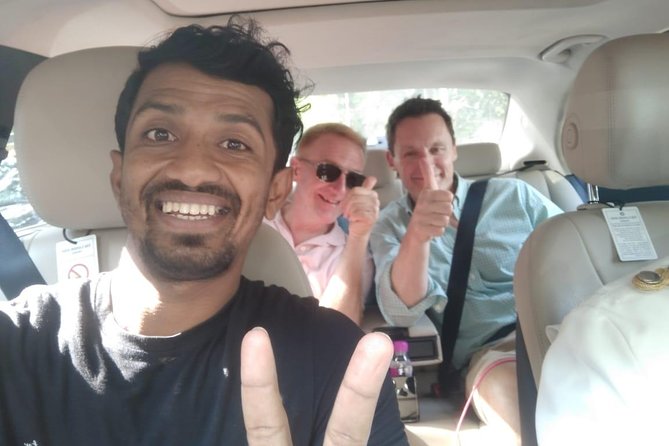
The other thing I like: you’re not left to figure out transportation between far-flung spots. You’re in an air-conditioned private car with pickup and drop-off, and you’re guided in English/Spanish/German depending on your option. That matters in Mumbai, where traffic can turn “quick hops” into time sinks.
Finally, the guide quality looks like a real priority. In past feedback, names like Dev, Raj, and Mukesh come up for being friendly, humorous, and good at connecting the dots between monuments and daily life. Even with a tight route, a strong guide is what turns a list of stops into an actual story.
You can also read our reviews of more tours and experiences in Mumbai


Day 1 Route: Elephanta Caves to Dharavi, with Architecture Stops
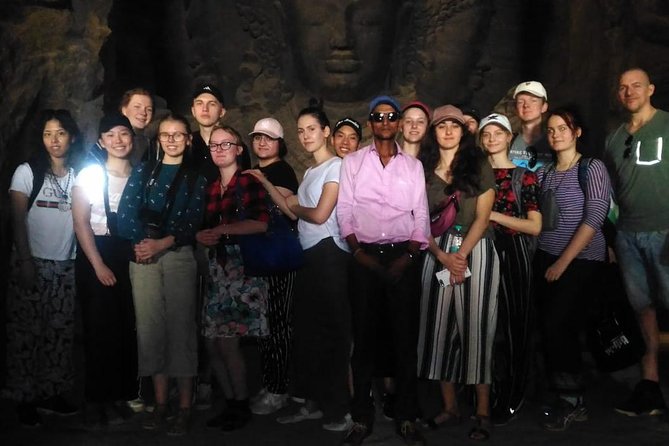
Day 1 starts with Elephanta Caves. These cave temples on Elephanta Island are a UNESCO World Heritage Site and are mainly dedicated to Shiva. You get about two hours there, which is a solid window: long enough to slow down, spot carvings, and take in the scale without feeling rushed immediately.
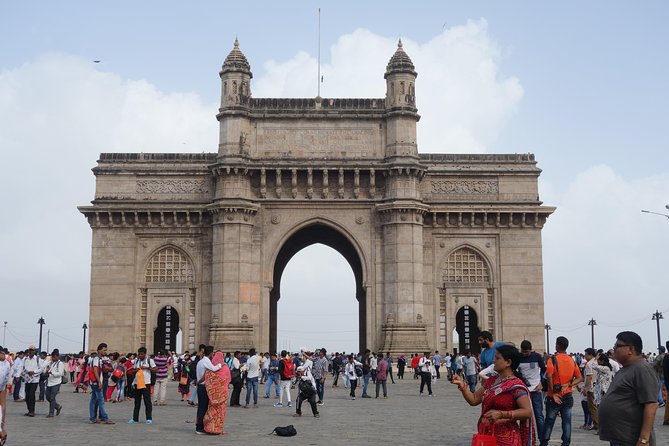
After the caves, the tour pivots to Mumbai’s signature coastal landmarks. Gateway of India is next—an arch monument built in the 20th century to mark the 1911 landing of King-Emperor George V and Queen-Empress Mary. It’s short here (about 20 minutes) but it’s an important anchor point because it’s the same area where the island trips begin.
Then comes Mani Bhavan Gandhi Museum, and this is one of the stops I’d call the most “human” on the first day. Mani Bhavan served as Gandhi’s Mumbai headquarters for around 17 years, from 1917 to 1934, so you’re not just seeing a building—you’re stepping into a place tied to a specific era. Admission is included, which saves you the hassle of hunting tickets mid-day.
From there, the vibe changes again in a good way. Marine Drive is described as the Queen’s Necklace, especially at night, when street lights look like pearls. Even if you don’t linger the way a local might, it’s still worth noting because it gives you a geography of the city—coastline first, then neighborhoods.
Day 1 Photo Stops: Dhobi Ghat, Dharavi, Sea Link Views, and UNESCO Sites
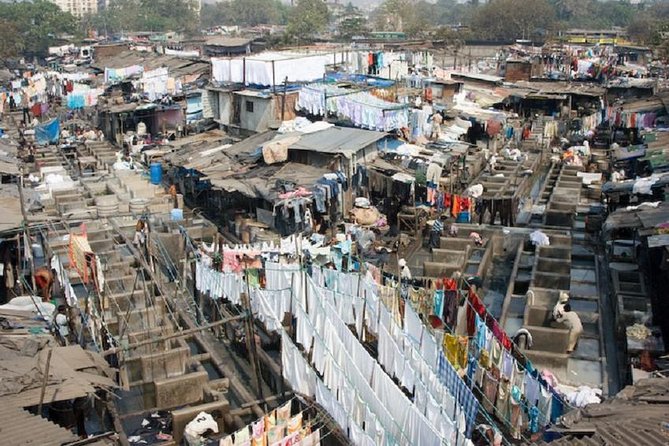
One of the most memorable moments of Day 1 is Dhobi Ghat, also called the world’s largest outdoor laundry. Even in a brief stop, you’ll get a sense of scale and routine. This is the kind of place where the visual detail does the talking, and a guide helps you avoid turning it into spectacle. Admission isn’t required, but you still want to be respectful with how you observe and photograph.
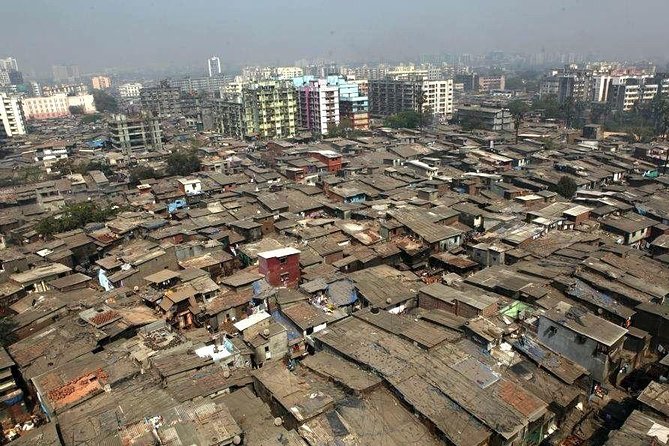
Next up: Dharavi. The tour frames it as the second largest slum in Asia, with about 45 minutes allotted. This is one of those stops that can either feel meaningful or uncomfortable depending on expectations. If you treat it as a chance to see how a dense city works—homes, work, and daily movement—you’ll get more out of the time you have. If you go looking for a tidy narrative, you might feel shortchanged.
Then the route moves to modern infrastructure and city drama with Bandra–Worli Sea Link, a cable-stayed bridge. You likely won’t spend long here, but it’s a helpful contrast after Dharavi and Dhobi Ghat: Mumbai isn’t only heritage and hardship, it’s also bold engineering and ongoing growth.
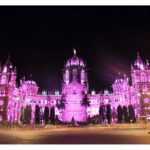
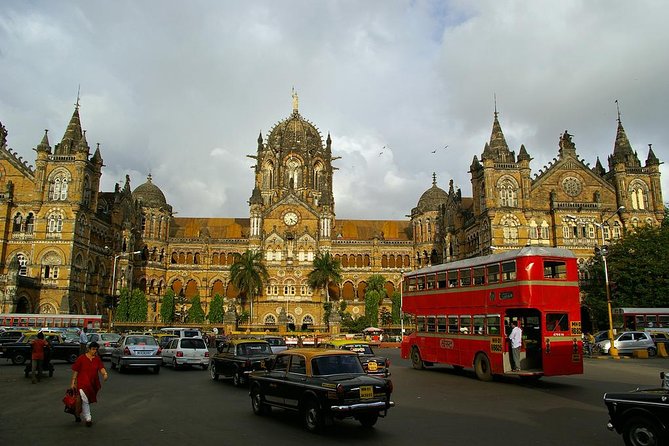
The day also includes two UNESCO-linked architecture hits. Chhatrapati Shivaji Terminus is UNESCO-listed and described as the busiest railway station in India, with a quick 20-minute stop. If you glance up at the station’s design and take in the role it plays as a transport hub, you start to understand why Mumbai’s identity is inseparable from rail.
Right nearby is the Rajabai Clock Tower, part of the Victorian and Art Deco Ensemble of Mumbai (added to the UNESCO list in 2018). Time is short—around 10 minutes—but it’s enough for a “look up” moment and a quick orientation to the area.
The day keeps going with smaller but interesting religious and garden stops:
- Jain Temple – Mumbai, known for intricate stone carvings and a dome painted with the zodiac.
- Hanging Gardens, with sunset views over the Arabian Sea and hedges carved into animal shapes.
And the cultural institutions stack up, too. The tour includes time at the Prince of Wales Museum, inaugurated on 10 January 1922 by Lady Lloyd (wife of George Lloyd, Governor of Bombay). There’s also Flora Fountain, tied to the site where Church Gate (named after St. Thomas Cathedral, Mumbai) stood before its demolition along with the Mumbai Fort. These are quick stops, but the context helps you connect the city’s physical layout with its past.
Day 2 at SJ Studio: Bollywood Move for Dance Show
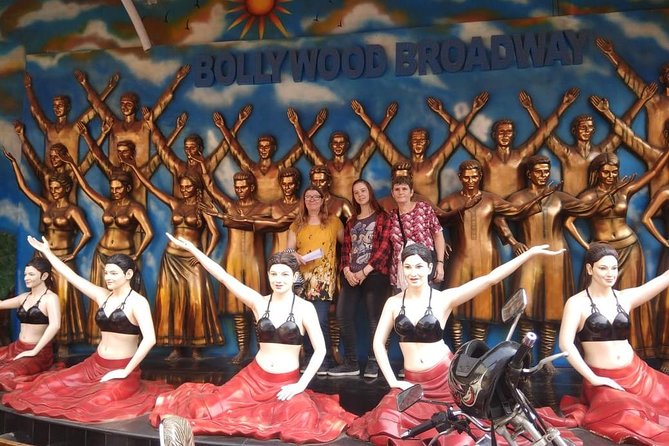
Day 2 is a break from the open-air circuit. You head to SJ Studio (the tour notes Sakinaka Kherani Rd in the pickup area) for about two hours on-site, with about four hours including travel time.
The headline here is a Move for Dance show. It’s described as based on film, music, and dances of Bollywood films, and it includes a blend of formal and folk Indian traditional music and dance traditions. In other words, this isn’t only “watch a performance.” It’s positioned as a structured, theme-based intro to how Bollywood connects with older dance and music styles.
What I like for practical reasons: a studio day can save your legs. After so many sightseeing stops on day 1, your energy is likely the limiting factor. This kind of indoor, scheduled experience gives you a predictable break from crowds, sun, and decision-making.
Day 3: Elephanta Again, This Time With the Boat Ride Setup

Day 3 starts with Elephanta Caves again, and here’s the useful nuance: the tour specifically calls out the hour-long boat ride from the Gateway of India to Elephanta Island. That boat segment is a big part of the experience because it shifts you into “island time.” Even before you reach the caves, you’re already changing setting—water, air, and a different pace.
Once you arrive, the tour again gives you about two hours to explore the caves. It also notes historical context about how the caves were used for Hindu worship until Portuguese rule was established. That’s a quick but meaningful reminder that layers of rule and culture sit on top of religious spaces over time.
If you’re wondering why Elephanta shows up twice in the 3-day plan: it’s likely the tour is built to give you either extra time to appreciate what you missed or to reinforce the island segment with a different arrival style. Either way, it’s a strong sign this is a cornerstone of the whole experience.






Price and What You Actually Get for $276.93
At $276.93 per person, this isn’t a “budget grab” for three days—but it also isn’t priced like a luxury private driver with zero admissions included. You’re paying for a bundle: pickup and drop-off, an air-conditioned private car, guide support in your language, a bottle of drinking water, and key admissions on included stops (Elephanta Caves, Mani Bhavan, and the SJ Studio experience).
That value equation matters in Mumbai because the real cost isn’t only entrance fees—it’s time lost to figuring out logistics. Here, the tour is designed to reduce that drag. You’re not just buying access to a few places; you’re buying a system that lines them up across multiple zones of the city.
That said, you should budget additional spending for what’s not included:
- Accommodation
- Lunch
If you’re traveling with a group, group discounts are mentioned, which can further improve value. Also, the fact that it’s often booked about 183 days in advance suggests you’ll get better seat timing (especially if you want specific guide-language options).
Practical Tips: Timing, Energy, and Meal Planning

The tour starts at 9:00 am, but the guide pickup is noted as sharp: 08:30 am on day 1, 10:00 am on day 2, and 8:00 am on day 3. That’s helpful because you can plan your mornings without wondering when the car will arrive.
This schedule is packed, so treat it like an active sightseeing weekend rather than a slow vacation. The itinerary includes multiple short stops mixed with a few longer blocks (like Dhobi Ghat and Dharavi, plus the core cave time). If you’re prone to getting “stop fatigue,” bring a simple strategy:
- Carry water even though a bottle is included (traffic waits happen).
- Wear shoes you trust for uneven sidewalks and stone steps.
- Plan a snack plan for lunch gaps.
Since lunch isn’t included, decide ahead of time whether you’ll grab something before the day starts or do quick bites while you’re on breaks. The good news: many stops are short enough that you can usually find food nearby on your own if you need it, but the tour itself won’t build in that comfort.
Should You Book This 3-Day Mumbai Tour?
Book it if you want a structured, high-coverage introduction to Mumbai that includes the big headliners plus harder-to-pin-down local scenes. It’s a good fit if you like history, architecture, and watching how the city works in real life—then you’ll likely appreciate the contrast of the studio day at SJ Studio.
Skip it (or adjust expectations) if you prefer a slower pace, longer museum-style time, or built-in meals. Also, if you’re very sensitive about how marginalized communities are discussed or photographed, go in with care and a respectful mindset for Dharavi and Dhobi Ghat.
One last nudge: if guide names matter to you, the track record of people like Dev, Raj, and Mukesh is a strong indicator this program puts effort into making the day feel human, not mechanical.
FAQ
How long is the 3-day Mumbai tour?
It runs for 3 days (approx.).
What is the pickup time each day?
The guide picks up you at 08:30am on day 1, 10:00am on day 2, and 8:00am on day 3.
What’s included in the price?
Pick-up and drop-off, bottle of drinking water, transportation in an air-conditioned private car, and an English/Spanish/German guide depending on the option purchased.
Are admission tickets included?
Yes for stops like Elephanta Caves (admission included), Mani Bhavan Gandhi Museum (admission included), and the SJ Studio experience (admission included). Other stops listed are free.
Is lunch included?
No, lunch isn’t included.
Does the tour include accommodation?
No, accommodation isn’t included.
Is it a private tour or a shared group?
It’s a private tour/activity, so only your group participates.
Are tickets provided on a phone?
A mobile ticket is included.
What languages are guides available in?
English, Spanish, and German (depending on the option purchased).
What if I need to cancel?
Free cancellation is offered up to 24 hours before the experience’s start time for a full refund.