Mumbai hits you fast, so this tour helps you focus. This 4-hour group route is built around major landmarks plus real street-level texture, led by an expert guide who explains what you’re actually looking at and why it matters. You also get the bonus of meeting travelers from different countries along the way.
I especially like the way it balances big-name monuments with everyday places that most first-timers skip, like Dhobi Ghat (hand-washing laundry blocks in open air). Another win: the pacing keeps you moving, with quick photo stops at the landmarks and a longer moment at spots where stories and details matter, like the Gandhi museum.
One possible drawback: it’s a tight schedule, and with Mumbai traffic and short time windows, you won’t have hours to wander on your own at every stop. Also, no food or drinks are included, so plan for water and a snack break outside the tour if you need it.
In This Review
- Key highlights you’ll actually feel during the tour
- Entering South Mumbai: a 4-hour plan that gets you oriented
- Price and logistics: why $69 can be good value here
- Gateway of India: the waterfront opener that sets the mood
- Dhobi Ghat at Mahalaxmi: the city’s everyday work, in plain view
- The Taj Mahal Palace (outside) and nearby landmarks: luxury, empire, and now
- Chhatrapati Shivaji Maharaj Vastu Sangrahalaya and Kala Ghoda: where the guide earns their pay
- Marine Drive: the Queen’s Necklace moment at the right time
- ISKCON Chowpatty and prayers in the middle of the city
- Mani Bhavan Gandhi Museum: the Gandhi story in documents and rooms
- Malabar Hill views: Hanging Gardens and Kamla Nehru Park
- Chhatrapati Shivaji Maharaj Terminus (CSMT): the grand ending with included entry
- Small-group tours in Mumbai: what the max 15 means for you
- What the guide adds (and why names like Rahul and Pooja matter)
- Practical tips so you enjoy every stop
- Who this tour fits best
- Should you book this Mumbai sightseeing group tour?
- FAQ
- How long is the Mumbai sightseeing group tour?
- What does the tour cost?
- How large is the group?
- Is food included?
- Which stops have tickets included?
- Does the tour include transportation?
- Do I need to print tickets?
- Can I bring a service animal?
Key highlights you’ll actually feel during the tour
- A focused 4-hour route across South Mumbai, with quick landmark stops plus a few deeper stops
- Guide-led explanations at places like Chhatrapati Shivaji Maharaj Vastu Sangrahalaya so you don’t just look—you understand
- Everyday Mumbai moments like Mahalaxmi Dhobi Ghat, not only colonial-era buildings and hotels
- Included tickets at Mani Bhavan Gandhi Museum and Chhatrapati Shivaji Maharaj Terminus (CSMT)
- Small groups (max 15) plus round-trip shared transfer in an air-conditioned vehicle
Entering South Mumbai: a 4-hour plan that gets you oriented
This tour is designed for the “first time in Mumbai” feeling. You’re not stuck with a long day where everyone’s exhausted before you even reach the good parts. Instead, you get a tight loop that covers waterfront views, major civic buildings, museums, and a classic seaside promenade.
You’ll start where visitors always want to go—Gateway of India—but you won’t just snap a photo and move on. The guide’s job is to connect the landmark to the city around it, so the architecture and setting click faster. It’s a smart move for a city that can otherwise feel like it’s doing ten things at once.
You can also read our reviews of more tours and experiences in Mumbai.



Price and logistics: why $69 can be good value here

At $69 per person, the value depends on what you’d otherwise spend time and effort doing solo. The tour includes a professional guide, a tour escort/host, and round-trip shared transfer in an air-conditioned vehicle. That matters in Mumbai, where traffic can chew up your day even when distances look small on a map.
It also helps that many stops are marked free for visitors, while the tour lists entry as included for Mani Bhavan Gandhi Museum and CSMT. If you’re trying to hit the big “must-see” buildings and a couple of ticketed sites without juggling separate tickets, that’s where the pricing starts to make sense.
What isn’t covered is also important: food and drinks aren’t included, and tip isn’t included either. If you’re the type who needs snacks to stay cheerful, bring a light plan.
Gateway of India: the waterfront opener that sets the mood
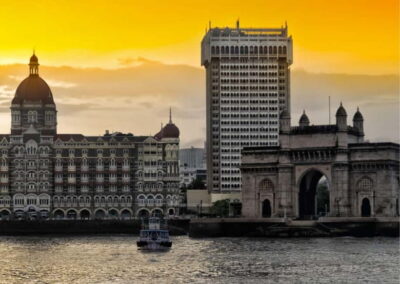
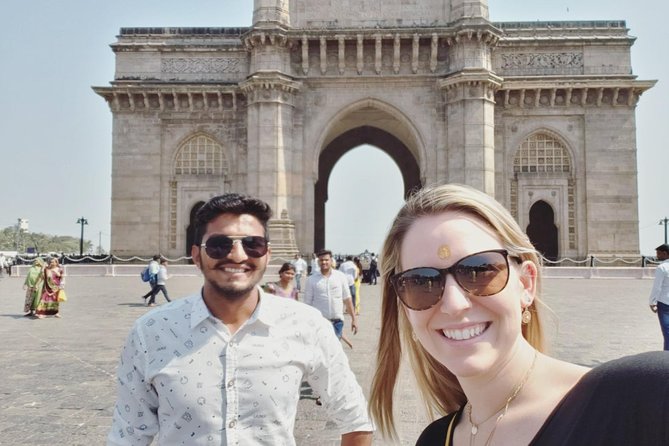
You’ll begin at Gateway of India, a historic monument from 1924 in Colaba by the Arabian Sea. Even if you’ve seen pictures, being there in person gives you the scale. It’s the kind of place that works as a mental “anchor point” for understanding Mumbai’s geography—sea on one side, the city pulling inland on the other.
This stop is short, around 15 minutes, so it’s best used for a quick loop: walk for a better angle, get one wide shot, and then move on. The guide’s context is the real value here—especially if you don’t know the colonial-era events the gateway marks.
Dhobi Ghat at Mahalaxmi: the city’s everyday work, in plain view
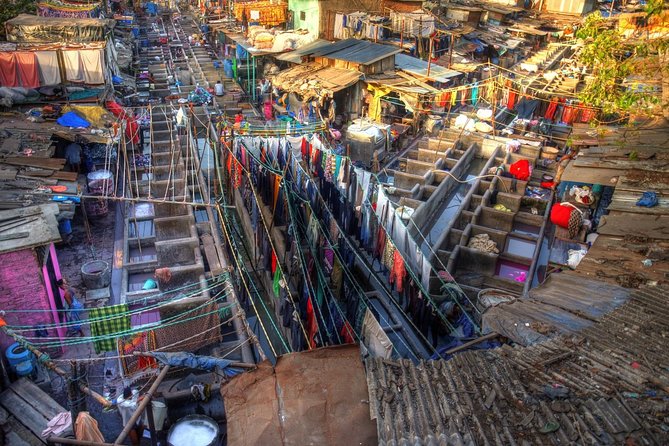
Next up is Mahalaxmi Dhobi Ghat, an open-air laundry where clothes are washed by hand in large communal areas. This is the stop that tends to make people pause. It’s not a “pretty photo” stop so much as a real life stop—people at work, synchronized routines, and a place that’s existed long enough to become part of Mumbai’s daily rhythm.
You’ll have about 15 minutes. That’s enough time to understand the layout and see the work happening, but not enough to get lost. If you’re sensitive to crowds or prefer quiet spaces, treat this like a cultural observation moment: watch first, then ask questions if your guide offers them. It’s one of the strongest “you’re really here” experiences on the route.
The Taj Mahal Palace (outside) and nearby landmarks: luxury, empire, and now
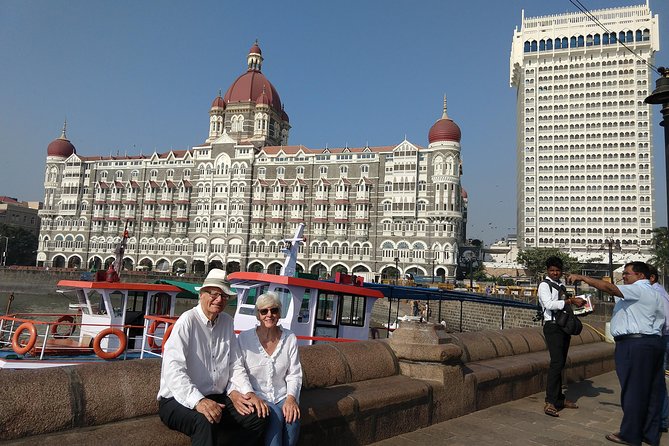
You’ll pass by the Taj Mahal Palace Hotel area for a brief look—about 10 minutes. Even with a short stop, it’s worth paying attention to the building’s presence. The point isn’t to do the inside tour. It’s to recognize how a landmark hotel can operate as both a historic icon and a living part of modern Mumbai.
Right after that, the route continues with a trio of educational and judicial landmarks:
- University of Mumbai (Vidya Nagari), founded in 1857 and listed as one of India’s oldest universities
- The Bombay High Court, established in 1862
- The route also includes the guided museum and arts areas later, so this early cluster helps frame Mumbai as a city built on institutions, not only tourism
These stops are all marked free and stay brief. That can be a downside if you love long architectural walks. The upside is efficiency: you get the “big picture” without wasting your whole time.


Chhatrapati Shivaji Maharaj Vastu Sangrahalaya and Kala Ghoda: where the guide earns their pay
One of the most meaningful parts of this tour is the museum stop at Chhatrapati Shivaji Maharaj Vastu Sangrahalaya, formerly the Prince of Wales Museum. You meet your accredited guide at the entrance, and then you move through galleries with stories built into the walk.
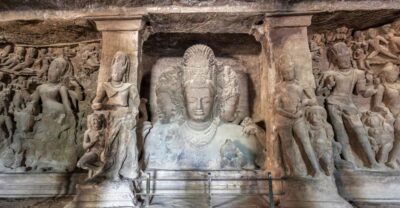
This isn’t just a random drop-off. The museum is described as housing artifacts, sculptures, and artworks from different Indian dynasties, with examples like miniature paintings and weaponry. That range is exactly why a guide helps: without context, it’s easy to see “a lot of stuff” and remember nothing.
After the museum, you’ll head toward Kala Ghoda, a South Mumbai arts district known for galleries, museums, cafes, and heritage buildings. Even if you only get a short taste, the area gives you a different side of the city—less about sea views and monuments, more about culture as a daily neighborhood function. It’s also an area where you can linger later on your own if you want to turn this tour into a longer day.
Marine Drive: the Queen’s Necklace moment at the right time
Then comes Marine Drive, a 3.6-kilometer promenade along the Arabian Sea, famous for the “Queen’s Necklace” streetlight effect at night. Your stop here is only around 10 minutes, but it still works because it’s placed after museum and arts time. You get a change of pace—fresh air and a view line you can actually breathe into.
At this point, you’ll probably understand the tour’s rhythm: quick but meaningful landmark stops, mixed with a couple of longer “interpretation” moments. Marine Drive is where the city’s scale starts to feel personal.
If you’re hoping for sunset views, time of day will decide the outcome. If you catch it on a bright afternoon, focus on the sea-city contrast and the art deco architecture along the promenade.
ISKCON Chowpatty and prayers in the middle of the city
Next is ISKCON Chowpatty at Sri Sri Radha Gopinath Mandir, a temple in South Mumbai dedicated to Lord Krishna. You’ll get about 20 minutes here—enough for quiet observation and a look at the atmosphere.
The tour notes daily prayers and devotional singing (kirtans), plus the presence of a vegetarian restaurant and gift shop. Even if you’re not there for religious practice, a temple stop can be a useful reset in a fast-moving itinerary. You can slow your breathing, watch people gather, and notice how the city’s energy changes when you step inside.
Mani Bhavan Gandhi Museum: the Gandhi story in documents and rooms
This is the one you’ll feel most clearly as “serious time.” Mani Bhavan served as Mahatma Gandhi’s residence from 1917 to 1934 and is now a museum and memorial. The tour includes admission here, and the stop is about 30 minutes.
What I like about this kind of museum stop is that it doesn’t rely on guessing. You’re shown photographs, documents, and personal items, plus a library and a room preserved as Gandhi used it. That combination can make the independence story feel less like a chapter in a textbook and more like a lived timeline.
Also, because your guide is in the group, you get help spotting the “what to look for” items—places where people often gloss over the first time.
Malabar Hill views: Hanging Gardens and Kamla Nehru Park
After the Gandhi museum, the tour shifts into green and viewpoints with:
- Hanging Gardens (Pherozeshah Mehta Gardens), a terraced garden with lush greenery and walking paths, plus skyline and sea views
- Kamla Nehru Park, known for its playful structure called the Old Woman’s Shoe and for scenic views toward Marine Drive and the Arabian Sea
Both stops are short—about 15 minutes each—but that’s enough to get the idea. Hanging Gardens feels like a “breather” between heavy history stops. Kamla Nehru Park offers an easy, family-friendly pause with sea-line perspective.
If you’re visiting with kids, these are the moments they usually enjoy most. If you’re traveling solo, it’s still a relief: you’ll get less noise, more walking space, and a calmer frame for photos.
Chhatrapati Shivaji Maharaj Terminus (CSMT): the grand ending with included entry
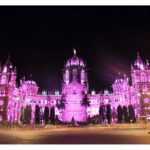
You’ll finish with Chhatrapati Shivaji Maharaj Terminus (CSMT), formerly Victoria Terminus, a UNESCO World Heritage Site. It’s built in 1887 and designed as a blend of Victorian Gothic Revival and traditional Indian styles, with intricate carvings and a major central dome.
This stop includes admission and lasts around 15 minutes. It’s a great choice for an ending because the station tells a lot at once: colonial-era architecture, massive modern transport importance, and a sense of Mumbai as a city always in motion.
Across the street is the Brihanmumbai Municipal Corporation (BMC) Building, completed in 1893 in Gothic Revival style with domes, turrets, and a central tower. Your time here is brief, about 10 minutes, but it’s the kind of civic architecture that helps you notice how different the city’s “official” buildings look compared with the malls and high-rises.
Small-group tours in Mumbai: what the max 15 means for you
A maximum of 15 travelers is a big deal in a city where lanes and sidewalks can get tight. With fewer people, your guide can actually manage the group during quick transitions—especially at landmarks where everyone wants a photo at the same angle.
The tour also lists air-conditioned vehicle transport and near public transportation, which helps if you need a quick reset or prefer to step out and rejoin at the next stop.
Your pace will still feel like a tour pace—short windows, lots of walking around points of interest—but the small group keeps it from feeling chaotic.
What the guide adds (and why names like Rahul and Pooja matter)
In the guide-led style that this tour promises, the biggest win is not the list of places—it’s the explanations. If your guide is the type who connects what you see to how the city works, the entire route clicks faster.
I’ve seen positive comments tied to guides such as Rahul and Pooja and their ability to explain Mumbai beyond surface sightseeing. Even if your day is focused on South Mumbai landmarks, that same approach makes short stops more memorable because you’re not just collecting sights—you’re picking up the logic behind them.
Practical tips so you enjoy every stop
- Bring a small water bottle and keep snacks in your bag since food isn’t included.
- Wear shoes you’re comfortable walking in; multiple stops mean more steps than you might expect for a 4-hour tour.
- If you’re sensitive to crowds, treat Dhobi Ghat as a short observation moment and stick close to the group.
- Keep your phone charged. The tour uses a mobile ticket, and you’ll want photos at viewpoints like Marine Drive and CSMT.
Who this tour fits best
This is a strong fit if you want:
- A guided first pass through South Mumbai’s key landmarks in about half a day
- A mix of architecture, museums, and one or two stops that show daily life
- Included entry at a couple of major sites (Mani Bhavan and CSMT) without extra planning
It might be less ideal if you’re the kind of traveler who wants a slow, unstructured afternoon. This route is about focus, not lingering.
Should you book this Mumbai sightseeing group tour?
If you’re arriving with limited time and want a guided route that hits the big iconic sights plus a couple of meaningful story stops, I’d book it. The value comes from the guide, the included entries at two high-impact locations, and the convenience of round-trip AC transport.
If you hate tight schedules, or if you’re hoping for a full museum deep-stroll with long independent wandering, you might find the timing limiting. But for most visitors, this tour does a very practical job: it helps you get your bearings in Mumbai, then gives you enough to want to return later for the slower, do-it-yourself version.
FAQ
How long is the Mumbai sightseeing group tour?
It’s about 4 hours.
What does the tour cost?
The price is $69.00 per person.
How large is the group?
The tour has a maximum of 15 travelers.
Is food included?
No. Food and drinks are not included.
Which stops have tickets included?
Mani Bhavan Gandhi Museum has admission included, and Chhatrapati Shivaji Maharaj Terminus (CSMT) also has admission included. Many other listed stops are marked free.
Does the tour include transportation?
Yes. You get round-trip shared transfer in an air-conditioned vehicle.
Do I need to print tickets?
No. The tour uses a mobile ticket.
Can I bring a service animal?
Yes, service animals are allowed.