REVIEW · MUMBAI
Mumbai: Private Global Pagoda Tour in Air-Conditioned Car
Book on GetYourGuide →Operated by BOMBAY INSIDER TOURS · Bookable on GetYourGuide
A quiet pagoda chase beats a rushed sightseeing day. This private trip takes you northwest of Mumbai to the Global Vipassana Pagoda, a place built for peace, not posing. You’ll start with a morning pickup and settle into an air-conditioned ride for the one-hour drive to Gorai.
I really like how the visit is guided, with an English-speaking tour guide who explains what you’re seeing and the meaning behind it. I also like the practical extras: skip-the-ticket-line entry, water, and refreshments, all wrapped into one price with transport included.
One consideration: this is a focused half-day outing. If you’re craving a wide range of Mumbai stops, you might wish it were longer or combined with more sights.
In This Review
- Key highlights worth planning around
- Mumbai’s Global Vipassana Pagoda: a calm break with real context
- The air-conditioned pickup: how the ride shapes the experience
- What you’ll see at the pagoda: golden color, huge dome, quiet purpose
- The guide’s job: making the site click without overwhelming you
- How long is long enough? Timing that works for a real half-day
- Price and value: what you’re really paying for at $10
- Who this tour suits best (and who should maybe skip it)
- Should you book this Global Vipassana Pagoda tour?
- FAQ
- How long is the Mumbai Private Global Pagoda Tour?
- Where do they pick you up from?
- Is the tour guide available in English?
- Do I need to buy tickets separately?
- Is transportation air-conditioned?
- Is this tour private or shared?
- What is the cancellation window?
Key highlights worth planning around
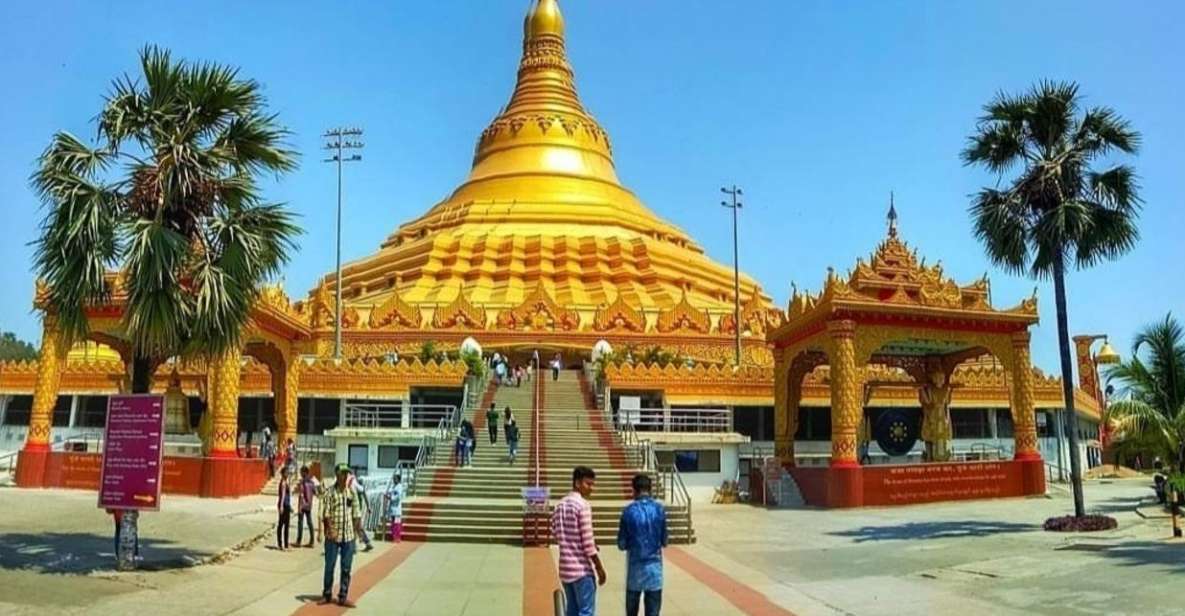
- Golden Pagoda serenity at Gorai: a monument of peace and harmony by the Arabian Sea
- One-hour AC drive with pickup/drop-off: hotel, airport, or cruise port
- World’s largest stone dome (pillar-free): a standout feature you’ll hear explained clearly
- Inaugurated on 8 February 2009: learn the significance from your guide
- Built on donated land between Gorai Creek and the sea: see how the setting supports the message
- Guides like Rishi and Nisar: expect enthusiastic, detail-minded English commentary
Mumbai’s Global Vipassana Pagoda: a calm break with real context
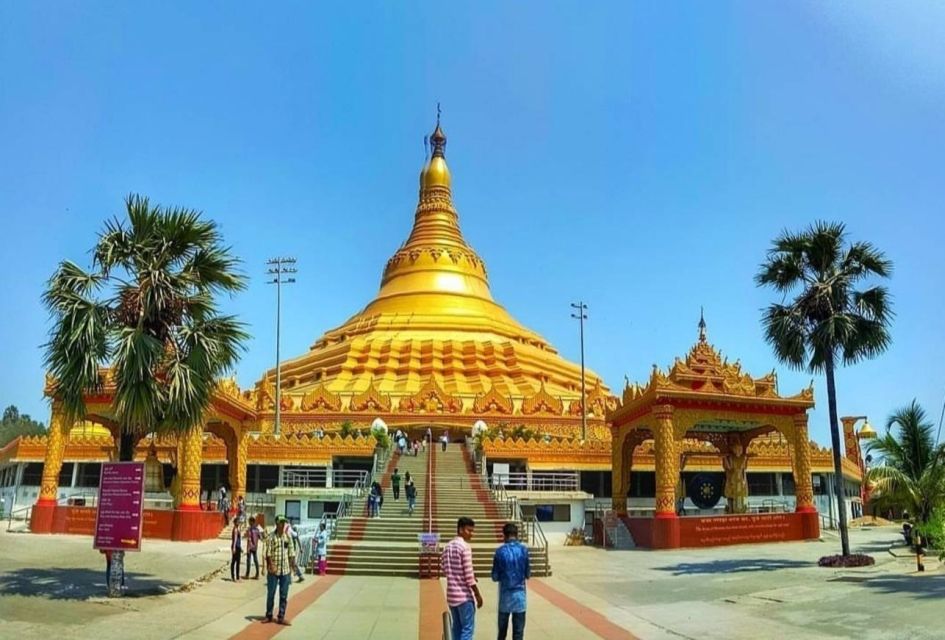
If your Mumbai day feels too loud, this tour gives you a reset. You’ll be heading to the Global Vipassana Pagoda, located near Gorai, northwest of the city. It’s not a random viewpoint stop. The whole place was designed as a meditation hall and a monument meant to communicate peace and harmony.
What makes it interesting is how the site story and the architecture connect. The pagoda’s location is part of the design: it’s built on donated land on a peninsula between Gorai Creek and the Arabian Sea. That means the atmosphere is shaped by water on both sides—still, open, and reflective—rather than surrounded by traffic and shops.
I also appreciate that the tour isn’t sold as pure sightseeing. It’s positioned as a guided visit where you’ll learn why the pagoda exists and how it links back to Vipassana’s roots. Even if you’re not into meditation, the meaning helps you understand what you’re looking at.
The duration matters too. With a total of 3–5 hours, you’re likely to spend a good chunk of that time on-site, not just passing through. That gives you a chance to actually take it in, instead of rushing from one “must-see” photo to the next.
You can also read our reviews of more private tours in Mumbai

The air-conditioned pickup: how the ride shapes the experience
The day starts with a complimentary morning pickup from your chosen location. Depending on what you book, that can include a hotel, the airport, or a cruise port. Then you’re taken by private vehicle—air-conditioned—to the pagoda area.
That one-hour drive is a big deal in Mumbai. Even when a trip is short on paper, traffic and heat can wear you down fast. An air-conditioned car means you arrive with energy. It also means the guide can set the tone early—sharing the basics before you step onto the grounds.
One practical upside: because the ride and guide are part of the same package, you’re not piecing together taxis, ticket desks, and directions. That matters at sites where you don’t want to waste time hunting down the right entrance or figuring out where the queue starts.
For me, the best part is that this keeps the outing simple. You show up, you get transported, you get guided, and you get back. The pagoda is the main event; everything else is handled so you don’t lose time to logistics.
What you’ll see at the pagoda: golden color, huge dome, quiet purpose
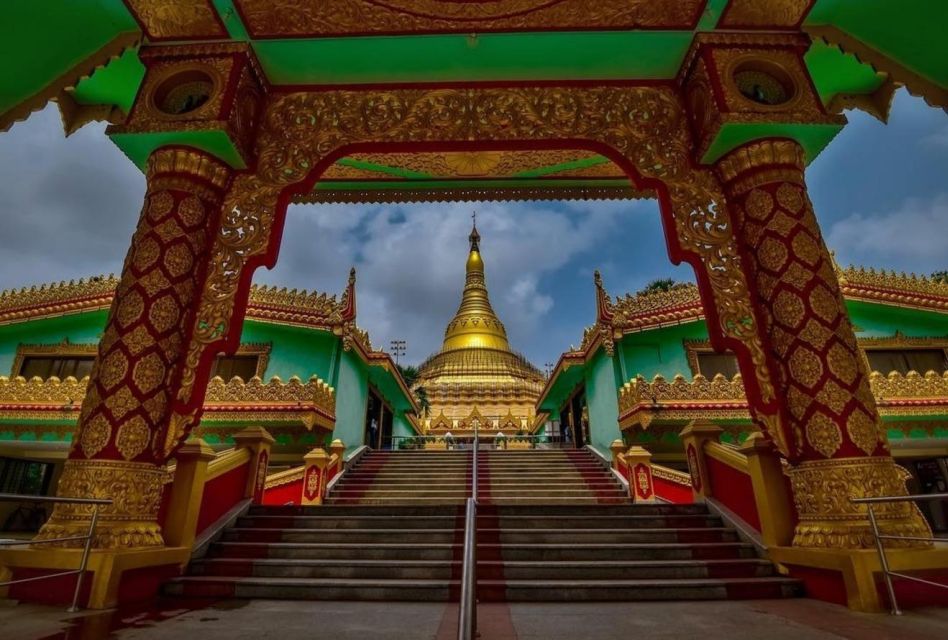
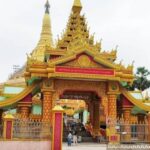
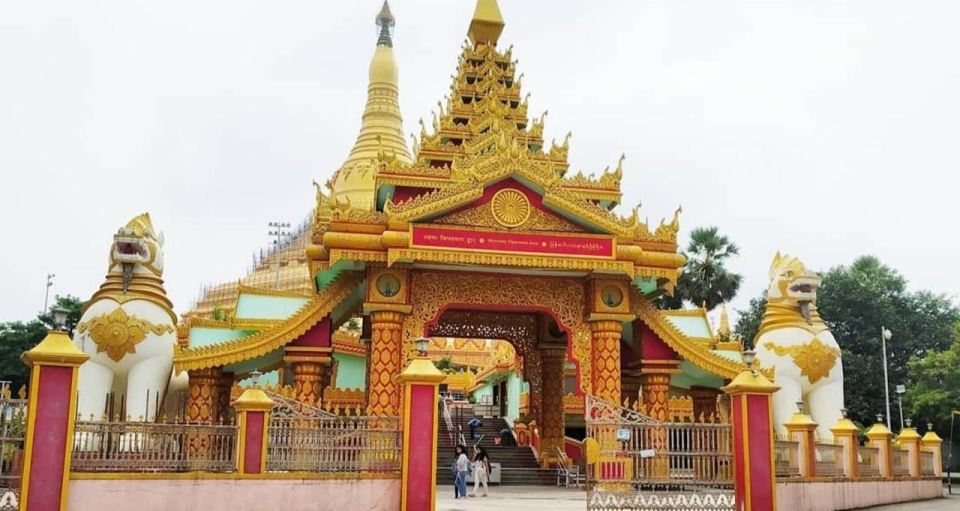
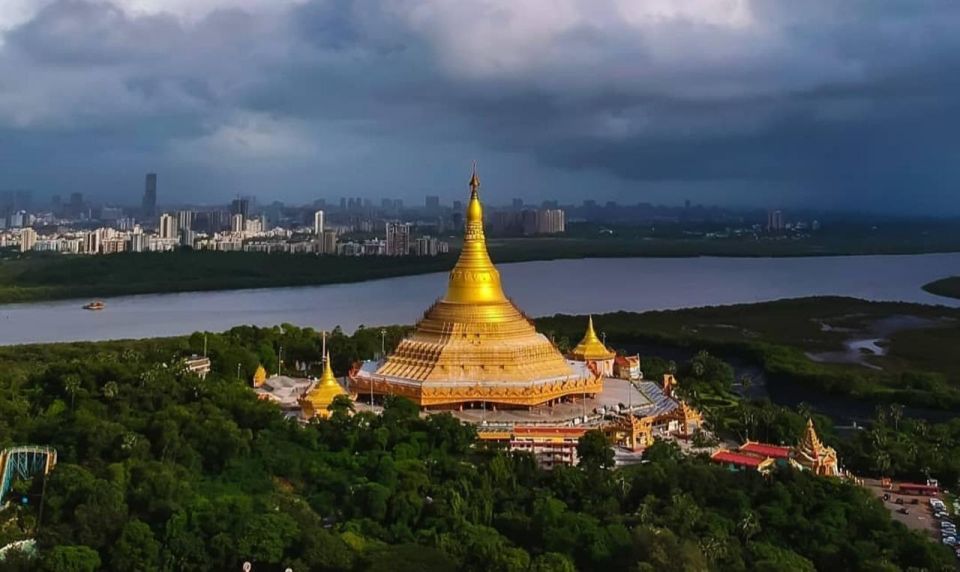
Once you arrive at the Global Vipassana Pagoda area, you’re walking into a space designed for reflection. The experience is described as visiting Mumbai’s largest Golden Vipassana Pagoda, and visually, that golden quality is part of the calm impression. It’s the kind of architecture you don’t fully understand from a single photo.
The most important structural feature is the dome. The center contains the world’s largest stone dome built without any supporting pillars. That pillar-free design is exactly the kind of detail a guide should explain, because it makes the building feel less like decoration and more like engineering with purpose.
You’ll also hear about the pagoda’s role as a monument of peace and harmony. It’s not only about how it looks. It was created to symbolize serenity and to support a meditative environment for visitors. That’s why the tour feels different from classic temple runs where the main focus is speed and crowd flow.
Another fact that adds depth: the pagoda was inaugurated by Pratibha Patil, then President of India, on 8 February 2009. Knowing that date gives you a sense of how modern the project is, even though it speaks to ancient traditions.
And if you pay attention to the surroundings, the setting makes more sense. The pagoda sits on land donated on a peninsula between Gorai Creek and the Arabian Sea. When a place is planned like that, it’s easier to understand why it’s built to feel open and quiet rather than closed and busy.
The guide’s job: making the site click without overwhelming you
The tour is built around an English-speaking guide, and that’s one of the most praised parts of the experience. From the information provided, guides such as Rishi and Nisar lead these visits, and the common thread is enthusiasm plus clear explanation.
Here’s what I think you’ll enjoy about a guide-led approach at a site like this: the pagoda is symbol-heavy. If you go on your own, you may know it’s important, but you might miss what each detail means. A good guide helps you connect the dots without turning it into a lecture.
For example, the pagoda is described as being built out of gratitude to Sayagyi U Ba Khin (1899–1971), a Vipassana teacher and the first Accountant-General of Independent Burma. He’s also noted as being instrumental in Vipassana returning to India, the country of its origin. That’s the kind of background that changes how you view the site. It moves the story beyond architecture into people and transmission of ideas.
It also helps with pacing. Instead of wandering, trying to figure out what matters most, you get a guided route through the essentials—enough structure to keep you oriented, without boxing you into a rigid script.
And because the tour includes refreshments and a water bottle, you’re less likely to feel rushed by basic comfort issues. That sounds small, but at a calm site, you want your body to be comfortable so your mind can actually settle.
How long is long enough? Timing that works for a real half-day
This trip runs 3–5 hours. That range is useful because it means you can usually match it to your day schedule. It also tells you the tour is designed to be more than a quick photo stop.
The typical flow makes sense:
- Morning pickup from your location
- One-hour drive to the pagoda
- Guided time at the meditation hall and surrounding features
- Return to your pickup/drop-off point
Because the travel time is clearly stated as about one hour each way (with the drive described as one hour to reach the site), you can plan your expectations. The tour is built to deliver meaning without eating your whole day.
If you’re staying near the city center, this will still feel like an outing outside Mumbai’s core. That’s not a downside for me—it’s the point. You’re trading some spontaneity for a quiet, structured experience you can rely on.





Price and value: what you’re really paying for at $10
At $10 per person, the value comes from what’s bundled. This isn’t just the guide and a car. You’re also getting:
- Hotel/airport/cruise port pickup and drop-off
- Air-conditioned vehicle
- English-speaking tour guide
- Water bottle and refreshments
- All entry tickets and transport fees
- Skip-the-ticket-line entry
Those items add up fast when you try to assemble them separately. Even if you’re comfortable with public transit, it’s not usually the best option for a private, time-friendly visit where you want to stay oriented and not juggle tickets.
Another value point: you get transport fees and entry tickets handled in advance. That reduces friction. You’ll spend less time at desks and lines, and more time where it counts—at the site.
In other words, the price isn’t just budget-friendly; it’s efficient. You’re paying for a smooth experience rather than collecting small annoyances all day.
Who this tour suits best (and who should maybe skip it)
This is a strong fit if you want a calm, guided experience with meaning. It’s especially good for:
- People who like learning what they’re seeing, not just taking photos
- Anyone looking for a peaceful break from Mumbai’s energy
- Visitors who appreciate structured timing and pickup/drop-off convenience
- First-timers who want one “big” site visit done properly
It might be less ideal if your priority is a busy checklist of multiple Mumbai attractions in one day. This outing is meant to focus. If you like variety and frequent stops, you may want to combine it with other activities yourself.
Also, if you’re someone who strongly dislikes guided explanations, you might find the narrative adds time. But based on the way guides like Rishi and Nisar are described—enthusiastic and detail-minded—the commentary seems aimed at making the visit easier to understand, not harder.
Should you book this Global Vipassana Pagoda tour?
I’d book it if you want a straightforward, guided half-day where the main attraction is the site itself. The combination of air-conditioned private transport, English guidance, and skip-the-ticket-line entry makes the whole day feel low-stress. And the facts are impressive: a pillar-free world’s largest stone dome, inaugurated in 2009, tied to Sayagyi U Ba Khin’s role in Vipassana’s return to India.
Skip it if your ideal Mumbai day is packed with city landmarks and you don’t want an hour of driving each way to reach a calmer setting. For a quieter, meaningful outing, though, this one fits the bill.
FAQ
How long is the Mumbai Private Global Pagoda Tour?
The duration is 3–5 hours, depending on the starting time available.
Where do they pick you up from?
Pickup can be arranged from your hotel, the airport, or a cruise port, based on the option you book.
Is the tour guide available in English?
Yes. The tour includes an English-speaking live tour guide.
Do I need to buy tickets separately?
No. All entry tickets and transport fees are included, and the tour also offers skip-the-ticket-line entry.
Is transportation air-conditioned?
Yes. You travel in a private air-conditioned vehicle.
Is this tour private or shared?
It’s available as private or small groups, depending on what you choose.
What is the cancellation window?
You can cancel up to 24 hours in advance for a full refund.