REVIEW · MUMBAI
Private Half-Day Sightseeing Tour in Mumbai
Book on Viator →Operated by Explore Mumbai Tours · Bookable on Viator
Mumbai in half a day beats guessing. This private tour packs the big Mumbai markers—Gateway of India, Dhobi Ghat, Marine Drive, CSMT—into one comfortable route with hotel pickup and Wi‑Fi. I like the private A/C ride for cutting through the heat and traffic, and I also like how the day runs with a real local guide style, from names like Priti, Yash, and Subhan showing up in the experience.
One consideration: Mumbai traffic can reshape the timeline, so even a tight itinerary may move around a bit, and areas like the Gateway can get crowded depending on your time slot.
In This Review
- Key things that make this tour worth your time
- What you get from this private half-day in Mumbai (and why it works)
- Price and logistics: the real cost is time, not tickets
- Door-to-door comfort: air-conditioning, Wi‑Fi, and a driver who knows the flow
- The Gateway of India start: colonial icon meets a working waterfront
- Sassoon Dock fish market: see Mumbai’s food economy at street speed
- The Afghan Church: a quiet shift into architectural memory
- Dhobi Ghat: Mumbai’s open-air laundromat, explained like a system
- Oval Maidan and the colonial civic core: wide space, big institutions
- Marine Drive to Chowpatty: the sea-front that anchors the postcard view
- Malabar Hill and the marble-and-mirrors side of Mumbai
- Tower of Silence and Mani Bhavan: belief, memory, and a human-sized museum stop
- CSMT and the Municipal Corporation: stations and government buildings that move the city
- Crawford Market: last stop energy before you head back
- How to get the most out of a short private day
- Should you book this private Mumbai half-day?
- FAQ
- How long is the private half-day sightseeing tour in Mumbai?
- What does the tour cost per person?
- Is pickup from my hotel included?
- Is this a private tour or a shared group tour?
- Do I need to buy tickets for the stops?
- Is Wi‑Fi included during the tour?
- What places are included in the itinerary?
- Are there different start times to fit my schedule?
- Are there cruise port options or add-ons?
- What is the cancellation policy?
Key things that make this tour worth your time
- Private, in-car comfort: an air-conditioned vehicle with Wi‑Fi to make a half-day actually feel doable
- A focused highlight route: Gateway of India, Dhobi Ghat, Marine Drive, CSMT, Crawford Market, and more in 4–6 hours
- A guide who can steer the day: clear English guides like Priti, Yash, Subhan, and Ravi are repeatedly praised for how they explain stops
- Free admission at many stops: multiple major sights are listed as admission ticket free, so your money goes to the guide and vehicle
- One paid museum stop included: Mani Bhavan Gandhi Museum has admission ticket included in the itinerary
- Flexibility for port days or limited time: cruise port options and multiple tour times help you fit it in
What you get from this private half-day in Mumbai (and why it works)
This is the kind of tour that helps you get bearings fast. In a city as big and intense as Mumbai, trying to “DIY your highlights” often turns into a day of shortcuts you don’t understand. A private half-day route means you can see the landmark loop and still have time to process what you’re looking at.
You’re not just passing by famous buildings. The stops mix architecture, everyday life, and religious and civic sites. One moment you’re at the sea-front with the classic Marine Drive view. The next, you’re looking at how Mumbai handles daily labor at places like Dhobi Ghat. That contrast is the whole point: it helps first-timers understand how the city’s old and new sides share the same streets.
The value angle is pretty straightforward. At $33.48 per person, you’re paying for a guide, a private air-conditioned vehicle with Wi‑Fi, and transport between a concentrated set of sights. Many of the listed stops are admission free, and Mani Bhavan’s museum ticket is included, which reduces the “nickel-and-dime” feeling that can pop up on half-day tours.
You can also read our reviews of more private tours in Mumbai


Price and logistics: the real cost is time, not tickets
The money is not the scary part here. The scary part is what Mumbai does to your schedule. Heat, traffic, and crowd flow can slow down even the best plans. This tour is priced like a practical solution: you rent comfort and local navigation instead of fighting city logistics on your own.
You’re also on a private basis—just your group—so the day doesn’t feel like a group stampede. That matters when you want photos, want to ask questions, or want to spend a few extra minutes at the places that catch your eye.
One more practical piece: the tour runs for about 4 to 6 hours and includes numerous tour times. That’s helpful if you’re juggling a late arrival, an early morning plan, or a cruise schedule (cruise port options are available).
Door-to-door comfort: air-conditioning, Wi‑Fi, and a driver who knows the flow
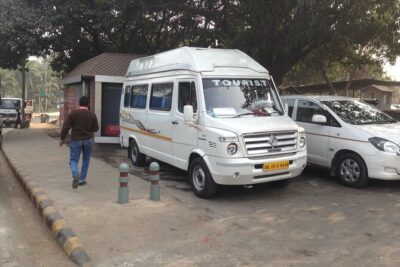
You’ll be moving around South Mumbai and nearby areas in a private, air-conditioned vehicle with Wi‑Fi. In Mumbai weather, that’s not a luxury. It’s basic survival. Even if you love walking, a half-day tour like this is built around minimizing time spent stuck in sun and exhaust.
In the feedback, drivers like Deepak, Wasim, Dipak, Santosh, Mahesh, and Pranav are repeatedly praised for safe, smooth handling through chaotic traffic. That’s what you want to hear when you’re sitting in the car more than you’re standing on the street.
And yes, traffic can still be unpredictable. There’s a lesson worth taking: keep your expectations flexible. If there’s a sudden delay—like the kind caused by a major politician in town—you’ll probably lose some minutes to route changes rather than to sightseeing.
The Gateway of India start: colonial icon meets a working waterfront
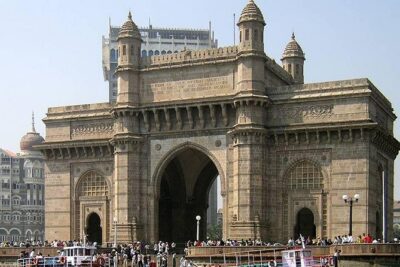
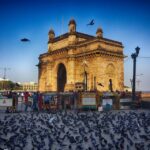
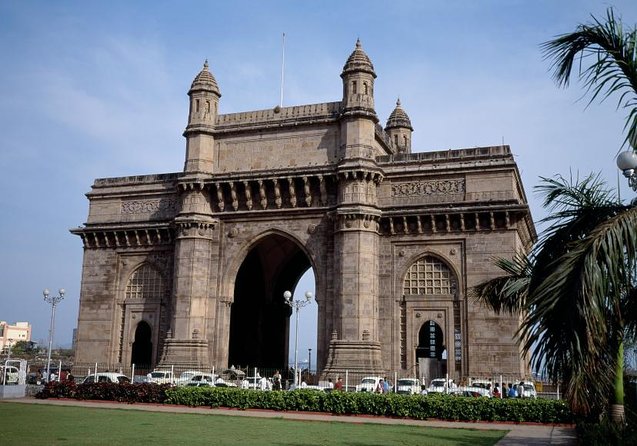
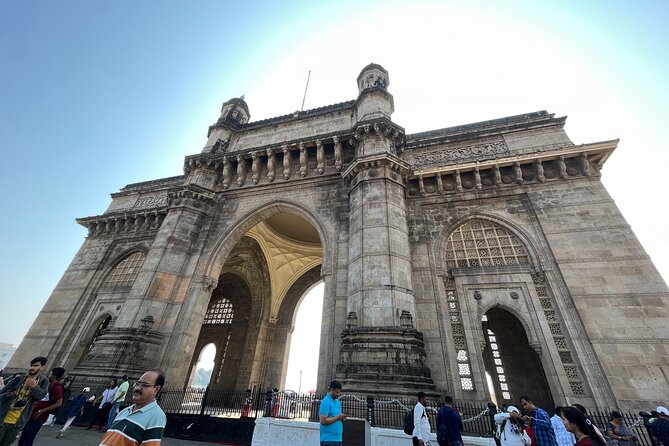
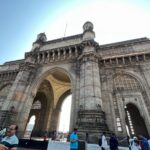
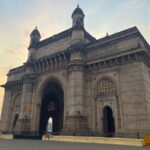
Most half-day tours start with something scenic, but this one starts with something symbolic. The Gateway of India is an arch monument tied to Mumbai’s colonial past. You’ll typically spend around 20 minutes here, which is enough time for a first look and a few photos without turning it into a museum-style marathon.
Why it’s worth early in the day: the surrounding area helps you understand Mumbai’s “arrival” story. The sea is close. The energy is street-level. Even if you’ve read about the place, seeing it in person anchors the rest of your route.
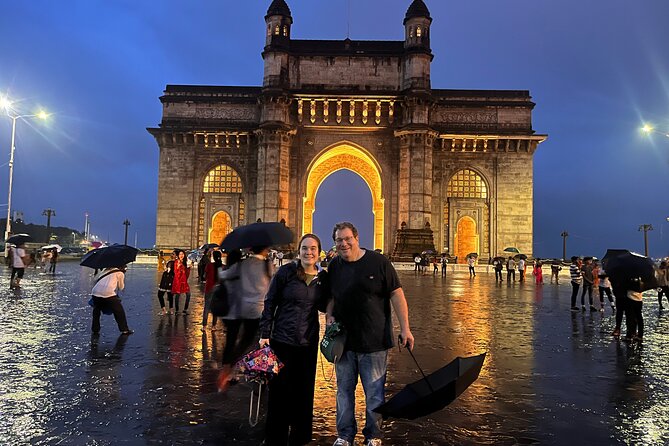
A small tip: plan for crowds here. There’s an account of a nighttime exposition being worth seeing, with the added reality of lots of people around the area. If your tour time lands near evening, expect a lively scene around the Gateway.
Sassoon Dock fish market: see Mumbai’s food economy at street speed
Right after the arch, the itinerary takes you to Sassoon Dock, an older and busy fish market. This stop is all about sensory detail: fresh catches traded by local fishermen, plus the fast-moving rhythm of a working harbor.
Expect this to be a visual-and-people stop more than a “stay forever” stop. The itinerary shows a short visit, which is perfect if you want a taste of local life without losing time.
Practical note: markets are not always the easiest place to linger in heavy heat. If you feel like moving quickly, you’re in the right zone.
You can also read our reviews of more tours and experiences in Mumbai

The Afghan Church: a quiet shift into architectural memory
The next stop is the Afghan Church, built in memory of soldiers who died in the First Afghan War. The draw is the Gothic-style architecture, which gives you a very different mood than the docks.
This is one of those stops that works best with a good guide. You’ll get the context for why the building exists and what it signals about the community connections of the time. The itinerary keeps the visit short, so you’ll want to listen closely rather than try to “solve” the architecture yourself.
Dhobi Ghat: Mumbai’s open-air laundromat, explained like a system
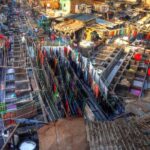
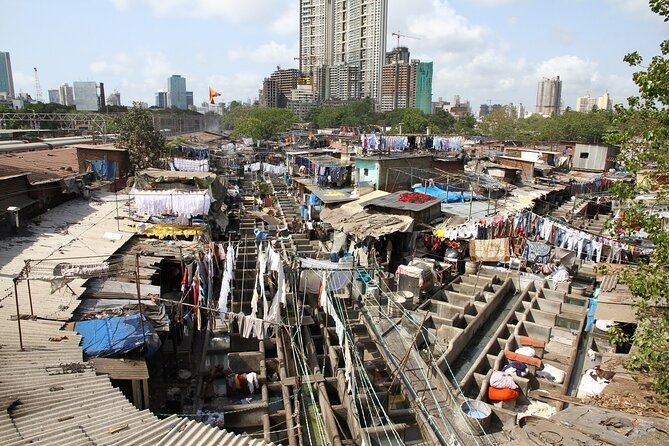
Dhobi Ghat is one of the stops that makes this tour feel uniquely Mumbai. It’s an open-air laundromat where hundreds of washermen—dhobis—wash, dry, and iron clothes for the city. The scale is the big takeaway: this isn’t one little side attraction. It’s a working service that touches a lot of people.
You’ll usually get about 20 minutes here. That’s long enough to watch the process and notice details, like how the work is organized and how the spaces function. If you’ve only ever seen laundry machines in private homes, this is the kind of contrast that sticks.
Because this is a working area, you’ll want to be respectful. Keep your voice down, and follow your guide’s lead on where to stand and how to observe.
Oval Maidan and the colonial civic core: wide space, big institutions
Oval Maidan is a large open space in the heart of Mumbai. It’s a pause from tight streets, and it’s also a way to see how the city breathes in public areas. Think of it as a “reset stop” where you can refocus before the architecture cluster.
From there, the itinerary pushes into major civic and educational landmarks, including:
- The Parliament House (Maharashtra State Assembly)
- University of Mumbai’s main historic building
- Rajabai Clock Tower
- Bombay High Court
- The UNESCO-listed Victorian Gothic and Art Deco ensembles of Mumbai
This section is where you get the “why Mumbai looks the way it looks” part of the trip. The buildings you see here are not just pretty facades. They mark how power, law, learning, and urban planning were expressed through design during the British era.
One practical consideration: this is a lot of “look and listen” in a short time. If your attention wanders, you’ll miss the connections. Ask your guide questions while you’re walking between stops. That’s where the stories become useful.
Marine Drive to Chowpatty: the sea-front that anchors the postcard view
Marine Drive is a promenade along the Arabian Sea coastline. It’s one of the classic Mumbai views, lined with palm trees and art deco buildings. The itinerary includes a short time here, which works because it’s the kind of place where even 10 minutes can refresh your whole brain.
Then you’ll head toward Girgaon Chowpatty, a popular beach area. It’s a good stop for atmosphere: you’ll see a different side of the city that feels more open and more social than the civic lanes inland.
If you’re traveling with limited time, this stretch is a smart use of it. It gives you:
- scenery,
- city pulse,
- and a break from heavy landmarks.
Malabar Hill and the marble-and-mirrors side of Mumbai
As the route rises toward Malabar Hill, the vibe shifts. This is an upscale residential area known for sea views, and the stops reflect that contrast.
The itinerary mentions Raj Bhavan (the Governor’s House) and the Jain Temple, known for its marble construction and intricate carving details. Even if you’re not a big temple person, this is one of those moments where craftsmanship becomes the main “sight.”
Then the day continues with parks and viewpoints:
- Hanging Gardens (Pherozeshah Mehta Gardens)
- Kamala Nehru Park
These are short stops, but they’re valuable because they add greenery and open-air sightlines to balance out the architecture and city infrastructure you’ve been seeing.
Tower of Silence and Mani Bhavan: belief, memory, and a human-sized museum stop
The Tower of Silence is a unique structure associated with the Parsi community, used for disposal of their dead per the tradition. Seeing it in person changes how you think about “heritage sites.” This isn’t just a monument. It’s tied to cultural practice.
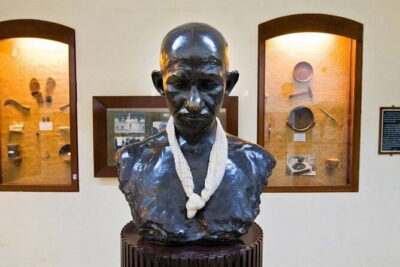
From there, you’ll visit Mani Bhavan Gandhi Museum. The itinerary lists admission ticket included here, and it’s typically around 30 minutes. This stop works because it gives you a person-centered view of history, not only buildings. Gandhi lived here from 1917 to 1934, and the museum is dedicated to his life and work.
If you’re trying to understand Mumbai’s role in India’s broader story, Mani Bhavan is a strong counterweight to the colonial architecture earlier in the day. Together, they show two different “forces” shaping the city: empire and independence.
CSMT and the Municipal Corporation: stations and government buildings that move the city
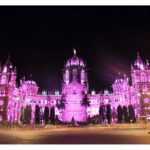
Chatrapati Shivaji Maharaj Terminus (CSMT)—formerly Victoria Terminus—is one of the city’s most important railway landmarks. Built in 1887 to commemorate Queen Victoria’s Golden Jubilee, it’s a historic station that still functions as a living part of Mumbai today.
Expect about 20 minutes. You’ll get the scale and the design, plus the sense that Mumbai never pauses. A station like this isn’t a backdrop; it’s an engine.
The route also includes the Brihanmumbai Municipal Corporation building (BMC Building), built in 1884 and serving as the headquarters of the Bombay municipal corporation at the time. It’s a short look—about 10 minutes—but it helps complete the civic picture you started at Oval Maidan.
Crawford Market: last stop energy before you head back
Crawford Market is a historic marketplace built in 1869. It’s named after Arthur Crawford, the first Municipal Commissioner of Mumbai. In a half-day tour, this is a perfect finale because it’s direct and active: you’ll see daily commerce in the open.
The stop is listed around 30 minutes, so it’s more than a quick “photo stop.” It’s enough time to browse the streetside vibe and soak in the human side of the city’s economy.
A practical note from the experience notes: water may be provided on this kind of day. Either way, come prepared to stay hydrated, especially if you’re visiting in the hotter parts of the year.
How to get the most out of a short private day
Here’s how to make this half-day feel like a win instead of a blur.
Ask for priorities at the start. The tour is private, and guides like Yash and Priti have been praised for adjusting plans to match what the group wants within the time limit.
Be ready for photos, but don’t rush the stories. The itinerary has many fast transitions. If you want good pictures, your guide can help you time it. If you want better understanding, listen at the stops where context matters most, like Afghan Church, Rajabai Clock Tower, and Mani Bhavan.
Dress for heat and standing. You’ll spend time outdoors—Gateway waterfront, Dhobi Ghat, promenade areas, parks, and market streets. Comfortable shoes and light layers matter.
Take it as a highlight map, not a full encyclopedia. A 4–6 hour route can’t turn Mumbai into a textbook. What it can do is show you where to return later, and this route gives you plenty of “return anchors.”
Should you book this private Mumbai half-day?
If you’re short on time and want the recognizable Mumbai hits plus real working-city contrasts, I’d book it. The biggest strengths are practical: private A/C transport with Wi‑Fi, free or low-ticket stops built into the route, and a guide-led approach that helps you understand what you’re seeing. People also highlight the English communication and the smoothness of the team, with guides such as Priti, Sharon, Yash, Ravi, Javed, Chirag, and Subhan paired with professional drivers like Deepak, Dipak, Wasim, Santosh, Mahesh, and Pranav.
I would think twice only if you’re the type who hates riding in a vehicle for long stretches or you’re arriving during a time window where you expect major delays. Mumbai can throw curveballs, and this route still depends on being able to move between areas.
If that sounds manageable, this is one of the best ways to get your bearings in Mumbai without losing your whole day to logistics.
FAQ
How long is the private half-day sightseeing tour in Mumbai?
It runs about 4 to 6 hours (approx.).
What does the tour cost per person?
The price is listed at $33.48 per person.
Is pickup from my hotel included?
Pickup is offered.
Is this a private tour or a shared group tour?
This is a private tour/activity, so only your group participates.
Do I need to buy tickets for the stops?
Many stops are listed with admission ticket free. Mani Bhavan Gandhi Museum includes an admission ticket.
Is Wi‑Fi included during the tour?
Yes, the vehicle has Wi‑Fi.
What places are included in the itinerary?
The listed stops include Gateway of India, Sassoon Dock, Afghan Church, Dhobi Ghat, Parliament House, Oval Maidan, University of Mumbai and Rajabai Clock Tower, Bombay High Court, UNESCO Victorian Gothic and Art Deco Ensembles, Marine Drive, Girgaon Chowpatty, Malabar Hill areas (including Raj Bhavan and the Jain Temple), Hanging Gardens, Kamala Nehru Park, Tower of Silence, Mani Bhavan Gandhi Museum, Chhatrapati Shivaji Maharaj Terminus (CSMT), BMC Building, and Crawford Market.
Are there different start times to fit my schedule?
Yes, there are numerous tour times.
Are there cruise port options or add-ons?
Cruise port options and additional add-ons are available.
What is the cancellation policy?
Free cancellation is available up to 24 hours in advance for a full refund.