REVIEW · MUMBAI
Dharavi Slum tour in Mumbai by local resident
Book on Viator →Operated by Beautiful Bombay Tours · Bookable on Viator
This is Mumbai at street level. A Dharavi slum tour with a local English-speaking guide takes you through real workplaces and homes in a tight walking route. I like how it focuses on Dharavi factories and workshops, not just photos, and I like that you get clear explanations from someone who lives there.
One consideration: it’s a neighborhood with real work happening, so you should come with respect, not a curiosity that feels like a spectacle.
You’ll spend about 2 to 3 hours inside Dharavi, with the tour ending back near where you start. The route is designed as an easy walk (most travelers can join), and you get an admission ticket included as part of the experience.
In This Review
- Key highlights you should know before you go
- Why Dharavi feels different when you’re guided
- What you’ll see on the walk: factories, recycling, soap, and more
- Commercial versus residential Dharavi: seeing the mix, not just the headline
- Meeting point at Third Wave Coffee in Mahim: how the start works
- Price and value: why $4.46 feels unusually fair
- Your local English-speaking guide: how the tour stays understandable
- Group size and what it means for your comfort
- Practical expectations: timing, duration, and the walking pace
- Respect makes the difference in Dharavi
- Who should book this Dharavi slum tour
- Quick note on the operator
- Should you book this Dharavi slum tour?
- FAQ
- How long is the Dharavi slum tour in Mumbai?
- Where does the tour start from?
- Does pickup come with the tour?
- What’s included with the tour?
- Is this tour only for certain people, or can most travelers join?
- How big are the groups?
- What if I need to cancel?
Key highlights you should know before you go
- Local resident guide, English-speaking: You’ll hear what things are, how work happens, and why it matters.
- More than one side of Dharavi: You’re shown both commercial areas and residential areas during the same visit.
- Workshop route inside the slum: You can expect stops that include plastic recycling and small production like soap and plastic bag making.
- Leather drying area in the mix: The itinerary includes a phase of processing where you’ll see how materials are handled.
- No-pressure shopping stop: There’s a shop component for items made in Dharavi, and you’re not forced into buying.
- Good value for the time: At about $4.46 per person with a 2–3 hour walk and admission included, the math is hard to beat.
Why Dharavi feels different when you’re guided
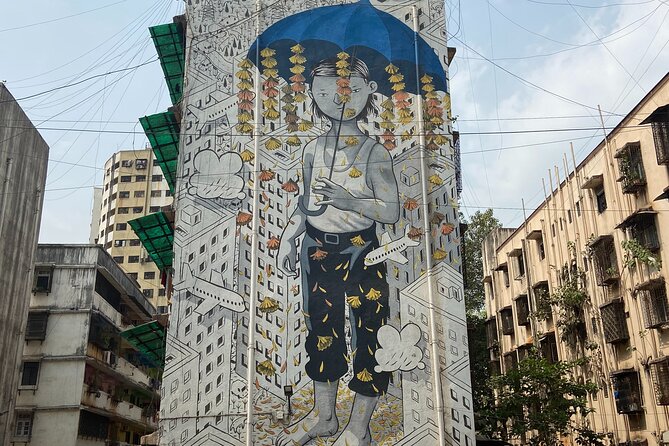
Dharavi is the kind of place people talk about from a distance. Getting up close is another story. With a local guide, the same streets turn into a map of jobs, routines, and community life.
I love that this tour is built around understanding work. Instead of treating Dharavi as a single view, you get a sequence of different activities, from recycling to small-scale production. That structure helps you connect what you’re seeing to how families earn money day to day.
There’s also a practical advantage: you don’t have to figure out where to go or what you’re looking at. The guide’s job is to translate the everyday into something you can actually follow, with the right context and pacing.
You can also read our reviews of more tours and experiences in Mumbai.

What you’ll see on the walk: factories, recycling, soap, and more
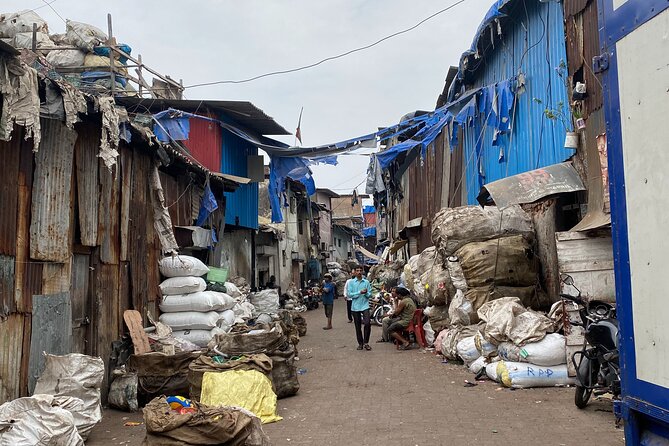
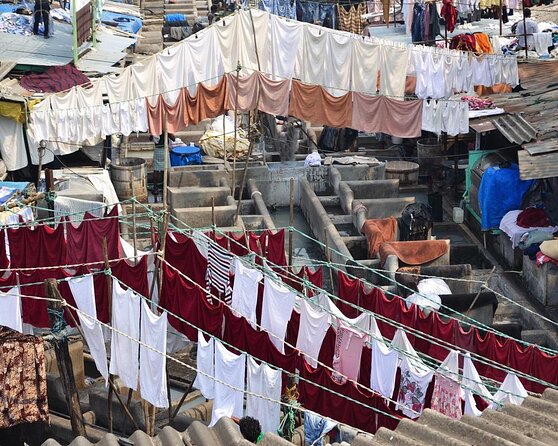
The tour’s core is a walking experience through Dharavi, with access to workshop areas that outsiders usually can’t interpret on their own. You’re not stuck behind a fence or stuck with a single viewpoint. You move through different working zones that show how items get made and handled.
Here’s the kind of route you can expect inside Dharavi:
- Plastic recycling area: This is where the process starts. You get to see how plastics are collected, sorted, and turned into usable inputs for other production.
- A walk through narrow lanes: The route includes a passage through smaller alleys, which helps you understand how closely homes and businesses share space.
- Soap and plastic bag production: You’ll see stages of making everyday goods, including soap and plastic bag work. This is the part that makes Dharavi’s reputation feel real, not abstract.
- Leather drying area: Another working zone is included, where processed materials are dried. It’s a very different visual scene from plastic recycling.
- A shop selling items made in Dharavi: You end with a place where products are displayed for sale, with no push to buy.
The big win here is variety. A one-stop visit can turn into a blur. This route gives you multiple angles on how a large informal economy functions on foot.
Commercial versus residential Dharavi: seeing the mix, not just the headline
One reason this tour works is that you don’t only view the business side. The experience is designed to show both the commercial and residential areas of Dharavi. That split matters, because Dharavi is not just industry; it’s also where families live their daily lives.
In practice, this means your walk tends to shift from workshop activity to more home-adjacent scenes. It helps you spot the overlaps: work happening near living space, and routines shaped around the rhythms of neighborhood life.
A useful way to approach it: watch for how people move through the space. In a guided visit, you can ask questions and notice details you’d otherwise miss, like how commerce and home life sit side by side without being fully separated.
Meeting point at Third Wave Coffee in Mahim: how the start works
You’ll meet at a clear landmark: Third Wave Coffee, Tip Road, Unit no. 58, Ground, Ram Mahal, Senapati Bapat Marg, Marinagar Colony, Station, Mahim, Mumbai, Maharashtra 400016, India. The tour ends back at the meeting point, so you’re not trying to navigate out at the end while tired.
Pickup is offered, which is helpful if you don’t want to rely on finding your own way to the meeting spot. Even if you take pickup, it still helps to know where you’re headed, so you can compare what you see in the area to the address on your confirmation.
Also, the area is listed as near public transportation, so if you’re traveling by rail or bus, you should be able to get close without too much hassle.
Price and value: why $4.46 feels unusually fair
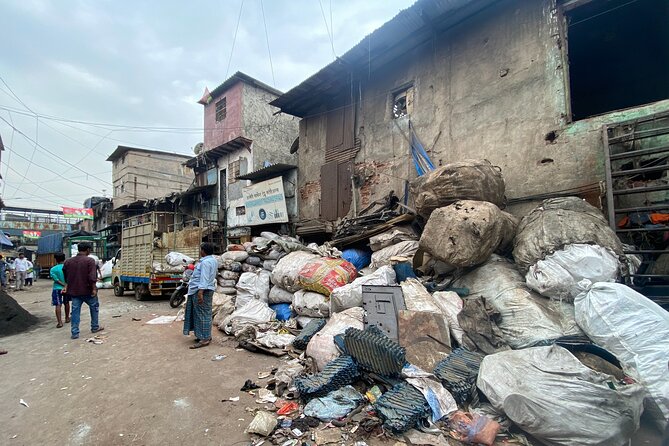
At about $4.46 per person, this tour sits in the budget-friendly zone for a guided neighborhood walk. You’re paying for a local guide, access to workshop areas, and an admission ticket included in the experience.
The best value part isn’t just the low price. It’s the structure: 2 to 3 hours of guided walking with multiple working zones covered in one go. If you were to pay separately for guide time plus transport plus entry fees, you’d likely spend more.
There’s also a sign this isn’t a niche product. It has 10+ bookings in the last month and a very high overall recommendation rate. Popularity isn’t proof of quality by itself, but it does suggest the experience is operating often enough to have a stable routine.




Your local English-speaking guide: how the tour stays understandable
This is a guided tour, and the guide’s role is central. You’re promised a local English-speaking tour guide, and the experience is built around explaining what you’re seeing rather than sending you off with vague directions.
From the way the tour is described, the guide helps connect the dots across several industries. That shows up in the types of stops: recycling, soap and plastic bag production, and leather drying. Each one has its own process, and you’ll get more from the walk if someone narrates it in simple terms.
Another thing I appreciate is the tone. The shop stop is presented as a chance to see what’s made, not a hard sell. That makes it easier to stay focused on the experience instead of negotiating sales pressure.
Group size and what it means for your comfort
The tour has a maximum group size of 99 travelers. That’s a wide cap, so your real experience could feel smaller or larger depending on the day.
If you’re someone who likes quieter walks and lots of personal space, you’ll want to mentally prepare that you may be in a crowd. If you’d rather get a solid, structured overview quickly, larger groups usually don’t hurt you as much, because the route and narration do the heavy lifting.
A practical tip: bring patience. Dharavi is active and working. Even with a guide, movement can slow when people stop for explanations or when a workshop area needs everyone to move carefully.
Practical expectations: timing, duration, and the walking pace
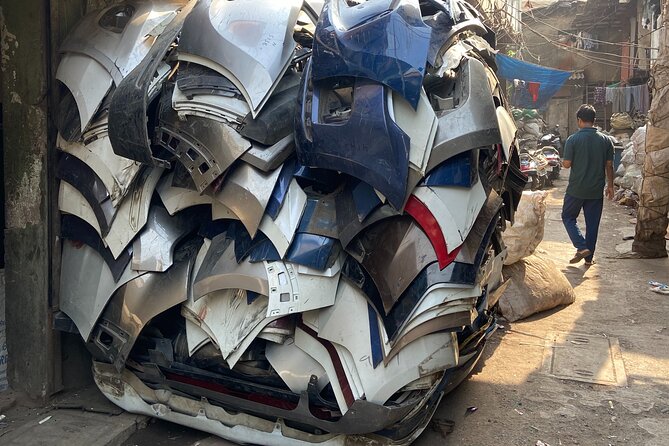
The tour runs about 2 to 3 hours. Plan for comfortable shoes and a pace that stays walkable. Since it’s a neighborhood tour with active industries, you shouldn’t expect a sit-down rhythm like a museum visit.
You also get a mobile ticket, and confirmation is received at the time of booking. That helps you reduce time spent sorting details on the day.
And yes, this is listed as a tour where most travelers can participate. Service animals are allowed as well, which is worth noting if that applies to you.
Respect makes the difference in Dharavi
This is the part people often forget: a slum tour can go wrong fast if the visitors treat it like a theme park. The best way to get the real value is to act like you’re entering someone’s workplace and neighborhood.
I suggest you keep these basics in mind:
- Ask questions, but don’t demand personal stories.
- Notice when people are working and keep your pace steady.
- Treat the shop portion like a cultural stop, not a sales hunt.
Because the itinerary includes factories and residential-adjacent areas, your behavior shapes the whole tone of the walk. A respectful attitude helps the guide do their job better, too.
Who should book this Dharavi slum tour
This tour is a strong fit if you want:
- A structured introduction to Dharavi through a local guide
- A walk that covers multiple workshop activities, not a single viewpoint
- A chance to understand how everyday production and community life share the same spaces
It’s also a good choice if you’re short on time in Mumbai and want an overview that’s only a couple of hours long. If you’re hoping for a purely scenic or photo-only experience, this one is more about processes and people’s work than about views.
Quick note on the operator
The experience provider is Beautiful Bombay Tours. Knowing the operator name matters because it helps you confirm you’re booking the right Dharavi walk and not a similarly titled option.
Should you book this Dharavi slum tour?
Yes, if you’re going with the right mindset: curiosity plus respect. The value is excellent for the price, and the route makes Dharavi easier to understand because it includes several types of workshop activity like plastic recycling, soap and plastic bag production, and a leather drying area.
Skip it only if you want a passive, purely comfortable sightseeing day. This is a working neighborhood visit, so you should expect walking, real-life context, and an experience that’s more about how Dharavi functions than about polished attractions.
FAQ
How long is the Dharavi slum tour in Mumbai?
The tour duration is listed as approximately 2 to 3 hours.
Where does the tour start from?
The meeting point is Third Wave Coffee, Tip Road, Unit no. 58, Ground, Ram Mahal, Senapati Bapat Marg, Marinagar Colony, Station, Mahim, Mumbai, Maharashtra 400016, India.
Does pickup come with the tour?
Pickup is offered.
What’s included with the tour?
An admission ticket is included in the experience.
Is this tour only for certain people, or can most travelers join?
Most travelers can participate.
How big are the groups?
The tour has a maximum of 99 travelers.
What if I need to cancel?
Free cancellation is available. You can cancel up to 24 hours in advance for a full refund.