REVIEW · MUMBAI
Dharavi Stories Unfold
Book on Viator →Operated by Mumbaiwanderstour · Bookable on Viator
Dharavi surprises people fast. This short group tour takes you into Mumbai’s working-class neighborhood, where small industries shape daily life in just 2.1 square kilometers and over a million residents make it run. I love how the tour uses an English-speaking guide to translate what you see into something you can actually understand on the spot.
I also like the value. At about $9.06 per person, you’re getting a real guided format (not just “show up and walk around”) plus a small group cap of up to 20 people, which keeps the pace manageable in a place that doesn’t slow down for tourists.
One consideration: the experience depends on good weather and notes a moderate physical fitness level. If you’re sensitive to heat, crowds, or uneven walking, plan accordingly.
In This Review
- Key things I’d mark on your mental map
- Dharavi Stories Unfold: what you’re really signing up for
- Entering Dharavi with an English-speaking guide (and why it changes everything)
- A 2 to 3 hour group visit: how to plan your day
- What you’ll see: industries, jobs, and the “work first” reality
- The one-stop itinerary: what “Stop 1: Dharavi” feels like in practice
- Meeting in Mahim at Third Wave Coffee: logistics that keep you sane
- Price and value: why about $9.06 can feel like a bargain
- Who this tour is best for (and who should think twice)
- When weather can make or break your plans
- Optional add-ons: how to avoid paying twice
- So, should you book Dharavi Stories Unfold?
- FAQ
- How long is the Dharavi group tour?
- Where does the tour start?
- Does the tour include an admission ticket?
- Is there an English-speaking guide?
- Is bottled water provided?
- How large is the group?
- Is the tour near public transportation?
- What fitness level do I need?
- What happens if the weather is bad?
- Can I cancel and get a full refund?
- One last decision helper
Key things I’d mark on your mental map
- English-speaking guides with standout personalities like Sam, Max, Sarfaraz Ali, Rohan, and Ali
- A tight group size (up to 20 people) that makes questions feel welcome
- A focus on work—pottery, leather, and recycling—so you see the economy, not just the buildings
- A short, practical 2 to 3 hour format with bottled water included
- A clear start point at Third Wave Coffee in Mahim, with the tour ending back there
Dharavi Stories Unfold: what you’re really signing up for
Dharavi is famous for one reason, then it’s famous for another. First came the worldwide attention after Slumdog Millionaire in 2008. But the longer truth is way more local: Dharavi is a working neighborhood with real industries, real trade, and real livelihoods.
This tour is built around that difference. You’re not just looking at hardship. You’re watching how people organize work and support each other in a dense area where space is tight and solutions have to be practical. The goal is to help you connect the dots between what you see on the ground and why so many small businesses thrive there.
It’s also why the tour’s format matters. Dharavi can look chaotic from the outside. A guided group walk gives you structure—what to look for, what questions to ask, and how to interpret what you’re seeing without turning it into a sideshow.
You can also read our reviews of more tours and experiences in Mumbai.


Entering Dharavi with an English-speaking guide (and why it changes everything)
A slum tour can go two ways. One is quick and superficial: you get photo spots and a few facts that don’t stick. The other is conversation-driven: you leave with a clearer sense of daily life and how the place functions.
This tour leans toward the second style. The experience includes an English-speaking tour guide, and the names that keep coming up in the feedback—Sam, Max, Sarfaraz Ali, Rohan, and Ali—suggest that different guides still share one pattern: they explain things in a way that feels respectful and grounded.
Here’s why that matters for you. Dharavi isn’t an “attraction” in the normal sense. It’s people’s home and workplace. When a guide can translate what you’re seeing—how industries work, how the neighborhood supports routines, what the spaces are used for—you’re less likely to leave with stereotypes and more likely to leave with understanding.
One more small plus: bottled water is included. It sounds basic, but in a short Mumbai outing it helps you stay comfortable enough to pay attention.
A 2 to 3 hour group visit: how to plan your day
The tour runs about 2 to 3 hours (the planned stop time is listed as 3 hours). That’s a sweet spot. Long enough to feel like you actually traveled “into” the neighborhood, not just passed it. Short enough that you won’t feel trapped all afternoon if your Mumbai schedule is tight.
Group size is capped at 20 people, which is huge for comfort. In places this dense, bigger groups can turn into a slow-moving line. A smaller group helps you keep up, hear explanations, and get your bearings faster—especially if this is your first time in Dharavi.
Timing-wise, you should build in buffer. The tour notes good weather is important. If rain or poor conditions hit, you may be offered a different date or a refund. So when you book, it’s smart to avoid locking yourself into another rigid plan right after the tour.
What you’ll see: industries, jobs, and the “work first” reality
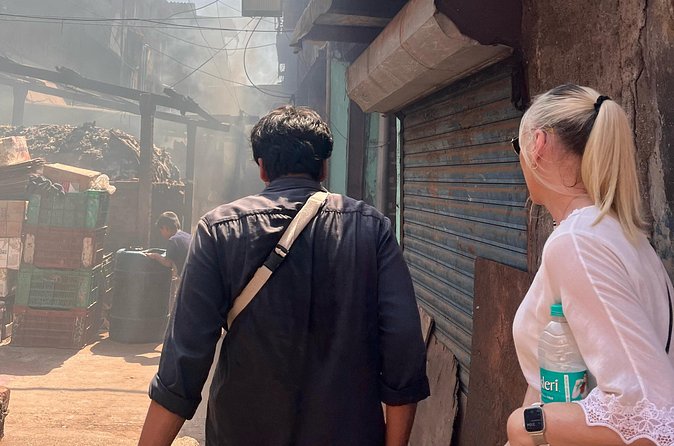
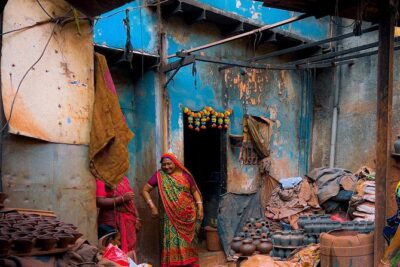
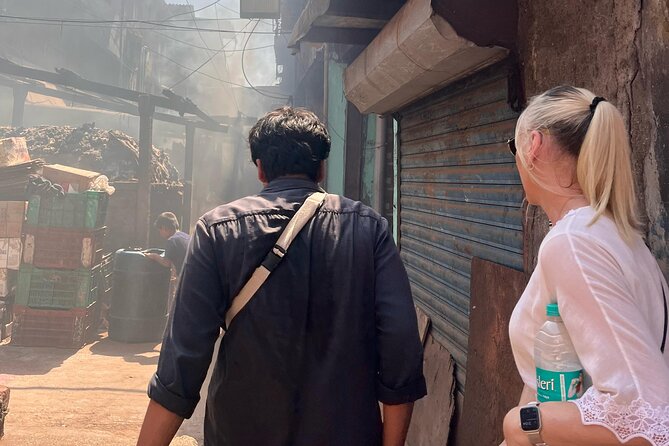
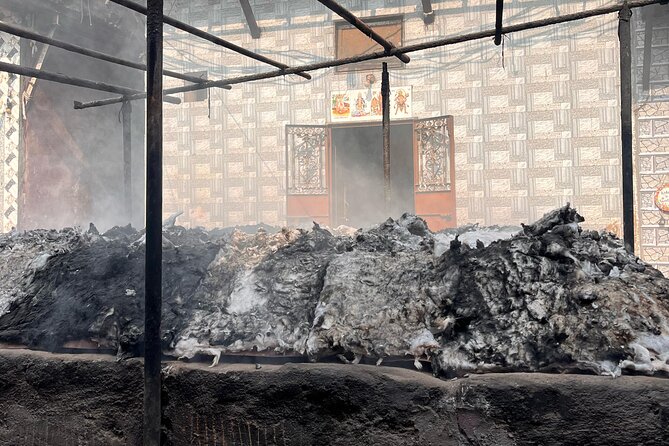
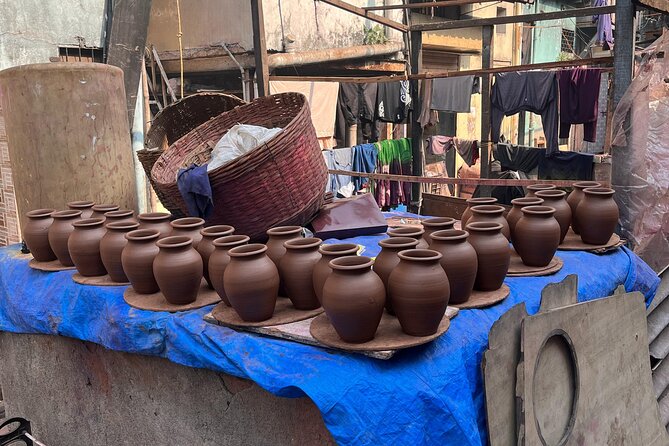
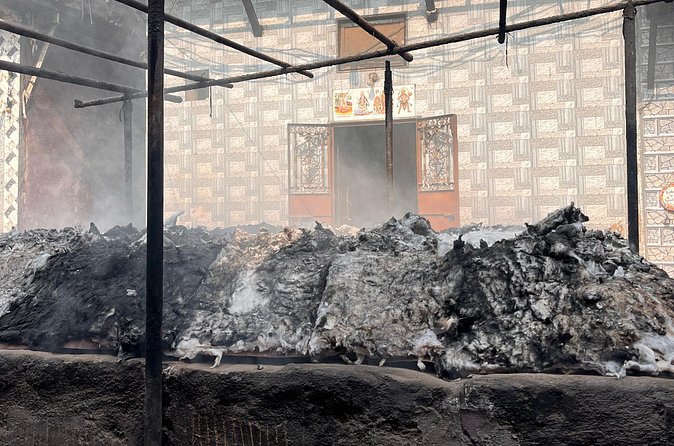
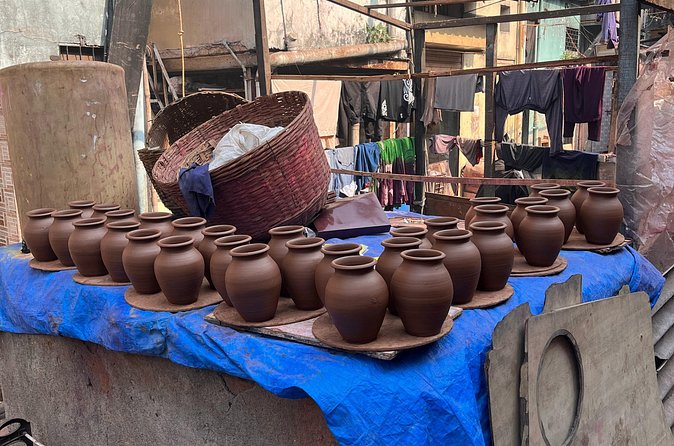
The tour’s learning center is practical: the neighborhood’s small-scale industries. You’ll hear about work such as pottery, leather, and recycling—the kinds of trades that keep goods moving and support local economies.
This is the part I’d treat as the main course. If you only expect to see housing conditions, you can miss the point. In Dharavi, the economy is part of the story. People build systems where raw materials turn into products and byproducts become value.
Also, the tour description frames Dharavi as a place with resilience and enterprise. That doesn’t mean it’s simple or easy. It means people solve problems every day. When you connect that to what you’re shown—workspaces, production-linked routines, and neighborhood flow—you get a fuller picture than you would from a quick overview.
And yes, this is exactly why a guided visit helps. Without context, you might see workshops or materials and wonder what you’re looking at. With a guide, those same details become readable.
The one-stop itinerary: what “Stop 1: Dharavi” feels like in practice
This experience is built around one main destination: Dharavi. So you’re not hopping between multiple areas to “cover more.” Instead, you spend your time moving through and learning in one place.
That one-stop focus tends to work well for two reasons:
First, you get continuity. Explanations don’t reset every few minutes. Your guide can build a storyline: how work happens, how spaces get used, how the neighborhood supports daily life.
Second, it reduces your stress. You’re not juggling transfers or trying to find a dozen landmarks. The tour ends back at the meeting point, which also makes it easier to plan what comes next.
The downside is also simple: if you were hoping to see a wide variety of neighborhoods or famous landmarks, this won’t be that kind of tour. It’s purpose-built for Dharavi itself.




Meeting in Mahim at Third Wave Coffee: logistics that keep you sane
The tour starts at Third Wave Coffee on Tip Road, Unit no. 58, Ground floor, Ram Mahal, Senapati Bapat Marg, Marinagar Colony, Mahim, Mumbai, Maharashtra 400016, India. It also ends back at the same meeting point.
That matters more than you’d think. Clear start and finish points reduce the risk of losing time, especially on a first visit to Mumbai. The tour notes it’s near public transportation too, which helps if you’re combining it with other plans.
If you’re arriving from another part of the city, give yourself extra time. Mumbai timing can be unpredictable, and a slum tour is not the moment to sprint through your itinerary.
Price and value: why about $9.06 can feel like a bargain
At $9.06 per person, this is priced to be accessible. The value isn’t just the number—it’s what’s included: an English-speaking guide, bottled water, and an admission ticket.
The “admission ticket included” detail is useful because it signals this isn’t only a stroll with a person talking. There’s a formal component baked into the experience.
Of course, value always has a catch. In this case, the tradeoff is that the tour is time-limited (2 to 3 hours). So you won’t see everything in Dharavi. You’ll see what fits into a guided route with explanation, and you’ll learn the priorities your guide chooses.
If you want the most value, go in with the right mindset:
- Ask questions when your guide offers openings.
- Pay attention to the work side—industries and day-to-day routines.
- Keep expectations realistic: it’s a neighborhood, not a museum.
Also note that there can be group discounts and you’ll use a mobile ticket. If you’re booking as a group, check pricing carefully at checkout.
Who this tour is best for (and who should think twice)
This is a great fit if you:
- Want a guided view of Dharavi that focuses on work and community, not sensational shock
- Like a short, focused outing instead of an all-day production
- Prefer a small group setting (up to 20 people)
- Appreciate guides who can explain what you’re seeing in plain English
It may be less ideal if you:
- Struggle with moderate walking or crowded, dense spaces
- Get uncomfortable in settings where people’s homes and workplaces overlap
- Want a classic sightseeing checklist with major monuments
One more thing. A slum tour can be emotionally intense. The best guides in the feedback—Sam, Max, Sarfaraz Ali, Rohan, and Ali—come across as friendly and respectful, which is exactly what you want. Still, it’s smart to mentally prepare for a shift in perspective.
When weather can make or break your plans
This experience depends on good weather. That means if rain or poor conditions show up, you may be offered a different date or a full refund.
Practically, plan for flexibility. If your trip days are locked down with no wiggle room, check the weather forecast closer to your booking date and keep one “buffer” slot in your schedule.
Optional add-ons: how to avoid paying twice
During checkout, optional add-ons are available. Since the details of those add-ons aren’t specified here, I’d treat this like any other travel purchase: skim carefully before you confirm.
If an add-on covers something you already planned to do anyway (transport, extra time, or another activity), you might be able to bundle and save effort. If it doesn’t, skip it and keep your budget simple.
So, should you book Dharavi Stories Unfold?
I’d book it if you want one of the more straightforward ways to understand Dharavi through a guided lens: English explanation, small group size, and a clear focus on how industries shape life in the neighborhood. The low price makes it easy to justify, and the guide quality is clearly a big part of what makes it work—names like Sam, Max, Sarfaraz Ali, Rohan, and Ali keep showing up for a reason.
Skip it only if you know you can’t handle moderate physical effort or you’re allergic to the idea that this is a real place where people live and work. If that’s you, you’ll be better off choosing a different kind of Mumbai tour.
If you do book, go with curiosity and respect. Ask questions. And try to remember: the point isn’t just what Dharavi looks like—it’s how it works.
FAQ
How long is the Dharavi group tour?
It runs about 2 to 3 hours.
Where does the tour start?
The start point is Third Wave Coffee, Tip Road, Unit no. 58, Ground, Ram Mahal, Senapati Bapat Marg, Marinagar Colony, Station, Mahim, Mumbai, Maharashtra 400016, India.
Does the tour include an admission ticket?
Yes, an admission ticket is included.
Is there an English-speaking guide?
Yes. The tour includes an English speaking tour guide.
Is bottled water provided?
Yes, bottled water is included.
How large is the group?
The tour has a maximum of 20 people.
Is the tour near public transportation?
Yes, it’s noted as near public transportation.
What fitness level do I need?
The tour notes a moderate physical fitness level.
What happens if the weather is bad?
The experience requires good weather. If it’s canceled due to poor weather, you’ll be offered a different date or a full refund.
Can I cancel and get a full refund?
Yes. Free cancellation is available up to 24 hours in advance for a full refund.
One last decision helper
If you’re looking for a short, guided, English-first way to understand Dharavi’s industries and daily life, this is a strong pick. If you want a quick photo stop or a low-contact, “museum-style” experience, you may not get what you’re expecting.