REVIEW · MUMBAI
Explore the New colorful places in Mumbai Market Tour
Book on Viator →Operated by Mumbai Dream Tours · Bookable on Viator
Color and chaos meet religion in South Mumbai. On this guided walk through historic South Mumbai markets, you pass colonial façades, temples, and mosques while vendors call out everything from scented candles to spicy snacks and bright flowers. It is the kind of place where your senses do half the sightseeing.
I love Crawford Market for the variety, from scented candles and exotic fruit to cake-mold curios and party-wear accessories. I also love the small-group feel, which keeps you moving through narrow lanes without feeling lost, especially with guides such as Akash, Sanika, Arjun, Siddhi Gunjal, and Rakesh.
One consideration: drinks aren’t included, so plan for water if it is hot. And since you are walking through working markets, some alleys can feel crowded and tight.
In This Review
- Quick hits on this New colorful places in Mumbai market tour
- Getting started at the Fort McDonald’s meeting point
- Crawford Market: where shopping smells, sweets, and accessories
- Mangaldas Market: cloth and fabric shopping in the lanes
- Spice market: smell-first shopping that teaches you fast
- Jewelry and flower markets: color, craft, and quick choices
- Jama Masjid and Mumba Devi Temple: religion beside everyday trade
- Cow shelter stop: a small break with big meaning
- How long is the walk, and how hard is it?
- What you get for the price (and why it feels fair)
- Getting the most from your guide’s storytelling
- Who this South Mumbai market tour suits best
- Should you book this Mumbai market tour?
- FAQ
- How long is the Mumbai Market Tour?
- What places are included in the route?
- Is admission included?
- Do I receive a mobile ticket?
- Where do we meet and where does the tour end?
- Are drinks included in the price?
- What is the maximum group size?
- Can I cancel for a full refund?
Quick hits on this New colorful places in Mumbai market tour
- 3 hours on foot in South Mumbai covering multiple market streets and set-pieces
- Crawford Market focus for shopping-style stops (candles, fruit, party wear, accessories)
- Textiles, spices, jewelry, and flowers in one route, so you get variety without extra planning
- Landmark religious stops including Jama Masjid and Mumba Devi Temple
- Cow shelter stop for a side of Mumbai you might not find on your own
Getting started at the Fort McDonald’s meeting point
This tour starts at a very specific place: the McDonald’s at No 134 to 136, Empire Building, Dr Dadabhai Naoroji Rd, Azad Maidan, Fort. That sounds oddly exact because it is meant to be, and it helps when you are trying to meet your guide amid a busy neighborhood.
You end back at the same meeting point. That matters because you are not left figuring out the last mile after a hot walk.
One practical tip: have a phone number that can receive messages. In at least one experience, the guide used WhatsApp-style contact to share the guide’s name and face before you met.
You can also read our reviews of more shopping tours in Mumbai

Crawford Market: where shopping smells, sweets, and accessories
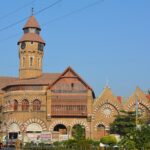
Crawford Market is the first big energy hit, and it is easy to see why it anchors the whole walk. You get that classic South Mumbai mix: stalls and counter displays that push strong scents, sweet items, and everyday goods side-by-side.
Think of scented candles, exotic fruits, and the kind of oddly specific items you would never shop for at home—like cake molds or party-wear accessories. If you like looking, comparing, and learning what different items are used for, this stop is a great first foundation.
What I like about starting here is that it sets a shopping rhythm for the rest of the tour. You go from one lane to the next with a clearer sense of what you are seeing, and your guide can explain what each market segment is known for.
Mangaldas Market: cloth and fabric shopping in the lanes
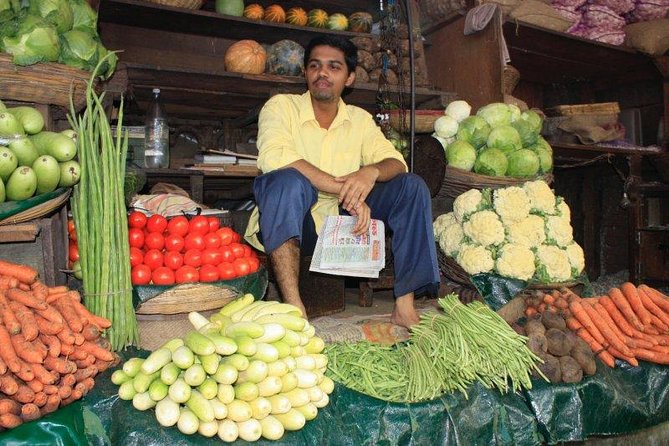
After Crawford Market, the route shifts toward Mangaldas Market, the cloth and fabric zone that pulls you into a different texture of trading. Here, the focus is less on quick snacks and more on materials—fabric options, rolls, and the whole ecosystem of textile commerce.
Even if you do not plan to buy, Mangaldas is valuable because it shows how Mumbai’s markets work as systems. Cloth is not just a product; it is tied to tailoring, gifting, and everyday wear.
A drawback to keep in mind: textile lanes can be busy, and it helps to stay patient if you want to see details rather than just pass through.
Spice market: smell-first shopping that teaches you fast

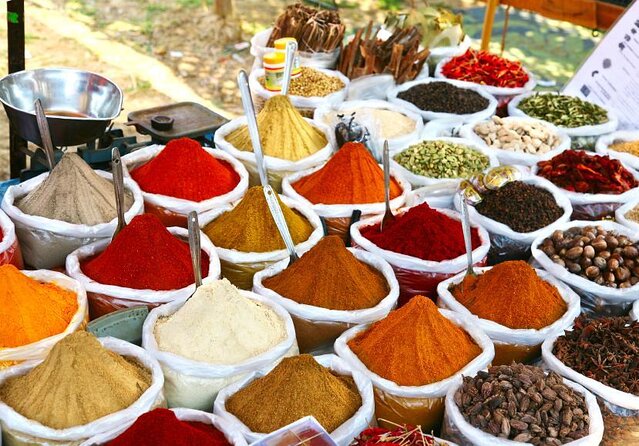
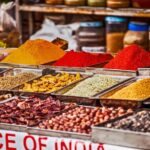
Next comes the spice market, where the tour becomes a sensory classroom. You will be surrounded by colors, aromas, and the practical reality of how spices are traded and sold in South Mumbai.
This stop is especially good for first-timers because it does more than show you jars. It helps you connect spice types with common uses and local tastes—how people buy, how they store, and how vendors present products.
If you love food, keep an eye out for how spices are packaged and displayed. You will start to notice categories quickly, and that makes the rest of your market wandering more confident.
Jewelry and flower markets: color, craft, and quick choices
After spices, the tour steps into two markets that work well together: jewelry and flowers.
The jewelry stop is where you see the craft side of commerce. Even when you do not buy, it is useful for understanding how artisans and vendors present items—what is showcased, what is arranged, and how buyers approach selection.
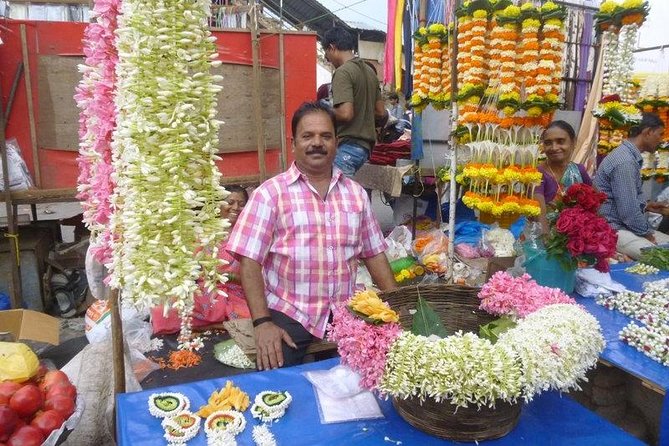
Then the route moves to the flower market, where color takes over. Flowers in Mumbai markets are not just decoration; they connect to daily life and religious occasions. Seeing flowers in a working market context makes that connection feel real.
These two stops are also good for photos, but do not treat them like a museum. Vendors, shoppers, and delivery routines are part of what you are photographing, so keep your pace respectful.
You can also read our reviews of more tours and experiences in Mumbai



Jama Masjid and Mumba Devi Temple: religion beside everyday trade
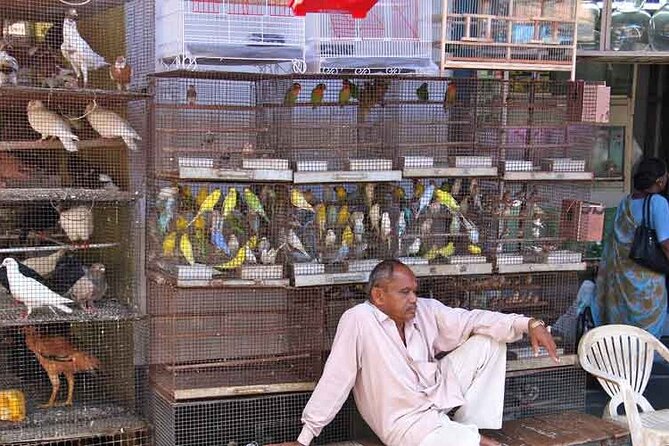
One of the strongest reasons to take this walking tour is that it places religious landmarks right inside the market world. You are not sightseeing from a distance; you are moving through the same neighborhoods where people shop, pray, and pass the time.
The tour includes Jama Masjid, described as the oldest Muslim community stop on the route, and you also visit Mumba Devi Temple. Add in pauses around Madhav Baugh and you start to feel how these sites act like anchors inside the city’s street life.
What I like here is the balance. Markets can feel like a pure shopping show, but the inclusion of temples and mosques gives you context for why people gather where they do. It also breaks up the shopping intensity with something calmer.
A consideration: religious spaces can mean slower moments, and you should expect respectful behavior and some attention to how you move through crowds.
Cow shelter stop: a small break with big meaning
You also make time for a cow shelter stop. This is one of those stops that tends to stick with people because it is so different from the rest of the market-shopping flow.
In experiences of this tour, the cow shelter visit has been highlighted as informative and memorable—less about products, more about how the city cares for animals and how that care fits into daily neighborhood life.
If you are the kind of traveler who wants a human-scale Mumbai detail, this is one of the best parts to lean into. Even if you only spend a short time there, it changes the tone of the walk.
How long is the walk, and how hard is it?
The tour runs about 3 hours, and it is a walking format through South Mumbai markets and lanes. That sounds simple, but market walking has its own stamina rules: stop-and-look time, crowd shifts, and narrow streets where you have to slow down.
Group size is capped at 15 travelers, which helps because you are not being dragged through shops in a huge crowd. It also makes it easier for your guide to keep everyone together around junctions.
If you get tired easily, pace yourself early. The first hour can feel the busiest because Crawford Market and the cloth lanes pull you in from the start.
What you get for the price (and why it feels fair)
The listed price is $36.24 per person for about 3 hours, including a cultured, professional guide. There is also an important value factor: the route notes admission ticket free.
So you are paying mostly for two things:
- a guided path that links multiple market types together
- local explanations that help you understand what you are seeing
That is the real advantage versus self-wandering. Mumbai’s markets are not hard to find, but it is hard to connect the dots fast. A good guide turns a random walk into a route with meaning.
The only thing not included is drinks. That is normal for city walking tours, but it does mean your budget should include water or a quick refill plan so you do not lose energy mid-walk.
Getting the most from your guide’s storytelling
Guides are the engine of this kind of market tour. In different experiences of the walk, guides such as Akash, Sanika, Arjun, Siddhi Gunjal, and Rakesh have been praised for being friendly and for explaining what each market is known for.
You will get the best value if you treat it like a guided conversation, not a shopping escort. Ask practical questions while you are in the lanes—what is used for, what is seasonal, what you are seeing that is specific to Mumbai, and how locals approach buying.
Also, the small-group size helps here. With fewer people, it is easier to stop and ask without feeling like you are holding up a tour line.
Who this South Mumbai market tour suits best
This is a great fit if you want:
- a first taste of South Mumbai markets without building your own route
- a mix of shopping zones (candles, fruits, textiles, spices, jewelry, flowers) plus landmark stops
- local context that makes the city feel lived-in, not staged
It is also ideal for travelers who like authentic street scenes but still want structure—someone to point out what matters and keep you moving through narrow alleys at a workable pace.
If you are looking for a slow, sit-down tour focused on formal museum time, this one may feel too focused on street-level commerce.
Should you book this Mumbai market tour?
I think you should book it if you want a high-impact South Mumbai experience in 3 hours, with no admission fees and a real local guide leading the way. The mix of Crawford Market, textile and spice lanes, plus Jama Masjid, Mumba Devi Temple, and a cow shelter stop gives you variety without making you run across the city.
Skip it if you are uncomfortable with walking in crowded market areas or you do not want to spend time around active trade. And do not forget the simple practical point: bring or plan water, since drinks are not included.
If that fits your style, this tour is a smart, efficient way to get your bearings and understand how Mumbai’s street markets connect to everyday life.
FAQ
How long is the Mumbai Market Tour?
The tour lasts about 3 hours.
What places are included in the route?
The stops include Crawford Market, Mangaldas Market, a spice market, a jewelry market, a flower market, Jama Masjid, Mumba Devi Temple, Madhav Baugh, and a cow shelter.
Is admission included?
Admission tickets are free for this experience.
Do I receive a mobile ticket?
Yes, the tour includes a mobile ticket.
Where do we meet and where does the tour end?
Meet at McDonald’s, No 134 to 136, Empire Building, Dr Dadabhai Naoroji Rd, Azad Maidan, Fort, Mumbai, and the tour ends back at the meeting point.
Are drinks included in the price?
No, drinks are not included.
What is the maximum group size?
The tour has a maximum of 15 travelers.
Can I cancel for a full refund?
Yes. You can cancel up to 24 hours in advance for a full refund. If you cancel less than 24 hours before the start time, the amount paid is not refunded.