REVIEW · MUMBAI
Mumbai Morning Market Tour of Flowers, Fish, and More
Book on Viator →Operated by Cityscape Mumbai Tours · Bookable on Viator
That first whiff of fish and flowers hits fast. This 3-hour morning route puts you on the working side of Mumbai, when the city is still waking up and a few market areas start closing as soon as the morning goes on. You’ll walk through places most visitors miss, then head to Dhobi Ghat, where thousands of clothes are washed and dried in an open-air system.
I especially like how the tour mixes different senses and industries in one compact loop: sharp fish aromas and chili-coriander smells, then colorful flower stalls, then fresh produce, then laundry operations that run every day. One drawback to plan for: the fish market area can be crowded and you should wear shoes you don’t mind getting wet or getting a little smelly.
In This Review
- Key things I’d circle on your plan
- Why this early-morning Mumbai route feels different
- Sassoon Dock fish market: the morning where everything starts
- Dhobi Ghat: thousands of clothes moving through open air
- Dadar fruit and vegetable market: where breakfast meets business
- Dadar flower market: scent, color, and morning photo light
- The chai break and getting around without stress
- Price and value: what $20.72 buys you here
- Who this tour fits best (and who might skip it)
- Tips to make your morning easier
- Should you book the Mumbai Morning Market Tour of Flowers, Fish, and More?
- FAQ
- How long is the tour?
- How much does it cost?
- Where do we meet and where does the tour end?
- Is pickup available?
- What stops are included?
- Is there a chai break?
- Do I need admission tickets for the stops?
- What’s the cancellation refund window?
Key things I’d circle on your plan
- Start early to beat closing times so you catch the morning rhythm before the markets thin out
- Sassoon Dock fish market for early-morning unloading and a strong, real market smell
- Dhobi Ghat laundry work to see thousands of clothes handled daily in open air
- Dadar fruit and vegetable market where you can spot seasonal produce and local buying habits
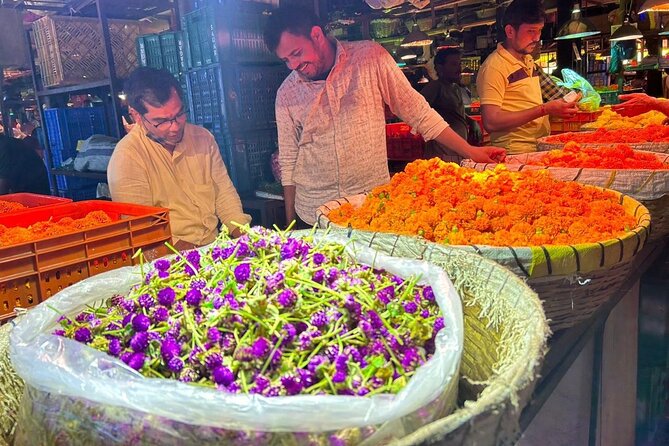
- Dadar flower market for color, scent, and strong photo light in the morning
- Small chai break to rest your feet and reset between stops
Why this early-morning Mumbai route feels different
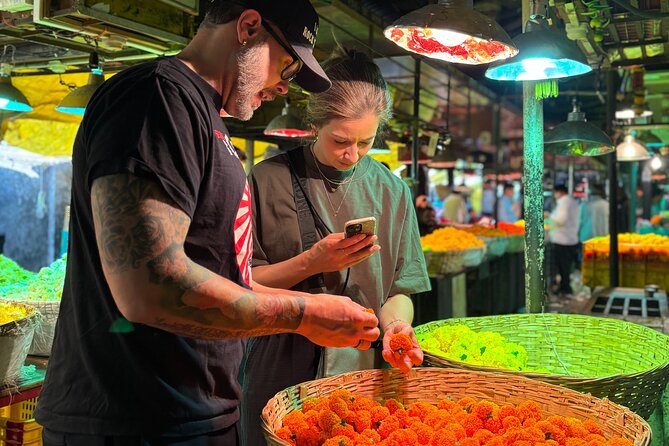
Mumbai’s big sights are easy to find later in the day. What’s harder is seeing how locals shop and work when most people are still in bed. This tour is built around that timing. You go when the market energy is at its peak, then you get out before the crowds and traffic build too much.
The best part for me is the variety in a short time. Within about three hours you’ll bounce between fish, produce, flowers, and a laundry system that’s on the same “morning schedule” as the markets. The contrast is the point. You go from seafood stalls where the air can feel strong, to fruit and veg stands built for daily cooking decisions, to flower sellers working with color and scent, and finally to Dhobi Ghat where you see the city’s laundry process in plain view.
One more practical bonus: you’re guided, and the guide’s job is to help you understand what you’re seeing while keeping you moving through busy areas safely. In reviews, guides like Jawwad (Jaw) and Abhishek (Abhi) are singled out for clear explanations and patient help with questions, and Sharon is noted for walking people safely across the street.
You can also read our reviews of more shopping tours in Mumbai

Sassoon Dock fish market: the morning where everything starts

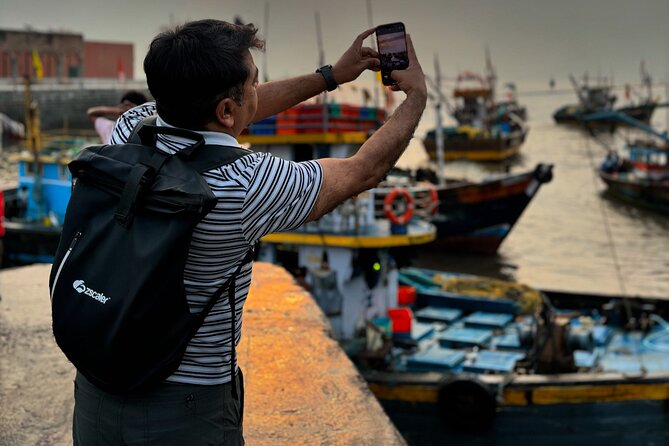
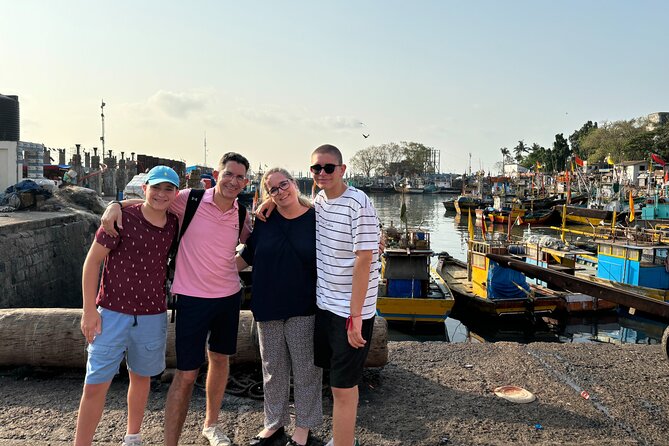
Sassoon Dock is your first stop, and it’s the kind of place where you immediately understand this is real work, not a show. Expect fishermen unloading catches and the market flow beginning at full speed. There are colorful boats and the day’s supply arriving while shoppers and workers are already moving.
You’ll likely spend about one hour here, and it’s long enough to get your bearings without rushing. That matters because fish markets have their own logic—who buys, how goods are handled, and how sellers set up. A guide helps you read the scene instead of just standing there blinking.
Two things to prepare for. First, it can feel smelly and wet. In fact, I’d treat this as your main gear check for the whole day. Second, it’s often very crowded, so you’ll want comfortable clothes and footwear that can handle close walking.
If you’re the kind of person who likes photos, this stop can deliver. People have noted great morning photo light and the advantage of getting these shots before the city’s day gets loud. Just remember: fish market conditions beat fancy shoes. Wear something practical, and keep your expectations in line with reality.
Dhobi Ghat: thousands of clothes moving through open air
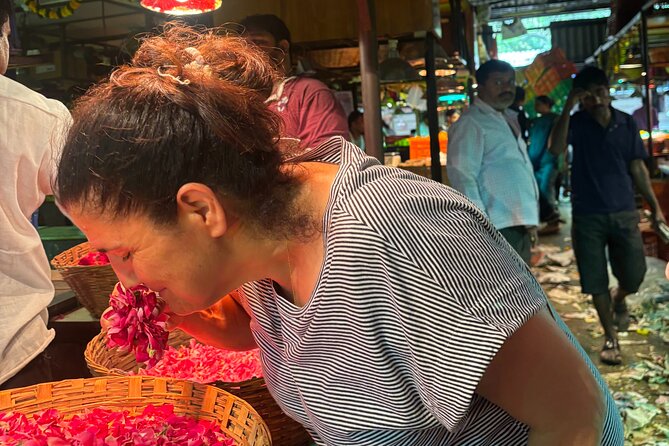
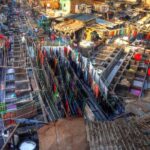
After the markets, you head to Dhobi Ghat. The transfer can be by local taxi or train, depending on the plan for the day. The stop itself is shorter—about 30 minutes—but it’s the kind of place that sticks in your memory because you’re watching a massive operation without walls.
Dhobi Ghat is described as the world’s largest open-air laundry, handling over 2,000 clothes daily from hotels, hospitals, and private homes. The scale is the main takeaway. You don’t just see a few workers with a few garments—you see the system that keeps clothes circulating through the city.
I like that the tour doesn’t treat Dhobi Ghat as a side curiosity. It’s one of the core stops, which means you’ll have time to look, ask questions, and understand what’s happening rather than snap a quick photo and move on.
Timing also matters here. Going earlier helps you see the work as part of the morning rhythm, not as something already winding down. And because you’re with a guide, you can ask the basics—how laundry is processed, who the workers are, and how the operation fits into Mumbai’s daily life—without feeling lost.
Dadar fruit and vegetable market: where breakfast meets business

Next up is the Dadar Fruit and Vegetable Market. This is one of the most relatable stops, because it’s about food you’d actually eat. You’ll see stalls filled with seasonal produce, along with the busy trade of people buying what they need for the day.
You’ll spend roughly 45 minutes here, which is a good pace. Too short and you miss how locals compare items. Too long and it turns into repetitive browsing. This timing is about enough to take in the range, notice how sellers present produce, and see how the market supports cooking in real households and restaurants.
I also like the way this stop acts as a palate reset. After the fish market smell and Dhobi Ghat’s intense visual field, fruit and veg feel cleaner and easier to process. It’s still crowded, still busy, but the cues are softer: colors, stacking produce, and the quick exchanges between buyers and sellers.
If you’re food-minded, pay attention to what looks plentiful that morning. It often hints at what’s in season and what people are choosing right then.
Dadar flower market: scent, color, and morning photo light
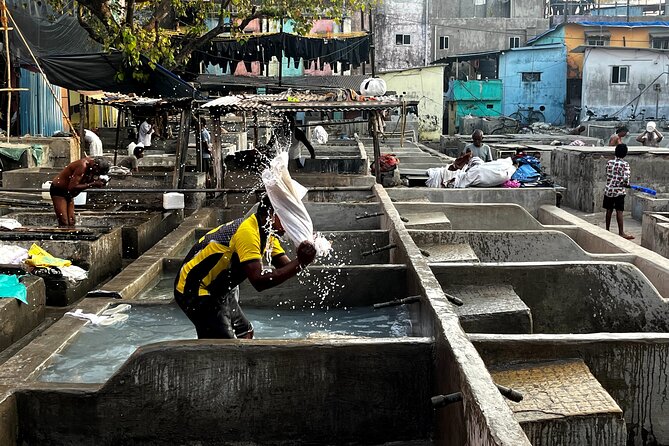
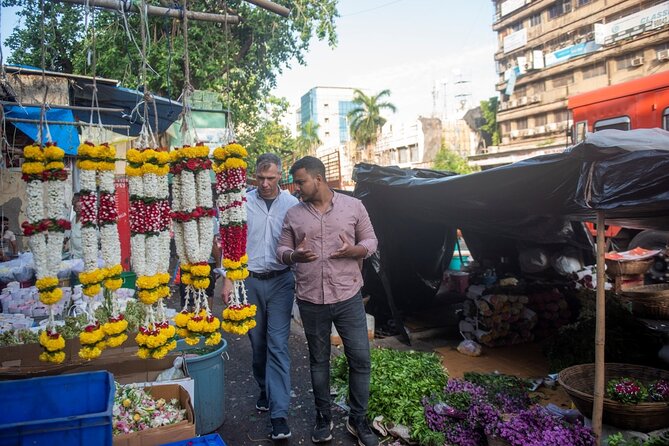
You finish (or end up spending final time) at the Dadar Flower Market, where the air shifts again. Expect vendors selling fresh flowers in a setting that feels made for color and close-up details. You’ll have about 45 minutes here, which gives you time to watch sales while still leaving energy for the rest of your morning.
Flower markets are great for photos, and one review mentioned the value of getting pictures in the morning light while also avoiding heavy traffic later. That’s exactly how this kind of timing works in Mumbai: early means better light and fewer headaches.
This stop also balances the day emotionally. Fish markets and Dhobi Ghat can feel intense. Flowers are part of everyday rituals—gifting, prayers, and everyday decoration—and the presence of that purpose makes the scene easier to enjoy.
Practical tip: if you’re sensitive to strong scents, this is the part to go slow. Flowers can be amazing, but perfume-like smells can hit hard in close spaces.
You can also read our reviews of more tours and experiences in Mumbai




The chai break and getting around without stress
You get a small chai (tea) break during the tour. It might sound like a minor detail, but it’s one of the best ways to make an early schedule feel manageable. Markets are active, and your feet will work. A short pause also helps you regroup so you can enjoy the next stop instead of just surviving it.
Transport between areas also matters. The tour includes taking a local taxi or train to reach Dhobi Ghat. That’s a good way to see how people move day-to-day, and it’s more interesting than being transported the whole time in a private car.
Pickup is offered, and the tour is listed as near public transportation, which can make it easier if you’re staying in South Mumbai or planning to use transit. And at the end, the guide can help you book a taxi—useful when you’re stepping out into a busy neighborhood and just want to get moving again without hunting.
Price and value: what $20.72 buys you here
At $20.72 per person for an about 3-hour guided experience, this feels like strong value if you care about how cities work. You’re paying for time, local knowledge, and organization: a guided route through multiple market zones, plus a short chai break and the transition to Dhobi Ghat by local transport.
A big value signal is that the stops are listed with free admission ticket for the tour segments, so you’re not paying extra entry fees on top. And because it’s private in the sense that it’s just your group, you can ask questions without getting drowned by strangers’ conversations.
There are also group discounts and a mobile ticket, which tends to make planning easier if you’re traveling with a friend or two. The “mobile ticket” part is small, but in practice it reduces hassle when you’re dealing with crowds and getting directions quickly.
If you’re visiting Mumbai for the first time, this tour helps you get your bearings fast. It’s not a museum lesson; it’s a working-morning snapshot.
Who this tour fits best (and who might skip it)
This is a great fit if you like real-life street scenes and you don’t need everything to be polished. If you enjoy people-watching, want food-related context, and like the idea of seeing Dhobi Ghat beyond photos, you’ll likely enjoy this.
It’s also a strong choice if you’re short on time. Three hours is manageable, and the route is built to give you variety without long travel gaps.
Skip it (or adjust expectations) if you hate crowded spaces, strong smells, and early mornings. The fish market condition is not subtle, and the schedule is early by design. If you have limited tolerance for smells or you don’t do well with standing/walking in crowded streets, you might want to pick a different kind of experience.
Tips to make your morning easier
Here’s how I’d prepare based on what matters most at these stops:
- Wear shoes you can get wet: the fish market area can be smelly and wet, and you’ll be happier if you don’t obsess over footwear.
- Keep your questions ready: guides like Jawwad (Jay) and Abhishek (Abhi) are praised for being patient and helpful, which is your cue to ask how the markets function.
- Plan for crowds: fish and flower markets can feel packed. Stay calm, follow the guide’s pace, and don’t let curiosity pull you away from the group.
- Dress for the day’s start: since you’re going early, you’ll likely be dealing with cooler morning air that can change fast, so comfortable layers are smart.
Also, if you care about photos, this tour’s timing is an advantage. People have called out good photo opportunities and better conditions early in the day.
Should you book the Mumbai Morning Market Tour of Flowers, Fish, and More?
Yes—if you want a Mumbai experience that feels like a window into daily life, not a checklist of landmarks. The route hits four key working worlds in a short time: fish at Sassoon Dock, laundry operations at Dhobi Ghat, shopping behavior at Dadar fruit and vegetable market, and the color-and-scent world of the Dadar Flower Market.
This tour earns its reputation for more than just being different. The guides highlighted in past outings—like Jawwad (Jay), Abhishek (Abhi), Sharon, and Ayan—are repeatedly described as friendly, patient, and good at helping you understand what you’re seeing, including safe navigation through busy areas.
The main reason not to book is simple: early start plus a fish market that can be smelly and wet, with real crowds. If that sounds fun instead of stressful, this is a smart, good-value morning plan.
FAQ
How long is the tour?
The tour lasts about 3 hours.
How much does it cost?
The price is $20.72 per person.
Where do we meet and where does the tour end?
The listed start point is PizzaExpress Dhanraj Mahal on Chhatrapati Shivaji Maharaj Marg in Colaba. The end point is the Flower Market Dadar area in Dadar West, and the guide can help you book a taxi from there.
Is pickup available?
Yes, pickup is offered.
What stops are included?
The tour includes Sassoon Dock (fish market), Dhobi Ghat (open-air laundry), Dadar Fruit and Vegetable Market, and the Dadar Flower Market.
Is there a chai break?
Yes, there is a small chai (tea) break during the tour.
Do I need admission tickets for the stops?
Admission tickets are listed as free for the tour stops.
What’s the cancellation refund window?
You can cancel for free up to 24 hours in advance for a full refund. If you cancel less than 24 hours before the start time, the amount paid is not refunded.