REVIEW · MUMBAI
Mumbai: Discover India’s Largest Slum -A Local’s Perspective
Book on GetYourGuide →Operated by The Urban Curious · Bookable on GetYourGuide
Dharavi is more than a slum label. This 2-hour walk is interesting because you’re guided by a resident of Dharavi, not a script, and the route focuses on day-to-day work and creativity. I especially like the hands-on feel of craft stops, plus the way the tour connects what you see in workshops to real lives nearby.
My second favorite part is the mix of industry and community: markets, recycling work, pottery, leather goods, embroidery units, plus a stop at a rooftop view that changes how you picture Dharavi. One consideration: this is a working neighborhood, so the pace and topics can feel intense for some people—come with respect, keep questions kind, and be ready for a new perspective.
If you want Mumbai beyond postcard views, this is a tight, focused tour that gives you context fast—without trying to turn Dharavi into a theme park.
In This Review
- Key highlights you should care about
- Starting at Third Wave Coffee: Getting Oriented in Mahim
- Walking Through Dharavi’s Narrow Lanes With a Resident Guide
- Markets, Everyday Hustle, and the Real Texture of Local Trade
- Recycling District: Turning Waste Into Value You Can See
- Pottery Workshops: Watching Art Become an Actual Skill
- Leather Workshops and Embroidery Units: Where Craft Shows Its Precision
- A Local Bakery Stop: Small Bite, Big Connection
- Community Projects: Schools and Health Centers You Can Point To
- Slumdog Millionaire Filming Locations: Pop Culture Meets Local Reality
- Rooftop View: Step Back and Understand Scale
- Price and Value: Why $10 for Two Hours Can Be a Good Deal
- Who This Dharavi Tour Fits Best (and Who It Might Not)
- Should You Book This Dharavi Local Walking Tour?
- FAQ
- Where does the Dharavi tour start?
- How long is the tour?
- How much does it cost?
- Is transportation included?
- What’s included in the tour?
- Do I need to speak a specific language?
- What should I bring?
- What is the group format?
- Can I cancel or pay later?
Key highlights you should care about
- Resident-led guidance from someone who knows the streets, the work, and the stories
- Craft districts on foot: pottery, leather workshops, and embroidery units you can actually watch
- Recycling district insights showing how waste gets transformed into usable value
- Slumdog Millionaire filming locations that link pop-culture attention to local reality
- Rooftop perspective that helps you understand the scale and layout
Starting at Third Wave Coffee: Getting Oriented in Mahim
You meet your guide outside Third Wave Coffee in Mahim, which is a friendly, easy reference point before you head into a place most people usually only see from a distance. The tour is set up as a short, walk-focused experience, and that starting point matters because it keeps the day simple: you’re not juggling complex transfers or waiting around.
From there, you head toward Dharavi, the neighborhood that people often discuss in one breath but rarely understand in details. The guide starts you with an overview of what Dharavi is, how it grew, and how daily life functions—not as a “before and after” story, but as a lived reality.
Your guide speaks English, Hindi, and Marathi, which helps if you want to ask follow-up questions and actually get answers. In one of the bookings, a late-arrival situation was handled with patience, and the guide made sure the experience still worked out. That’s a good sign: the tour isn’t rushing you through set photos.
You can also read our reviews of more tours and experiences in Mumbai.

Walking Through Dharavi’s Narrow Lanes With a Resident Guide
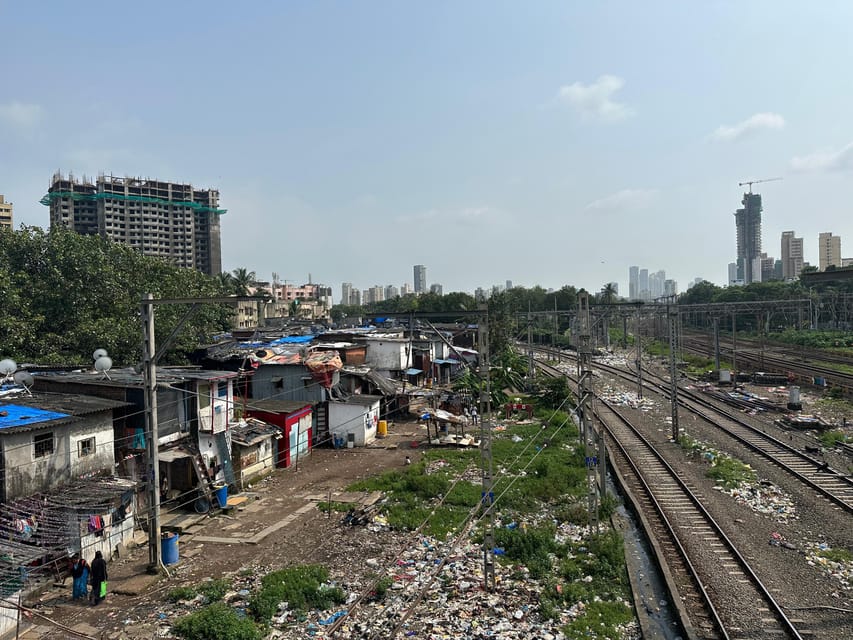
Once you’re in Dharavi, the tour’s power comes from being guided by someone who lives there. You’ll get context as you go—why certain streets feel busy at certain times, how different trades connect, and what people do for a living day after day.
This is also where you’ll likely notice how your own assumptions shift. Reviews leaned hard on the feeling of going from distant ideas to close-up understanding. The common thread is respect: you start seeing the skill in everyday work, not just the surroundings.
What helps most is how the guide explains things in a way that invites your questions. If you’re the type who likes to understand how things work—supplies, processes, roles—you’ll fit right in.
A practical note: wear comfortable shoes. This is a walking tour with multiple stops, and your comfort affects your ability to pay attention.
Markets, Everyday Hustle, and the Real Texture of Local Trade
The tour takes you through local markets where you can see the everyday hustle: fresh produce, handcrafted goods, and the steady rhythm of trade. Markets in places like this aren’t just scenery. They’re a window into how people earn income, how products move, and what “normal” looks like for the people living there.
I like this stop because it gives you a base layer before you get technical with workshops. You’ll begin to understand what people buy, sell, and make—and how that feeds into other trades you’ll see later.
You’re not just watching from the outside. With a resident guide, it’s more like being shown how locals interpret what’s happening around you. And if you like photo stops, there are breaks built into the flow so you’re not stuck standing in one place the whole time.
Recycling District: Turning Waste Into Value You Can See
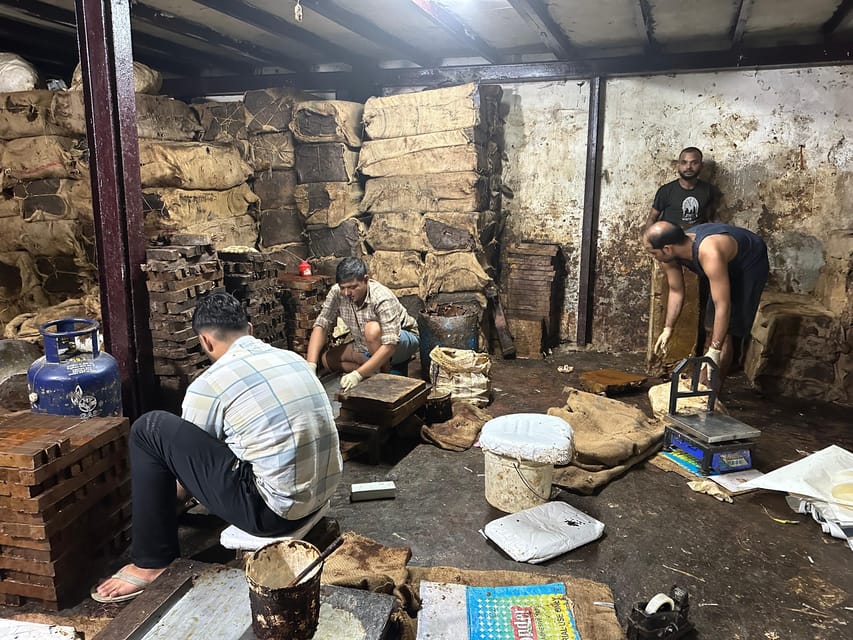
One of the most eye-opening segments is the recycling district. Here, you’ll see waste transformed into usable products. That’s the headline, but the value is in the details: you start understanding Dharavi through a practical lens—materials, reuse, and a work system that turns problems into inputs.
This section also helps answer a question many people carry with them: How can a place like this function with so much constraint? The recycling work is part of the answer. You’ll come away thinking less about labels and more about systems.
It’s also a reminder that creativity is often not an art-studio thing. Sometimes it’s logistics. Sometimes it’s improvisation. Sometimes it’s just people doing what works, day after day.
Pottery Workshops: Watching Art Become an Actual Skill
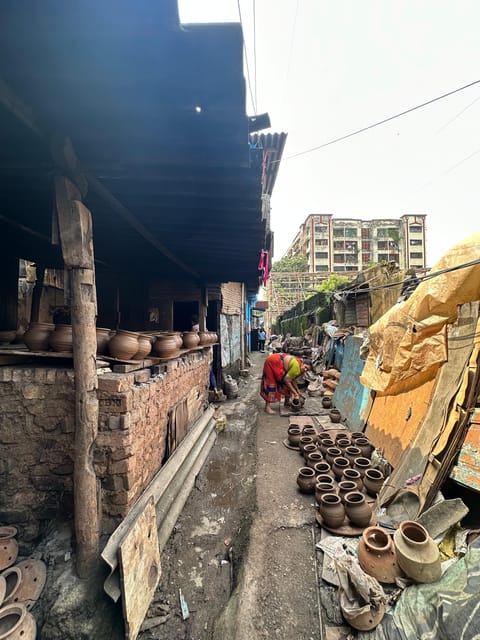
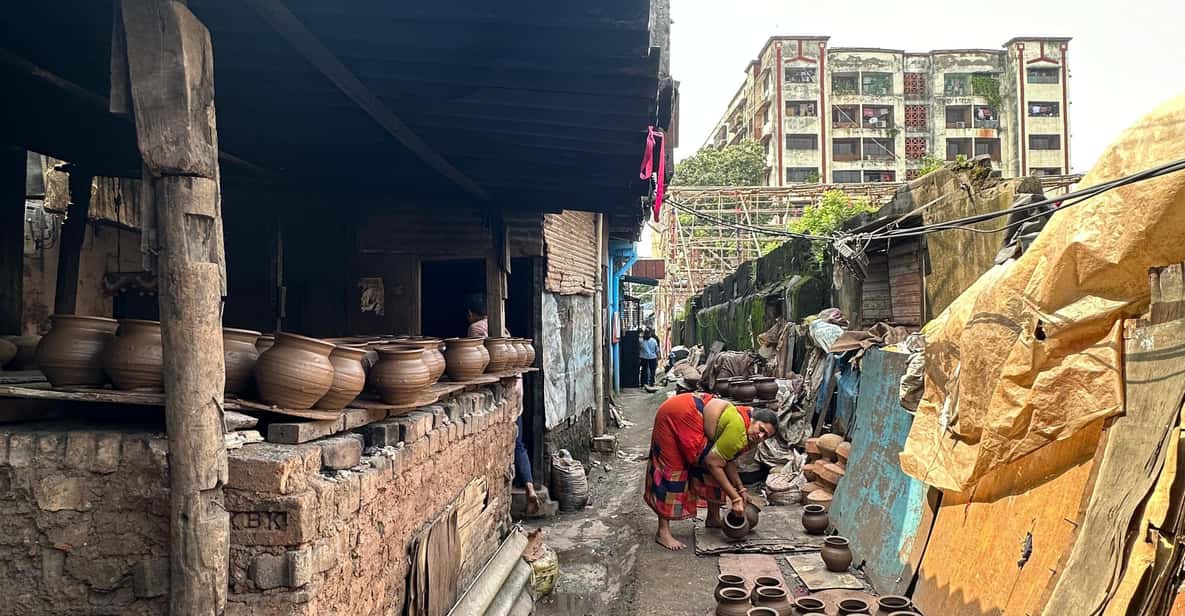
Next up: pottery workshops. You’ll visit workshops where artisans work hands-on, and the best part is that you even get a chance to try your hand at making pottery.
This is valuable because it moves you from observer mode into participant mode. When you attempt a basic process, you can better appreciate what you’re seeing later—why certain steps take time, why tools matter, and why technique is the difference between rough and finished.
Potential drawback: if you only want quick sightseeing without hands-on activities, you might feel like this segment asks more of you than purely looking. But if you enjoy learning by doing—even briefly—this is one of the most memorable stops.




Leather Workshops and Embroidery Units: Where Craft Shows Its Precision
The tour includes both leather workshops and embroidery units, which makes it more than a one-industry visit. Leather production lets you see work where materials, cutting, shaping, and finishing matter. Embroidery lets you see precision—designs brought to life on fabric.
These stops are where your understanding becomes specific. Markets are about what’s moving. Workshops are about how it gets made. Once you’ve watched hands doing the work, it’s harder to reduce Dharavi to a single story.
I also like that the tour doesn’t keep you at the level of looking. You’ll have chances for interaction with locals and questions, which is where craft becomes human. One review mentioned how helpful the guide was with patience and detailed explanations. That’s exactly what you want in craft-heavy sections: someone who can explain what you’re seeing without talking over you.
A Local Bakery Stop: Small Bite, Big Connection
You’ll sample freshly baked goods from a local bakery during the tour. It’s a simple inclusion, but it’s also a smart one: food acts like a break that resets your senses while keeping you inside the daily rhythm of Dharavi.
If you’re someone who likes tasting places rather than just photographing them, this adds warmth to the walk. And since it’s included, it reduces your need to hunt for something mid-tour.
Community Projects: Schools and Health Centers You Can Point To
The tour doesn’t stop at workshops. It also includes community projects, with mentions of schools and health centers aimed at improving quality of life in Dharavi.
This matters because it prevents the tour from turning into a one-note story about work alone. You see that community life includes education and health systems, not just production.
I recommend you bring curiosity here, not judgment. Asking questions about how community projects operate is often more interesting than trying to force a political takeaway. Your guide can help you understand what’s happening in practical terms.
Slumdog Millionaire Filming Locations: Pop Culture Meets Local Reality
One of the distinct features is a visit to real-life filming locations of Slumdog Millionaire. The tour also connects Dharavi’s international visibility to the storyline inspiration that was linked to Who Wants to Be a Millionaire.
This segment works best if you treat it as a context check. It’s not about celebrities. It’s about how global attention arrives, what it highlights, and what it can oversimplify.
If you’ve seen the film, this stop can feel like recognizing shapes on a map. If you haven’t, it still helps because it gives you a specific reference point: this is a place that entered the world’s conversation, and you’re seeing what that conversation looks like on the ground.
Rooftop View: Step Back and Understand Scale
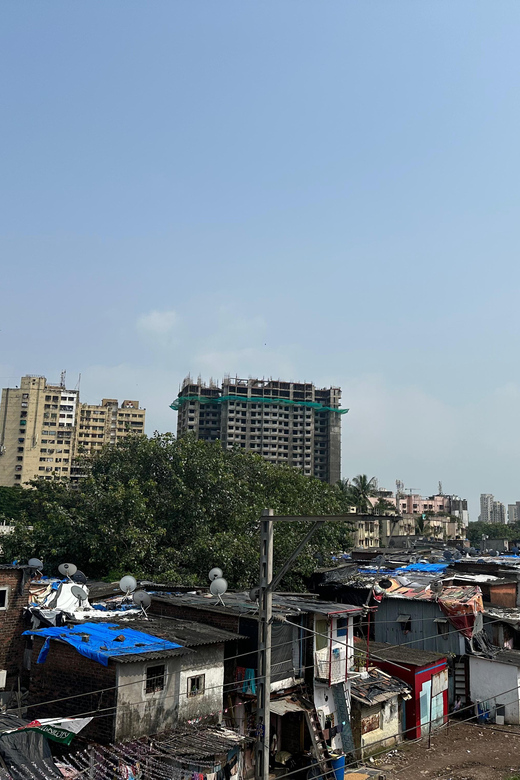
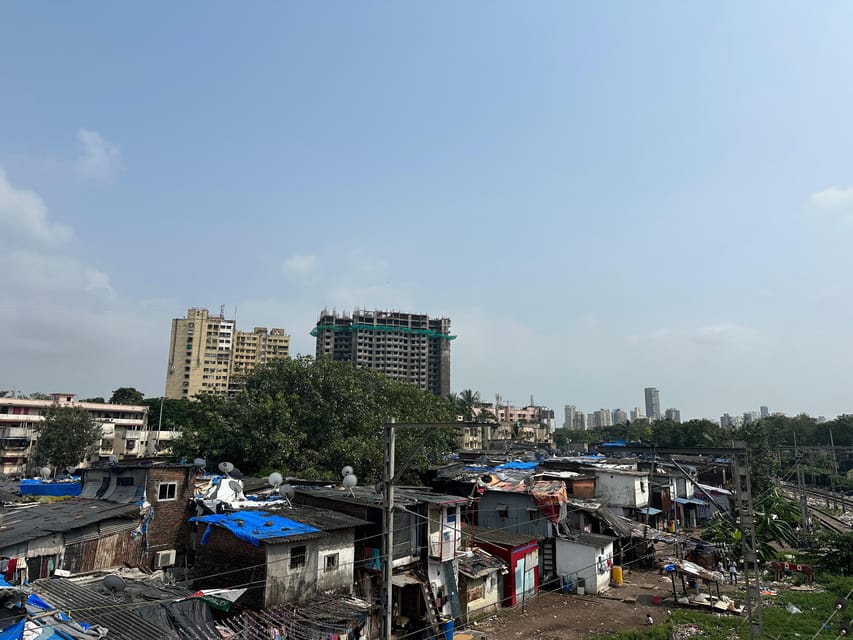
The tour ends with a panoramic rooftop view of Dharavi, which is a smart final move. When you’re walking street-level, everything feels close and intense. From above, you get a sense of how densely people live and how the neighborhood is arranged.
This view also helps you absorb the day. You can look down and connect what you learned earlier—markets, workshops, recycling areas, and community spaces—into one mental picture.
This is the moment when the tour often lands for people: you stop thinking in stereotypes and start thinking in layout, work, and interconnections.
Price and Value: Why $10 for Two Hours Can Be a Good Deal
At $10 per person for a 2-hour walk, the value can be surprisingly strong, mainly because so much is included. You get:
- A local resident guide leading the experience
- Visits to multiple working areas (markets, pottery, leather, embroidery, recycling)
- Entry to Slumdog Millionaire filming locations
- Personal interactions with locals and artisans
- A bakery sampling
- A rooftop view
That’s not just a bundle of stops. It’s access to understanding. In many big-city tours, you pay for transportation and a guide who explains from a distance. Here, you’re walking with someone who knows the place from the inside.
Two small considerations about value:
- You’re paying for depth, not breadth. It’s two hours, so you’ll see highlights rather than every street corner.
- Transportation to and from the start point isn’t included, so you’ll want to budget for getting to Third Wave Coffee, Mahim.
Who This Dharavi Tour Fits Best (and Who It Might Not)
This tour is a strong fit if you:
- Want a local-led experience rather than a generic sightseeing loop
- Like hands-on learning and craft viewing (pottery, leather, embroidery)
- Prefer short tours with meaningful stops
- Are curious about how recycling and production work together in a real neighborhood
It might not be your best match if you:
- Want a mostly passive experience with minimal human interaction
- Are only looking for quick, easy photos
- Dislike walks as a format (you’ll be on foot for the full duration)
Should You Book This Dharavi Local Walking Tour?
I’d book it if you’re traveling through Mumbai and you care about understanding the city beyond the usual highlights. The combination of resident guidance, workshop-focused stops, and the rooftop perspective makes it more than a look-and-leave experience. It gives you context you can carry with you when you’re back out in the rest of the city.
If you book, do it with the right mindset: come for learning, keep questions respectful, and wear shoes that can handle a walking day. You’ll likely leave with a new way of seeing Dharavi—less label, more people and work.
FAQ
Where does the Dharavi tour start?
You meet your guide outside Third Wave Coffee in Mahim. From there, the tour goes on foot and returns to the same starting place.
How long is the tour?
The tour lasts about 2 hours, including walking time and the stops.
How much does it cost?
It’s priced at $10 per person.
Is transportation included?
No. Transportation to and from the meeting point is not included.
What’s included in the tour?
The tour includes a resident-led guided exploration, visits to markets and workshops (pottery, leather, embroidery), a recycling district visit, real-life filming locations of Slumdog Millionaire, personal interactions with locals, a bakery sampling, and a rooftop panoramic view.
Do I need to speak a specific language?
The live tour guide is available in English, Hindi, and Marathi.
What should I bring?
Wear comfortable shoes since it’s a walking experience.
What is the group format?
It’s described as a small group setting and also as a private group.
Can I cancel or pay later?
Yes. You can cancel up to 24 hours in advance for a full refund, and you can reserve now and pay later (with pay nothing today).