REVIEW · MUMBAI
Mumbai: Sightseeing by Walk or Car
Book on GetYourGuide →Operated by Mumbai with Locals · Bookable on GetYourGuide
Mumbai changes fast when someone else drives. This tour mixes big-name sights with everyday Mumbai, and I like that you get a Mumbai-born English-speaking guide who explains daily life, faith, and city politics in plain language. One thing to plan for: it is a group experience with short walking segments and some uneven spots at religious sites.
You start in Colaba and move through South Mumbai by car for the longer stretches, so the day stays manageable. I also like that train tickets are included, which cuts down on the usual logistics headaches and keeps you moving toward the next stop.
At about $36 per person for roughly 4 hours, it’s good value for a guided route that covers both iconic landmarks and smaller spiritual stops. Still, it’s not for everyone: if you have mobility issues, motion sickness, or back/heart problems, this may be the wrong format.
In This Review
- Key points that make this tour worth your time
- Starting outside Regal Cinema in Colaba
- The 4-hour rhythm: short walks, car time, and real-city pacing
- Marine Drive, Gateway of India, and the Colaba photo circuit
- Chhatrapati Shivaji Terminus: Gothic rails you can actually admire
- Crawford Market to Mani Bhavan: daily Mumbai and Gandhi’s doorstep
- Banganga Tank and a Jain Temple: quiet spaces in the middle of the city
- Banganga Tank
- Jain Temple
- City viewpoints and quick photo stops: how the route builds context
- Dhobi Ghat: the open-air laundry that runs every day
- Price and value: what $36 buys you in real terms
- Who this tour suits best (and who should skip it)
- Should you book this Mumbai walk-or-car tour?
- FAQ
- What is the tour duration?
- Where does the tour start?
- What’s included in the price?
- Is food included?
- What languages are available with the guide?
- How early should I arrive at the meeting point?
- Is this tour suitable for wheelchair users or limited mobility?
- What should I wear or bring for temple stops?
- Are photography and video allowed?
- What happens if it rains or there are public holidays?
Key points that make this tour worth your time
- Regal Cinema in Colaba is a clear, central starting point that’s easy to reach.
- CST and Marine Drive give you the classic South Mumbai visuals without wasting time hunting for them.
- Mani Bhavan + Gandhi’s story adds context beyond sightseeing photos.
- Banganga Tank and a Jain Temple show the quieter, more spiritual side of the city.
- Dhobi Ghat ends the route with a hands-on look at Mumbai’s open-air laundry work.
Starting outside Regal Cinema in Colaba
The meeting point is outside Regal Cinema in Colaba, one of those easy-to-find South Mumbai landmarks. If you arrive about 10 minutes early, you’ll get a smooth handoff to your guide and avoid that last-minute scramble in traffic or crowds.
You’ll be traveling with an English-speaking guide (and Hindi is available too). The guides are local—born and raised in Mumbai—and they tend to answer questions in a way that feels conversational rather than like a scripted lecture. That matters, because Mumbai rewards curiosity: the more you ask, the more you understand.
This is also where you set expectations. The tour is set up as a guided route with quick photo stops and short on-foot time, not a free walk where you can wander as long as you want.
You can also read our reviews of more walking tours in Mumbai

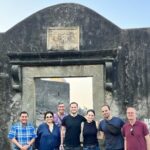
The 4-hour rhythm: short walks, car time, and real-city pacing
This experience is designed to cover a lot in about 4 hours, while still giving you enough time at key places. Most of the day runs in an air-conditioned vehicle, with brief walking segments at selected stops.
That mix is practical for Mumbai. You get the chance to look closely at places on foot—like walking the Crawford Market area or taking in a temple interior—while the car handles the longer jumps between neighborhoods and viewpoints. You’ll also have bottled water provided, which you’ll want on a warm day.
Two realities to keep in mind:
- It’s a group tour, so your pace follows the group schedule.
- The tour is not suitable for wheelchair users or limited mobility, because you may run into uneven surfaces or stairs at certain stops.
If you get motion sickness easily, you should take that seriously too, since you will be in the vehicle for parts of the route.
Marine Drive, Gateway of India, and the Colaba photo circuit
South Mumbai’s best “first glance” moments happen quickly, and this tour takes you right through them.
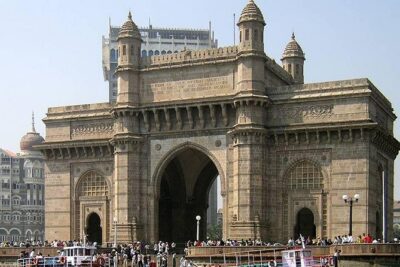
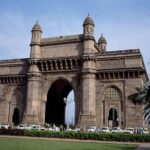
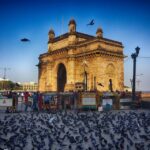
You’ll see the Gateway of India up close as a photo stop, plus get time to actually visit there for a bit rather than just drive past. From there, the route continues toward classic seafront visuals along Marine Drive, a seaside boulevard locals often nickname the Queen’s Necklace because of the lighting and the sweep of the road.
This is also where the tour becomes more than postcard stops. You’ll catch glimpses of Mumbai University and the High Court with their old-world feel, and you’ll pass by a city viewing area where you can see how Mumbai rises—colonial-era buildings, modern skyscrapers, and the space between them. Even if you don’t study architecture, you’ll start to grasp how the city layers time.
One more interesting visual: you may pass Antilia, known for being an extremely extravagant private residence. It’s the kind of sight that quietly shocks you, and the guide can usually explain why people talk about it.
Bring a camera, but also bring patience for crowds at popular spots.
Chhatrapati Shivaji Terminus: Gothic rails you can actually admire
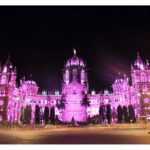
One of the strongest “wow” moments is Chhatrapati Shivaji Terminus. This is a Gothic-style railway station, and seeing it in person hits differently than seeing it in photos because of the scale and details.
Here’s what I think makes it a great stop on a short tour:
- You get the chance to admire the station properly, not just take a quick exterior picture.
- Your guide can connect it to what the station means in everyday Mumbai life—especially since rail matters so much in how people move.
It’s the kind of place that rewards a slower look. Even with limited time, you can still focus on columns, arches, and the station’s dramatic presence.
Crawford Market to Mani Bhavan: daily Mumbai and Gandhi’s doorstep
After the big-picture sights, the tour moves to places where the city feels more lived-in.
Crawford Market comes next, with a short walk. It’s a working market zone, so expect energy and movement. This isn’t about shopping for a souvenir every time—it’s about seeing Mumbai’s food-and-life culture in one compact area. If you like photography, this is usually a great stretch for street-level shots.
Then you go to Mani Bhavan, Gandhi’s former home in Mumbai, for a visit. This stop is valuable because it changes the tone. At Gandhi’s place, you’re not just looking at old buildings—you’re learning how a key figure in India’s freedom story connected to this city.
If you care about politics and how ideas travel, this is one of the stops that gives you a lens for understanding Mumbai beyond architecture. Your guide will likely tie it to present-day questions people debate in the city.



Banganga Tank and a Jain Temple: quiet spaces in the middle of the city
Two of the most peaceful moments happen away from the loudest roads: Banganga Tank and a Jain Temple.
Banganga Tank
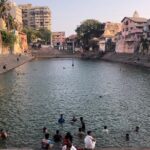
Banganga Tank is a sacred water tank hidden in the city. You’ll have a mix of photo stop time and a visit, which is a good format because these kinds of places often need a bit of stillness. It’s not a “power through” stop. Take a moment, look around, and let the guide explain what makes the tank meaningful.
Jain Temple
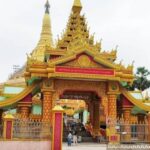
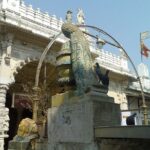
Then you’ll visit a Jain Temple where you can see intricate carvings inside. Even when you are not religious yourself, you’ll probably find this stop relaxing. Carvings like this don’t feel random. They’re built for attention.
One practical note: religious sites require modest clothing. Avoid sleeveless tops and short skirts so you can enter comfortably and show respect. If you forget, you might find it harder to enjoy the stop rather than rushing back out.
City viewpoints and quick photo stops: how the route builds context
Between the longer visits, the tour includes several photo stops and short breaks where you look out over parts of South Mumbai.
This is where the city map starts making sense. You’ll get glimpses that connect what you already saw—CST’s dramatic rail station, seafront views from Marine Drive, the legal-and-academic feel of landmark buildings, and the way modern development sits next to older structures.
From these points, the guide’s running commentary matters. If you ask questions, the guide can explain why these areas developed the way they did, and what people mean when they talk about the city changing over time.
This section is also why you’ll want a charged smartphone. A lot of what you’ll capture is about angles and comparisons.
Dhobi Ghat: the open-air laundry that runs every day
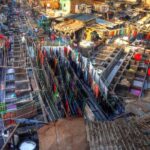
The day’s final big emotional shift happens at Dhobi Ghat, described as the world’s largest open-air laundry.
This stop isn’t a museum. It’s a working place where hundreds of workers wash and organize clothes by hand. That’s the key reason Dhobi Ghat lands with many visitors: you’re watching real labor, not a staged show.
It’s also a useful reminder that Mumbai is not only monuments and history—it is jobs, routines, and services that keep the city running. When your guide frames it in context, the experience becomes more than a photo opportunity.
The tour ends at Dhobi Ghat, and the guide can help you get back to Colaba or guide you to the nearest train station from there. That matters, because it’s a practical way to finish the day without getting stuck guessing what to do next.
Price and value: what $36 buys you in real terms
At $36 per person for about 4 hours, the value is strongest when you focus on what’s included.
You’re paying for:
- an English-speaking guide who stays with you throughout,
- an air-conditioned vehicle for the longer stretches,
- bottled water during the tour,
- and train tickets included in the cost.
When you’re planning a tight route in a big city, those inclusions add up quickly. Instead of juggling tickets, figuring out timing between stops, and trying to explain complex context to yourself on the fly, you get a guided sequence that’s built to work.
Is it a luxury day? No. It’s a smart, efficient route. If you want slow, unstructured wandering, you may prefer a different style of touring. But if you want to see a lot with guidance and get your bearings fast, this price makes sense.
Who this tour suits best (and who should skip it)
This tour fits best if you:
- want South Mumbai highlights plus quieter spiritual stops,
- like learning why places matter, not only what they look like,
- enjoy a guide who can answer questions about faith, daily life, and what’s changing in the city,
- and prefer a group format that’s social and budget-friendly.
It’s also a good sign that guides are praised for being helpful with details like explaining things clearly and even assisting people with pictures—those small helps make a big difference in real travel.
But skip it if you fall into these categories:
- Wheelchair users or anyone with mobility impairments,
- people with back problems,
- those with heart problems,
- anyone who is motion sick,
- pregnant women,
- or anyone who expects an entirely flat, low-walking itinerary.
Also remember the rules: no pets, no drones, and no intoxication. Littering is not allowed either. It’s a respectful-city format.
Should you book this Mumbai walk-or-car tour?
If your goal is to understand South Mumbai in a compact, practical way, I think booking makes sense. The mix is strong: CST, Gateway of India, Marine Drive, Mani Bhavan, then calmer stops like Banganga Tank and a Jain Temple, ending with the working-life reality of Dhobi Ghat. That combination is hard to recreate on your own without spending extra time figuring out logistics and context.
Book it if you want a guide who can turn landmarks into context—and who clearly knows the city from the inside, not from a script. Guides named Balaji and Sajid have been specifically praised for being professional, honest, and full of useful local information.
Skip or choose a different style if you have mobility limitations, motion sickness, or you want a slower, mostly on-foot day. This one is efficient, planned, and group-paced.
FAQ
What is the tour duration?
The tour lasts 4 hours.
Where does the tour start?
The meeting point is outside Regal Cinema in Colaba.
What’s included in the price?
It includes an English-speaking guide, packaged water, and train tickets.
Is food included?
No. Food is not included.
What languages are available with the guide?
The tour guide is available in English and Hindi.
How early should I arrive at the meeting point?
For group tours, plan to arrive at least 10 minutes before the start time.
Is this tour suitable for wheelchair users or limited mobility?
No. It is not suitable for wheelchair users or people with limited mobility due to uneven surfaces or stairs at some locations.
What should I wear or bring for temple stops?
Wear modest clothing. Avoid sleeveless tops and short skirts when visiting religious sites. Bring comfortable shoes, sunglasses, a sun hat, and a charged smartphone.
Are photography and video allowed?
Photography is allowed at most places, but some religious or historical sites may have restrictions.
What happens if it rains or there are public holidays?
In case of rain, heavy traffic, or public holidays, certain stops may be adjusted or skipped for comfort and safety.