REVIEW · MUMBAI
Small Group Tour of Dharavi Slum
Book on Viator →Operated by Young Tours And Travel · Bookable on Viator
Dharavi is the Mumbai you usually skip. This 2-hour walk-through gives you a ground-level look at how daily life and work overlap in one of the world’s densest neighborhoods, led by a local guide who can explain what you’re seeing.
I like that local guides bring real context, and names like Sneha, Rahul, Divya, and Pooja show up repeatedly for clear explanations and day-to-day perspective. I also like the practical value: mineral water is included, and transport from Churchgate is part of the experience when you start there.
One consideration: the tour starts and ends at the Young Tours & Travel office address, but the route you walk during the tour can leave you far from your next stop. You’ll want to plan for an easy ride or train connection afterward.
In This Review
- Key points before you go
- A quick primer: what Dharavi is and why this tour works
- Stop 1: Dharavi streets, workspaces, and community life
- Seeing the industries behind the headlines (without getting lost)
- Kumbharwada pottery area: a different kind of viewpoint
- The guide is the difference: how locals shape what you learn
- Price and value: how $15 adds up in real terms
- Churchgate transport and timing: plan like a Mumbai commuter
- Meeting point to getting back: the small logistics that matter
- Respectful questions and what to ask on this walk
- Who this tour suits best (and who might want to rethink)
- Should you book this Dharavi Slum Tour?
- FAQ
- How long is the Small Group Tour of Dharavi Slum?
- What’s included in the price?
- Is food included?
- Where do I meet the tour?
- Will the guide help me get back after the tour?
- Is there free cancellation?
Key points before you go
- Local perspective drives the whole experience, with guides such as Sneha, Rahul, Divya, and Pooja praised for making sense of what you see
- Mineral water bottles are included, which matters on a hot day in Mumbai
- Churchgate transport can be included if that’s where you begin
- Kumbharwada pottery stop adds a craft layer to the bigger Dharavi picture
- Expect a compact experience, since the activity is capped at a maximum of 1 traveler
- No food or cold drinks are included, so you may want to plan around meals
A quick primer: what Dharavi is and why this tour works
Dharavi is often talked about in dramatic, negative shorthand. This tour gives you a chance to see something more useful: how people live, work, and keep their routines going in an extremely crowded place.
What makes it click for me is the format. You’re not stuck in a classroom or watching from behind a fence. You’re guided through everyday spaces, including places tied to production and community life, so you can connect the dots between homes, work, and local services.
And because the guide is local, you’re more likely to get answers to the questions you actually have—like how different industries function and how residents understand their own neighborhood. Guides in this program have also been noted for speaking clear English alongside regional languages, which helps if you’re trying to follow along without losing nuance.
You can also read our reviews of more tours and experiences in Mumbai.


Stop 1: Dharavi streets, workspaces, and community life
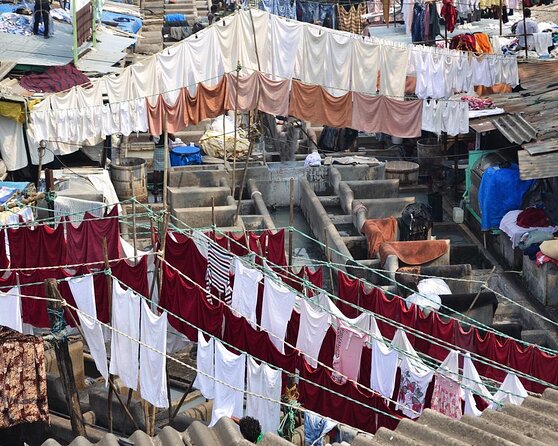
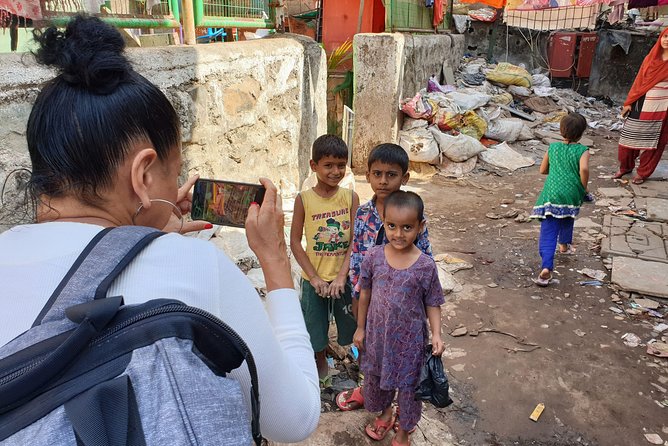
Your main block of time is spent in Dharavi, walking through the neighborhood and getting a sense of how life is structured when space is tight. You’ll see the area described with hard numbers—just over 2.1 square kilometers and a population around 700,000—so it helps to understand that you’re not visiting a small “slum section.” You’re in a place with real density and real neighborhoods.
This is also where the tour’s biggest value comes from: the mix of production and public life. The highlights include visits to factory areas where goods are produced, plus residential zones and community touchpoints. You may also encounter Hindu shrines as part of what people see in their everyday routines, which shifts the visit away from a single-theme photo stop.
One practical expectation: Dharavi is busy and compact, so your comfort depends on your willingness to walk through crowded lanes and keep your attention on the guide. This isn’t “drive-by sightseeing.” It’s closer to getting your bearings fast and letting local explanations do the heavy lifting.
Seeing the industries behind the headlines (without getting lost)
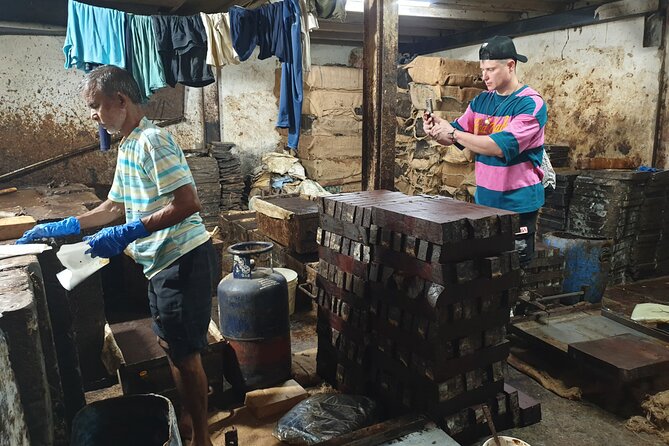
Dharavi gets pigeonholed as one thing. A good guide helps you see the working ecosystem inside it.
In this experience, the focus includes factories producing items such as suitcases, and the tour also connects those activities to how the local economy functions. Some guides have been praised for talking through outsourced work and industries tied to materials like plastics and leather, so if those topics matter to you, you’ll likely have room to ask questions and follow the threads.
Here’s why that matters for you as a visitor: Mumbai is a global city, and it’s easy to think of production as something that happens far away from where people live. Seeing how work and daily life sit side by side helps you understand that the economic engine isn’t separate from the neighborhood—it’s part of it.
At the same time, keep your expectations grounded. This is a walking tour with a set time window (about 2 hours 15 minutes total). You won’t see everything Dharavi contains, but you can come away with a stronger mental map than you started with.
Kumbharwada pottery area: a different kind of viewpoint
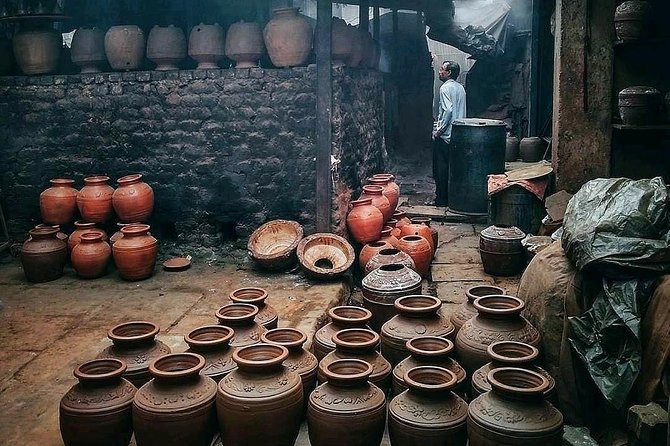
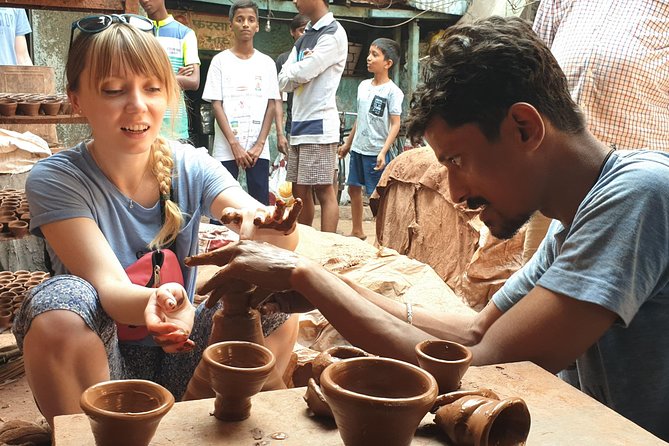
After the main Dharavi time, the itinerary includes a stop in Kumbharwada, known for pottery. This is only about 15 minutes, so it’s not a long studio visit. It’s a quick shift in gears: from the neighborhood’s day-to-day density to a craft-focused corner where you can pay attention to how objects get made.
Why this stop is worth your attention: it adds a tangible, human-scale detail to the broader picture. Factories and residential life are one story. Pottery is another—more visual, more hands-on in terms of watching how materials become usable products.
If you’re the type of traveler who likes to understand how “things” are made, this little craft stop gives your brain something concrete to hold onto when the rest of the area feels overwhelming.
The guide is the difference: how locals shape what you learn
In tours like this, the difference between a forgettable walk and a meaningful one usually comes down to the person leading you. This program leans hard on local guidance, and the strongest comments you’ll see tied to specific guide names like Sneha, Rahul, Divya, and Pooja are about clarity, organization, and answering questions.
What I’d pay attention to is the way guides handle access. The tour description emphasizes that you’ll visit areas that are otherwise hard to reach. That can mean narrow lanes and everyday spaces that most visitors would not find on their own, even if you’re willing to use public transport and good maps.
A good guide also customizes the route based on what you’re curious about. Some people noted that the tour felt tailored and that they were able to see many lanes and spots they wouldn’t be able to access independently. That’s a big deal in Dharavi, because the area can be confusing fast. Customization helps you get value without feeling like you’re just moving from one photo angle to the next.




Price and value: how $15 adds up in real terms
At $15 per person for about 2 hours 15 minutes, this tour can represent strong value—especially because it includes items that visitors often end up paying for separately.
Here’s what helps the math work:
- Mineral water bottles are included
- Admission tickets are free for the listed stops
- If you’re picked up from Churchgate, train transportation is included
- You’re getting a local guide rather than a generic walking route
Of course, not everything is included. Food and cold drinks aren’t part of the package, so if you’re visiting during peak heat, plan a snack before or after. Also, taxi or Uber charges aren’t included if you choose to go that route for getting back.
Still, for many visitors, the big win is the guide plus access. If you’ve ever paid for a sightseeing walk that felt like it could have been done solo with a map, this one generally aims for the opposite: you’re paying for local context and practical navigation inside the neighborhood.
Churchgate transport and timing: plan like a Mumbai commuter
The tour includes transportation from Churchgate, but only if you’re picked up there. That matters, because it changes how smooth the day feels.
Here’s what I suggest:
- If Churchgate is convenient for you, start there to make the transport piece easier.
- If not, still plan your route into Dharavi well. The meeting point is at Young Tours & Travel (90 Feet Rd, Muslim Nagar, Kumbhar Wada, Dharavi, Mumbai, Maharashtra 400017).
The tour’s total time is about 2 hours 15 minutes. That’s enough time to see key parts and get explanations, but it’s not long enough to treat the day like a full-day immersion. Think of it as a smart, focused window—one that you can pair with other Mumbai sights.
Meeting point to getting back: the small logistics that matter
You meet and the tour ends at the Young Tours & Travel office location. But the experience also notes that the starting point and final point are quite far from each other, and that you’ll likely need help getting to your next destination.
This is where the guide support matters. After the tour, the guide helps you get back by taxi, bus, train, and walk. If you need to reach the nearest railway station, the guide will accompany you back to the station.
For you, that means the day doesn’t require heroic navigation afterward. You’ll want to keep your phone charged and ready for directions, and it helps to decide in advance where you want to go next (a station, a hotel area, or a major landmark).
Respectful questions and what to ask on this walk
This kind of neighborhood visit can feel emotional if you’re not prepared. The best way to keep it respectful is simple: ask thoughtful questions and follow the guide’s pace. Because the guide is local and the tour is organized around day-to-day realities, your questions can turn confusion into understanding.
Some people come in with big curiosity about the local economy and how industries function. Others focus more on daily life and what routines look like. Either way, ask what you want to understand first, because you’ll have a limited time window.
A practical tip: plan to bring a neutral, curious attitude. If you treat it like a “look at this” experience, you’ll feel distance. If you treat it like a conversation guided by local context, you’ll come away with a clearer picture of how people live in a place that’s often misunderstood.
Who this tour suits best (and who might want to rethink)
This is a strong choice if you want a structured way to see Dharavi with local explanations, and you like tours where the guide can answer questions in real time. It’s also a good fit if you’re short on time and want a focused look rather than a half-day or full-day plan.
It may be less ideal if you want a relaxed, low-walking experience. The tour goes through crowded lanes, and the value comes from moving through the neighborhood with a guide rather than staying in one open area.
One more note that can help you decide: the activity is capped at a maximum of 1 traveler. If you prefer less crowding and more room to ask questions, that format can feel reassuring.
Should you book this Dharavi Slum Tour?
I’d book it if you’re aiming for a guided, local-context experience in a short time window, and if you want to connect Dharavi’s daily life with the local work system behind it. The combination of local guides (including names like Sneha, Rahul, Divya, and Pooja), included mineral water, and the handy transport option from Churchgate can make the $15 price feel unusually fair.
Skip it if you’d rather not spend time walking through congested lanes or if you’re hoping for long stays, lots of stops, and food included. This is about a focused window of understanding, not a full-day package.
If you book, go in with curiosity, wear comfortable shoes, and keep your next destination in mind so the post-tour return is smooth.
FAQ
How long is the Small Group Tour of Dharavi Slum?
The tour lasts about 2 hours 15 minutes.
What’s included in the price?
Mineral water bottles are included. If you are picked up from Churchgate, train transportation is included as well. You also get a mobile ticket, and admission is free for the listed stops.
Is food included?
No. Food and cold drinks are not included.
Where do I meet the tour?
You meet at Young Tours & Travel, 90 Feet Rd, Muslim Nagar, Kumbhar Wada, Dharavi, Mumbai, Maharashtra 400017, India.
Will the guide help me get back after the tour?
Yes. After the tour finishes, the guide helps you get back using taxi, bus, train, and walk. If you need to get to the nearest railway station, the guide will accompany you.
Is there free cancellation?
Yes. You can cancel for a full refund up to 24 hours in advance of the experience start time (local time).