REVIEW · MUMBAI
Mumbai Sightseeing Tour for Cruise Passengers
Book on Viator →Operated by Linda Tours Mumbai · Bookable on Viator
Five hours can feel like a week in Mumbai. This cruise-focused city tour strings together major sights with an English-speaking guide, air-conditioned comfort, and a route built for staying on schedule. You hit iconic spots like the Gateway of India and the UNESCO-listed rail wonder at Chhatrapati Shivaji Maharaj Terminus without wasting your precious port time.
I especially like the small-group size (max 15) and the practical extras: bottled water and all fees and taxes are included, so you’re not playing add-on guessing games mid-day. One thing to keep in mind: the pace is fast and the sightseeing time is tight, so if shopping is your top priority, you may want to plan that separately.
Guides matter on a cruise day, and this one leans on solid local guiding. In past runs, guides such as Husein/Hussain have been described as personable, thoughtful, and quick to adapt when plans shift, including when a ship was running late. Just remember you’ll be moving from stop to stop, not lingering like you might on a land trip.
In This Review
- Key highlights and why they’re worth your time
- A 5-hour Mumbai hit for cruise days
- Where the tour starts: Mumbai International Cruise Terminal
- Gateway of India: history, photos, and the sea-facing feel
- Taj Mahal Palace Hotel: a quick look at a famous 1903 landmark
- Dhobi Ghat: watch Mumbai’s open-air laundry at work
- Mani Bhavan Gandhi Museum: a focused Gandhi stop in Mumbai
- Hanging Gardens: terraced views over Malabar Hill and the Arabian Sea
- Marine Drive: street lights and a long ocean line
- Chhatrapati Shivaji Maharaj Terminus and Rajabai Clock Tower
- St. Thomas Cathedral: an early British-era symbol in Mumbai
- Small-group guidance: what makes the day run smoothly
- Price and value: what $52 actually buys
- What to pack (so the short stops don’t feel stressful)
- Who this tour is for (and who should skip it)
- Should you book this Mumbai cruise tour?
- FAQ
- How long is the Mumbai sightseeing tour for cruise passengers?
- What does it cost?
- Where does the tour start and end?
- Is pickup included?
- What group size should I expect?
- Is there an English-speaking guide?
- Are admission tickets included?
- Is lunch included?
- Is bottled water provided?
- What is the cancellation policy?
Key highlights and why they’re worth your time
- Cruise-smart timing: built around a return to the meeting point so you can get back to your ship feeling in control
- Max 15 travelers: easier to hear the guide and get quick questions answered
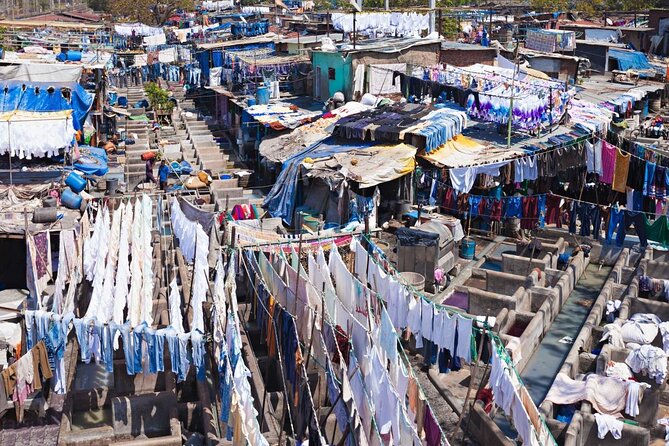
- Real Mumbai stops: Dhobi Ghat (open-air laundry) shows daily work, not just postcard views
- UNESCO arrival point: Chhatrapati Shivaji Maharaj Terminus gets you a major architectural moment with context
- Included water and AC ride: helpful for the heat and the stop-and-go driving
- English-language guidance: clear explanations at each major stop, not just free time
A 5-hour Mumbai hit for cruise days
This is a $52 per person tour designed for cruise passengers who want the essentials without turning the port day into a marathon. At about 5 hours, you get a guided overview of Mumbai’s major layers—British-era landmarks, Gandhi-era memory, and everyday city life—within a schedule that’s realistic for ships.
Value here comes from what you don’t have to manage. The tour includes an air-conditioned vehicle, bottled water, an English language guide, and all fees and taxes. Lunch isn’t included, so you’ll want to plan on a quick snack strategy or rely on your cruise plans for a full meal later.
The other value lever is group size. With a maximum of 15 travelers, the guide can keep things moving while still answering questions. If you prefer more control, the tour also offers private options, which can be a better fit if you want photos, fewer group stops, or more time at one place.
You can also read our reviews of more boat tours in Mumbai

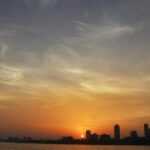
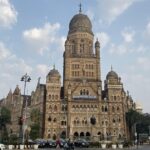
Where the tour starts: Mumbai International Cruise Terminal
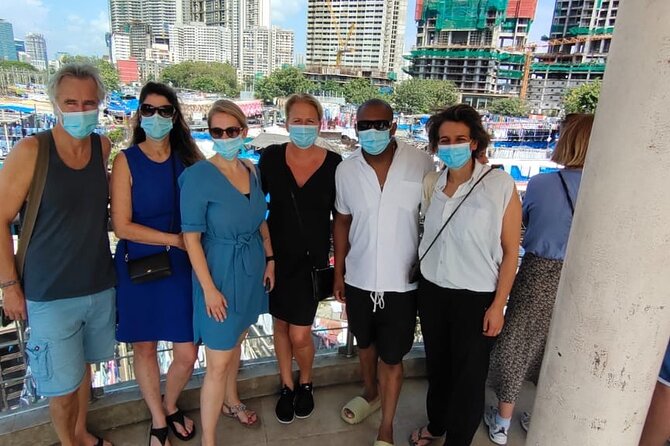
You meet at Mumbai International Cruise Terminal, Mumbai Port Trust International Terminal, Fort—and the tour ends back at the meeting point. That matters more than it sounds. In a city as big as Mumbai, ending where you started helps you avoid the “now what?” moment that can happen on shore excursions.
You’re also told the meeting point is near public transportation, which is comforting if you have any last-minute changes. The tour uses a mobile ticket, so bring your phone battery and make sure you can show the ticket easily.
Practical tip: on cruise days, plan for extra time buffering. Even when everything goes right, traffic and port procedures can stretch your window.
Gateway of India: history, photos, and the sea-facing feel
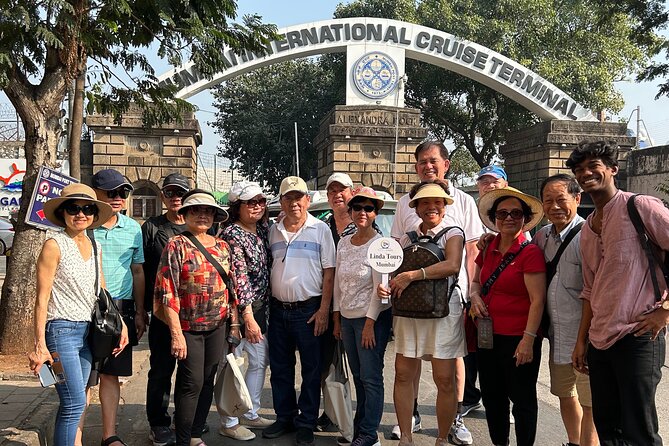
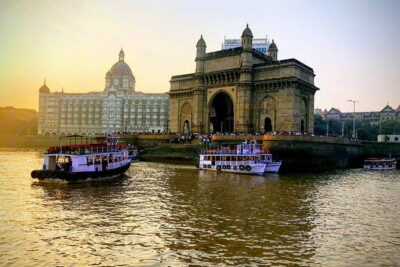
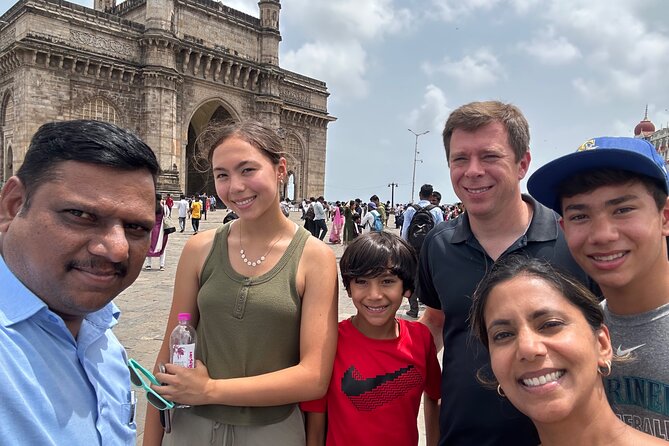
The day kicks off at Gateway of India, the arch-monument built in the early twentieth century to commemorate King-Emperor George V and Queen-Empress Mary’s December 1911 landing at Apollo Bunder. This stop is short—about 20 minutes—but it’s the classic Mumbai starting frame.
What you’ll like here is the mix of story and setting. The monument sits with the water and the port vibe close by, which makes it easier to understand why Mumbai has always been a gateway city. You’ll typically want a couple of angles: one straight-on for the arch, and another from the side if you’re photographing with the surroundings in frame.
Drawback to consider: because it’s a quick photo-and-orientation stop, don’t expect museum-level time. Treat it as a landmark primer that sets up the rest of the tour.
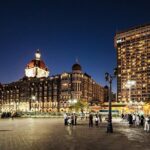
Taj Mahal Palace Hotel: a quick look at a famous 1903 landmark
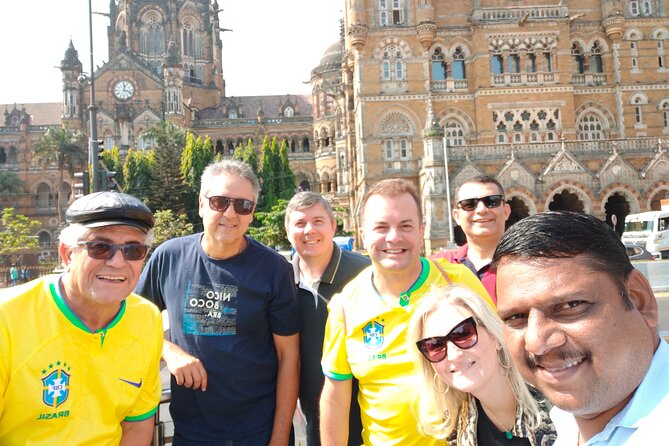
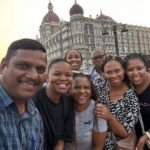
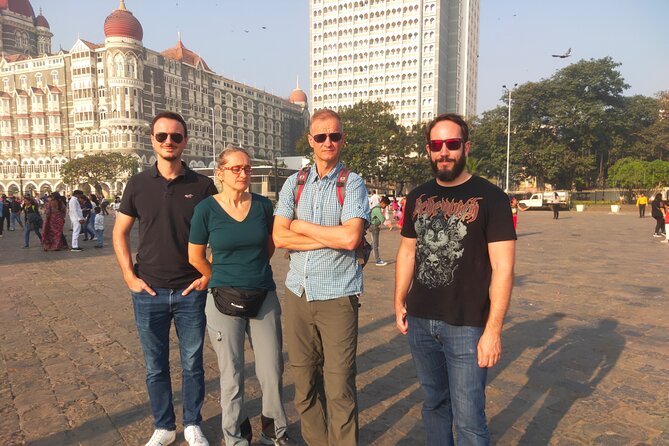
Next is a brief stop at The Taj Mahal Palace Hotel, built in 1903. The tour gives you about 10 minutes, with admission ticket free noted for this stop.
This is the kind of stop that helps you understand why the Taj is more than a hotel name in Mumbai. Even if you don’t go inside, you’ll get a sense of the early twentieth-century scale and the way landmark buildings anchor the city’s identity.
Because the time is short, it’s best as a photo break and a “spot it from the street” moment. If you want to tour the interior, you’d need separate plans.
Dhobi Ghat: watch Mumbai’s open-air laundry at work
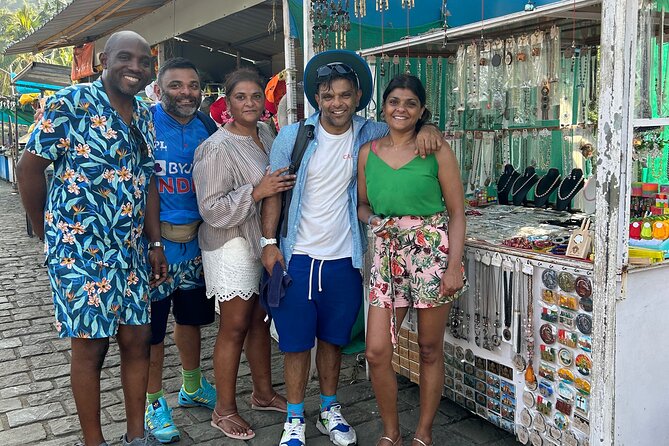
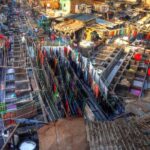
Dhobi Ghat is one of the most memorable stops because it’s about daily labor, not just sightseeing. It’s described as the world’s largest open-air laundry, with washers known as dhobis working in the open to clean clothes and linens from Mumbai’s hotels and hospitals. It was constructed in 1890.
You’ll have around 15 minutes here. In that time, you can watch the workflow and get a feel for how the city runs behind the scenes. It also helps you see Mumbai as a working metropolis, not only a list of monuments.
A practical note: this is an active place. Wear footwear that works for uneven surfaces, and be respectful with photos—what you’re seeing is real work.



Mani Bhavan Gandhi Museum: a focused Gandhi stop in Mumbai
Then you’ll head to Mani Bhavan Gandhi Museum, a museum and historical building dedicated to Gandhi. Mani Bhavan was a focal point of Gandhi’s political activities in Mumbai between 1917 and 1934, and the stop is about 20 minutes with admission ticket included.
This is one of the best stops for people who want the tour to mean something beyond architecture. Gandhi’s story is everywhere in India, but Mani Bhavan gives you a Mumbai-centered setting—how ideas moved through specific rooms and specific years.
What I like about this stop’s placement is that it provides a pause from big monuments. After seeing gateway and colonial-era structures, the museum grounds the day in a person and a time period, which helps the whole tour connect.
Hanging Gardens: terraced views over Malabar Hill and the Arabian Sea
At Hanging Gardens, you get a break from streets and buildings. These terraced gardens sit at the top of Malabar Hill on its western side, just opposite Kamala Nehru Park. The gardens are known for sunset views over the Arabian Sea, and you’ll have about 15 minutes.
Even if your timing doesn’t line up exactly with sunset, you’ll still benefit from the height. The views help you understand Mumbai’s geography—how neighborhoods rise and how the sea shapes the city’s edges.
What to watch for: gardens can mean uneven paths and short stair climbs. If you’re traveling with limited mobility, this stop may require extra care, especially in hot weather.
Marine Drive: street lights and a long ocean line
Next is Marine Drive, with about 10 minutes. The tour notes Marine Drive was built around 1920 and runs along the Arabian Sea from Society Library at Nariman Point and Mumbai State Central Library toward Malabar Hill via Chowpatty. Street lights make it especially striking at night, when the line of illumination gives a smooth, curving look along the waterfront.
If you’re there during daylight, it still works as a visual reset. You get the ocean horizon, the city’s movement along the coast, and a sense of why this is a common gathering zone for locals.
This stop is short by design. You’re not meant to linger. You’re meant to see what Marine Drive looks like so you can recognize it later from photos or your own wander time.
Chhatrapati Shivaji Maharaj Terminus and Rajabai Clock Tower
The tour then gives you two architectural heavy-hitters.
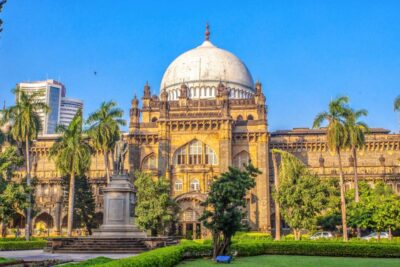
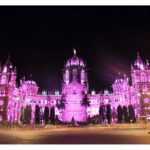
First, Chhatrapati Shivaji Maharaj Terminus (formerly Victoria Terminus) is a historic terminal train station and UNESCO World Heritage Site, with about 20 minutes and admission ticket free noted. This is one of those places where the building does part of the explaining. Even without a deep technical background, you can appreciate the scale and the energy of the design.
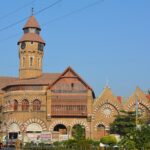
After that, you’ll stop at Rajabai Clock Tower, completed in the 1870s and associated with the University of Mumbai’s library. It’s about 10 minutes, with an admission ticket included noted.
If you want the “why it matters” takeaway: together, these stops show how Mumbai’s urban identity grew around transport and education—railways pulling people and ideas through the city, and institutions shaping who learned and who led.
St. Thomas Cathedral: an early British-era symbol in Mumbai
Finally, the tour heads to St. Thomas Cathedral Mumbai, built in 1718. It’s described as an example and symbol of the early British settlement.
This stop is about 15 minutes and admission ticket free is listed. Like many European-style churches in South Asia, it’s the kind of building where you notice details quickly once you’re standing at the right angle: symmetry, stonework, and the way the structure frames the sky.
It’s also a helpful closing note to the day. After Gandhi and modern city scenes, the cathedral adds a different historical layer—helping you understand the many time periods that Mumbai stacks together.
Small-group guidance: what makes the day run smoothly
The best part of any cruise tour is how well it adapts to real-world conditions. This one has earned praise for responsiveness, including situations where the tour operator waited for late passengers getting off the ship. The tour also includes water on greeting, and the vehicle is described as clean and air conditioned.
Guides matter too. In past groups, guides named Husein/Hussain have been described as knowledgeable about Mumbai and accommodating with requests. That’s exactly what you want in a time-limited day: the ability to point out what’s worth seeing, while still adjusting if you need a quick extra photo stop or you want a short change in pace.
Group size (max 15) supports that. You’re not swallowed by a giant crowd, so your questions actually land.
Price and value: what $52 actually buys
Let’s talk value without hand-waving. For $52, you’re paying for:
- Transport in an air-conditioned vehicle
- Bottled water
- English language guide
- All fees and taxes
- Admission where it’s marked as included at specific stops (like Gateway of India, Mani Bhavan Gandhi Museum, and Rajabai Clock Tower)
Lunch isn’t included, so you should budget for your own food plan. But you’re not paying separately for every ticket in the places where admission is part of the experience.
Is it expensive compared to DIY? Sure, if you’re comfortable with local logistics and negotiating your own route. But for cruise passengers, the value is usually about avoiding stress and reducing risk—missing time, getting lost, or spending your short day trying to figure out transport.
This tour also comes with pickup offered, private and group options, and a mobile ticket, which all reduce friction on port day.
What to pack (so the short stops don’t feel stressful)
You’re on the move for about five hours, with short walks and quick transitions. You’ll enjoy the stops more if you come prepared for heat and time pressure.
Bring:
- Comfortable walking shoes
- Sunscreen and a hat
- A light layer for AC vehicle rides
- A charged phone (mobile ticket)
Also, think in terms of photo strategy. With only 10–20 minutes per stop, you’ll want to decide what matters most to you (wide shot, doorway shot, sea-facing view) so you’re not scrambling at the last second.
Who this tour is for (and who should skip it)
This is a strong match if you:
- Are a cruise passenger with limited shore time
- Want a guided overview of Mumbai’s top highlights
- Prefer a small group rather than a large bus crowd
- Like mixing iconic landmarks with a glimpse of everyday life (Dhobi Ghat)
It’s less perfect if you’re the kind of traveler who wants long museum time, heavy shopping stops, or lots of free wandering. One past feedback theme was that some guests would have liked more opportunities for shopping. If that’s your priority, add shopping time either before or after the tour.
Should you book this Mumbai cruise tour?
I’d book it if your goal is efficiency with context. You get a well-paced tour that hits major landmarks—Gateway of India, Dhobi Ghat, Mani Bhavan, Hanging Gardens, Marine Drive, UNESCO Chhatrapati Shivaji Maharaj Terminus, Rajabai Clock Tower, and St. Thomas Cathedral—within a schedule that’s set up for cruise days.
Pass if you want a slow, independent day, or if shopping time is a must-have. Also, if you’re very sensitive to walking uneven ground, consider that gardens and real working areas like Dhobi Ghat may involve some practical footwork.
If you book, arrive with a simple plan: decide what you want to photograph most, accept that each stop is short, and let the guide do the heavy lifting of connecting the dots.
FAQ
How long is the Mumbai sightseeing tour for cruise passengers?
The tour runs for about 5 hours.
What does it cost?
It costs $52.00 per person.
Where does the tour start and end?
It starts at the Mumbai International Cruise Terminal (Mumbai Port Trust International Terminal, Fort) and ends back at the same meeting point.
Is pickup included?
Pickup is offered, and the tour includes an air-conditioned vehicle.
What group size should I expect?
The tour has a maximum of 15 travelers.
Is there an English-speaking guide?
Yes, the guide is an English language guide.
Are admission tickets included?
Admission ticket inclusion depends on the stop. Some stops include admission tickets (for example Gateway of India, Mani Bhavan Gandhi Museum, and Rajabai Clock Tower), while others are noted as admission ticket free.
Is lunch included?
No, lunch is not included.
Is bottled water provided?
Yes, bottled water is included.
What is the cancellation policy?
You can cancel for free up to 24 hours in advance for a full refund.