REVIEW · MUMBAI
Private Mumbai At Night 4-Hour Tour
Book on Viator →Operated by Mystical Mumbai · Bookable on Viator
Mumbai at night turns monuments into stage props. This private 4-hour Mumbai night tour strings together major South Mumbai sights after dark, with a guide who keeps things moving and helps you shoot better photos. You also get hotel transfers, so you spend less time figuring out logistics and more time actually looking up at the buildings.
I love the setup for photos: key stops are timed for landmark lighting, and you’re not stuck staring at your phone map while everyone else gets the shot. I also like the comfort factor, with an air-conditioned car and bottled water built in, plus the option to tweak the route to match what you care about most.
One possible drawback: the 4-hour window can feel tight if roads get slow, so I’d plan to be flexible about pacing and exact time at each stop.
In This Review
- Quick hits
- Why Mumbai by night feels worth the trip
- Price and logistics: $60 worth it for a private night plan
- From the harbor: Gateway of India after dark
- UNESCO rail power: Chhatrapati Shivaji Maharaj Terminus
- Rajabai Clock Tower: University architecture in the night glow
- Kamala Nehru Park: a breather with a distinctive shape
- Bombay High Court and NGMA: law and modern art in one loop
- Kala Ghoda and Hutatma Chowk: creative streets and British-era blocks
- David Sassoon Library and an Indo-Saracenic museum stop
- Ending at the Taj Mahal Palace across from the water
- Who this night tour fits best
- My quick decision guide: book or keep shopping
- FAQ
- How long is the Private Mumbai At Night 4-Hour Tour?
- What time does the tour start?
- Is hotel pickup and drop-off included?
- Is the tour private?
- Are there admission fees for the listed stops?
- What’s included in the price?
- Can the itinerary be customized?
- What is the minimum number of people per booking?
- What is the cancellation policy?
- Is there a mobile ticket?
Quick hits
- Hotel transfers help you avoid the meeting-point scramble in busy South Mumbai
- Photo-first stops at major landmarks lit up after dark
- Private, adjustable itinerary so your guide can shift priorities
- UNESCO Chhatrapati Shivaji Maharaj Terminus plus classic British-era architecture
- English-speaking guide with time to explain what you’re seeing
Why Mumbai by night feels worth the trip
Mumbai at night has a different rhythm than daytime. In daylight, you notice the details. After dark, you notice the impact—the floodlights, the silhouettes, and the way different eras of the city share the same streets.
This tour is built around that effect. You’ll go from the harbor area to heritage landmarks across South Mumbai, stacking recognizable sights into one smooth run. And because it’s private, you’re not stuck with a big group shuffling toward the same spot like a school field trip. The point here is clear: see famous places when they look dramatic, and get your camera (and your eyes) working fast.
If you’re on a first trip or short on time, this is also a smart way to build a mental map. You’ll get the street-level context around Gateway of India, the UNESCO station, and the colonial-era cluster near Kala Ghoda and Hutatma Chowk—so the next time you walk around on your own, you’ll actually recognize what you’re seeing.
You can also read our reviews of more private tours in Mumbai

Price and logistics: $60 worth it for a private night plan
At $60 per person for about 4 hours, the value depends on your group size and your priorities. This is a private tour with hotel pickup and drop-off, an air-conditioned car, and a guide who’s working on your schedule—not a set group pace.
Here’s how I think about the math:
- If you’re booking as two people, you’re likely paying around $120 total for a private guide plus transport. That can still be a good deal compared with paying separately for a car service and a guide you hire on the fly.
- If you have three or four people, it starts to feel even more sensible because the guide and driver costs spread out.
- If you’re the type who wants to stop, take a few extra photos, or linger at one location, private time is where you get your money’s worth.
Also, the tour offers a mobile ticket, and it runs with a set start time of 6:00 pm. That matters because night lighting in Mumbai can be the difference between good photos and “why does everything look flat?” You’re going out specifically when landmarks come alive.
From the harbor: Gateway of India after dark
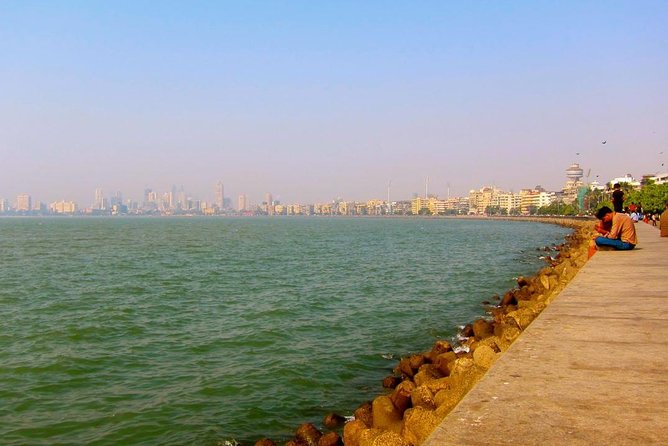
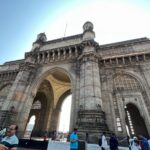
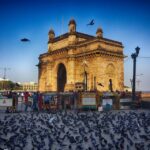
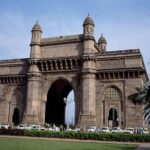
You start at the Gateway of India, the arch monument built during the 20th century. It commemorates the landing of King-Emperor George V and Queen-Empress Mary, and in the evening it takes on that classic “big moment” feeling—especially with the Arabian Sea in the background.
This stop is short on paper (about 20 minutes), but it’s the right kind of short. It gives you time for photos without turning into a long museum-style lecture. I like this approach for night tours: you get one strong visual anchor, then you move before the light and crowds shift.
What to do while you’re there:
- Watch for reflections and the way the lights define the arch shape.
- Take a couple wider shots first (for context), then step in for close framing.
- If you’re traveling with anyone who prefers less standing around, this is usually where you’ll still satisfy the photo crowd without dragging the whole tour.
UNESCO rail power: Chhatrapati Shivaji Maharaj Terminus
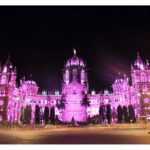
Next up is Chhatrapati Shivaji Maharaj Terminus, formerly known as Victoria Terminus. It’s a UNESCO World Heritage site, and even if you don’t care about railways, this station has serious visual presence—especially at night with lights and motion in the frame.
You’ll have about 25 minutes here. That’s enough time to appreciate why the station is worth protecting and photographing, plus get some great “city at work” pictures rather than only monument shots.
Two practical tips for this stop:
- Keep an eye on where you’re standing for safe footing near traffic and footpaths.
- Use the station’s symmetry for photos: this is one of those places where your camera benefits from steadier framing and fewer last-second scrambles.
This stop also helps the tour feel more real. You’re not only seeing famous landmarks for postcards—you’re seeing a key piece of the city’s day-to-day infrastructure.
Rajabai Clock Tower: University architecture in the night glow

After the station, the tour heads toward the Rajabai Clock Tower, located in the Fort campus of the University of Mumbai. The tower is listed at 85 meters tall, and it’s part of the Victorian and Art Deco-style architectural mix.
Your time here is around 10 minutes, so think of it as a quick architectural hit. You’re not trying to “tour” the university; you’re getting the view, learning what the tower represents, and grabbing one or two clean shots before moving on.
If you’re the kind of traveler who likes details, this is a good spot to pay attention to the tower’s proportions against nearby buildings. Night lighting can flatten shapes, but it can also make vertical lines look crisp. That’s when this tower tends to photograph well.
You can also read our reviews of more evening experiences in Mumbai
Kamala Nehru Park: a breather with a distinctive shape
The next pause is Kamala Nehru Park, a favorite for both young and old that’s been around for over 65 years. One of its most distinctive features is described as a boot-shaped structure, which makes it a fun contrast to the more formal monuments you’ll see elsewhere.
This stop gives you about 20 minutes, which is a nice reset. In a 4-hour tour, you need at least one break from “nonstop photo mode.” A park stop also helps you see how the city relaxes in the evening—less only monumental, more everyday.
If your group includes people who want lower effort than constant landmark stops, this is often the easiest win. It’s also an opportunity to get a quick stretch before the tour shifts toward art and colonial-era streetscapes.
Bombay High Court and NGMA: law and modern art in one loop
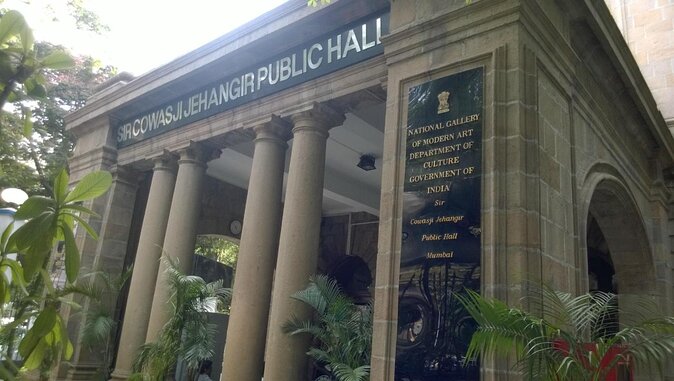
The route then passes Bombay High Court, noted as one of India’s oldest high courts. After that, the plan includes the National Gallery of Modern Art, Mumbai, opened to the public in 1996.
A key thing here: the tour format suggests you’re likely seeing these areas as guided exterior stops rather than doing long indoor time. That can be good for your total schedule. You get context from the guide, and you still keep the night energy moving.
If you’re wondering what’s “worth it” at this stage, I’d focus on this idea: these stops show two different layers of Mumbai’s identity—old institutions and newer cultural spaces. The night lighting plus guided explanation can turn “just another building” into something you recognize later.
Kala Ghoda and Hutatma Chowk: creative streets and British-era blocks
Next comes Kala Ghoda, described as a creative area with designer cafes, indie galleries, and sidewalk art stalls. That blend matters because it changes the mood from formal landmarks to a more human, street-level vibe.
Then you’ll reach Hutatma Chowk square, lined on all sides by buildings constructed during the British Raj. This is one of those areas where architecture and street life intersect, and the night lighting helps the facades look more dramatic.
You’ll have short time windows here (with several nearby sights grouped together). That’s not a flaw—it’s how this kind of night tour works. Your job is to pick your photo priority:
- If you want street art-style pictures, spend a minute longer at the curbside scenes.
- If you prefer architecture, take a step back and shoot the square as a frame, not only individual buildings.
David Sassoon Library and an Indo-Saracenic museum stop
The route includes the David Sassoon Library, a heritage library building. The idea for its placement is described as coming from Albert Sassoon, and that’s the kind of clue your guide can use to explain why the building matters.
After that, you’ll visit a grand museum with Indo-Saracenic architecture that features history exhibits plus cultural art and education. The key detail for your planning is the architectural style. Indo-Saracenic can look especially good under night lighting because it mixes decorative shapes with strong outlines.
In a short stop, I’d focus on:
- Symmetry and doorway details (they’re easier to photograph than tiny ornamentation).
- Any lighting that emphasizes curves or layered patterns.
- Getting at least one shot that shows the museum’s exterior as a whole, not only close-up sections.
Ending at the Taj Mahal Palace across from the water
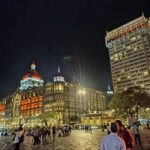
The final big anchor is The Taj Mahal Palace, Mumbai. It’s described as iconic and located across from the Gateway of India, overlooking the Arabian Sea.
This is a great way to close the loop. You started at the harbor’s arch, and now you end with one of Mumbai’s most recognizable hotel silhouettes. Even if you’re not entering, the view matters—and the route makes it easy to compare how the area looks across time and lighting.
Your time here is about 10 minutes, so treat it like a photo sprint. If you want one perfect closing image, pick your spot quickly, take two or three angles, then move on so your group doesn’t fall behind.
Who this night tour fits best
This tour is a strong match if you:
- Want a first-night Mumbai orientation without the stress of transit and meeting points
- Care about photos of landmark lighting and want them in a tight, efficient loop
- Like having a guide explain what you’re seeing while you move from stop to stop
- Prefer private pacing, so you’re not stuck waiting on a large group
It’s less ideal if you:
- Need long, unhurried time at each location. The tour is designed for multiple stops within a limited window.
- Have very strict expectations about timing down to the minute. Night driving conditions can affect pacing in any big city, and Mumbai is not an exception.
- Have strong preferences about guide speaking style. The tour lists an English-speaking guide, but one booking in the past flagged an accent issue, so if that matters a lot to you, it’s worth asking about English clarity when booking.
My quick decision guide: book or keep shopping
I’d book this private night tour if you want maximum “wow” per hour—harbor monuments, UNESCO rail architecture, and a final shot at Taj with minimal hassle. The combination of hotel pickup, air-conditioned transport, and a guide who helps you connect the sights makes it feel like more than just a car ride.
I’d hold off if your priority is deep museum time or long stops where you want to sit, read, and wander. This is a focused route. If you want that style, it’s a good fit.
If you’re choosing between a DIY evening plan and a guided night loop, go guided here. Mumbai at night can be gorgeous, but you don’t need the stress tax when a private guide and hotel transfers can remove it.
FAQ
How long is the Private Mumbai At Night 4-Hour Tour?
It runs for about 4 hours.
What time does the tour start?
The tour starts at 6:00 pm.
Is hotel pickup and drop-off included?
Yes. Hotel pickup and drop-off are included.
Is the tour private?
Yes. It’s a private tour, and only your group participates.
Are there admission fees for the listed stops?
The itinerary lists admissions for the included landmarks as free.
What’s included in the price?
Included items are transport in an air-conditioned car, hotel pickup and drop-off, an English-speaking guide, a professional driver, private tour service, and bottled water.
Can the itinerary be customized?
Yes. The itinerary can be customized to suit your needs.
What is the minimum number of people per booking?
A minimum of 2 people per booking is required.
What is the cancellation policy?
Free cancellation is available up to 24 hours in advance for a full refund.
Is there a mobile ticket?
Yes. The tour includes a mobile ticket.