REVIEW · MUMBAI
Mumbai By Night: Lights & Luminance
Book on Viator →Operated by Linda Tours Mumbai · Bookable on Viator
Mumbai looks different after dark. This Lights & Luminance night tour turns South Mumbai’s famous sights into an easy circuit, with an air-conditioned vehicle and a guide who explains what you’re seeing as the city glows. I especially like the private feel and the relaxed pace that keeps you out of the daytime heat and crowd chaos.
I also love how well the tour supports photo time without making you sprint between stops. One thing to keep in mind: one of the big expectation points, like the Gateway of India, can be affected by closures or events, so you should stay flexible about lighting and photos at that particular moment.
In This Review
- Key things that make this night tour worth your time
- Mumbai at night is a glow-up, not just a change of lighting
- Price and logistics: what $37.50 buys you in real comfort
- Pickup, timing, and the car ride that actually matters
- The full Lights & Luminance route: what each stop gives you
- Gateway of India and Flora Fountain: the classic start, with skyline energy
- Chhatrapati Shivaji Terminus and Rajabai Clock Tower: rail heritage meets university grandeur
- Marine Drive and Girgaum Chowpatty: the curve that photographers chase
- Asiatic Society of Mumbai: civic elegance without needing a ticket
- Dhobi Ghat: the most human stop on the whole route
- Hanging Gardens and Malabar Hill viewpoints: where you finally see the whole city
- Antilia: famous, futuristic, and fast
- St. Thomas Cathedral: a quiet finish with old-world weight
- Photography and comfort tips I actually use on night city walks
- Who should book this tour, and who might want a different style
- Should you book Mumbai By Night: Lights & Luminance?
- FAQ
- How long is the Mumbai By Night: Lights & Luminance tour?
- Is pickup available, and where does the tour meet?
- Is this tour private or shared with others?
- What’s included in the tour price?
- Are admission tickets required for the stops?
- Is dinner included?
- Can I get a refund if I cancel?
Key things that make this night tour worth your time
- A/C car with roundtrip transport so the night stays comfortable, not exhausting
- Photo-friendly viewpoints across South Mumbai, including Malabar Hill angles
- A guide who adjusts to your interests, from history facts to extra picture stops
- Clear-night viewing opportunities from elevated spots for sharper skyline photos
- Smooth driving and safety focus, including careful navigation through busy areas
Mumbai at night is a glow-up, not just a change of lighting
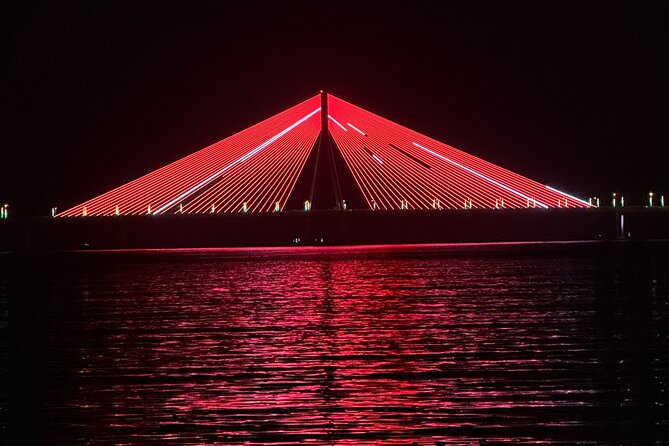
Daytime Mumbai is intense. Nighttime Mumbai is still busy, but it feels more human and cinematic. You get light on stone, color on old façades, and long shadows along the shoreline—plus the bonus of cooler air while you’re moving around.
This tour works because it is built like a guided route, not a free-for-all. You ride between landmarks in a car with AC, then step out at each stop long enough to look, read the vibe, and take a few photos before rolling to the next point.
What makes the night angle special is that it changes your attention. In daylight, you clock the architecture. At night, you notice proportions, reflections, and how people live alongside the monuments. That’s why this route includes everything from iconic buildings to the laundry area and the beachfront—so you see Mumbai’s “public life” as much as its “postcard life.”
You can also read our reviews of more evening experiences in Mumbai

Price and logistics: what $37.50 buys you in real comfort
At $37.50 per person for roughly 3 to 4 hours, the value comes from the package you don’t have to assemble yourself. You’re not just paying for a guide. You’re paying for:
- Air-conditioned roundtrip transportation
- English-language guide
- WiFi onboard
- Bottled water
- Private transportation with your group only
When you do this kind of circuit alone, you quickly spend time solving problems: where to park, when to cross streets, how to time traffic, and how to survive the heat between far-apart sights. Here, the car compresses that hassle into a single plan.
Also, the tour is designed around short, high-impact stops. That’s great if you have limited time or you want a fast “first look” at the city after landing. If you’re the type who needs long, quiet museum-style visits, you’ll still get the highlights, but you may want a second day in Mumbai to go deeper.
Pickup, timing, and the car ride that actually matters
Meeting point is at Starbucks No C, Dhanraj Mahal, 15, Chhatrapati Shivaji Maharaj Marg, near Apollo Bunder, Fort, Mumbai, Maharashtra 400001, India. The tour ends back at the same place.
Pickup is offered, and many people like that setup because it removes the question of how you’ll reach the start point when traffic and distances are part of the equation.
Why timing matters on this tour: Mumbai streets can turn into slow motion quickly. Reviews repeatedly praise drivers for navigating smoothly and arriving on time. That matters because night tours are unforgiving—if you lose 30 minutes in traffic, you feel it at every next stop.
A practical tip: wear light layers. Even with AC, nights near the water can cool down, and you’ll be out of the car briefly at multiple sites.
The full Lights & Luminance route: what each stop gives you
This tour is built as a rolling mix of monuments, grand civic buildings, coastal views, and local scenes. Each stop is short, so your best strategy is to look first, then use your guide’s facts to make the photos mean something.
Gateway of India and Flora Fountain: the classic start, with skyline energy
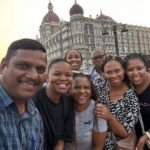
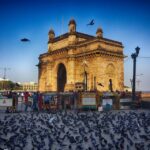
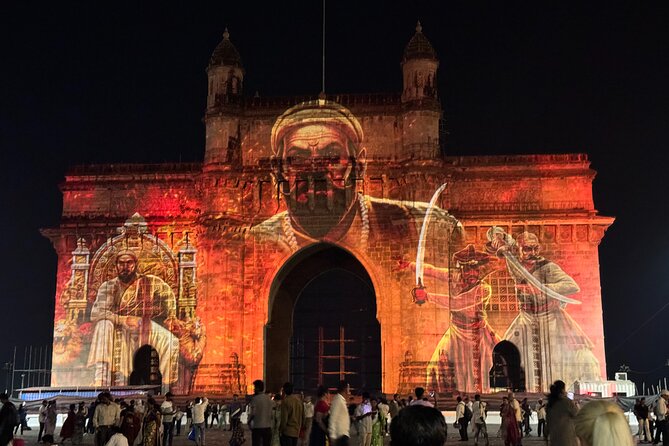
Gateway of India is your opening anchor. You’ll see the arch monument associated with the landing of King-Emperor George V and Queen-Empress Mary at Apollo Bunder. You get about 20 minutes here, which is enough for a first walk, a few wide-angle shots, and a quick moment to watch the area’s nighttime rhythm.
Some people also look forward to the Gateway area light show. On clear nights, you’ll often do better with photos when the guide suggests angles that keep bright light sources from blowing out your camera.
Next is Flora Fountain at Hutatma Chowk (Martyr’s Square). It’s an ornately sculpted architectural piece and a strong “people-watching + landmark” spot. It’s also conveniently located for building momentum: you’re still in the Fort/South Mumbai zone, where many of the next stops cluster.
Possible drawback at the start: if the Gateway of India is closed due to a private event, you can lose the best lighting moment and photo framing you came for. If this is your must-see, I’d treat it as a bonus rather than a guarantee.


Chhatrapati Shivaji Terminus and Rajabai Clock Tower: rail heritage meets university grandeur
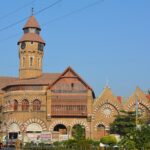
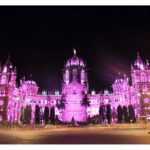
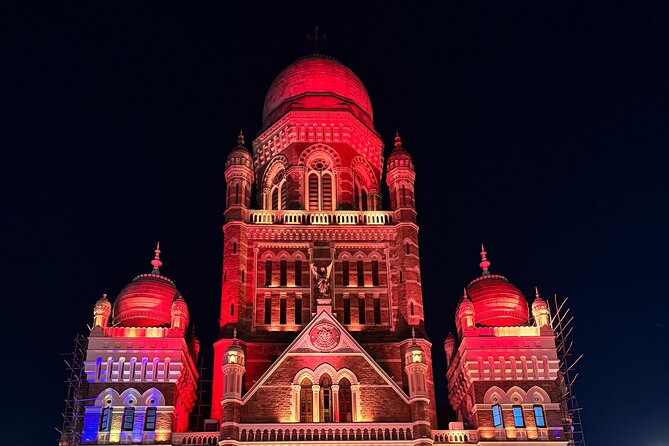
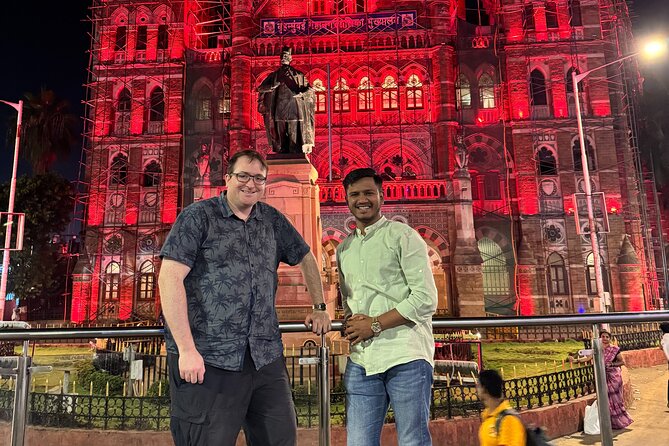
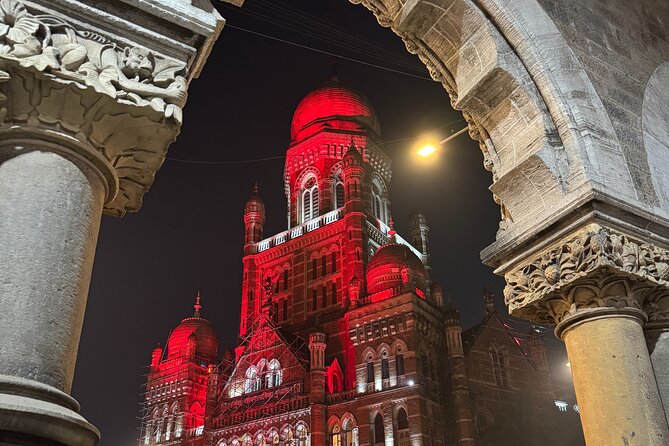
A major shift happens when you reach Chhatrapati Shivaji Maharaj Terminus (CSTM), a historic train station and UNESCO World Heritage site. You’ll spend about 15 minutes here. Even if you don’t ride trains, this stop is worth it because the station looks like a city within a building—big geometry, strong lines, and night lighting that makes the structure feel even more dramatic.
Then you’re at Rajabai Clock Tower, part of the University of Mumbai Fort campus. The tower rises about 85 meters, and even from a distance you can see why it anchors the skyline. You get around 10 minutes here, which is just enough to step back, take a few structured shots, and catch your bearings for the next section along the coast.
Marine Drive and Girgaum Chowpatty: the curve that photographers chase
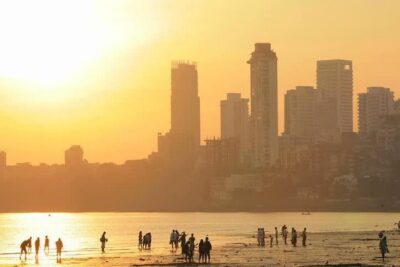
Marine Drive is a 3.6-kilometer boulevard known for its distinctive “C” shape. At night, this stretch turns into a long, curved line of light. You’ll spend roughly 10 minutes here, plus time by the shoreline at Girgaum Chowpatty, a public beach along the Queen’s Necklace adjoining Marine Drive.
This is one of the best areas to slow down and let the city settle into view. It’s also where a quick photo plan pays off. If you’re using a phone, switch to a steadier hold (rest your elbows, use burst mode), and aim for reflections and silhouettes instead of trying to capture every person in sharp detail.
Asiatic Society of Mumbai: civic elegance without needing a ticket
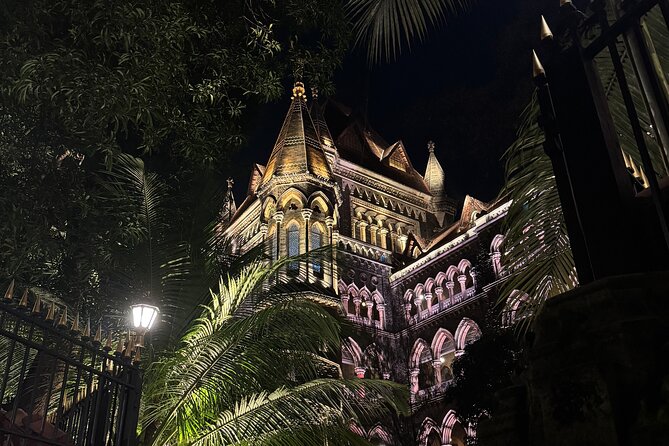
The Asiatic Society, Mumbai stop includes the Town Hall associated with the Asiatic Society of Bombay. The visit is short (about 10 minutes), but the building’s calm presence helps break up the more kinetic energy of traffic and street life.
This is a good stop if you like noticing how the city organized itself around institutions. At night, the lighting makes these façades feel more formal and less chaotic, so your guide’s stories land well.
Dhobi Ghat: the most human stop on the whole route
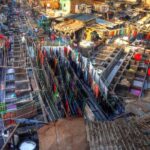
Dhobi Ghat (the open-air laundry) is about 20 minutes and it’s one of those places that makes you feel Mumbai’s daily rhythm instead of just its landmarks. It’s a series of wash pens in the open, with rows of concrete areas and a setup designed for washing and beating clothes with stone tools.
People often come here because it’s visually different from typical sightseeing. The night view can feel almost mechanical—repetition, steam, movement—but it’s also a place where locals show up for work and routines. Go with respectful curiosity. It’s not a theme park.
Hanging Gardens and Malabar Hill viewpoints: where you finally see the whole city
Hanging Gardens, also known as Pherozeshah Mehta Gardens, sit on Malabar Hill and get about 20 minutes. It’s terraced, created in the late 19th century, and at night it’s more about silhouette and spacing than about greenery.
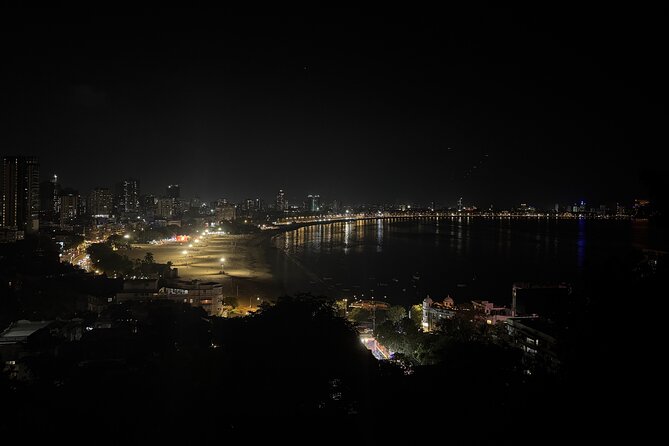
Then you reach elevated viewing near the end: Pramod Navalkar Viewing Gallery gives panoramic views of South Mumbai. Expect roughly 10 minutes. This is where you want to be most intentional with your photos because it’s the best chance to capture the city as a grid of lights rather than single buildings.
A quick photo tip: if the sky looks clear, ask your guide to point out the best angles. More than one guide and driver pairing is praised for taking time to help people get the shots they came for, especially on clear nights when visibility is better.
Antilia: famous, futuristic, and fast
Antilia is the residence of billionaire Mukesh Ambani. The tour passes it in about 5 minutes, on Billionaires’ Row. It’s considered one of the world’s most expensive private residences, and you’ll see it from the outside, quickly.
Treat this stop as a contrast moment. It’s not a slow architectural study. It’s a quick reminder that Mumbai contains everything from heritage buildings to jaw-dropping modern wealth—all within a short drive.
St. Thomas Cathedral: a quiet finish with old-world weight
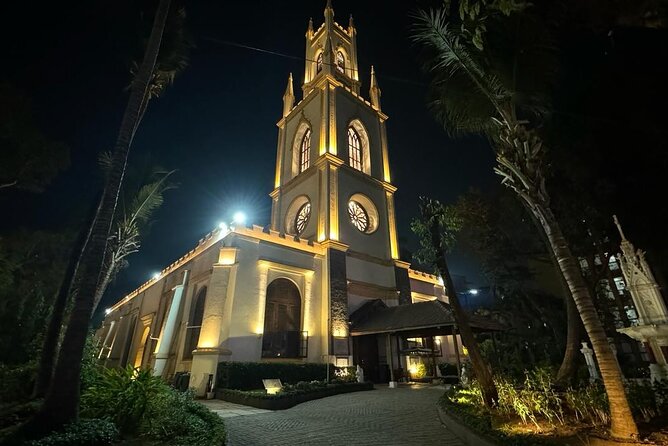
For the final architectural anchor, the tour heads to St. Thomas Cathedral. It’s described as the oldest church in Mumbai, located near Horniman Circle, close to landmarks like Flora Fountain and Bombay House. You get about 10 minutes.
At night, the cathedral’s lighting gives it a grounded, solid look. It’s a good place to end because it feels less chaotic than the coastal spots and it gives you a calm last reference point before you return.
Photography and comfort tips I actually use on night city walks
Night tours are all about timing and control. Here’s what helps in Mumbai:
- Ask for photo spots before the stop ends. Many guides on this tour are willing to take your picture and suggest angles, especially at viewpoints like Malabar Hill.
- Look for structure, not just lights. At CSTM and Rajabai Clock Tower, framing the geometry will beat random wide shots.
- Use a steady stance. Brace your phone, don’t zoom too much, and expect moving lights from boats, cars, and people.
- Plan for short windows. Each stop is brief. If you waste time at one spot waiting for perfect conditions, the later viewpoints might feel rushed.
One more practical point: monsoon season can be a factor in Mumbai. If you go during rainy months, expect wetter streets and add a small buffer for traction. A careful driver makes a big difference here.
Who should book this tour, and who might want a different style
You should book if:
- You want a first night orientation to South Mumbai.
- You care about photos and want help finding good angles.
- You prefer a private experience with an A/C car rather than negotiating traffic on your own.
- You want history and context while you ride, with guides who adjust to what you ask for.
You might choose a different option if:
- You need lots of time at each location. This is a “see many, learn enough” style.
- You’re expecting every building to have special light effects. Some places look best because of their shape and placement, not because they have flashy projections.
- The Gateway of India is your only reason to come. If it’s closed for an event, you’ll still see plenty, but that specific moment could disappoint.
Should you book Mumbai By Night: Lights & Luminance?
If you like efficient, well-timed sightseeing where you can actually breathe, I’d say yes. This tour hits the best “night Mumbai” mix: iconic landmarks, a few serious architecture stops, the coast, and a genuinely different look at daily life at Dhobi Ghat.
For the price, you’re getting more than sightseeing. You’re buying peace of mind: A/C transport, bottled water, WiFi, and a guide who keeps the route moving and helps with photos. Just go in with flexible expectations for the Gateway area and you’ll leave feeling like you understood the city’s glow, not just photographed it.
FAQ
How long is the Mumbai By Night: Lights & Luminance tour?
It runs about 3 to 4 hours.
Is pickup available, and where does the tour meet?
Pickup is offered. The meeting point is Starbucks No C, Dhanraj Mahal, 15, Chhatrapati Shivaji Maharaj Marg, near Apollo Bunder, Fort, Mumbai, Maharashtra 400001, India.
Is this tour private or shared with others?
This is a private tour. Only your group participates.
What’s included in the tour price?
Included items are bottled water, an air-conditioned vehicle, private transportation, WiFi on board, and an English language guide.
Are admission tickets required for the stops?
The tour information lists admission tickets for the stops as free.
Is dinner included?
No, dinner is not included.
Can I get a refund if I cancel?
Free cancellation is available. You can cancel up to 24 hours in advance for a full refund. If you cancel less than 24 hours before the start time, the amount paid is not refunded.