REVIEW · MUMBAI
Mumbai Night Tour: Queen’s Necklace, Skyline & Heritage Lights
Book on Viator →Operated by Explore Mumbai Tours · Bookable on Viator
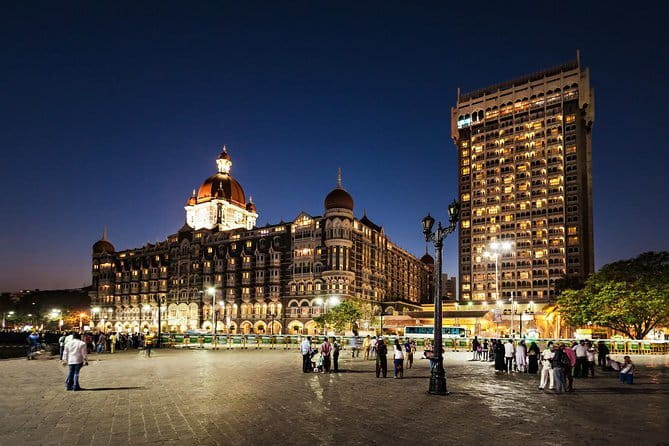
Mumbai night feels different the minute lights click on. This 3 to 4 hour tour is a smart way to see South Mumbai’s big architectural names after dark, with stops that are brief but meaningful. I like how the drive along Marine Drive (the Queen’s Necklace) turns skyline watching into a real event, and I like that you also get the quieter views from Malabar Hill instead of only rushing between monuments. One consideration: this is mostly short photo-and-look stops, so if you want long time on the ground in each place, you may feel a bit rushed.
You’ll start in Colaba and work your way through landmark after landmark: Gateway of India, the Chhatrapati Shivaji Maharaj Terminus (CSMT) area, and a string of colonial-era public buildings and gardens. Guides such as Pranav and Priti have been praised for making the story of Mumbai’s night scene make sense, and Javed is specifically noted for history that feels practical, not academic. The best fit is an easy night out where you still want context.
Possible drawback: you’re hopping around in a vehicle with multiple stops, and the timing can feel tight at places where you’ll want extra photos—especially near the viewing points.
In This Review
- Key highlights to look for
- Where the tour starts in Colaba, and how the evening flows
- Gateway of India: your night “anchor” point
- Marine Drive and the Queen’s Necklace skyline run
- Malabar Hill: parks, hanging gardens, and calm city views
- CSMT and Town Hall: Victorian Gothic and the power of old stone
- The colonial circle: Horniman Circle Garden and the calm between monuments
- Finance and institutions: BSE, courts, and clock-tower drama
- St. Thomas Cathedral, Flora Fountain, and reading the street like a map
- University of Mumbai and the “education architecture” moment
- How much time you really spend (and where you should use it)
- Who this tour suits best
- Price value: why $31.14 can make sense here
- Should you book this Mumbai night tour?
- FAQ
- What’s the duration of the Mumbai night tour?
- Where does the tour start and end?
- What sites will we see during the tour?
- Is dinner included?
- What’s included in the price?
- Can I cancel for a full refund?
Key highlights to look for
- Queen’s Necklace timing: the Marine Drive stretch is built for skyline views when the light is at its best
- Malabar Hill viewpoints: parks and a dedicated viewing gallery give you a step back from street-level noise
- Big-hammer architecture in short visits: CSMT, Town Hall/Asiatic Society Library, and Gothic clock towers show up in one evening
- Photo-friendly variety: sea-facing promenades, terraced gardens, and clock-tower angles are all in the mix
- AC vehicle + bottled water: comfort matters in Mumbai heat, even more when you’re out at night
- Know-what-you-see guiding: guides like Javed and Yash have a reputation for clear, helpful context
Where the tour starts in Colaba, and how the evening flows
The meeting point is PizzaExpress Dhanraj Mahal on Chhatrapati Shivaji Maharaj Marg in Colaba. That location is handy because Colaba is already where many first-time visitors want to be—near the waterfront and a cluster of historic sites. The tour ends back at the meeting point, so you’re not scrambling for transport when you’re tired and hungry.
You’ll be in an air-conditioned vehicle for the whole ride, with bottled water included. That sounds like a small detail, but it matters in Mumbai, where humidity can drain you fast. The guide keeps the evening moving with frequent short stops, roughly 5 to 10 minutes at each site, so you get a lot of variety without burning hours.
This is also a private tour/activity for your group. That’s a big quality-of-life upgrade versus shared group tours, because you can ask quick questions and adjust when you need a photo or a restroom pause. Most travelers can participate, and the walking time is light by design.
You can also read our reviews of more historical tours in Mumbai

Gateway of India: your night “anchor” point
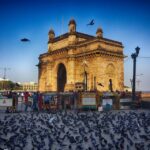
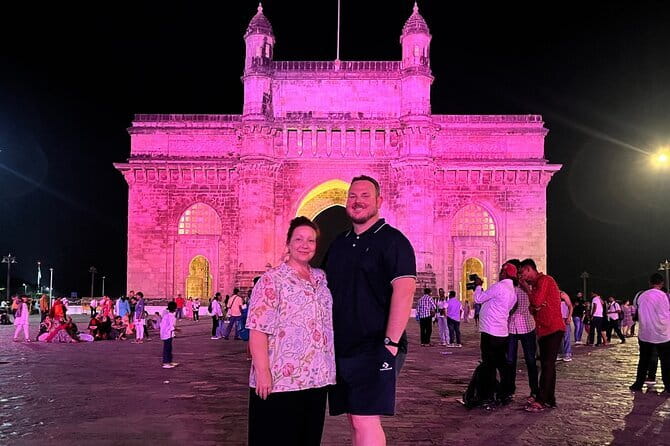
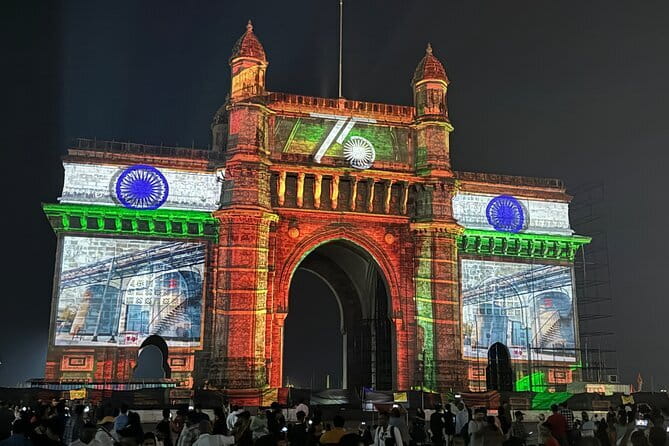
Your first major stop is the Gateway of India. It’s an impressive arch monument and a symbol of Mumbai’s history and colonial past. At night, the advantage is simple: the monument is easier to enjoy without the day’s crowds and glare, and it often feels more dramatic because the surrounding light does the work for your photos.
You’ll have about 10 minutes here. That’s enough time to appreciate the carved details and get your first sense of where you are in South Mumbai. If you’re the type who likes to figure out a city’s geography early, this stop helps you mentally map the rest of the evening.
Tip: if your camera battery hates cold or low-light, this is a good place to start shooting right away so you don’t waste momentum later.
Marine Drive and the Queen’s Necklace skyline run
Next up is Marine Drive, the sea-facing promenade known as the Queen’s Necklace. It runs along the Arabian Sea coastline, lined with palm trees and art deco buildings. The whole point of coming here at night is that the roadway lights turn your view into a moving reflection—one of those places where the city looks like it planned the lighting scheme on purpose.
You’ll spend around 10 minutes along Marine Drive. That might sound short, but the timing fits the visual payoff: you’re seeing the illuminated stretch while it still feels fresh, and you’re not stuck there long enough to lose the rest of the tour.
This is also where a good guide adds value. The history and “what to notice” can be quick, but the payoff is bigger than you think: you start noticing patterns—how the buildings sit, where the best sightlines are, and how the curve of the road shapes the skyline. People mention photo help in ways that make sense here too, because this is one of the easiest places to frame.
If you’re sensitive to motion, take the outside seat view whenever possible while you’re driving the route. The views are more fun when you’re not only looking through a window at speed.
Malabar Hill: parks, hanging gardens, and calm city views
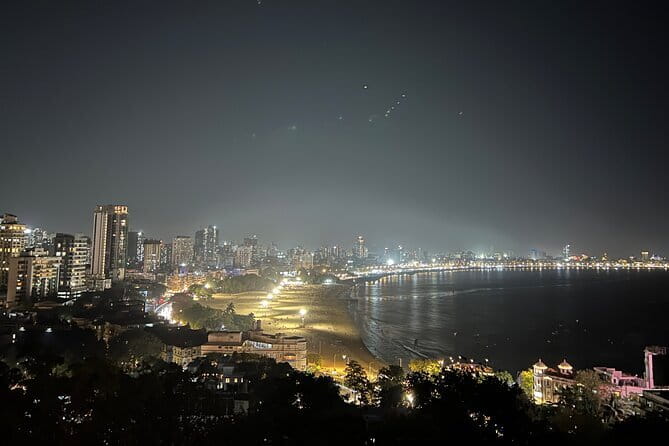
After the main monuments, the tour shifts toward Malabar Hill, an upscale residential area in South Mumbai known for green space and city-and-sea views. This is where the evening slows down, visually and mentally. You trade straight-on monument shots for lookout moments and landscaped spaces.
You can expect several quick stops in this area:
- Hanging Gardens (Pherozeshah Mehta Gardens): a terraced garden set in Malabar Hill’s upscale zone. The terraces help create depth, which makes night photos look more layered even with limited time.
- Kamala Nehru Park: a landscaped park with lawns and colorful flowers, plus stunning views (especially when the skyline lights start to pop).
- Pramod Narvankar Viewing Gallery: a dedicated spot for panoramic views, including landmarks like the Gateway of India and the Arabian Sea.
Those stops are short—about 10 minutes at the Hanging Gardens and the viewing gallery, and around 5 minutes at Kamala Nehru Park. The value is that you get multiple “flavors” of Malabar Hill without needing a half-day. If you only had time for one viewpoint, the viewing gallery is the most directly geared for that skyline overview.
Practical thought: the hill area can feel cooler than lower streets, but you still want a light layer. Night air can shift quickly when you’re moving between sea-level and higher ground.
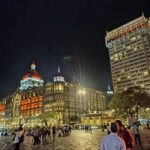
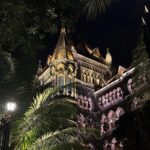
CSMT and Town Hall: Victorian Gothic and the power of old stone
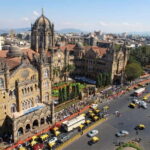
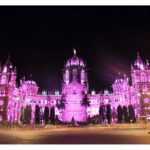
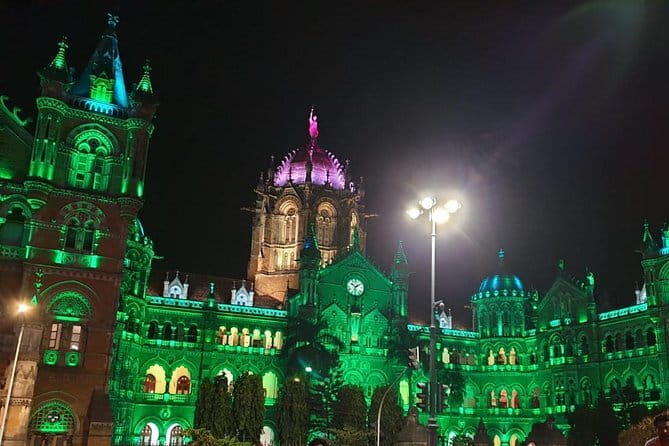
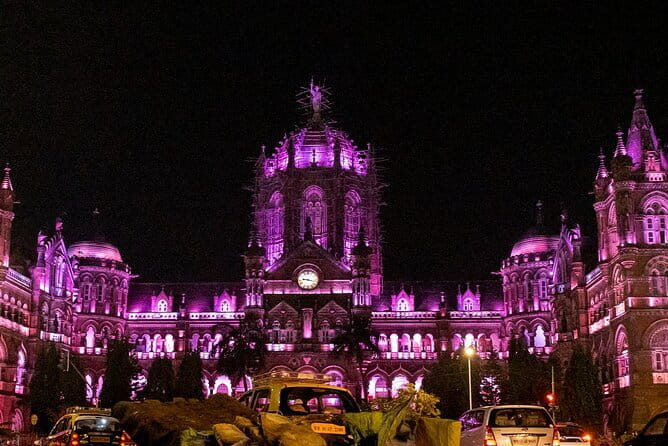
Then you hit Chhatrapati Shivaji Maharaj Terminus (CSMT), formerly known as Victoria Terminus. It’s a historic railway station built in 1887 to commemorate Queen Victoria’s Golden Jubilee. It’s also one of the evening’s biggest “wow per minute” moments, because the building’s size hits you even if your stop is only about 10 minutes.
The guide context matters here. A railway station sounds functional, but at CSMT you’re really seeing how Mumbai built prestige into infrastructure. At night, the lighting helps the building read as architecture instead of just a place you pass through.
From there, you visit the Town Hall (Asiatic Society Library). This one is known as an architectural landmark dating back to the 19th century. You’ll have around 5 minutes—just enough to spot the scale and understand why people treat it like a cultural stop, not just a building on a street.
If you like your city tours to mix movement with meaning, this part of the evening is where it clicks. You get the sense that South Mumbai grew into its identity with big, statement-making structures.
You can also read our reviews of more evening experiences in Mumbai

The colonial circle: Horniman Circle Garden and the calm between monuments
After CSMT and Town Hall, you’ll pass into Horniman Circle Garden, a serene oasis inside busy city motion. It’s described as a historic park encircled by colonial-era buildings.
This stop is short—about 5 minutes—but it’s a useful rhythm-break. You’ve just seen major institutional architecture; Horniman Circle gives you a moment where the eye can rest on open space and surrounding facades.
If you’re traveling with someone who gets tired of constant photo stops, this is the “agreeable pause.” Parks and garden areas are easier for non-architecture lovers to enjoy because you can just look up, breathe, and reset.
Finance and institutions: BSE, courts, and clock-tower drama
One of the more interesting turns in the evening is Bombay Stock Exchange (BSE). It’s described as Asia’s oldest stock exchange and among the top exchanges worldwide. You’re not going inside on this tour—think of it more as an exterior stop that signals Mumbai’s role as a finance engine, not just a port and a film set.
Right after that, you’ll spend time around Bombay High Court Principal Bench, described as the oldest High Court in India. The building is noted for a blend of Gothic and Indo-Saracenic architecture. Even in a brief stop, it’s one of the places that makes you understand how different styles got layered into the city’s institutions.
Then comes the Rajabai Clock Tower, built during the British Raj era in a Gothic style with intricate carvings. Clock towers can look theatrical in photos, and at night they often look even more dramatic because the sky acts like a dark backdrop that makes the edges sharper.
If you like architecture that feels like it has a sense of authority, this section delivers. If you don’t, it can still be worth it just to see how the city’s street-level identity ties to law, learning, and finance.
St. Thomas Cathedral, Flora Fountain, and reading the street like a map
Next you’ll visit St. Thomas Cathedral Mumbai, built in the early 18th century and noted as one of the oldest churches in Mumbai. This is one of the stops where time on the ground feels less necessary. The main value is the exterior impression and the way the structure fits into the surrounding urban fabric.
You’ll also see Flora Fountain, a historic monument built in the 19th century and named after the Roman goddess Flora. It’s a classic “city center landmark” type of stop, which means it helps you re-orient the rest of your mental map of South Mumbai.
There’s also Readymoney Mansion, described as a historic late-19th-century colonial-era building. The details given are about its opulence and that it was once the residence of someone tied to the era, but the broader takeaway is that Mumbai’s grand homes and public buildings aren’t separate worlds—they’re part of the same sightseeing circuit.
These short stops are efficient, but they work best if you treat them like landmarks on a route, not like museum exhibitions. I like the way this tour makes that easy.
University of Mumbai and the “education architecture” moment
Finally, you’ll stop at the University of Mumbai Library area. The University of Mumbai is described as one of India’s oldest and most prestigious universities, and the main building is noted as a historic landmark with ornate architectural features.
This is a nice closing note because it completes a theme: governance, finance, faith, and learning all show up in one evening. You’re seeing South Mumbai not just as a collection of pretty places, but as a network of institutions that shaped the city’s public face.
With about 5 minutes at this stop, don’t expect a deep look. Do expect the quick satisfaction of seeing another major facade and realizing how consistent the architectural language is across different types of buildings.
How much time you really spend (and where you should use it)
The tour runs about 3 to 4 hours total, with short visits at many places. That means the key decisions happen early: you should show up ready to look, not ready to linger.
Here’s how to make those brief stops work in your favor:
- At each landmark, pick one thing to notice first: arch detail, facade pattern, or skyline line.
- Use the viewing gallery and Marine Drive for your longer photo time. Those are the spots built for skyline framing.
- If you want extra time anywhere, ask right away. Private tours tend to be more flexible when you communicate what you care about.
In the reviews, guides like Priti and Pranav are praised for being both informative and entertaining. That combo matters on a night tour, because you don’t want the guide to read a script—you want them to point out what you can actually see in the moment.
Who this tour suits best
This works best if you want:
- A first-night orientation to South Mumbai
- A mix of big architecture and sea views without over-planning
- Comfort thanks to an AC vehicle, bottled water, and short walks
- Context from a guide who can turn monuments into something you understand fast
If you already know Mumbai well and crave deep, time-intensive museum-style stops, you might prefer something longer and less packed. But for a practical introduction, this is an efficient way to see a lot without turning your evening into a spreadsheet.
Price value: why $31.14 can make sense here
At $31.14 per person, this is priced like a budget-friendly night intro, not like a luxury private car experience. What makes it feel reasonable is that you’re getting transportation (private AC vehicle), bottled water, and all fees and taxes included.
Also, many stops are listed as free admission ticket. When the tour includes the practical extras, you spend your money on the experience instead of minor add-ons.
One note: dinner isn’t included. That’s not a dealbreaker, but it does mean you should plan where you want to eat after the tour. If you come hungry, you’ll need to grab food nearby rather than expecting it as part of the package.
Should you book this Mumbai night tour?
Book it if you’re a first-timer who wants a strong night overview of South Mumbai—especially the Queen’s Necklace stretch and the architecture around CSMT and other major landmarks. It’s also a good choice if you prefer light walking, air-conditioned comfort, and a guide who can explain what you’re seeing without turning the evening into a lecture.
Skip it if you want long stops, slow wandering, or a dinner-included night plan with lots of free time to explore on your own. This tour is about efficient seeing with just enough time to make each stop count.
FAQ
What’s the duration of the Mumbai night tour?
It runs about 3 to 4 hours.
Where does the tour start and end?
It starts at PizzaExpress Dhanraj Mahal, Chhatrapati Shivaji Maharaj Marg, Apollo Bandar, Colaba, Mumbai, and it ends back at the meeting point.
What sites will we see during the tour?
You’ll visit places including Gateway of India, Marine Drive, Malabar Hill area viewpoints and gardens, Chhatrapati Shivaji Maharaj Terminus (CSMT), Town Hall (Asiatic Society Library), Horniman Circle Garden, Bombay Stock Exchange, St. Thomas Cathedral, Readymoney Mansion, Flora Fountain, Bombay High Court Principal Bench, Rajabai Clock Tower, and University of Mumbai Library.
Is dinner included?
No, dinner is not included.
What’s included in the price?
Included items are bottled water, an air-conditioned vehicle, and all fees and taxes. Admission tickets for the listed stops are shown as free.
Can I cancel for a full refund?
Yes. You can cancel up to 24 hours in advance for a full refund. If you cancel less than 24 hours before the start time, the amount paid is not refunded.