REVIEW · MUMBAI
Dharavi Slum Tour
Book on Viator →Operated by Mumbai Dream Tours · Bookable on Viator
Dharavi changes how you see Mumbai. What makes this tour special is the time you spend with residents in homes and local businesses, not just a drive-by look, plus a hands-on pottery moment and a vegetarian meal in a family setting. I love that the guide is English-speaking and lives in Dharavi, and I love that the focus is on work and enterprise. One thing to plan for: it can feel very hot and you’ll need to dress modestly with closed-toe shoes.
At about two hours, this is a short commitment with a strong payoff. It’s also priced in a way that feels refreshingly accessible for a guided experience: $13.42 per person, with bottled water included and a mobile ticket for easy entry. There’s one more practical note: tours can include up to 20 people, so you’ll want to keep your expectations realistic if you’re hoping for a super-personal, one-on-one chat the whole way.
In This Review
- Key things to know before you go
- Why a Dharavi Tour Feels Different Than Most City Tours
- Resident Guides and Small Groups: The Real Safety Factor
- The 2-Hour Itinerary Inside Dharavi: How the Time Adds Up
- Time with residents at homes and businesses
- The pottery workshop experience
- A vegetarian meal in a family home
- The Parts Worth Prioritizing: Work, Craft, and Food
- Work and entrepreneurship (not just housing)
- Craft that you touch: pottery
- A real meal that isn’t a checklist
- Price and Value: What $13.42 Buys You in Mumbai
- Meeting Point, End Point, and How to Plan Your Day
- What to Wear and Bring (Because It Can Get Hot)
- A Note on Respect: How to Have a Better Tour (and a Better Memory)
- Should You Book the Dharavi Slum Tour?
- FAQ
- How long is the Dharavi Slum Tour?
- Is the tour in English?
- What is included in the price?
- What should I wear?
- How many people are in a group?
- Can I cancel for free?
Key things to know before you go
- Resident English-speaking guides help you understand daily life with context you won’t get from a standard sightseeing script
- Small groups (up to 20) keep the experience manageable and helps you feel less like a crowd
- Hands-on pottery at a local workshop gives you more than just photos
- Vegetarian meal in a family home adds a human, local taste of Dharavi life
- Bottled water included makes the hot parts of the walk more comfortable
- Mobile ticket and easy end-of-tour pickup by Uber can simplify your day
Why a Dharavi Tour Feels Different Than Most City Tours

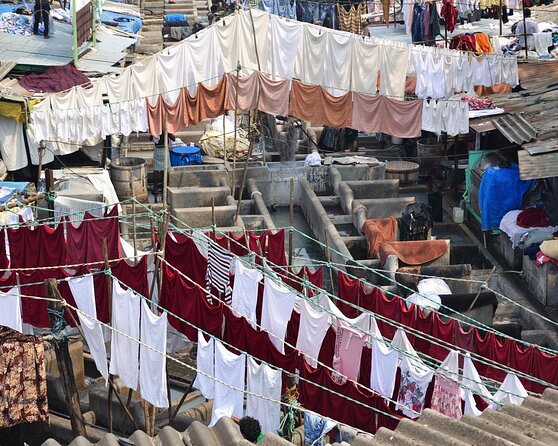
Mumbai is a city of contrast. You can stand next to tall buildings and still find communities where life runs on local know-how and hustling skills. Dharavi is one of Asia’s largest slum areas, but this tour frames it the way residents likely live it day to day: work, recycling, entrepreneurship, and a community that keeps moving.
What I like about this experience is that it’s not built around pity. The guide’s job is to explain how people live and earn in Dharavi, including the recycling economy that has made the area famous for turning scraps into value. You’re also not stuck with only one angle. The tour includes time in residential settings and in small local businesses, so you get a fuller picture than a single street stop.
The other strong point is that the tour gives you a clear activity arc. You learn, you walk through the area with an insider, you try pottery, and you end with food in a family home. That mix matters because it shifts you from observer mode to participant mode, at least for a short while.
You can also read our reviews of more tours and experiences in Mumbai.


Resident Guides and Small Groups: The Real Safety Factor
This isn’t a faceless tour run by someone who shows up, points, and leaves. You get an English-speaking guide who lives in the slum area. That changes the whole tone. Guides like Smith, Alkama, Rakesh, Hardik, and Dinesh are mentioned in the tour feedback, and a recurring theme is how professional they are, how safe people feel, and how well the guides answer questions.
You’ll also notice the group size cap: up to 20 travelers. For a place with narrow paths and lots of street activity, smaller is easier. You’re not competing with a huge crowd, and you’re more likely to get time for questions instead of being rushed down a line.
One review comment hits the practical point: people felt safe with the guide and didn’t feel rushed. That’s not a guarantee for every tour hour, but it’s a solid signal that the operator trains guides to manage a respectful pace.
The 2-Hour Itinerary Inside Dharavi: How the Time Adds Up
The tour’s core stop is Dharavi, and all the main activities fit into about two hours. In practice, that usually means a guided walking route with brief moments where you slow down to watch, ask, and learn from people doing real jobs in real spaces.
Here’s what you can expect within the Dharavi walk:
Time with residents at homes and businesses
You’ll spend time learning from residents at local homes and businesses. This is where the tour stops being about buildings and starts being about daily life. You get a better sense of how routines work, how homes and work overlap, and how people make the best use of limited space.
This is also where good manners matter. You’re in someone’s area, not a theme park. The best experience comes when you keep your questions practical and your camera use respectful (and only when your guide suggests it).
The pottery workshop experience
You’ll get to try your hand at pottery at a potter’s workshop. That’s a great use of time because it forces you to slow down and understand craft through action, not explanation. Even if you’ve never touched clay before, you’ll come away with a physical memory of the place, not just a few photos.
If you’re worried about being awkward, don’t. In these kinds of short workshops, the goal isn’t perfection. It’s learning how the workshop works and getting the feel of the process.




A vegetarian meal in a family home
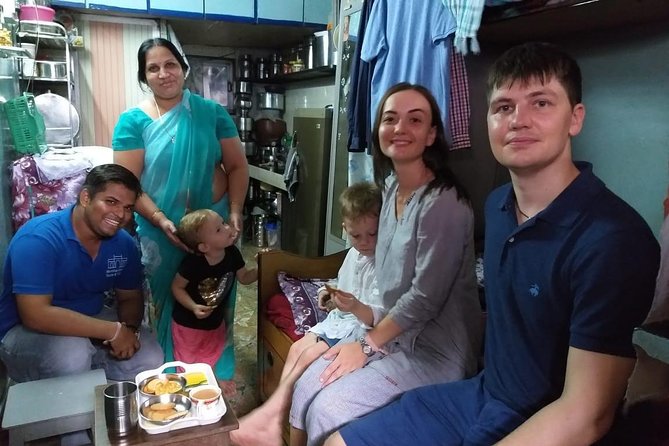
You’ll dine on vegetarian fare in a family home. Food is one of the fastest ways to build real human connection, and it’s also a strong cultural bridge. You’re not eating in a restaurant designed for visitors. You’re eating in a family setting, guided by someone who knows how to handle the flow and expectations.
You should go in hungry, but also ready for a different rhythm than a typical travel meal. It’s more personal, less staged.
The Parts Worth Prioritizing: Work, Craft, and Food
If you’re choosing this tour for the first time, here are the aspects that tend to land hardest and why.
Work and entrepreneurship (not just housing)
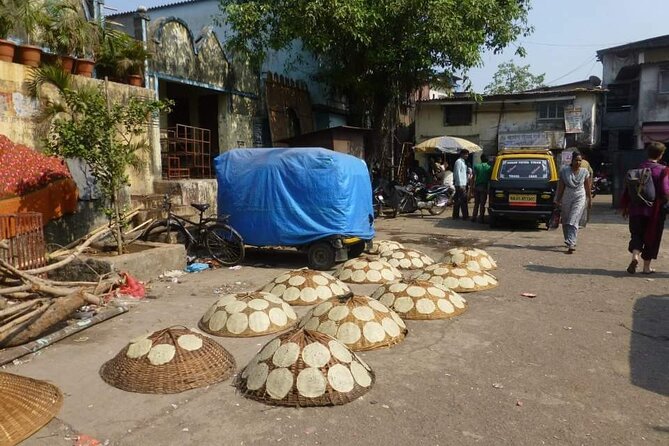
Dharavi is described as a major center for entrepreneurship and recycling. That line matters because it changes what you look for while walking. Instead of focusing only on basic infrastructure, you start noticing trades, small shops, materials moving through hands, and the hustle of making income locally.
This is also one reason the tour feels “inside.” It’s trying to show how Dharavi functions, not only how it looks from the outside.
Craft that you touch: pottery
Many tours promise hands-on moments. Here, you actually get to do pottery. That’s valuable because you’ll learn through sensation and time. Clay has its own pace. You’ll feel how work is shaped by small constraints and repeated practice.
A real meal that isn’t a checklist
A vegetarian family-home dinner is more meaningful than grabbing a quick bite nearby. It’s part of the tour’s effort to connect you with everyday hospitality. Keep expectations simple: you’re there to share space and eat what’s served, not to compare menus like a critic.
Also, since it’s in a home, it tends to feel warmer and calmer than a restaurant stop. You might even hear stories that don’t fit neatly into a walking route.
Price and Value: What $13.42 Buys You in Mumbai
At $13.42 per person for about two hours, this tour is priced extremely accessibly compared with the cost of many guided experiences in major cities. The math gets even better when you look at what’s included.
Included:
- English-speaking guide who lives in the area
- Bottled water
Not included:
- Private transportation
- Tips
The key value point isn’t just the low price. It’s that you’re paying for a resident guide plus real access to daily life elements: homes/businesses, a workshop activity, and a family-meal experience. Those are the things that usually cost more time, more coordination, and more trust to make possible.
If you’re traveling on a tighter budget, this is exactly the kind of tour that can fit without forcing you into “skip it” mode. If you’re a luxury traveler, it won’t be for you if you expect cars, comfort stops, and a polished itinerary with lots of downtime. But if you want value and authenticity, this price point is hard to ignore.
Meeting Point, End Point, and How to Plan Your Day

This tour uses a fixed start and end location, which helps. You’ll meet at Third Wave Coffee, Tip Road, Unit no. 58, Ground, Ram Mahal, Senapati Bapat Marg, Marinagar Colony, Station, Mahim, Mumbai, Maharashtra 400016, India.
It ends at Sai Multispeciality Hospital & Research Centre, 90 Feet Rd, behind Sion Hospital, Dharavi, Mumbai, Maharashtra 400017, India. The good news: it says Uber cabs are easy to get at the end of the tour. That makes it simpler to connect to the rest of your day without hunting around for transport.
The tour is also listed as near public transportation. So you shouldn’t feel stuck if you don’t have a private car.
One practical tip: plan your schedule so you’re not immediately rushing into a long walking trek after the tour. You’ll be doing a couple of hours in an active neighborhood, and the best next step is usually something nearby and easy.
What to Wear and Bring (Because It Can Get Hot)
This tour comes with a clear dress guideline, and it’s not just for aesthetics. You’ll want modest clothing and closed-toed shoes.
Recommended:
- For women: avoid sleeveless shirts, short shorts, and low tops
- Closed-toed shoes
- Bring what you need for heat and walking comfort
A review specifically flags that it can get hot and recommends staying hydrated and carrying a cap. Since bottled water is included, you’ll have a start, but I’d still come prepared with your own basics for the day: something to protect from sun and a mindset that the walk will take place in real weather.
Also, think about your phone and camera behavior. In tight, lived-in streets, you’ll want to keep your movements smooth and avoid blocking anyone’s path.
A Note on Respect: How to Have a Better Tour (and a Better Memory)
In places like Dharavi, the difference between a good tour and a bad one isn’t the price or the route. It’s how you act. This tour is built around learning from residents at their homes and businesses, so your behavior matters.
Here’s what helps:
- Ask questions that are about daily life, work, and how things run
- Follow your guide’s cues on where to stand and when to move
- Treat the pottery workshop and meal as a participation moment, not a performance
- Keep your tone calm. No rushing the people you meet
If you go in with that attitude, the tour tends to feel humbling in a constructive way. Several guide names show up with praise for being kind and for making people feel safe, which suggests the operator strongly emphasizes respect.
Should You Book the Dharavi Slum Tour?
I think you should book this tour if you want a short, structured introduction to Dharavi that focuses on how the community works. It’s a strong choice if you’re the type who likes to meet people and ask questions, not just take photos from the outside.
You’ll likely enjoy it if:
- You care more about daily life and local enterprise than about distant landmarks
- You want a resident English-speaking guide and a small group size
- You’re comfortable with walking in a real neighborhood for about two hours
- You like hands-on experiences, especially pottery
- You’re open to a vegetarian meal in a family setting
Skip it if you need a mostly comfortable, low-movement sightseeing day. This tour is short, but it’s still in an active area where the pace and surroundings won’t feel like a controlled city center.
FAQ
How long is the Dharavi Slum Tour?
The tour runs for about 2 hours.
Is the tour in English?
Yes. It includes an English-speaking guide who lives in the slum area.
What is included in the price?
The tour includes the English-speaking guide and bottled water. It also includes the pottery experience and a vegetarian meal as part of the tour experience.
What should I wear?
Wear modest clothing and closed-toed shoes. For women, avoid sleeveless shirts, short shorts, and low tops.
How many people are in a group?
The tour has a maximum of 20 travelers.
Can I cancel for free?
Yes. You can cancel up to 24 hours in advance for a full refund. If you cancel less than 24 hours before the start time, the amount you paid is not refunded.
If you tell me what month you’re going and your preferred time window, I can help you pick whether morning or afternoon feels like the smarter choice for heat and comfort.