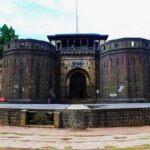
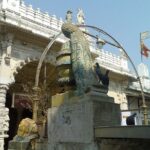
Historic synagogues in Mumbai, in one morning. This half-day private tour stitches together centuries of Jewish life in South and Central Mumbai, with stops that include the Orthodox Keneseth Eliyahu Synagogue and the UNESCO-listed Chhatrapati Shivaji Terminus. I love that you spend time inside and right in front of the actual places, not just at a viewpoint with a quick photo.
I also like the small scale: a private group of up to two, an English-speaking guide, and air-conditioned transport that keeps you comfortable while you bounce between neighborhoods. The main thing to consider is that admission is not included for many synagogue stops (some are free), so your total out-of-pocket can vary a bit depending on what you’re able to enter.
In This Review
- Key things to know before you go
- Why this half-day private tour makes sense in Mumbai
- The Jewish communities you’ll hear about (and what to listen for)
- Keneseth Eliyahu Synagogue: downtown Sephardic heritage in an Orthodox setting
- Magen David Synagogue at Byculla: scale and visibility
- Tiphereth Israel and the oldest layers of Mumbai synagogues
- Shaar Harahamim (Gate of Mercy) Synagogue: built in 1796
- Share Rason Synagogue (Bene Israel): 1843 and a management split
- Magen Hassidim Synagogue: still operating with a small congregation
- Chhatrapati Shivaji Maharaj Terminus: UNESCO architecture and the former Victoria Terminus
- David Sassoon Library: learning as a community value
- Chabad India at Nariman House: admission included and a living outreach story
- Timing, admissions, and how to avoid small surprises
- The guide’s role: why English, and why questions matter
- Price and value: is $86 per group a good deal for two people?
- Who this tour suits best
- Should you book this Half-Day Mumbai Jewish Heritage Private Guided Tour?
- FAQ
- FAQ
- What time does the tour start in Mumbai?
- How long is the tour?
- Is pickup and drop-off included?
- What language is the guide?
- Is this a private tour?
- How many people are in a group?
- Is admission included for the synagogues?
- Which site is marked as free?
- What if the weather is poor?
- Can I cancel for a full refund?
Key things to know before you go
- Bene Israel and Sephardic threads in one route: you’ll see different Jewish communities presented through specific synagogues and sites
- Orthodox and heritage synagogues in the same morning: Keneseth Eliyahu, Magen David, Tiphereth Israel, and more
- Gate of Mercy context at two related stops: Shaar Harahamim and the Gate of Mercy area tied to Bene Israel heritage
- Nariman House Chabad visit is included: Chabad India at the five-storey landmark with admission included
- UNESCO World Heritage Site stop: Chhatrapati Shivaji Maharaj Terminus (formerly Victoria Terminus)
- Most stops are short on purpose: you’ll typically get about 15 to 30 minutes per location, which helps you see more with less rushing
Why this half-day private tour makes sense in Mumbai
Mumbai is big, traffic is real, and mornings go fast. This tour is built for a half-day window—about 5 to 6 hours starting at 9:00 am—so you get structure without feeling like you’re stuck on the move all day.
The private format matters. At $86 per group (up to 2), you’re not waiting around for a giant bundle of strangers. You can ask questions as they come up, and the guide can pace the stops based on what you’re interested in, like architecture versus community stories.
And the practical stuff is included: pickup & drop, toll and parking fees, an air-conditioned vehicle, and bottled water. That sounds basic, but in Mumbai it’s the difference between a pleasant culture day and a day where you’re thinking more about heat and fumes than synagogues.
You can also read our reviews of more guided tours in Mumbai


The Jewish communities you’ll hear about (and what to listen for)
The tour frames Jewish history in India through three distinct groups: Bene Israel, the Malabar Jewish community, and the Iraqi Jews. That’s a useful way to approach Mumbai’s synagogues, because different communities shaped different prayer spaces and leadership styles over time.
When you’re standing in front of these buildings, I’d pay attention to two things:
- Which community the synagogue is associated with (Sephardic, Bene Israel, or broader Orthodox heritage).
- What the building’s age and role are today—some are purely heritage sites, while others remain operational with a small congregation.
That second point is where the tour becomes more than “old stones.” For example, one of the Bene Israel synagogues on the route, Magen Hassidim, remains operational with a small congregation. That changes the tone: you’re seeing a living thread, not only a museum label.
Keneseth Eliyahu Synagogue: downtown Sephardic heritage in an Orthodox setting
Your first stop is Keneseth Eliyahoo Synagogue (also known as Knesset Eliyahu). It’s an Orthodox Jewish synagogue in downtown Mumbai and described as the city’s second oldest Sephardic synagogue.
What I like about starting here is the clarity. Sephardic heritage has its own architectural and community rhythms, and a major historic synagogue makes a strong foundation for the morning. You’re also in the downtown area, which helps you get oriented quickly before moving into other parts of the city.
Practical note: the stop is listed as 30 minutes, and admission is not included. That means you should expect that you might need to pay separately if entry is available during your time window.
Magen David Synagogue at Byculla: scale and visibility
Next is Magen David Synagogue at Byculla, described as a heritage point and a famous tourist place, and noted as one of the largest synagogues of the Jewish community in India.
This stop is valuable because size matters. Smaller synagogues can feel intimate and quiet. Bigger ones change your perspective—you can better understand how a community organized itself as it grew and how it served members beyond a few families.
You’ll get about 30 minutes here. Admission is not included for this stop, so plan for possible entry costs.
One tip: if you’re the type who likes details, spend a minute looking for how the building presents itself from the outside first. The route keeps moving, and a quick outside scan helps you appreciate what you see inside.
Tiphereth Israel and the oldest layers of Mumbai synagogues
Then the tour moves to Tiphereth Israel Synagogue and also references the Gate of Mercy Synagogue as part of the oldest synagogue story in Mumbai.
Here’s what to focus on. “Oldest” can turn into a vague claim if you don’t anchor it to the place itself. In this part of the morning, try to connect three dots:
- The synagogue’s age,
- What that suggests about when Jewish communal life became established in the city,
- Why these buildings still matter even as the community has shrunk over time.
The schedule is short—around 30 minutes—and again admission is not included. Still, even with limited time, these stops give you the sense of continuity: different generations building and rebuilding communal life in the same city.
You can also read our reviews of more private tours in Mumbai


Shaar Harahamim (Gate of Mercy) Synagogue: built in 1796
One of the most specific dates you’ll hear all morning is 1796, tied to Shaar Harahamim (also called the Gate of Mercy Synagogue). The tour notes it was built in 1796 and established by the Bene Israel community.
This is also where I’d slow down mentally. When you know the year, it changes how you look at the building. Seventeen-ninety-six isn’t “a long time ago” anymore. It becomes a real historical anchor.
Timing is tight here: about 5 minutes, and the stop is listed as free. That short duration can feel fast, but with a guide, it can be enough to understand what you’re looking at without losing the momentum of the morning.
If you care about photos, do the outside shot quickly. Use your guided time to grasp the meaning first.
Share Rason Synagogue (Bene Israel): 1843 and a management split
Next is Share Rason Synagogue, noted as the second-oldest Bene Israel synagogue in Mumbai and built in 1843. The tour explains it was established due to a split in the management of the earlier synagogue, Shaar Harahamim (Gate of Mercy).
That detail matters. A split in leadership can sound like dry admin history, but it’s often how communities express differences in how they want to govern, worship, or manage resources. A synagogue isn’t only architecture—it’s also organization and identity.
You’ll get roughly 15 minutes here, and admission is not included for this stop.
Magen Hassidim Synagogue: still operating with a small congregation
Then the route visits Magen Hassidim Synagogue, described as the largest of the Bene Israel buildings in Mumbai and still operational with a small congregation.
This is one of the stops that tends to land best for people who want more than sightseeing. When a place is still in use, you feel the present tense behind the centuries. The tour won’t ask you to ignore the past; it’ll help you see how the present is carried forward.
Expect about 15 minutes and admission not included.
A respectful approach goes a long way here. Keep your voice low, follow the guide’s cues, and remember you may be sharing the space with community members.
Chhatrapati Shivaji Maharaj Terminus: UNESCO architecture and the former Victoria Terminus
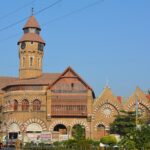
After the synagogue cluster, you’ll switch gears to Chhatrapati Shivaji Maharaj Terminus—a UNESCO World Heritage Site. The tour also notes its former name: Victoria Terminus, often shortened to VT.
This is a smart contrast. You’ve spent the morning with religious and community spaces. Then you step into a landmark railway station—architecture on a scale built for crowds and daily movement.
You’ll have about 30 minutes, and admission is listed as free. Even if you’re not a trains person, this stop helps you understand Mumbai as a city where communities connected through trade, travel, and migration—Jewish history included.
If timing allows, take a few minutes to look at the station beyond the obvious photo angle. Big buildings can feel “samey” if you rush.
David Sassoon Library: learning as a community value
The route includes David Sassoon Library, described as a famous library and heritage structure in Mumbai, with the idea attributed to Albert Sassoon, son of the famous… (the description cuts off, but the key point remains: the library is tied to the Sassoon name and is recognized as a heritage structure).
This stop is valuable because it broadens what “heritage” means. Synagogues are about worship. Libraries are about learning and community access to knowledge.
The tour information provided doesn’t clearly label entrance here as free or paid, so treat it as a “maybe there’s an entry fee” situation. If you’re keeping your budget tight, you might want to have some flexibility for any on-site entry requirements.
Chabad India at Nariman House: admission included and a living outreach story
The final major stop on the route is Chabad India at Nariman House in Colaba. The building is described as a five-storey landmark and as the home of a Chabad house, with the tour framing it as a Hasidic Jewish outreach center.
Admission is marked as included for this stop. You’re also given about 30 minutes.
This is a good way to end the morning because it connects heritage to present-day community activity. Even if you’re not religious, outreach centers show how cultural identity gets maintained through teaching, support, and community gatherings.
It’s also a reminder that Jewish presence in Mumbai isn’t frozen in the past. You’re seeing a modern expression of the same “we’re here, we’re active” energy you sensed at Magen Hassidim.
Timing, admissions, and how to avoid small surprises
This tour is designed around short, manageable time slots. Many stops are around 30 minutes, while Gate of Mercy/Shaar Harahamim is listed as about 5 minutes, and a couple of the Bene Israel synagogues are about 15 minutes each.
Admission varies:
- Several synagogue stops are listed as admission ticket not included.
- Chhatrapati Shivaji Terminus is listed as free.
- Chabad India at Nariman House is listed as admission included.
So here’s the practical mindset I recommend: bring cash or card for possible synagogue entrances, and don’t plan on every stop being a long walk-in-and-stay visit. Some sites may be easier to enter than others depending on access during your time.
Also, check the weather before you set expectations. The experience is marked as requiring good weather, and if it’s canceled due to poor weather, you’ll be offered a different date or a full refund.
The guide’s role: why English, and why questions matter
You’ll travel with a local English-speaking guide, and pickup/drop is handled. That’s the “how,” but the “why” is the storytelling connection.
When the tour includes places tied to multiple Jewish groups in India, you’ll get more from it if you ask simple questions like:
- What community was this building tied to?
- What does the building’s age tell us about when this community took root?
- Why does the tour separate Sephardic and Bene Israel synagogues?
One past guest specifically praised their guide Sameer for delivering an excellent experience and for arranging conversations with two members. While I can’t promise that exact interaction will happen on every run, it’s a good signal of what this tour is trying to do: not only point at history, but help you connect with the people behind it when possible.
Price and value: is $86 per group a good deal for two people?
At $86 per group (up to 2), the cost is not per person. That changes the value equation in your favor if you’re traveling as a duo—say a parent and child, two friends, or anyone who wants the privacy without paying for a larger group.
You’re also getting:
- private transportation in an air-conditioned vehicle
- pickup & drop
- local English-speaking guide
- bottled water
- toll tax and parking fees
- mobile ticket
For Mumbai, where logistics can add up fast, the bundled transportation and guide time are the big value drivers. The main budget variable is admissions at certain synagogue stops (since many are not included).
If you’re solo, the price still may feel fair depending on your travel style. But if you can share the group cost with one other person, it’s easier to see the math as a straightforward “one morning, one guide, minimal stress.”
Who this tour suits best
This experience is a strong match if you:
- want Jewish heritage in Mumbai without getting lost in details
- like guided context that connects communities and buildings
- prefer a private, calm pace rather than a big bus day
- have limited time and want key landmarks in one structured morning
It may be less ideal if you want lots of free time at each stop. Some locations are brief by design, so you’ll want to be comfortable with moving from place to place and letting the guide handle the pacing.
Should you book this Half-Day Mumbai Jewish Heritage Private Guided Tour?
I’d book it if you want a focused, well-organized way to understand Mumbai’s Jewish community through real places: synagogues that date back centuries, a UNESCO station with major architecture, and an ending at Nariman House where community life continues.
I’d think twice if your priority is long stays at a single site. This is built to cover many meaningful stops in about 5 to 6 hours. Also, budget for the fact that several synagogue entrances are listed as not included, while a couple are marked free or included.
If you’re traveling in a pair, the price is especially sensible because you’re paying for a private morning rather than splitting costs with a crowd.
FAQ
FAQ
What time does the tour start in Mumbai?
The start time is 9:00 am.
How long is the tour?
It runs for about 5 to 6 hours.
Is pickup and drop-off included?
Yes. Pickup & drop are included, along with toll tax and parking fees.
What language is the guide?
The guide is listed as local English speaking.
Is this a private tour?
Yes. It’s a private tour/activity, and only your group participates.
How many people are in a group?
The price is per group (up to 2).
Is admission included for the synagogues?
Admission ticket is not included for several synagogue stops. Some stops are listed as free, and Chabad India is listed as admission included.
Which site is marked as free?
Chhatrapati Shivaji Terminus is listed as admission free.
What if the weather is poor?
The experience requires good weather. If it’s canceled due to poor weather, you’ll be offered a different date or a full refund.
Can I cancel for a full refund?
Yes, you can cancel for free. You must cancel at least 24 hours before the experience start time for a full refund.
If you want, tell me your travel dates and whether you’re more interested in architecture or community stories, and I’ll suggest what to pay attention to most during the stops.