REVIEW · MUMBAI
Dharavi, Dhobighat, and Mumbai Dabbawallas
Book on Viator →Operated by Amaze Mumbai Tour · Bookable on Viator
Three stops, one real Mumbai lesson. I love how this tour shows Dharavi up close with a guide who can answer questions, and I love the local train ride that makes getting around feel normal, not scary. One thing to keep in mind: the dabbawallas portion doesn’t operate on Sundays or public holidays.
This is a great way to get your bearings fast in a city that loves its shortcuts and contrasts. You’ll go beyond the skyline photo stops and see how laundry, lunch delivery, and informal industry actually work day to day. It runs with a small group (max 15), uses public transport, and includes a mobile ticket so you’re not scrambling at the station.
In This Review
- Key highlights you’ll feel on the day
- Where the tour starts: Churchgate and easy meeting logistics
- Dharavi on foot: seeing work, routes, and everyday logic
- Dhobi Ghat from inside: the open-air laundry machine
- Churchgate and the dabbawallas: lunch delivery as a system
- The local train experience: how the route becomes part of the story
- Price and value: $20 for three working-life stops
- Tips to help you enjoy it more (and worry less)
- Who this tour is best for
- Should you book this Dharavi, Dhobi Ghat, and dabbawallas tour?
- FAQ
- How long is the tour?
- What does the tour cost?
- Where do I meet the guide and where does the tour end?
- What stops are included?
- Are tickets included for all stops?
- Do the dabbawallas run on weekends?
- How big is the group?
Key highlights you’ll feel on the day
- Dharavi on a guided walking route for about 1 hour 30 minutes, focused on how the place functions beyond stereotypes.
- Dhobi Ghat from inside, not just a quick look from outside the laundry bays, with a guided visit.
- Churchgate station during lunchtime flow, where you’ll witness how the dabbawallas’ lunch system moves.
- Real Mumbai transit, using local trains to connect sites in a way that locals would recognize.
- Small-group vibe, with personalized attention and a guide who helps the group stay together.
Where the tour starts: Churchgate and easy meeting logistics
The tour anchors itself in the Churchgate area, which is handy because it keeps things simple. You meet at Burger King at the Express Building near Churchgate Railway Station (opposite Churchgate), then later you’re guided to the end point near Maharshi Karve Rd, Churchgate.
Why I like this setup: Churchgate is one of those Mumbai hubs where you can usually get where you need to go afterward (train, taxi, bus). It means you’re not stuck planning your whole day around one remote pickup.
You’ll also be told where to stand at the station. The tour notes point you to the outside entrance of Platform no. 4 for the meeting with the guide. When you’re arriving, look for the simplest landmark: the Burger King area near the station entrance. From there, the guide handles the handoffs.
Practical tip: wear comfortable walking shoes. Even though the total time is around 3 hours, you’re walking inside Dharavi and around the station area more than you might expect. Add sunglasses and a hat or cap since you’ll be out in open air at points.
You can also read our reviews of more tours and experiences in Mumbai.
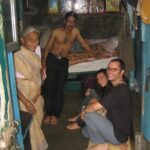


Dharavi on foot: seeing work, routes, and everyday logic
Dharavi is the emotional headline of this tour, and that’s also why the guide matters so much. Your first major stop is a guided walking tour of Dharavi for about 1 hour 30 minutes. The goal isn’t to do a drive-by look at a place. It’s to walk through sections of the community and understand how daily life and small businesses operate in a high-density environment.
What I like about how this tour approaches Dharavi is the practical framing. Instead of treating the area like a museum, you learn how people make a living, how spaces are organized, and why certain trades and production steps exist where they do.
From the vibe of past guides on this route—names like Lokesh (often called Loki), Lucky, Ganesh, Lokesh, and others—I’d expect the guide to explain what you’re seeing in plain language and keep the mood respectful. One recurring point in the experience is that guides help the group feel safe while still being honest about conditions.
A possible consideration: Dharavi is not a theme park. If you’re expecting clean, staged viewpoints, you’ll be disappointed. If you want to understand how cities work at street level—how materials move, how businesses survive, and how people solve daily problems—this stop can be genuinely eye-opening.
Photo note: You’ll be guided on when and where photos are permitted. That’s important in Dharavi, and it also helps your guide manage the flow of the group through tighter areas.
Dhobi Ghat from inside: the open-air laundry machine
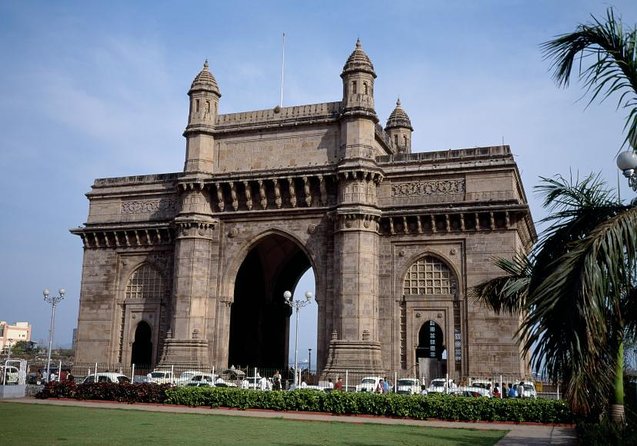
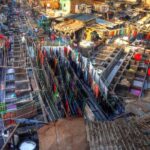
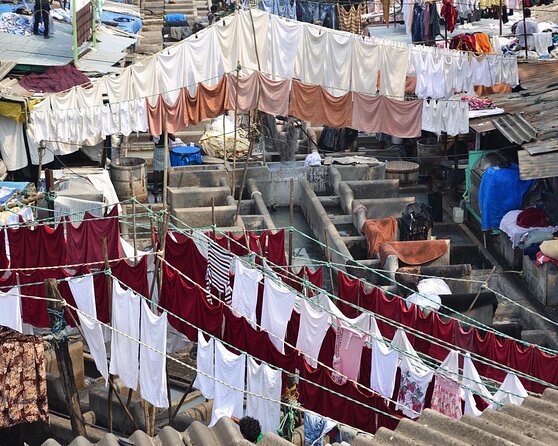
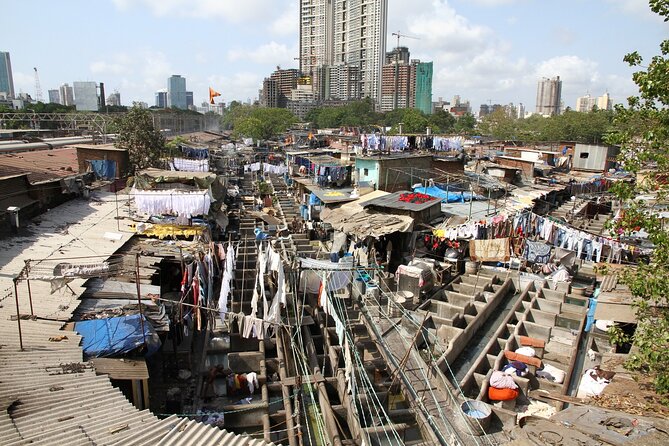
Next up is Dhobi Ghat, Mumbai’s famous open-air laundry place. Here you get the inside view: the tour includes a guided visit where you see how the laundry operations work up close.
Time on this stop is about 20 minutes, and that’s both the good news and the catch. Good news: you’ll get a focused look without dragging the day out. Catch: if you’re the type who wants to linger and watch every step, 20 minutes may feel short.
Still, this is one of the most interesting contrasts in the whole itinerary. Dharavi shows work happening in tightly packed informal systems. Dhobi Ghat shows work happening in a visible, almost industrial workflow where you can spot the steps and the rhythm of labor.
Also, inside Dhobi Ghat can vary in what you see at any given time. One note from an experience: sometimes there isn’t much action happening when you arrive, but you still get a close-up impression of how the site functions. So treat this stop as a window into a system, not as a guaranteed show.
What to watch for:
- How laundry moves through the space (you’ll notice it’s more process than spectacle)
- How workers operate in an open-air setting
- The scale of the place, once you’re actually inside
Bring your patience for smells and sounds. This isn’t a curated indoor exhibit. It’s a working environment.
Churchgate and the dabbawallas: lunch delivery as a system
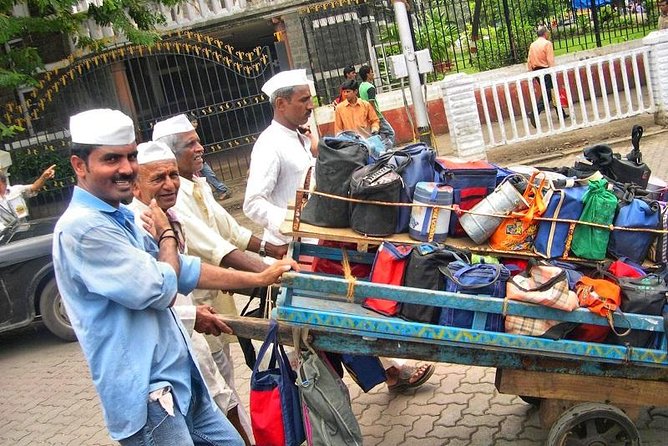
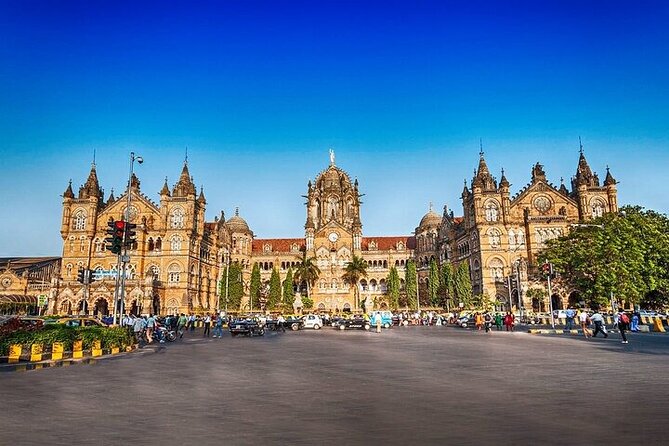
The last real “wow” piece for many people is the dabbawallas, the lunchbox delivery men and women who keep office lunches moving through Mumbai. The tour includes a stop at Churchgate Railway Station where you witness the dabbawallas in action.
This portion is short—around 10 minutes—but the value is in what you learn about coordination. A lot of visitors come in with a vague idea of lunch delivery. The tour helps you see it as logistics: handoffs, routes, timing, and organization that has to work every working day.
A key note from the tour details (and something worth planning around): dabbawallas are not available on Sunday and Public Holidays. So if your trip lands on one of those days, you may still see the Churchgate station environment, but don’t count on the delivery system being present as part of the tour.
Why this stop matters:
- You get a human-scale look at a city-wide service
- You see how timing and coordination are handled at a major rail hub
- You understand why this system survives in one of the world’s most complex transit cities
Meeting handoff: The tour also includes a brief moment meeting your guide again at the station area near Burger King (another 10 minutes block). This is mainly to connect you to the group and ensure you’re at the right place for the end point.
The local train experience: how the route becomes part of the story
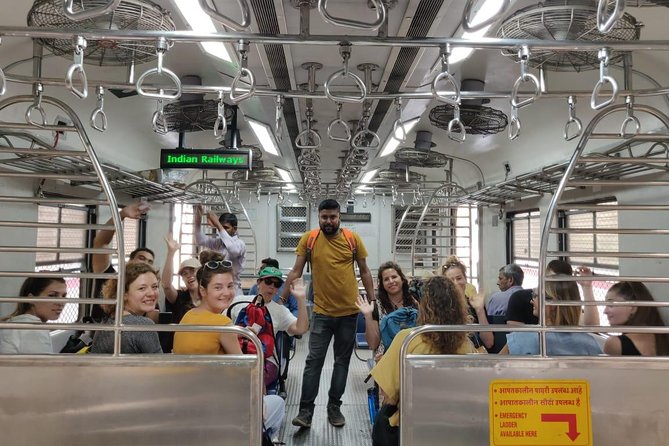
One of the quiet strengths of this tour is that you don’t just transport between stops—you learn the city’s movement style through the ride itself. You’ll use public transportation during the tour, and local train travel is part of the experience.
On day one in Mumbai, public transit can feel chaotic from a distance. Here, the train becomes a learning tool. You ride with your guide’s timing and group coordination, and you’ll likely notice:
- How station flow works during commute hours
- How people read schedules and platforms
- How locals navigate crowds with practiced habits
Several guide stories from the experiences you shared highlight how safe people felt while using trains and buses. That’s the real value: you’re not trying to figure out Mumbai transit alone while also trying to interpret a dense neighborhood visit.
Quick practical tip: keep your phone handy but not out constantly. Use the time on the train to listen to the guide’s explanations, especially when you’re switching between different parts of the city.




Price and value: $20 for three working-life stops
At $20 per person, this is one of those rare Mumbai tours that feels like a practical deal rather than a sightseeing markup. You’re paying for three real experiences:
- A guided Dharavi walking visit (with no admission ticket cost)
- A guided Dhobi Ghat visit from inside (with the site ticket included)
- A guided dabbawalla system look near Churchgate (when it’s running, as it usually does on working days)
And you’re also getting public transportation included. That matters in Mumbai, where transit can be a big part of the day’s effort.
What makes the price feel fair is also the guide component. The best moments in this type of tour aren’t just the places—they’re the explanations and the safety and coordination that come with a small-group format. Past experiences connected with this route repeatedly stress that guides like Loki/Lokesh, Lucky, Ganesh, and others made the group feel taken care of.
The drawback side of the value equation: two stops are brief (Dhobi Ghat and the dabbawallas segment). If you love long observational time, you might want to pair this with independent wandering afterward—especially around Churchgate or near the Dharavi edge areas your guide points you toward.
Tips to help you enjoy it more (and worry less)
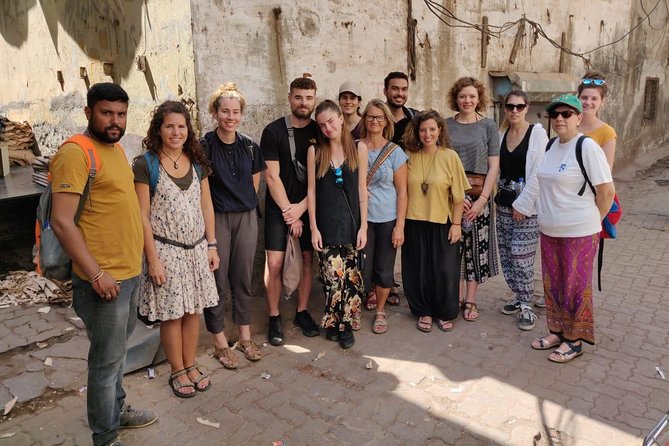
Here’s how to set yourself up for a smoother day.
What to wear
- Comfortable walking shoes are a must.
- Plan for sun and open air: sunglasses and a hat/cap help.
What to bring
- Water and a small snack can be smart. One experience note mentions there wasn’t water or snacks provided during the run of the day, so bring your own just in case.
How to handle photos
- Expect guidance on when photos are okay in Dharavi. Follow your guide’s rules and keep things respectful.
How to manage expectations
- Dhobi Ghat is a working facility; activity levels can vary.
- The dabbawallas segment depends on the day (no Sunday/public holiday operations).
How to get the most from the guide
- Ask practical questions about what you’re seeing: who does what, how materials move, how delivery timing works. The tours do well when you treat it like a Q&A with a local brain.
Who this tour is best for
This tour suits travelers who want the real Mumbai “how things work” perspective.
Best fit:
- First-time visitors who feel overwhelmed by Mumbai’s scale
- People who like guided context instead of only looking at famous sights
- Travelers who enjoy local transit and small-group pacing
- Families with kids who can handle walking and curiosity (one experience specifically mentions kids being reassured and enjoying the day)
You might reconsider if:
- You need a very long stay at each location
- You dislike walking in working neighborhoods
- Your trip date is on a Sunday or public holiday and you strongly want the dabbawallas moment
Should you book this Dharavi, Dhobi Ghat, and dabbawallas tour?
My take: yes—especially if it’s a weekday and you want a fast but meaningful introduction to Mumbai beyond the postcard layer. At $20, you’re getting three working-life windows plus public transport support, and the small group size helps the guide keep things organized.
Book it if you’re curious, willing to ask questions, and you want a guided route that makes complex neighborhoods understandable. If you’re traveling on a Sunday/public holiday, check your priorities first—because the dabbawallas part depends on whether that system is operating as part of the tour.
If you want a different kind of Mumbai day—one that teaches you logistics, labor, and local problem-solving—this is a strong pick.
FAQ
How long is the tour?
The tour runs for about 3 hours.
What does the tour cost?
It costs $20.00 per person.
Where do I meet the guide and where does the tour end?
You start at Burger King Express Building near Churchgate Railway Station (opposite Churchgate) and you end near Maharshi Karve Rd, Churchgate, with the meeting instructions tied to the station area (including Platform no. 4 outside entrance details).
What stops are included?
You’ll visit Dharavi on a guided walking tour, Dhobi Ghat with a guided visit from inside, and Churchgate Railway Station to see the dabbawallas in action (when they are operating).
Are tickets included for all stops?
Dharavi does not require an admission ticket. Dhobi Ghat includes the admission ticket. The dabbawallas portion depends on whether it’s a day they operate.
Do the dabbawallas run on weekends?
No. The dabbawallas part is not available on Sunday and public holidays.
How big is the group?
The tour has a maximum of 15 travelers.