REVIEW · MUMBAI
Local Transport & Dabbawallah Tour
Book on Viator →Operated by Reality Tours & Travel Pvt Ltd · Bookable on Viator
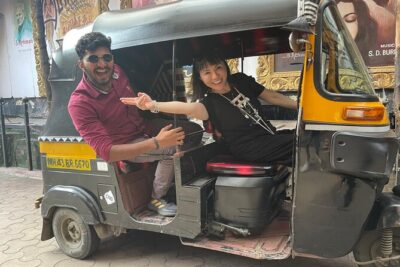
Mumbai feels like a moving puzzle. This tour helps you solve it on local transport. You’ll ride public trains and taxis with a guide, so you can focus on watching how Mumbai actually runs. I like that transportation fares are handled for you, which means less time worrying about coins and more time learning what you’re seeing.
The second thing I really like: the stops aren’t just landmarks—they’re places tied to daily work, like Dhobi Ghat and the lunchbox delivery routine near Churchgate. The one drawback to plan for is simple: there’s no hotel pickup. You meet at Regal Cinema, so build in time to get yourself there for the 8:30 am start.
In This Review
- Why This Tour Works: local rides, real work, and a short time commitment
- Price and Value: $32.45 that covers fares for Mumbai’s transit maze
- Getting on Mumbai time: Regal Cinema and the South Mumbai meet-up
- Chhatrapati Shivaji Terminus at rush hour: UNESCO looks different when you’re there
- SHYAM STALL flower stops: how worship and daily life share the same street
- Dhobi Ghat: the open-air laundry that turns hospital work into routine
- Chor Bazaar: the thieves market for real snacks and souvenir decisions
- Churchgate and dabbawallah delivery: lunch logistics as a city system
- Taxi splits and crowd reality: what to expect when the group moves
- Practical tips for your comfort and confidence on public transport
- Who should book this Local Transport and Dabbawallah tour
- Should you book it? My decision guide
- FAQ
- How long is the Local Transport & Dabbawallah tour?
- Where do I meet the guide?
- Where does the tour end?
- What time does the tour start?
- What transportation will you use during the tour?
- Is transportation included in the price?
- Do I need to pay fares or find change?
- Is bottled water provided?
- Is hotel pickup and drop-off included?
- How big is the group?
- What is the cancellation policy?
Why This Tour Works: local rides, real work, and a short time commitment

This is a half-day, roughly 3 hours 30 minutes in South Mumbai, built around motion. Instead of staying parked at a viewpoint, you keep moving through the city on train, bus, and taxi while your guide points out what matters. That “in motion” style is the whole value of the experience—Mumbai doesn’t behave like a quiet museum city.
For first-timers, the goal isn’t to “see everything.” It’s to get your bearings fast: where stations are, how crowds flow, how neighborhoods feel, and what daily life looks like when you’re not centered on tourist sites.
And because it’s a small group (up to 25 people), you’re not stuck in a school-trip blob. You should feel like you’re traveling with a plan, not just tagging along.
Price and Value: $32.45 that covers fares for Mumbai’s transit maze
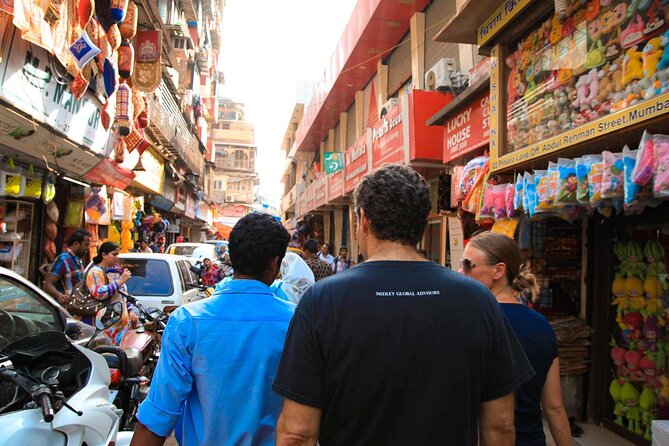
At $32.45 per person, this tour is priced in the “doable impulse purchase” zone—especially for a city where getting around can turn into a money-and-time guessing game. The key value isn’t just the price tag. It’s what’s included:
- All transportation on the tour
- Local guide
- Bottled water / cold drink
Most importantly, the tour explicitly covers the transportation fares, so you don’t have to scramble for change. That’s a big deal in Mumbai, where small frustrations can pile up fast.
If you’re the kind of traveler who enjoys learning by doing, this price feels fair because you’re paying for two things at once: the guide’s navigation help and the transit cost itself. If you only want photo stops, you might be tempted to skip a guided transit day. But if you want to learn the system, this is one of the more efficient ways to do it.
You can also read our reviews of more tours and experiences in Mumbai.



Getting on Mumbai time: Regal Cinema and the South Mumbai meet-up
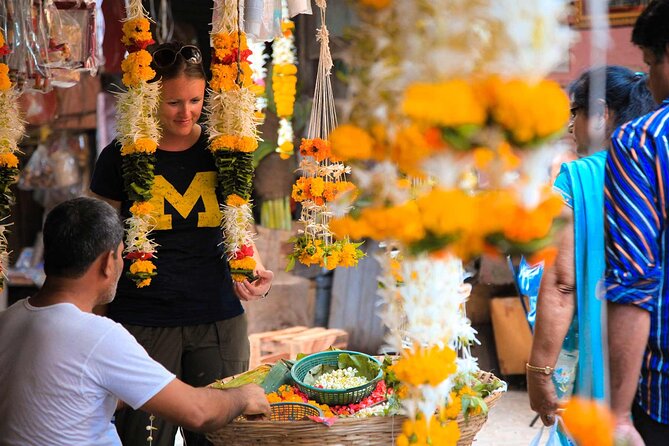
You start at Regal Cinema on Colaba Causeway, right by Chhatrapati Shivaji Maharaj Vastu Sangrahalaya (Apollo Bandar, Colaba). That location is useful. It places you in South Mumbai from the jump, with the kind of street energy and transit access that makes a train-and-taxi day make sense.
There are two practical takeaways for your planning:
- Arrive early. Since there’s no hotel pickup, you own getting yourself to the meeting point.
- Wear comfortable shoes. Even if each stop is short, you’ll be walking, standing, and following the group through station areas.
The tour doesn’t waste the first minutes with throat-clearing. It’s designed to transition you quickly into transport mode.
Chhatrapati Shivaji Terminus at rush hour: UNESCO looks different when you’re there
One of your first big sights is Chhatrapati Shivaji Terminus (CST). You’ll see it during a busy time—built to show you the station’s real tempo instead of a calm, empty-photo version.
CST matters for two reasons:
- It’s the UNESCO-listed rail hub for Mumbai.
- It’s also tied to pop culture, including a mention through the movie Slumdog Millionaire (the final song).
On a practical level, seeing CST this way teaches you something you can use later in your own trips: how mass transit organizes movement in a city where crowds are part of the daily deal. You’re not just admiring architecture—you’re watching how people enter, flow, and reset when trains arrive.
The likely experience here is brief but intense: a 10-minute stop that’s less about lingering and more about catching the station in action.
SHYAM STALL flower stops: how worship and daily life share the same street
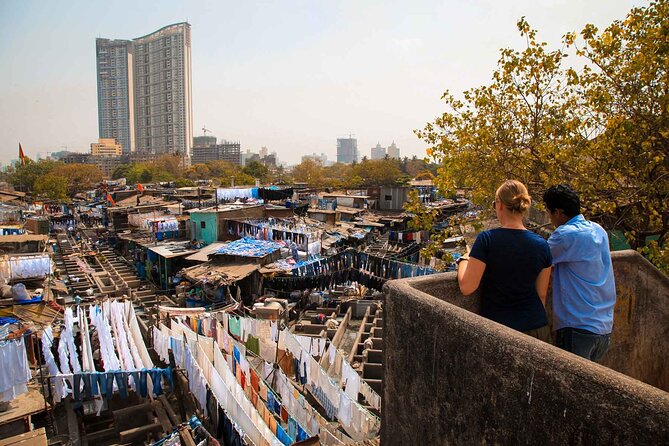
Next up is SHYAM STALL, a stop focused on flowers—used everywhere in Mumbai for temples, taxis, at home, and in women’s hair. If you’ve only seen India through big-ticket monuments, this is a great correction. It shows how devotion and everyday routines mix without needing a special occasion.
This stop is also designed to be visual and sensory, not just informational. You’ll likely notice how quickly flowers show up in the details: in corners, at transit points, and in small gestures you might otherwise miss.
It’s scheduled for 15 minutes, so it’s not a long market detour. Think of it as a “pattern-spotting” pause that helps you read the city better.
Dhobi Ghat: the open-air laundry that turns hospital work into routine
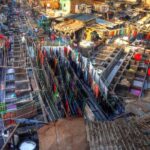
Then you get the stop that many people remember the most: Dhobi Ghat, described as the world’s largest outdoor laundry. This is where the tour shifts from sightseeing to work in progress.
You’ll see dhobiwallahs (washermen) scrubbing linens tied to major hospitals and hotels. That detail matters. It’s not just a pretty street scene. It’s a whole cleaning pipeline that keeps institutions running.
A few things make Dhobi Ghat a strong tour value:
- It’s functional. You’re watching labor, tools, motion, and repetition.
- It connects scale to daily need. Sheets from big facilities are a reminder that this isn’t small, hobby-scale washing.
- It’s photographed less because it’s harder to “stage.” That’s exactly why a guided approach is useful—your guide helps you see what’s meaningful without you getting stuck trying to figure it out alone.
Expect about 30 minutes here. Wear something you’re comfortable with—Dhobi Ghat is an outdoor, working space.
One extra planning note based on real-world variability: during major holidays like Republic Day (Jan 26), the laundry workers may be off, and the stop can be shorter. If your dates include that holiday, don’t be surprised if the flow changes.




Chor Bazaar: the thieves market for real snacks and souvenir decisions
After the laundry, you head to Chor Bazaar, nicknamed the Thieves Market. It’s one of the largest and busiest flea markets in India, with stalls selling almost anything.
This is a stop where you have to decide what kind of experience you want:
- If you enjoy browsing, it can be fun because the variety is intense.
- If you hate crowds and noise, it can feel like a sensory test.
The tour slot is 30 minutes, so it’s long enough to grab a few bites or pick a small item, but not long enough to lose your morning. You can also use the time for practical local food taste tests—there’s mention of local sweets and taking home homemade pickles and chutneys.
My advice: treat Chor Bazaar like a mini scavenger hunt. Go in with a spending target and a couple of categories you’d actually use. Otherwise the sheer number of things can turn your decisions into stress.
Churchgate and dabbawallah delivery: lunch logistics as a city system
The final major chapter happens at Churchgate Railway Station, where you’ll get a close look at the dabbawallah delivery system.
This stop is special because it isn’t just about a station. It’s about a daily coordination machine. The tour description highlights that dabbawallahs organize delivery of 200,000 lunchboxes every day. That number gives you scale fast.
Here’s the real benefit for you: even if you never plan to use the service yourself, this is the kind of city system lesson you can carry forward. You watch how timing, organization, and workflow replace chaos with routine.
Your tour time near Churchgate is short—about 10 minutes—but the tour then references Oval Maidan nearby for a vegetarian dabba-wallah style lunch. Since lunch inclusion isn’t clearly stated in the listed inclusions, I’d plan on handling your own lunch cost if you want it. Either way, the area choice matters. Oval Maidan is a logical nearby place to sit, eat, and process the morning.
Taxi splits and crowd reality: what to expect when the group moves
Because the itinerary uses train, bus, and taxi, you should expect some waiting and some coordination time. In a city like Mumbai, that’s normal.
One consideration I’d flag: if the group needs to split into multiple taxis, you might not ride exactly together in one vehicle. That can feel slightly unnerving if you’re not used to trusting local drivers and a route plan. The practical way to handle this is to stay calm, keep your timing tight, and follow your guide’s instructions without improvising.
Also, expect crowds at the transit hubs. This isn’t a quiet stroll. You’re learning in the real environment.
Practical tips for your comfort and confidence on public transport
If you want this tour to feel empowering (not stressful), come prepared. Here are the real-world moves that help:
- Start your day early with water and a quick breakfast. The tour begins at 8:30 am, and you’ll be on your feet.
- Use cross-body bags or secure closures. Station areas are busy. You’re not paranoid—just smart.
- Keep your phone power ready. You’ll want photos, plus maps if you get turned around outside tour time.
- Bring patience for walking and waiting. A short stop schedule means movement is constant.
- Ask questions when you’re stopped. The guide’s explanations fit the moment—station, market, or laundry scene—so don’t save curiosity for later.
The best part of tours like this is that after one morning, your confidence usually improves. You see how movement works, and you don’t feel as lost when you’re back on your own.
Who should book this Local Transport and Dabbawallah tour
This tour is a strong fit for:
- First-time visitors who want to understand Mumbai beyond a list of monuments
- Travelers who like public transport and want a guided “practice run”
- People who enjoy work-in-progress experiences, like Dhobi Ghat
- Anyone who wants a short morning plan that still feels like it teaches you something
It might be less ideal if:
- You need hotel pickup and hate fixed meet-up times
- You dislike crowded stations or moving through busy areas
- You want a slow, relaxed sightseeing pace
Should you book it? My decision guide
Book this tour if you want value that’s measured in real capability: learning how to move around and how Mumbai’s daily systems work. At $32.45 with transport fares included, plus a guide and water, it’s one of those deals that feels efficient. The itinerary choices hit three powerful themes—rail infrastructure, everyday worship/flowers, and the labor behind cleanliness—then end with the dabbawallah delivery routine.
Skip or reconsider if your priority is quiet, long landmark time. This day is designed for motion and context, not lingering.
If you’re the kind of traveler who likes to leave a destination with new street-level confidence, this is a smart morning investment.
FAQ
How long is the Local Transport & Dabbawallah tour?
It runs about 3 hours 30 minutes (approx.).
Where do I meet the guide?
The tour starts at Regal Cinema on Colaba Causeway, opposite Chhatrapati Shivaji Maharaj Vastu Sangrahalaya, Apollo Bandar, Colaba, Mumbai.
Where does the tour end?
It ends at Churchgate Railway Station in Mumbai, with easy access to other parts of the city.
What time does the tour start?
Start time is 8:30 am.
What transportation will you use during the tour?
You’ll travel by train, bus, and taxi.
Is transportation included in the price?
Yes. All transportation on the tour is included.
Do I need to pay fares or find change?
No. Transportation fares are included, so you don’t need to find change.
Is bottled water provided?
Yes. The tour includes bottled water (water / cold drink).
Is hotel pickup and drop-off included?
No. Hotel pickup and drop-off is not included.
How big is the group?
There’s a maximum of 25 travelers.
What is the cancellation policy?
You can cancel for a full refund up to 24 hours before the experience starts, with free cancellation available.