REVIEW · MUMBAI
Mumbai Temple Tour in Private Vehicle
Book on Viator →Operated by Shreeji Tours n Travels · Bookable on Viator
Mumbai teaches religion by the mile. This private, A/C spiritual day is built around seeing how Hindu, Jain, Christian, and Buddhist life all sit side-by-side in one city. I love the front-door pickup/drop-off and bottled water because Mumbai heat can be real, and I love that your English-speaking guide helps you make sense of what you’re seeing at each stop. The one thing to consider: this is a full-day route with many quick visits, so if you want long, quiet time in each temple, you may feel a bit rushed.
You’ll start around 9:00 am and spend about 6–8 hours moving through some of Mumbai’s most meaningful religious places, from the famous Ganesh temple to St. Thomas Cathedral. Admission at the listed stops is free, which keeps the day focused on experience, not ticket hunting. Come with comfortable shoes and modest clothing, because you’ll be walking and stepping into sacred spaces throughout the morning and afternoon.
In This Review
- Key Things I’d Plan for Before You Go
- A/C Comfort and Door-to-Door Pickup for a Long Temple Day
- Cost, Value, and What You Actually Get for $98
- Stop-by-Stop: Siddhivinayak and Mahalakshmi’s Most Famous Faces
- Babulnath, Banganga, and Mumba Devi: Shiva, Water, and the Old City Mood
- ISKCON Radha Gopinath (Chowpatty) and Nipponzan Myohoji: Krishna Meets Japanese Buddhism
- Jain Adishwarji and St. Thomas Cathedral: Faiths You’ll Recognize Fast
- A Practical Way to See Temples Respectfully Without Rushing
- Guides and the Little Details That Make or Break the Day
- Should You Book This Mumbai Temple Tour?
- FAQ
- What is the price for this Mumbai Temple Tour?
- How long is the tour, and what time does it start?
- Is hotel or airport pickup included?
- Are admission tickets included for the temples and cathedral?
- Is there an English-speaking guide?
- Is the tour private?
- What if the weather is poor?
Key Things I’d Plan for Before You Go
- Private transport with A/C: you’re not competing for a seat or stuck waiting for others.
- English-speaking guide at every stop: you get context right when you need it.
- Free admission at the listed sites: fewer add-on costs during the day.
- A nine-stop route: you’ll see a lot, but most visits are short and focused.
- Multi-faith religious focus: you’re guided through Hindu, Jain, Christian, and Buddhist sites, with broader context for Mumbai’s religious mix.
- Hot-weather reality: the tour still runs across an active city day, so hydration and airflow matter.
A/C Comfort and Door-to-Door Pickup for a Long Temple Day
Mumbai has a way of testing your patience: traffic, crowds, and that warm, humid air. This tour keeps the stress level down by using a private A/C vehicle and handling pickup and drop-off directly from your hotel, airport, or train station. That means you can spend your energy on the temples, not on figuring out transport.
The other practical win is that the car day feels designed for a full schedule. Bottled water is included, and the tour also factors in tolls and parking fees. For a day built around multiple sacred sites, those “small logistics” add up fast if you do it yourself.
Because it’s private, you also avoid the awkward time loss of waiting around for other groups to finish photos. You’re still moving through a real city, but the pacing stays under control. One small note: even with good planning, temple days can vary a bit depending on ceremonies and the flow inside.
You can also read our reviews of more private tours in Mumbai

Cost, Value, and What You Actually Get for $98
At $98 per group (up to 2 people), this isn’t a budget “sit on a bus” tour. But it can be good value if you want comfort and guidance. The pricing works especially well when you share the car cost with one companion, since the day includes a private chauffeured vehicle, an English-speaking local guide, and bottled water.
What’s included matters more than the headline price:
- Air-conditioned vehicle
- Private transportation
- Bottled water
- Pickup & drop-off
- Local English-speaking guide
- Toll tax & parking fees
- Mobile ticket
And what’s not included is refreshingly straightforward: meals and personal expenses. You can bring your own plan for lunch, or buy something nearby once you’ve finished the morning route. No hidden “VIP entrance” fees either, at least based on what’s listed.
If you’re the type who likes structure—pickup on time, a driver who knows the route, and a guide who explains the meaning behind the scenes—this kind of day tour usually pays for itself in sanity.
Stop-by-Stop: Siddhivinayak and Mahalakshmi’s Most Famous Faces
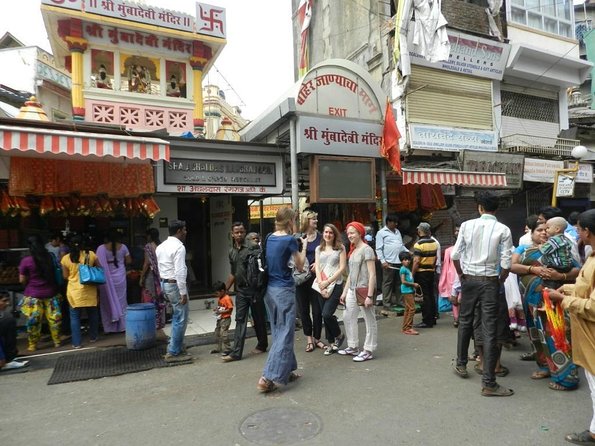
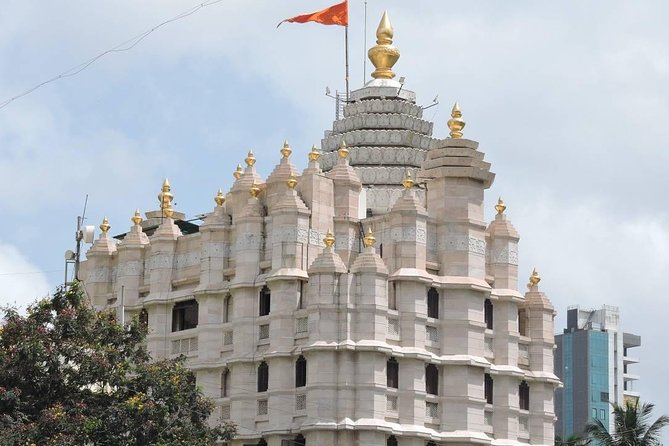
Your morning starts with one of Mumbai’s biggest religious magnets: Shree Siddhivinayak Ganapati Mandir in Prabhadevi. The focus here is Lord Ganesh, the deity associated with new beginnings and blessings. The scheduled time is about 1 hour, which is long enough for you to take in the energy without feeling like you’re sprinting through.
This stop is also a great “orientation” moment. Even if you’re not deeply familiar with Hindu rituals, your guide can help you connect what you’re seeing—offerings, movement of devotees, and the way people approach the shrine. It’s the kind of place where understanding the basics makes the experience feel personal.
Next up is Mahalakshmi Temple, dedicated to Goddess Mahalaxmi, often linked with wealth and prosperity. It’s one of the oldest temples in the city. Like the previous stop, it’s allotted about 1 hour, giving you time to notice details that you’d usually miss if you were just passing by quickly.
A useful way to think about this pair of temples: you’re seeing two different “modes” of devotion. Ganesh tends to feel welcoming and direct; Mahalakshmi often feels more ceremonially focused. If your guide times it right, you’ll get a steady rhythm of explanation, then a chance to slow down and absorb.
Babulnath, Banganga, and Mumba Devi: Shiva, Water, and the Old City Mood
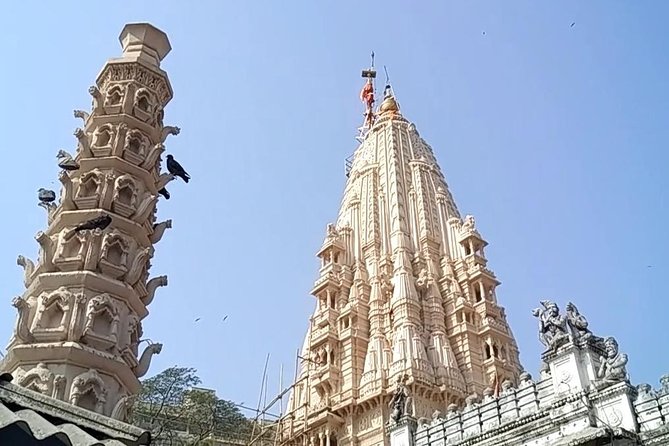
After Mahalakshmi, the route shifts to Babulnath Temple, an ancient Shiva temple on a small hillock near Girgaum Chowpatty. The main deity is Shiva in the form connected to the babul tree. You’ll have about 1 hour here.
This is a good stop for understanding how Mumbai’s neighborhoods “hold” spirituality in everyday space. Hilltop temples tend to feel a little more elevated—literally and mentally—because you can see more context around the shrine. It’s also a place where the guide’s storytelling really helps: Shiva isn’t just one god you look at; he’s a whole set of ideas expressed through form, ritual, and temple tradition.
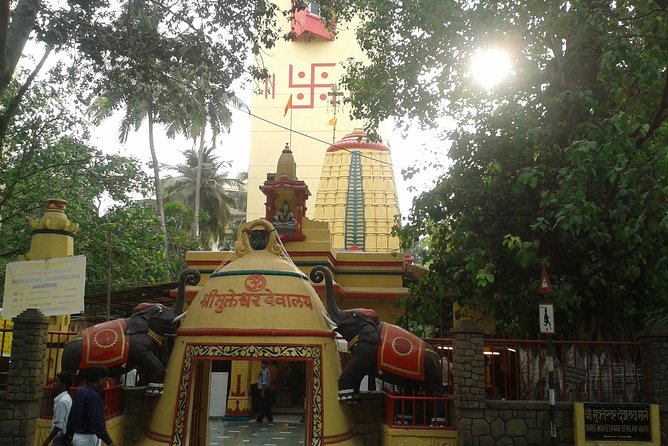
From there, you move to Banganga, a sacred water tank connected to the Walkeshwar temple complex, with origins dating back to the 12th century. Your time is around 20 minutes. This stop is shorter, but it’s memorable because water sites often feel quieter than main temples. You’re seeing a different side of worship: not only the deity, but also the sacred geography that supports the whole religious idea.
Then, toward the end of the day, you’ll return to devotion at Mumba Devi Mandir, dedicated to Goddess Mumba, described as the local incarnation of the Mother Goddess Durga. You get about 20 minutes here. This is a nice final emotional note because it ties the earlier Shiva-focused parts of the day back into a broader “mother goddess” theme that’s strongly rooted in local identity.
If you enjoy variety—different deities, different shrine atmospheres—this cluster gives you a satisfying arc: Ganesh to wealth, to Shiva, to sacred water, to the local goddess.
ISKCON Radha Gopinath (Chowpatty) and Nipponzan Myohoji: Krishna Meets Japanese Buddhism
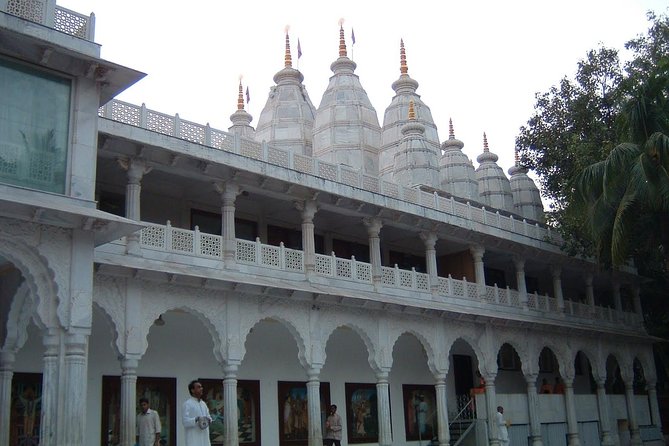
One of the smartest things about this itinerary is that it doesn’t treat religion as one lane. After Babulnath, you’ll stop at Sri Sri Radha Gopinath Temple (ISKCON Chowpatty), a Hare Krishna temple. You’ll have about 30 minutes.
This one is often the most emotionally distinct stop. ISKCON spaces can feel calmer and more focused, and if there’s a ceremony or aarti timing during your visit, it can make the experience feel extra alive. Even without a major festival moment, the ritual style is different from the Hindu temple rhythm you’ll have already seen—so it keeps your day from blending together.
Next is Nipponzan Myohoji Budha Temple, established in 1956 with origins linked to a prophecy connected to the Japanese Buddhist monk Nichiren (1222–82). Your scheduled time is about 15 minutes.
This is a great “contrast” stop. When you visit temples from different traditions back-to-back, you start noticing what stays the same—devotion, repetition, prayer—and what changes—ritual style, iconography, and language. The guide’s explanations help you connect those dots quickly, instead of you trying to guess what everything means.
If you want one simple way to prepare: don’t try to learn everything in your head. Use the time at each stop to ask one or two questions through your guide, then look with fresh eyes. That’s how the day clicks.





Jain Adishwarji and St. Thomas Cathedral: Faiths You’ll Recognize Fast
After ISKCON and the Buddhist temple, you’ll swing back across the religious map with a Jain temple stop: Babu Amichand Panalal Adishwarji Jain Temple in the Malabar Hills (Walkeshwar Road) area. It’s a shorter stop, about 10 minutes.
Even with limited time, Jain temples are worth it because the focus on devotion can feel precise and intentional. Your guide can help explain what you’re looking at and how Jain practice shapes temple behavior. A short visit like this is ideal if you want to experience the setting and understanding basics—then move on without draining your energy.
Then comes St. Thomas Cathedral Mumbai, listed as a 300-year-old cathedral. The name honors Saint Thomas the Apostle, believed to have first brought Christianity to India. You’ll have about 15 minutes here.
Christian churches offer a different kind of sacred space: sound, light, and architectural cues that guide your attention. It’s also a meaningful contrast after temple stops, because it shows how worship can be centered around different symbols and different ways of gathering. For many visitors, this is where the day’s multi-faith theme becomes unmistakable.
A Practical Way to See Temples Respectfully Without Rushing
This tour runs on a tight rhythm: nine stops, ranging from about 10 to 60 minutes each, with a mix of indoor and outdoor moments. That doesn’t mean it’s superficial. It means you should adjust your expectations. You’re getting an overview that’s guided, not a full day of deep, slow worship in one place.
Here’s how I’d make it work for you:
- Wear comfortable shoes. Even with a vehicle, you’ll do a fair bit of walking.
- Keep clothing modest for entering sacred spaces.
- Bring sunscreen and water patience. Bottled water is included, but Mumbai sun still has opinions.
- Save your best questions for the guide at the beginning of each stop. You’ll get more out of answers when you’re staring at the exact object of the discussion.
Also, if you’re someone who likes photography, do it after you’ve looked once without your phone. Temples can be busy, and you’ll enjoy them more when you’ve already let the scene land.
The route timing also supports your attention span. You get a balance of larger “anchor” temples (Ganesh, Mahalakshmi, Shiva) and shorter “spotlight” stops (cathedral, Jain temple, Buddhist temple). It’s a smart structure for a one-day itinerary.
Guides and the Little Details That Make or Break the Day
This kind of tour lives or dies based on the guide. When an English-speaking guide explains what you’re seeing as you arrive—before you get overwhelmed—it changes everything.
From the guide names that have shown up for this experience, people tend to remember them for a reason: Siddhi, Sameer, Sanseer, and Vikrant all come up with the same theme of giving context right at each stop and answering questions while you’re still in the moment. That is exactly what you want from a private religious tour. You don’t want a lecture from a distance. You want the explanation synced to the shrine in front of you.
Another detail that matters: people praise the day for feeling smooth, with the AC SUV and a driver who keeps things moving. On a city day in Mumbai, that’s not a luxury. It’s the difference between arriving tired and arriving curious.
Should You Book This Mumbai Temple Tour?
I’d book this if you want a structured, private way to experience Mumbai’s religious variety in one long day. It’s especially worth it when you care about understanding what you’re seeing—Ganesh devotion, Shiva temple traditions, Jain temple focus, ISKCON ritual style, and Christian worship in St. Thomas Cathedral—without spending your trip days mapping routes and fighting traffic.
You might skip it if:
- You want slow, quiet time at just one or two sites.
- You prefer to do everything independently with no guide.
- You’re easily drained by back-to-back stops.
For most people, this is a smart value: free admissions at the listed stops, an A/C private vehicle, a real English guide, and a route designed to show you how Mumbai’s spirituality lives in the same neighborhoods.
FAQ
What is the price for this Mumbai Temple Tour?
It costs $98.00 per group, with a maximum of up to 2 people per group.
How long is the tour, and what time does it start?
The tour runs about 6 to 8 hours and typically starts at 9:00 am.
Is hotel or airport pickup included?
Yes. Pickup and drop-off are included from your hotel, airport, or train station.
Are admission tickets included for the temples and cathedral?
For the listed stops, admission tickets are free.
Is there an English-speaking guide?
Yes. The tour includes a local English-speaking guide.
Is the tour private?
Yes. This is a private tour/activity, so only your group participates.
What if the weather is poor?
The experience requires good weather. If it’s canceled due to poor weather, you’ll be offered a different date or a full refund.