REVIEW · MUMBAI
Mumbai Bazaar Walking Tour
Book on Viator →Operated by Young Tours And Travel · Bookable on Viator
Mumbai’s markets move fast, in the best way. This walking tour stitches together classic Fort-area food and shopping lanes with religious stops, ending with a rare peek into Mumbai’s animal-care culture. You’ll go from Crawford Market to jewelry streets, then to temples and Panjrapole, guided in English so you understand what you’re seeing.
I like the focused mix of places in a small time window—shopping, faith, and everyday life side by side. I also like that the essentials are handled: private transportation, bottled water, and snacks keep you going through a city that’s not set up for long breaks. One watch-out: several stops are brief, so wear comfortable shoes and come ready to walk and look, not to linger.
In This Review
- Key highlights you’ll care about
- Why this Mumbai Bazaar route works so well
- Crawford Market: a classic starting point with real street energy
- Mangaldas Market: a practical fabric stop (and a lesson in trade)
- Zaveri Bazaar jewelry lanes: craftsmanship you can actually see
- Shri Mumbadevi Temple and Bhuleshwar Bazaar: faith next to daily life
- Shri Mumbai Panjrapole: a rare stop that adds heart
- Madhav Baug Derasar Jain Temple: calm detail in the middle of the city
- What you’re really paying for: value in a 3–4 hour private walk
- Timing and comfort: how to plan your day around the route
- Who should book this Mumbai Bazaar walking tour?
- Should you book it? My take
- FAQ
- How long is the Mumbai Bazaar Walking Tour?
- Where does the tour start and end?
- Is pickup offered?
- What major stops are included?
- What’s included in the price?
- Are there entry fees?
- Do I need to tip?
- Can I get a full refund if I cancel?
Key highlights you’ll care about

- English-speaking guide keeps the whole route understandable, step by step
- Pickup and private transportation reduce hassle in busy Fort/Bhuleshwar/Girgaon areas
- Market-to-temple flow connects shopping streets with places of worship
- Panjrapole visit adds a meaningful, off-the-usual-track stop about animal protection
- Snacks and bottled water included so you’re not stuck hunting for basics
Why this Mumbai Bazaar route works so well
Mumbai can feel like a lot on your first day—noise, smells, people, motion. A guided route helps because it does two useful things at once: it keeps you oriented, and it explains what you’re looking at. This tour is built around major market zones and then punctuates them with temples and Jain space, so you don’t just watch trade happen—you learn how different parts of the city connect.
The private format matters. You’re not sharing the guide with a crowd, and you can move at a comfortable pace for your group size. That’s a big deal in marketplaces, where stopping too long can become a traffic jam. The guide also helps you get back afterward, since the tour ends at a different location than it starts.
You can also read our reviews of more walking tours in Mumbai



Crawford Market: a classic starting point with real street energy

You begin at Crawford Market, a named landmark in the Fort area and one of the city’s best-known market settings. Expect a dense swirl of stalls and shoppers, the kind of place where the city’s everyday economy is right in front of you. The stop is short—about 15 minutes—so the goal here is orientation: you learn how the market is organized and what types of goods you’ll notice as you walk through it.
What I like about starting here is the “baseline.” Once you understand how Crawford Market works, the next stops make more sense. You can also use this as a pacing moment. If you’re sensitive to crowds, this is where you decide how close you want to stand to shop fronts, and you get the hang of how fast the lanes move.
Possible drawback: since it’s a quick introduction, you won’t have time to shop deeply at this stop. If you want to buy anything, think of it as a preview, then save your serious time for later—either on this same trip or another visit.
Mangaldas Market: a practical fabric stop (and a lesson in trade)

Next is Mangaldas Market, focused on textiles and fabrics. The advertised theme here is an extensive selection—silk, cotton, and synthetic materials—displayed in a way that makes it easier to spot what different shops carry. Like Crawford, this is a shorter stop (about 15 minutes), so you’re not here for sewing-machine-level homework. You’re here to understand the visual language of fabric trade in Mumbai: colorways, types of cloth, and how shoppers compare options in the same lane.
This stop is valuable even if you’re not shopping for clothes. It helps you see what people are spending time and money on. Markets are cultural maps. They show what households buy, how choices get compared, and what “quality” looks like in person.
One consideration: fabric lanes can be tight. If your group has anyone with mobility limits, comfortable shoes matter here because walking space can shrink quickly around displays.
Zaveri Bazaar jewelry lanes: craftsmanship you can actually see

Then you head to Zaveri Bazaar, known for gold, silver, and diamond jewelry. This is where the tour shifts from “everyday buying” into “high-skill craft and big-ticket goods.” Even if you won’t purchase anything, walking the jewelry lanes gives you a clearer picture of how traditional craftsmanship and modern retail styles sit side by side.
Because the jewelry focus can feel intimidating (especially if you’re not used to shopping in busy, high-value settings), I recommend using the guide as your buffer. Ask simple, grounded questions—what you’re seeing, why certain pieces are grouped, and what terms people commonly use. The point isn’t to haggle; it’s to translate the visual details into something you can understand.
Also, keep your expectations realistic. This isn’t an in-depth workshop or museum tour. It’s a guided walk meant to help you read the street.
Shri Mumbadevi Temple and Bhuleshwar Bazaar: faith next to daily life

After the jewelry lanes, the tour moves to Shri Mumbadevi Temple, described as one of the oldest temples in Mumbai and dedicated to Goddess Mumbadevi. You’ll visit with the sense that this is a pilgrimage site, not a photo-stop. Even if you’re not there for religion, the atmosphere is different from the market streets. People come with devotion and purpose, and that changes how you experience the area.
Right near the temple is Bhuleshwar Bazaar, a market stop that runs alongside the temple experience (about 20 minutes). This pairing is smart. Markets near temples tell you something important: local life doesn’t separate shopping from worship. You see how everyday errands fold into religious calendars.
What I like about this portion is the contrast. Markets teach you motion and commerce; temples teach you pause and meaning. Put them together and you get a more complete picture of Mumbai than you would from markets alone.
Practical note: temple areas often require respectful behavior. Keep your voice down and dress appropriately. If you’re unsure, follow what locals are doing around you, and ask the guide before you enter areas where rules matter.
You can also read our reviews of more shopping tours in Mumbai




Shri Mumbai Panjrapole: a rare stop that adds heart
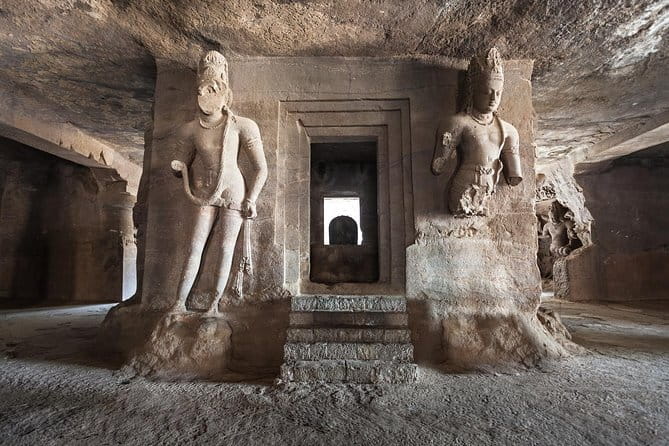
One of the most memorable parts of the tour is Shri Mumbai Panjrapole, a 19th-century institution dedicated to caring for animals—especially cows and other livestock. The stop is about 20 minutes, and the admission is included.
This isn’t just a sightseeing checkbox. Panjrapole gives you a window into how charity and animal protection can be organized in a dense city. You’ll see that the “market city” side of Mumbai isn’t the whole story. There’s also an organized compassion that has been running for generations.
I’d treat this stop as the emotional mid-point of the walk. If you’ve been hustling through bazaars, this gives you a quieter reset where you can look longer without feeling rushed. It also gives context to the idea that Mumbai’s public institutions often serve practical needs, not only tourism.
Madhav Baug Derasar Jain Temple: calm detail in the middle of the city

Later, you’ll visit Madhav Baug Derasar, a Jain temple known for its serene ambiance and intricate architectural details. The dedication is to Lord Mahavira, the 24th Tirthankara.
This stop works especially well after Panjrapole and the temple market area, because it continues the theme of faith—but with a different religious tradition and a different tone. Jain architecture and temple design tend to reward slower looking, and even with a timed visit, you can catch the craftsmanship through patterns, carvings, and the way the space is used.
One consideration: as with any temple visit, keep your behavior respectful and follow any guidance the tour provides. If you’re carrying a camera, pay attention to whether photography is allowed in the specific areas you enter.
What you’re really paying for: value in a 3–4 hour private walk

At $49 per person, the headline value is that you’re buying time, coordination, and guidance—not just a list of stops. You’re getting:
- an English-speaking guide
- private transportation
- bottled water and snacks
- a route that moves between market and religious sites
- a private tour where it’s only your group
If you tried to do this on your own, you could cover some of the same areas, but you’d pay for it in planning effort and in lost understanding. Markets are not the kind of place where reading signage is enough. The guide turns chaos into comprehension, especially in jewelry lanes, where context helps you avoid feeling lost or pressured.
One caution about value: because it’s private, solo travelers might feel the price more than couples or friends sharing the same group. If you’re traveling alone, it can still be a great deal—but check whether your departure time and pickup meet your needs so you truly get the full experience window.
Timing and comfort: how to plan your day around the route
The tour runs about 3 to 4 hours (including travel time). Several segments are specifically short—around 15 minutes for Crawford Market and Mangaldas Market, and about 20 minutes for Bhuleshwar Bazaar and Panjrapole. That means the experience is designed for motion, not long breaks.
Plan like a city walker:
- Wear closed-toe, non-slip shoes.
- Bring a small layer if you’re sensitive to AC or indoor cool spots.
- Expect frequent street-level browsing where you’ll want to look without stepping into the flow of foot traffic.
Also, the tour ends at CP Tank Circle (Charni Road East area), but your guide will assist you in getting back to your hotel or wherever you want to go next. That’s helpful because your end point isn’t the same as your start.
Who should book this Mumbai Bazaar walking tour?
This is a great match if:
- you want a structured walk through multiple major market zones without guessing your way around
- you like the contrast of shopping streets and temple settings
- you appreciate learning how different parts of Mumbai live next to each other
- you’d rather have snacks and water handled so you stay focused on the sights
It’s also a good choice if your travel style leans toward practical experiences: street level first, then meaning. The stop at Shri Mumbai Panjrapole is especially suited to travelers who want something beyond shopping and selfies.
Should you book it? My take
Book it if you want a guided route that’s built around how Mumbai actually functions: commerce, faith, and charity in close proximity. The combination of market stops, temple visits, and a meaningful detour to Panjrapole makes it more than a shopping spree.
Skip or reconsider if you’re looking for long museum-style time in one place, or if you hate walking through crowded lanes. This tour is short-stop by design, so you’ll want comfort with movement and quick orientation.
If your goal is to understand the city beyond a single neighborhood, this one gives you a lot of ground in a manageable half-day.
FAQ
How long is the Mumbai Bazaar Walking Tour?
It runs about 3 to 4 hours, and the travel time is included in that total.
Where does the tour start and end?
It starts at Crawford Market in the Fort area (Dhobi Talao / Khand Bazar area). The tour ends at CP Tank Circle near Charni Road East. Your guide helps you find your way back afterward.
Is pickup offered?
Pickup is offered, and the tour also includes private transportation.
What major stops are included?
You’ll visit Crawford Market, Mangaldas Market, Zaveri Bazaar, Shri Mumbadevi Temple, Bhuleshwar Bazaar, Shri Mumbai Panjrapole, and Madhav Baug Derasar.
What’s included in the price?
The tour includes bottled water, snacks, private transportation, and an English-speaking guide.
Are there entry fees?
Crawford Market, Mangaldas Market, and Bhuleshwar Bazaar are listed as free. Admission for Shri Mumbai Panjrapole is included.
Do I need to tip?
Tips are not included, so you’ll want to plan for gratuity separately.
Can I get a full refund if I cancel?
Yes. You can cancel for free up to 24 hours in advance for a full refund.