REVIEW · MUMBAI
Mumbai City of Dreams Tour in Private Vehicle
Book on Viator →Operated by Shreeji Tours n Travels · Bookable on Viator
South Mumbai in one day feels easy. This private air-conditioned City of Dreams tour uses a local guide to keep you on track while you enjoy round-trip hotel transfers and bottled water. I like the built-in “no getting lost” factor, and I also like that most major stops are quick, so you hit a lot without feeling like you’re speed-running. One possible drawback: it’s a full 8-hour loop, so traffic and a busy schedule mean you’ll want comfy shoes and a flexible attitude.
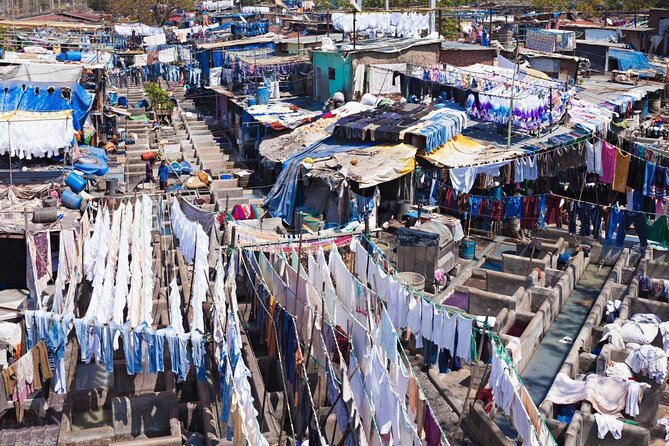
You’ll move from famous monuments to real street life, then into places many visitors rush past. You’ll see the arch at the Gateway of India, browse Colaba Causeway, admire the Victorian-era grandeur around Rajabai Tower and Mumbai University, and then take in the sea views from Marine Drive and Girgaum Chowpatty. The most memorable pivot is Dhobi Ghat, the open-air laundromat where hotel and hospital linens get cleaned right in public view.
The guide is the difference-maker here. Names like Ankita Shah, Vikrant, Sameer, and Siddhi come up with consistent themes: clear English, lots of context at each stop, and the ability to adjust timing when your group wants more photos or less shopping. If you hate religious sites or prefer to linger for long museum hours, this format may feel too structured.
In This Review
- Key things that make this tour worth your time
- How the private vehicle setup makes Mumbai easier
- Gateway of India and Colaba: arches, shops, and quick photo stops
- Rajabai Tower, Mumbai University, and the Bombay High Court exterior moments
- Chhatrapati Shivaji Maharaj Terminus (CST): the UNESCO rail-station spectacle
- Crawford Market, Marine Drive, and Girgaum Chowpatty: food energy and sea views
- Krishna, Shiva, and Jain stops: temples in the same day that actually make sense
- Antilia and Malabar Hills viewpoints: seeing wealth without pretending it’s your life
- Mani Bhavan: Gandhi’s home base and why it hits
- Dhobi Ghat: watching laundromat work in the open
- Timing, pacing, and weather reality
- Price and value: what you get for $126 per group
- Should you book the Mumbai City of Dreams Private Vehicle tour?
- FAQ
- How long is the Mumbai City of Dreams tour?
- What time does the tour start?
- Is this a private tour?
- How many people can be in the group?
- What’s included in the price?
- Are meals included?
- Is Mani Bhavan Gandhi Museum admission included?
- Do I need to pay admission for the other stops?
- Can I get a refund if plans change?
Key things that make this tour worth your time
- Private AC vehicle with hotel pickup/drop so the day runs on your schedule, not random city buses
- A tight South Mumbai circuit built around icons like Gateway of India, Crawford Market, and Chhatrapati Shivaji Terminus
- Temples plus everyday Mumbai: Krishna, Shiva, and Jain worship alongside Dhobi Ghat’s working laundry scene
- Mani Bhavan Gandhi Museum is included—a meaningful stop that you don’t have to plan separately
- Most admissions are free on the route, keeping the budget predictable
- Free bottled water for a long day in the sun and in traffic
How the private vehicle setup makes Mumbai easier
This tour is designed for people who want a strong overview without having to map, navigate, and translate every turn. You start in the morning (9:00 am) and spend about 8 hours with a local English-speaking guide in a private, air-conditioned vehicle. The price is listed per group (up to 2 people), and that matters because private transport plus a guide can be pricey in India if you try to piece it together yourself.
You also get pickup and drop-off, plus toll and parking fees. Translation: fewer surprises, less time wasted, and more actual sightseeing. The tour includes bottled water, which you’ll appreciate when you’re doing temple stops and sea-front walks that don’t always feel shady.
The one thing to keep in mind is that “8 hours” in Mumbai is still 8 hours inside the reality of city traffic. Your guide can’t delete rush-hour from the planet, so the best approach is to treat this as a highlight loop: see a lot, ask questions, and don’t plan a second major activity right after.
You can also read our reviews of more city tours in Mumbai


Gateway of India and Colaba: arches, shops, and quick photo stops
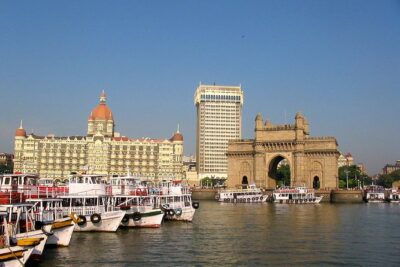
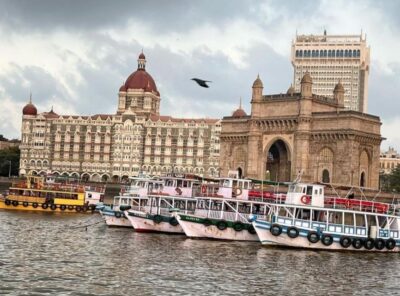
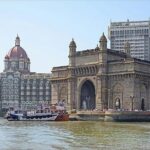
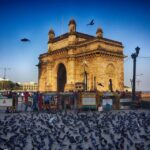
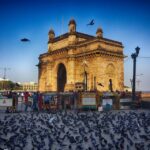
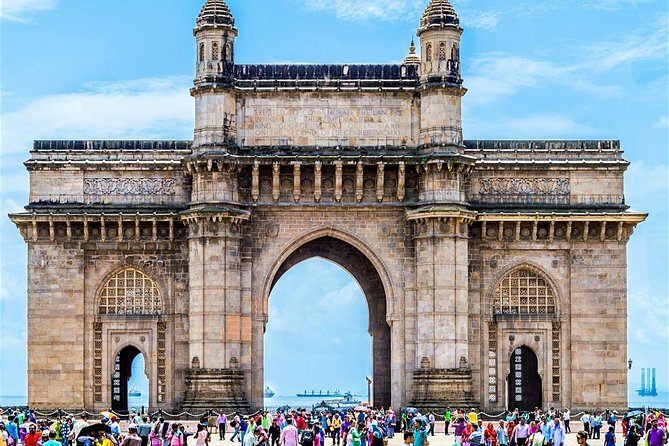
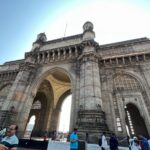
The day begins at the Gateway of India, an arch monument built in the 20th century to commemorate the landing of King George V and Queen Mary at Apollo Bunder. It’s one of those sights that makes people instantly understand the scale of Mumbai’s waterfront story—sea, empire-era architecture, and modern city energy all in one frame.
You’ll have about 30 minutes here, which is enough for photos and a bit of orientation before moving on. Then comes Colaba Causeway, a lane famous for shopping and street food. Expect a short stop (around 10 minutes), more “feel the area” than “shop like you’re preparing for winter.”
This pairing is smart: the Gateway gives you the historic anchor, and Colaba gives you the street-level Mumbai. If you want more shopping time, this is where you can ask your guide to adjust—some guides are known for being flexible about what you care about most.
Rajabai Tower, Mumbai University, and the Bombay High Court exterior moments
After the waterfront, you shift into the older civic-and-academic look of South Mumbai. You’ll make a quick stop at the Rajabai Clock Tower, part of the Fort campus of the University of Mumbai. It’s about 85 meters tall and part of a notable ensemble that mixes Victorian and Art Deco elements—so even if you’re not a architecture super-nerd, there’s plenty to notice.
The schedule keeps these stops short: around 5 minutes at Rajabai and about 5 minutes at the University of Mumbai Library. There’s also a stop for the Bombay High Court. The time here isn’t meant for deep study; it’s an exterior-and-photo moment that helps you connect the streets you’ll see later in life when you come across similar buildings in photos, films, and postcards.
Why this section matters: it gives you a sense of Mumbai’s “organized grandeur,” the side of the city that doesn’t look like a typical monument. It’s also a good breather after crowds and sea air—short and structured, but still meaningful.
Chhatrapati Shivaji Maharaj Terminus (CST): the UNESCO rail-station spectacle
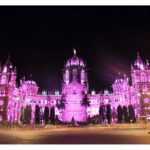
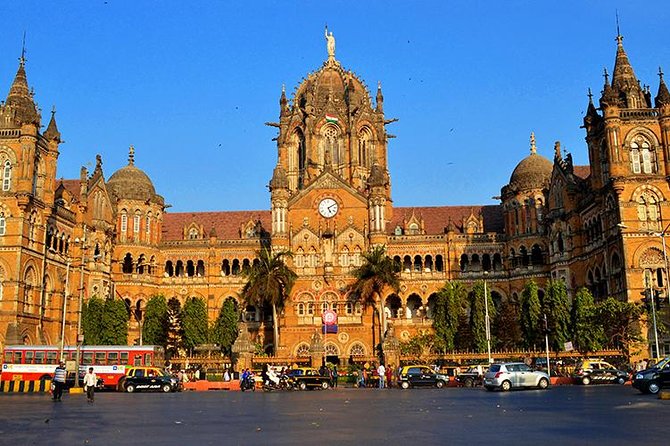
Next up is Chhatrapati Shivaji Maharaj Terminus (CST), formerly known as Victoria Terminus. It’s a historic railway station and a UNESCO World Heritage Site, and even if you’re not catching a train, you’ll feel why it’s world-famous.
You’ll have about 20 minutes here—long enough to take in the façade details and the general buzz of a working station. The best use of this time is not just the front-view photos. Stand back, look up, and then turn slightly—this is one of those buildings where the architecture rewards attention even in short visits.
This stop is also a useful “Mumbai reality check.” You’re going from monument-land into active city life. It helps you understand that Mumbai’s identity isn’t only in landmarks; it’s in what the city uses every day.
Crawford Market, Marine Drive, and Girgaum Chowpatty: food energy and sea views
Crawford Market is next, with about 10 minutes at the stop. The building was completed in 1869, and it was donated to the city by Cowasji Jehangir. Originally it was named after Arthur Crawford, and the result is a market space inside an old architectural shell.
It’s a great contrast with the earlier monuments. Instead of a single iconic structure, you get motion—people, goods, and the practical side of city life. Even if you don’t buy anything, it helps you understand how Mumbai actually feeds itself and shops.
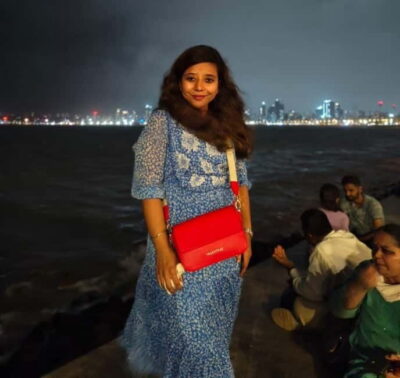
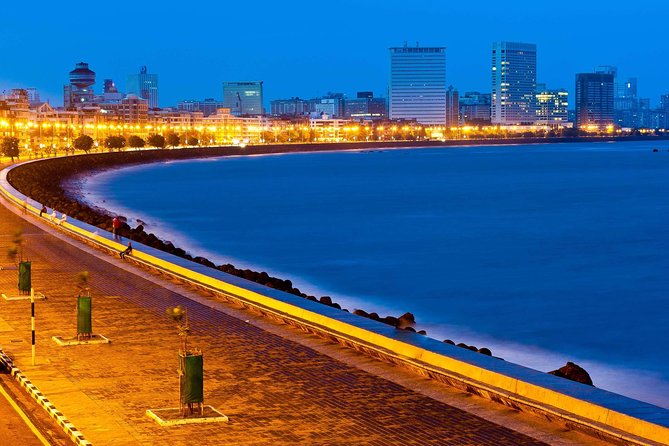
Then you head to Marine Drive, one of the city’s best-known boulevards. The C-shaped stretch is often called Queen’s Necklace, and you’ll get about 10 minutes to enjoy the view. The mood shifts again at Girgaum Chowpatty, the beach along Marine Drive. It’s a public beach area, so it’s lively even when you’re just standing and watching.
Practical tip: sea-front areas can be cooler than inland streets, but they also attract wind. Bring a light layer if you run cold.
You can also read our reviews of more private tours in Mumbai




Krishna, Shiva, and Jain stops: temples in the same day that actually make sense
This tour earns its name by mixing the “dreamy postcard” sites with the spiritual neighborhoods people live in.
You’ll visit Sri Sri Radha Gopinath Temple (around 30 minutes). It’s dedicated to Lord Krishna and offers a calm, focused contrast to the street scenes earlier in the day. Then there’s ISKCON Chowpatty (connected to the Krishna devotion theme), which is part of the Hare Krishna temple, community, and ashram dedicated to Krishna.
After that, Babulnath Temple comes next (about 20 minutes). It’s an ancient Shiva temple on a small hillock near Girgaum Chowpatty and is said to be one of the oldest temples in the city. This is a good stop if you like comparing how different traditions shape temple spaces and daily rhythms.
From there, the itinerary also includes a Jain temple stop at Malabar Hills (Walkeshwar Road) with about 10 minutes. The name listed is the Babu Amichand Panalal Adishwarji Jain Temple. You’re not getting hours to study, but you are getting a solid sense that Mumbai’s sacred geography is layered and close together.
One extra viewpoint stop worth noting is Hanging Gardens (about 20 minutes). The gardens spread out over a large area and offer green space among dense South Mumbai. The hedges are shaped into animal forms, so it’s a quick “reset” between temple visits and busier streets.
As for what to wear: for temple visits, choose something you’re comfortable adjusting or covering. Don’t make it complicated—just plan for basic modesty and you’ll be fine.
Antilia and Malabar Hills viewpoints: seeing wealth without pretending it’s your life
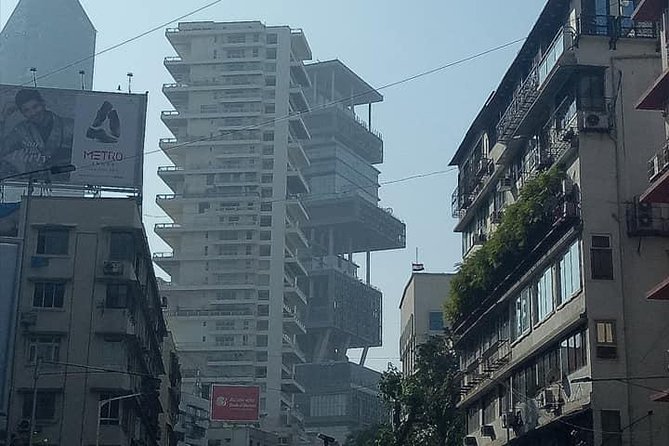
The route includes Antilia, described as a private home in South Mumbai. It’s valued at around $2 billion (as of November 2014) and is noted as the world’s second most valuable residential property after Buckingham Palace.
Real talk: you won’t go inside. This is a roadside glimpse and a conversation starter—more about how Mumbai layers extreme wealth and everyday life in the same city blocks. It’s also a useful moment to ask your guide what the location means historically and socially, since the area around Malabar Hills has its own story shape.
Then you finish this section by continuing through the hills-side temple stop at Malabar Hills and the nearby garden time. It keeps the “South Mumbai” theme from becoming only concrete and stone.
Mani Bhavan: Gandhi’s home base and why it hits
Mani Bhavan Gandhi Museum is included, with about 30 minutes at the site. Mani Bhavan is a museum and historic building dedicated to Gandhi and highlights key parts of his life. The listing notes his room, a library, photos, films, and other displays.
This stop adds depth without requiring you to be an expert on India’s political history. It works best when you let the museum do the pacing for you. Instead of trying to read everything, pick a couple of areas that match what you’ve already seen—then let the day’s themes connect.
It’s also a welcome indoor option if the weather turns or if the sun has you tired. Just plan your questions in advance so you can get the most value in the time you have.
Dhobi Ghat: watching laundromat work in the open
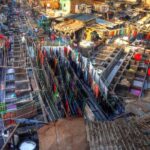
Dhobi Ghat is one of the most striking final stops because it’s not a staged tourist scene. It’s an open-air laundromat in Mumbai where washers called dhobis work in the open to clean clothes and linens from hotels and hospitals.
You’ll have about 10 minutes here, which is enough for a close look and a few good photos if you’re respectful. The key is to watch the work rhythm—this is labor done in public view, tied directly to the city’s daily functioning. Your guide can help you understand what’s happening and why this place matters beyond being a photo stop.
If you’re short on time in Mumbai, you might wonder why this is included at all. That’s the point: it shows Mumbai as an operating system, not a theme park. You’re seeing real work in real public space, and it changes how you read the city afterward.
Timing, pacing, and weather reality
Your start time is 9:00 am and the duration is about 8 hours. That’s a lot of movement for a day, even when you’re in a private car. The stop durations vary, and many are intentionally short—this keeps the itinerary full enough to feel like you made progress, even if you’re only in Mumbai for a brief visit.
Weather matters. The experience notes that it requires good weather, and if it’s canceled due to poor conditions, you’ll be offered a different date or a full refund. So if you’re booking around monsoon season or an unpredictable forecast, don’t plan a tight sequence of outdoor activities afterward.
The best way to make this day feel enjoyable is to treat it like a guided orientation:
- Ask one or two questions at each stop.
- Take your photos, then move.
- Save deep reading for your next day.
Also, plan to purchase no meals during the tour unless you want to snack. Meals aren’t included, and personal expenses are extra.
Price and value: what you get for $126 per group
At $126 per group (up to 2 people), the tour pricing is built for couples, friends, and solo travelers who don’t want to share a vehicle with strangers. To judge value fairly, look at the included items:
- Air-conditioned private transportation
- Pickup & drop
- Free bottled water
- Toll and parking fees
- A local English-speaking guide
- Mani Bhavan admission included
- Many stops with free admission
For many visitors, the big hidden cost in independent city touring is transport. Between traffic time, navigation stress, and parking/tolls, a guided private loop can end up cheaper than you think if it saves you hours of figuring things out.
Notably, meals are not included. That’s normal for city tours, but it means you should budget lunch and expect to rely on your guide for timing and suitable stops along the route.
Should you book the Mumbai City of Dreams Private Vehicle tour?
Book it if:
- You’re in Mumbai for a short time and want a strong overview of South Mumbai
- You want the comfort of a private car plus a guide to explain what you’re seeing
- You like a mix of monuments, temples, and one real-working-life stop like Dhobi Ghat
- You prefer to avoid the stress of public transport navigation
Skip or consider alternatives if:
- You hate structured schedules and want lots of unhurried time in one museum or one neighborhood
- You’re planning the day around long shopping trips, since several stops are quick by design
- You’re sensitive to temple visits and prefer purely secular sightseeing
If you’re the type who wants Mumbai to make sense quickly—history, architecture, faith, and day-to-day work—this is a solid way to get oriented without feeling lost.
FAQ
How long is the Mumbai City of Dreams tour?
The tour lasts about 8 hours.
What time does the tour start?
The start time is 9:00 am.
Is this a private tour?
Yes. It’s a private tour/activity, and only your group participates.
How many people can be in the group?
The price is per group for up to 2 people.
What’s included in the price?
Included features are an air-conditioned vehicle, private transportation, bottled water, pickup and drop-off, a local English-speaking guide, and toll tax and parking fees.
Are meals included?
No. Meals are not included, and personal expenses are also not included.
Is Mani Bhavan Gandhi Museum admission included?
Yes. Mani Bhavan has admission ticket included on the tour.
Do I need to pay admission for the other stops?
Most stops list admission ticket free.
Can I get a refund if plans change?
You can cancel for a full refund up to 24 hours in advance. If you cancel less than 24 hours before the start time, you won’t get a refund. If it’s canceled due to poor weather, you’ll be offered a different date or a full refund.