REVIEW · MUMBAI
Half Day Mumbai City Private Sightseeing Tour
Book on Viator →Operated by Linda Tours Mumbai · Bookable on Viator
Mumbai feels like a highlight reel. This private half-day route lines up Mumbai’s biggest landmarks with human, on-the-ground stops like Dhobi Ghat and a guided visit to Dharavi. The pace stays manageable with an AC vehicle and an English-speaking guide.
I especially like how you get city history made practical, not just place names. You’ll also have time to see the architecture at street level, from the Gateway of India waterfront area to the tall, old institutions around Fort and Colaba. One consideration: it’s a short window, so traffic and heat can tighten timing, and Dhobi Ghat has an on-site fee that is not included.
You’ll be picked up from your hotel or the port area when offered, or you can meet at Starbucks near Apollo Bunder in Fort. Either way, it’s built for first-timers who want the right mix of UNESCO sights and real Mumbai in just 3 to 4 hours.
In This Review
- Key things I’d watch for
- Why This Half-Day Mumbai Route Works for First-Timers
- Pickup, AC Vehicle, and Beating the City’s Timing Stress
- Gateway of India, Flora Fountain, Rajabai, and Marine Drive Views
- Chhatrapati Shivaji Terminus and Rajabai Clock Tower: Big Architecture, Small Time
- Dhobi Ghat: The Open-Air Laundry You Can Actually See Working
- Mani Bhavan Gandhi Museum and Hanging Gardens: History Indoors, Views Outdoors
- The Dharavi Stop: How to Make It Respectful and Useful
- Price and What You’re Actually Paying For
- Guide Quality and Flexibility: What You Can Hope For
- Who This Tour Is Best For
- Should You Book This Mumbai Half-Day Tour?
- FAQ
- How long is the Half Day Mumbai City Private Sightseeing Tour?
- What is the price per person?
- Is pickup and drop-off included?
- Will I have a guide, and what language do they speak?
- Are there WiFi and water included?
- Which stops include admission and which don’t?
- What’s included in terms of food?
- FAQ
- What is the cancellation policy?
- Is this a private tour?
Key things I’d watch for
- A half-day route that doesn’t feel rushed: major sights with focused stop times, not a long slog.
- UNESCO Chhatrapati Shivaji Terminus stop: included admission makes this easier to plan.
- Dhobi Ghat, the working laundromat: you see how dhobis clean clothes for hotels and hospitals; note the fee.
- Mani Bhavan Gandhi Museum included: Gandhi’s Mumbai HQ period is a strong anchor for the day.
- Terraced views at Hanging Gardens: a break from streets, with classic Malabar Hill scenery.
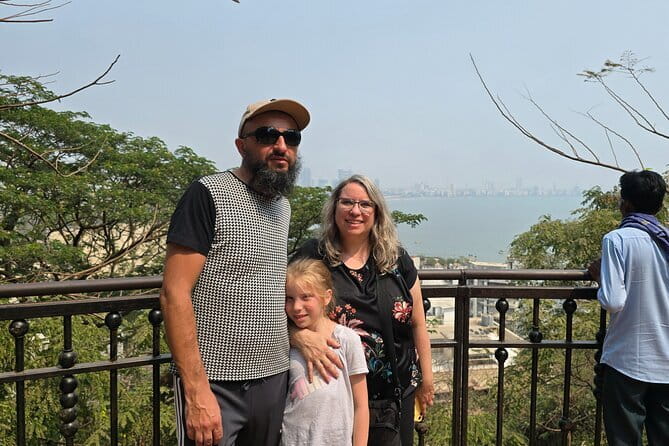
- Dharavi visit with a guide: important context, with your guide helping you look past headlines.
Why This Half-Day Mumbai Route Works for First-Timers

Mumbai can overwhelm you fast: lanes, people, noise, traffic, and a skyline that keeps changing. This tour helps you get your bearings quickly by clustering the most recognizable areas into one compact run. In about 3 to 4 hours, you’ll cover Fort landmarks, seafront icons, and viewpoints, while also tackling a reality-check stop in Dharavi.
The biggest strength is that it mixes postcard Mumbai with lived-in Mumbai. You’re not only looking at monuments; you’re also getting a guided explanation of what you’re seeing and why it matters. That turns photos into understanding, especially if you’re short on time.
You can also read our reviews of more city tours in Mumbai



Pickup, AC Vehicle, and Beating the City’s Timing Stress
You start with pickup and drop-off when offered, which matters in Mumbai where transfers can eat your day. If you’re meeting instead, the listed start point is Starbucks near Apollo Bunder in Fort, close to the Gateway of India waterfront zone. Either way, the goal is simple: reduce friction so you spend your limited hours looking, not coordinating.
The tour uses an air-conditioned vehicle, plus WiFi on board and a mineral water bottle. WiFi won’t replace rest breaks, but it’s handy for mapping and quick message checks when you’re on the move. The practical upside of a private setup is that your guide can pace the stops for your group.
Traffic is real here, so keep expectations flexible. If your day is heat-heavy or your hotel is far from Fort/Colaba, build in buffer and wear breathable clothes.
Gateway of India, Flora Fountain, Rajabai, and Marine Drive Views
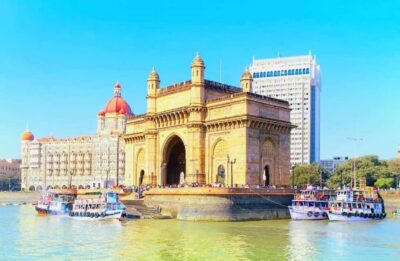
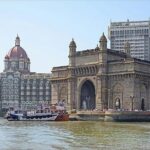
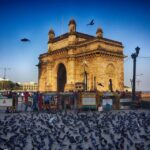
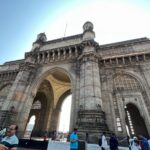
You’ll begin near the Gateway of India area, where the arch monument commemorates the landing of King-Emperor George V and Queen-Empress Mary. Even if you don’t spend long here, it’s a strong visual anchor for modern Mumbai’s waterfront history. Plan for photos and a few minutes of orientation before you move on.
Next is Flora Fountain at Hutatma Chowk (Martyr’s Square). It’s a sculpted heritage monument that helps connect the seafront area to the street-grid and institutional buildings around South Mumbai. Quick stop, good payoff, and usually easy to see without complicated logistics.
Marine Drive later in the route gives you a different mood: a classic art deco seafront stretch and a common sunset reference point near the NCPA. This is the kind of stop where even a short look can feel satisfying because you get a sense of how locals pace the day along the promenade. If you’re trying to catch softer light, ask your guide if timing lines up with that window.
Tip for timing: if you care about photos, let your guide know early. When stops run a little long or traffic shifts, the guide can sometimes prioritize picture moments so you’re not stuck at the back of the group.
Chhatrapati Shivaji Terminus and Rajabai Clock Tower: Big Architecture, Small Time

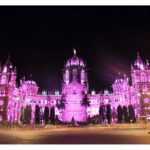
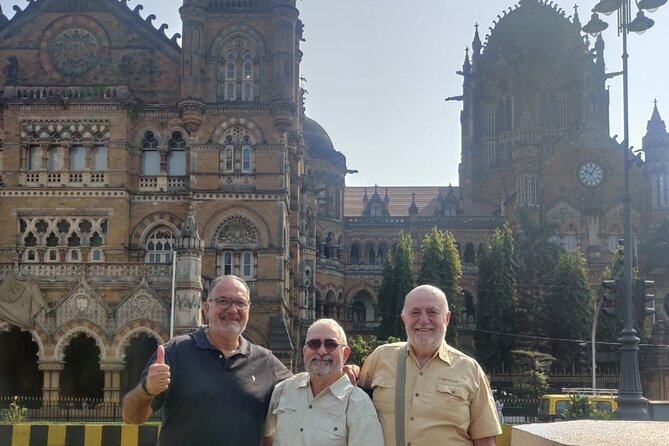
One of the best “bang for the buck” stops is Chhatrapati Shivaji Terminus (official name), a UNESCO World Heritage train station. The tour includes admission time here, which removes a common planning headache. You get a focused visit that works well even if you’re not a rail enthusiast.
What makes this stop worth your time is the station as a city symbol. It’s not just a building; it’s a statement about Mumbai’s global connections and the layers of the city’s past. Your guide can point out details and explain the station’s importance in a way that makes the architecture feel less abstract.
You then pass by Rajabai Clock Tower, a prominent landmark completed in the 1870s and tied to the University of Mumbai’s library. Clock towers can sound generic until you see one in context, rising over the academic streets around Fort. It’s a great pause for perspective: the city has this habit of putting monumental institutions right where daily life happens.
Dhobi Ghat: The Open-Air Laundry You Can Actually See Working

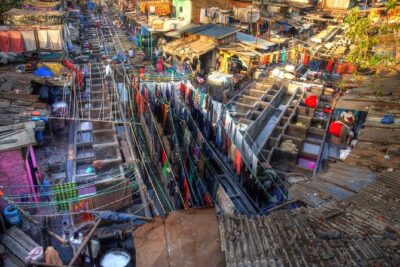
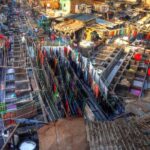
Dhobi Ghat (Mahalaxmi Dhobi Ghat) is one of those stops that hits differently because it’s active, not staged. It’s an open-air laundromat built in 1890, where washers known as dhobis work outdoors to clean clothes and linens from Mumbai’s hotels and hospitals. That means you’re watching a real service in motion, not just observing a historic site.
One practical caution: Dhobi Ghat admission is not included. If you want to plan ahead, assume there may be an on-site fee. Still, the experience is often worth budgeting for, because the working environment is the point.
How to enjoy it: stand back enough to take photos without getting in the way, and let your guide explain what you’re seeing. Laundry might sound like an odd highlight, but it’s one of the most concrete ways to understand how Mumbai keeps moving.
You can also read our reviews of more private tours in Mumbai




Mani Bhavan Gandhi Museum and Hanging Gardens: History Indoors, Views Outdoors
Mani Bhavan is where the day gets more reflective. This is Gandhi’s Mumbai headquarters from about 1917 to 1934, and the building itself was owned by Revashankar Jagjeevan Jhaveri, Gandhi’s friend and host in Mumbai. The museum stop is included with admission, which makes it an easy add without extra decision-making.
If you’re the kind of person who likes your history anchored in real places, this is a strong mid-day pivot. Instead of treating India’s independence story as a distant timeline, you see a specific address connected to Gandhi’s Mumbai years. Even on a short tour, it adds meaning beyond photos.
Then the tour shifts upward to Hanging Gardens (Pherozeshah Mehta Gardens) on Malabar Hill. These are terraced gardens perched at the top, opposite Kamala Nehru Park, and they’re known for views. It’s a good break from street-level crowds because you get a wider sense of the neighborhood shape and skyline angles.
The Dharavi Stop: How to Make It Respectful and Useful
This tour includes a guided visit to Dharavi, described as one of Asia’s largest slums. That sounds like a headline, so here’s the real value: you go with a guide who can help you interpret what you’re seeing in context rather than as a spectacle.
The key is your approach. Keep questions focused on everyday life and systems, and follow your guide’s cues about where it’s appropriate to stand, photograph, or simply observe. You’ll likely learn more from listening and asking thoughtful questions than from trying to “capture” everything.
Also, don’t expect the slum to fit a single visual frame. Even in a short visit, there are moving parts: families, work, narrow pathways, and community networks. Your guide’s job is to help you understand those layers without reducing them to one dramatic image.
If you’re sensitive to ethical tourism, you’ll be glad this is guided. A guide can set boundaries and steer you away from the worst kind of attention.
Price and What You’re Actually Paying For
At $34 per person, this is priced like a practical city-orientation tour rather than a long, museum-heavy day. That matters in Mumbai, where time is expensive because traffic is unpredictable and distances add up quickly.
Here’s how the inclusions translate into value:
- Hotel/port pickup and drop-off (when offered) saves you from arranging separate transport.
- Air-conditioned vehicle plus WiFi on board reduces fatigue during transfers.
- Professional English-speaking guide turns quick stops into a connected story.
- Mineral water bottle and short stop times help you handle the heat.
Admission costs are mixed:
- Chhatrapati Shivaji Terminus admission is included.
- Mani Bhavan Gandhi Museum and Hanging Gardens admissions are included.
- Gateway of India and Flora Fountain are listed as free.
- Rajabai Clock Tower is listed as free.
- Dhobi Ghat admission is not included.
Food isn’t included, so plan to either eat before you start or grab something after. If you’re the type who needs a snack break, pack something simple you can handle in hot weather.
The private format is another value factor. For the same half-day time window, you’re not fighting to be heard over other groups. Your guide can check in on what you want to focus on.
Guide Quality and Flexibility: What You Can Hope For
A big theme with this tour is that guides show up prepared and keep the day running smoothly. Names that have guided this route include Aziz, Fahim, Ravi, Bala, and Dipen, and in multiple cases the guide and driver are praised for being on time and professional.
What I like most for you: the best versions of this tour can adapt. For example, some guides have added requests like a quick beach moment on Marine Drive so someone could put feet in the sea, or they’ve fit in an extra local stop such as Crawford Market when it made sense for the group.
You should still know the limits: it’s a short tour, so “flexible” doesn’t mean everything is possible. But if you tell your guide what matters to you most, you’ll often get small adjustments that improve your day.
Who This Tour Is Best For
This tour is ideal if you want to:
- See major South Mumbai sights without planning each stop yourself.
- Include a guided Dharavi visit rather than just reading about it.
- Hit UNESCO Chhatrapati Shivaji Terminus and a major Gandhi-related site in one go.
- Keep things private, with an AC vehicle and an English-speaking guide.
It may be less ideal if you want a slow, deeply museum-based day with lots of free time at each location. The structure is designed for movement and context, not for lingering.
Heat can be part of the experience, so wear breathable clothes and shoes that work well on busy sidewalks. If you’re traveling with mobility limits, note that the tour says most travelers can participate, but you’ll still be outside in public areas for short stop times.
Should You Book This Mumbai Half-Day Tour?
I think you should book this tour if your goal is first-time orientation with smart stops: Gateway of India, UNESCO Chhatrapati Shivaji Terminus, Mani Bhavan, Dhobi Ghat, and views from Hanging Gardens and Marine Drive, plus that important guided Dharavi component. For the price, you’re paying for organization, AC transport, and a guide who can connect the places.
Pass if you hate crowds and tight schedules, or if you’re only interested in one deep museum experience. This is a “see a lot, learn fast” tour, and it’s best when you treat it like that.
FAQ
How long is the Half Day Mumbai City Private Sightseeing Tour?
The tour lasts about 3 to 4 hours.
What is the price per person?
The price is $34.00 per person.
Is pickup and drop-off included?
Hotel or port pickup and drop-off are included, and the meeting point is near Apollo Bunder at Starbucks if you’re meeting there.
Will I have a guide, and what language do they speak?
Yes. You’ll have a professional English-speaking guide.
Are there WiFi and water included?
Yes. WiFi is provided on board, and there is a mineral water bottle included.
Which stops include admission and which don’t?
Chhatrapati Shivaji Terminus admission, Mani Bhavan Gandhi Museum admission, and Hanging Gardens admission are included. Dhobi Ghat admission is not included, while Gateway of India and Flora Fountain are listed as free.
What’s included in terms of food?
Food and drinks are not included.
FAQ
What is the cancellation policy?
You can cancel for a full refund if you cancel up to 24 hours in advance of the experience start time. If you cancel less than 24 hours before, the amount paid is not refunded.
Is this a private tour?
Yes. It’s private, and only your group participates.