REVIEW · MUMBAI
Mumbai Private Sightseeing With Slum Tour
Book on Viator →Operated by Memorable Mumbai · Bookable on Viator
Mumbai reveals its layers fast. This private Mumbai sightseeing and slum tour mixes postcard stops with real daily life, all guided by someone who knows how to connect the dots. I love the private car comfort and the way the guided slum visit adds context to what you see around the city. The main drawback: it’s a full 6 hours and you’ll spend time on your feet in active neighborhood areas, so wear comfy shoes and go in ready to be moved.
One big reason the tour feels like good value is that the day isn’t just a drive-by. You get a planned route around Gateway of India, Marine Drive, Dhobi Ghat, Crawford Market, and more, plus tea, bottled water, and a stop for a classic wada pav. A UNESCO railway station, Gandhi’s museum, and a sacred 1,000-year-old tank are thrown in too, with entry fees covered along the way.
In This Review
- Key highlights I’d book again
- Why this 6-hour Mumbai loop works
- Gateway of India to Sassoon Dock: Mumbai’s sea story in two stops
- Dhobi Ghat and CSMT: everyday work and UNESCO station power
- Ganesh Murti Nagar slum tour: a respectful look at resilience
- Mumbai University’s Big Ben-style tower and Crawford Market
- Mani Bhavan Gandhi Museum to Hanging Gardens: history and a breather
- Banganga and Marine Drive: sacred steps and the Queen’s Necklace feel
- Price and value: what $49.99 actually buys you
- Who this tour suits best (and who might want a different plan)
- My booking verdict: should you do the Mumbai landmarks plus slum tour?
- FAQ
- How long is the Mumbai Private Sightseeing With Slum Tour?
- Is this tour private?
- Do you offer pickup and drop-off?
- What’s included for food and drinks?
- Are entry fees included?
- What are some of the main places you visit?
- Is there a slum tour on this itinerary?
- What are the tour operating hours?
- What physical fitness level do I need?
- Is free cancellation available?
Key highlights I’d book again
- Private car + expert guide: less guessing, smoother timing.
- Landmarks plus working Mumbai: from Gateway of India to Sassoon Dock.
- Ganesh Murti Nagar slum tour: a structured, respectful look at daily life.
- Food and drinks included: wada pav, tea, and bottled water.
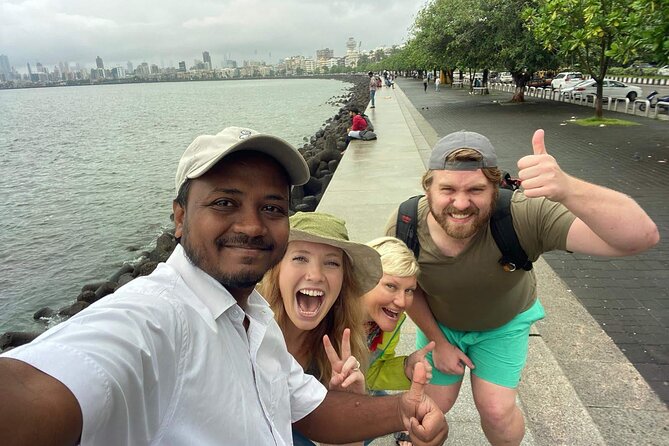
- Easy photo stops: Arabian Sea views, colonial-era architecture, market scenes.
- Gandhi Museum included: Mani Bhavan adds real meaning to the day.
Why this 6-hour Mumbai loop works

This is the kind of day trip that helps you avoid the classic first-timer trap in Mumbai: spending hours in traffic and leaving with only a few famous photos. You’re in a private car for the full route, and the tour keeps you moving through South Mumbai where a lot of the city’s most recognizable sights are clustered.
The timing is also practical. At roughly 6 hours, you can hit major landmarks, a busy dock area, a working laundry site, a market, and a couple of quieter spiritual breaks without turning it into a two-day marathon. And because hotel/port pickup and drop-off are within South Mumbai, you don’t waste the day coordinating taxis or figuring out where to meet.
You can also read our reviews of more private tours in Mumbai


Gateway of India to Sassoon Dock: Mumbai’s sea story in two stops
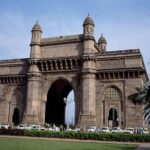
You start with Gateway of India, the grand Indo-Saracenic arch built in 1924. It’s a big, photogenic silhouette aimed at the Arabian Sea, and the classic backdrop is the nearby Taj Mahal Palace Hotel. Even if you’ve seen Gateway photos a hundred times, being there in person makes it feel like a doorway into the whole city.
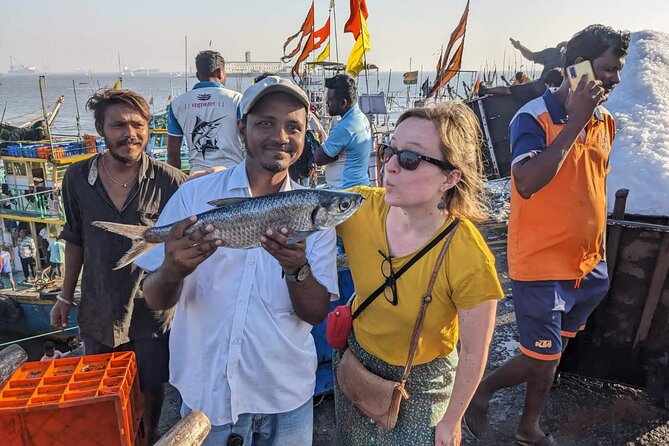
From there, you head to Sassoon Dock, built in 1875. This stop is about Mumbai’s working waterfront: one of the city’s oldest and busiest fishing harbors. You’ll spend time around the morning fish market area, where the trade is fast, loud, and visually intense. It’s not a museum vibe. It’s the real engine room, and it helps you understand how much of Mumbai’s energy comes from the coast.
If you’re sensitive to strong smells or crowds, this is the part of the day that might feel like a sensory jump. Still, it’s exactly why the tour is worth doing with a guide—so you can look, learn, and move on before it overwhelms you.
Dhobi Ghat and CSMT: everyday work and UNESCO station power

Next up is Dhobi Ghat in Mahalaxmi, often described as the world’s largest open-air laundry. The scale is the point: you can see thousands of dhobis (washermen) washing, drying, and ironing clothes in an old, still-functioning routine. It’s one of those stops where you realize how a city’s dignity can come from simple repetition—day after day, work done well.
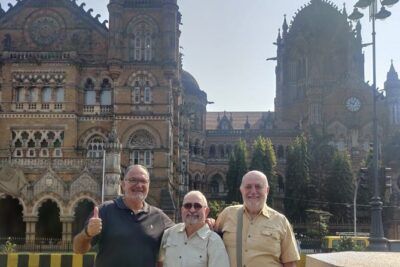
From laundry pens to rail architecture, the tour then visits Chhatrapati Shivaji Maharaj Terminus (CSMT), a UNESCO World Heritage Site. This is the Victorian-Gothic station that blends Indian and British influences. You’ll get time to admire the façade and recognize why it’s protected: it’s not just pretty buildings, it’s a landmark of how Mumbai grew into a global city.
Practical tip: this segment is a good place to slow down for details. Look at angles, materials, and how people move through the station area. It gives you a different view than typical sightseeing.
Ganesh Murti Nagar slum tour: a respectful look at resilience
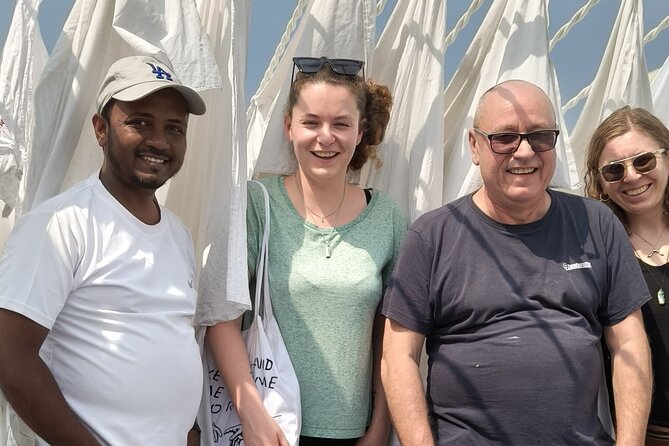
The most emotionally powerful part of the day is the guided slum tour in Ganesh Murti Nagar. You’ll have about an hour here, and the point isn’t shock value. You’re looking for understanding—how people build routines, community, and hope in cramped conditions, and how Mumbai’s resilience shows up in daily life.
This stop is also where your behavior matters most. Stay patient, listen to your guide’s explanations, and follow their lead on what’s appropriate to photograph or discuss. If you show respect and curiosity, you’ll likely come away with more than images—you’ll leave with context for what you just saw at the docks, the stations, and the markets.
A consideration before you book: if you know you’d rather keep your day strictly scenic, this portion may feel like the wrong fit. But if you want your Mumbai day to make sense, it’s a strong anchor.
Mumbai University’s Big Ben-style tower and Crawford Market

After the slum visit, you move into a more straightforward “look and walk” rhythm with two very different stops.
First, there’s a Gothic architectural tower inspired by London’s Big Ben, built in 1878 within Mumbai University. It’s around 85 meters tall, so it reads as a landmark even before you reach it. It’s a good counterpoint to the other older infrastructure on the route—another layer of Mumbai’s colonial-era influence, tied to the city’s institutions.
Then you hit Crawford Market, one of Mumbai’s oldest bazaars, dating to 1869. This is the place for real browsing energy: fresh fruits, spices, sweets, and lots of everyday goods. You might also see things that feel unexpected, like exotic pets and home décor items. It’s the kind of market where you can snack, shop, and people-watch all at once.
If shopping is your thing, go in with small cash-ready habits and don’t plan to buy everything. With only about 30 minutes there, think of it as a taste of the variety rather than a full-day market expedition.






Mani Bhavan Gandhi Museum to Hanging Gardens: history and a breather

Now the tour shifts toward reflection.
You visit Mani Bhavan Gandhi Museum, Gandhi’s Mumbai headquarters—his home base where he lived and planned major freedom movements. You’ll spend about 20 minutes inside, and the exhibits include rare photographs, letters, and a library of Gandhi-related books. This stop is especially useful after seeing modern Mumbai’s workspaces and neighborhoods, because it connects the city to political identity and ideas of civic change.
Then you take a short pause at Hanging Gardens, a scenic hilltop garden with terraced greenery and fun animal-shaped hedges. The views are the reason to come: you’re looking out over Marine Drive and the Arabian Sea. The tour gives you about 30 minutes, enough time to slow down and reset your brain before the final coastal walk.
If your feet feel tired, this garden stop is a lifesaver. It’s not just pretty; it’s a planned recovery moment in the middle of a very active day.
Banganga and Marine Drive: sacred steps and the Queen’s Necklace feel

You end the sightseeing sequence with Banganga Tank, a sacred water tank believed to be around 1,000 years old. The area has mythological associations and sits among temples and old stone steps. It’s quieter than the markets and docks, and it gives your mind space after the day’s heavier social stop.
Finally, you reach Marine Drive, the famous 3.6 km coastal boulevard along the Arabian Sea. This is where the nickname Queen’s Necklace comes in—especially at night. Even during the daytime, it’s a classic place to breathe in sea air and absorb how Mumbai’s identity lives right on the waterline. You’ll have about 15 minutes here, so keep your expectations realistic: think of it as a strong finish, not a long beach break.
Price and value: what $49.99 actually buys you
At $49.99 per person, the price looks modest only if you notice what’s included. You get a private car for the full route, an expert guide, hotel/port pickup and drop-off within South Mumbai, and a series of major stops that would otherwise cost time and transport to piece together.
On top of that, entry fees are covered. That includes the Mani Bhavan Gandhi Museum admission, plus other ticketed locations on the route. You also get wada pav, tea, and bottled water during the day. In practical terms, that means you can spend your mental energy on the city instead of budgeting for snacks, tickets, and transit every few hours.
The best value part is the structure: you’re not wandering randomly. You’re seeing Mumbai in a way that connects landmarks, labor, faith, and politics into one coherent day.
Who this tour suits best (and who might want a different plan)
This works especially well for:
- First-time visitors who want a fast but meaningful overview of South Mumbai.
- People who like architecture, markets, and photo stops but also want a real look at how the city functions at ground level.
- Travelers who prefer a guide to help them interpret what they’re seeing, not just point at it.
It may not be ideal if:
- You want strictly scenic sightseeing with minimal social context.
- You have limited mobility, because the day involves moderate physical effort across multiple active areas.
My booking verdict: should you do the Mumbai landmarks plus slum tour?
If you want Mumbai that’s more than a scrapbook, I’d book this. You get the big-name hits like Gateway of India and Marine Drive, but you also get daily-life stops that add meaning: Dhobi Ghat, a working harbor area at Sassoon Dock, and the guided community visit in Ganesh Murti Nagar. The food and drinks included help keep the day comfortable, and the covered entries make the price feel more like a package than a guess.
Go with an open mind and you’ll leave with a clearer picture of what Mumbai is made of—sea, rail, work, markets, belief, and ordinary resilience.
FAQ
How long is the Mumbai Private Sightseeing With Slum Tour?
It runs for about 6 hours.
Is this tour private?
Yes. It’s a private tour/activity, and only your group participates.
Do you offer pickup and drop-off?
Yes, pickup and drop-off within South Mumbai is included.
What’s included for food and drinks?
The tour includes wada pav, tea, and bottled water.
Are entry fees included?
Yes. All entry fees are covered, and Mani Bhavan Gandhi Museum admission is included.
What are some of the main places you visit?
You’ll visit places such as Gateway of India, Sassoon Dock, Dhobi Ghat, CSMT, Ganesh Murti Nagar, Crawford Market, Mani Bhavan Gandhi Museum, Hanging Gardens, Banganga Tank, and Marine Drive.
Is there a slum tour on this itinerary?
Yes. There is a guided slum tour stop in Ganesh Murti Nagar.
What are the tour operating hours?
It runs Monday through Sunday from 9:00 AM to 5:00 PM.
What physical fitness level do I need?
The tour is listed for travelers with a moderate physical fitness level.
Is free cancellation available?
Yes. You can cancel up to 24 hours in advance for a full refund. If you cancel less than 24 hours before the start time, it isn’t refunded.