REVIEW · MUMBAI
Mumbai: Private tour for Kanheri Caves and Golden Pagoda
Book on GetYourGuide →Operated by Beautiful Bombay Tours · Bookable on GetYourGuide
Two spiritual stops, one smooth day. I like how this tour links the carved calm of the Kanheri Caves with the sunlight-bright Golden Vipassana Pagoda, so you see two sides of Buddhism in one go. My favorite bits are the big, clear “what you’re looking at” explanations inside Kanheri, and the striking golden exterior in Gorai that turns into a peaceful break from city noise. One drawback to plan around: weekends can mean more crowding on the park paths and during the ferry/transfer.
I also appreciate that you’re not stuck figuring things out on your own. You ride in an air-conditioned car, meet your English-speaking guide at the park entrance, and get a focused route that hits the major highlights. In past groups, guides such as Nikheil and Aryan have been praised for explaining the sites well and keeping the mood relaxed.
If you go in hot weather, wear shoes you trust and keep water handy (food isn’t included). And if you’re sensitive to crowds, aim for weekdays, especially in the morning, when the park and ferry crossings tend to feel more manageable.
In This Review
- Key highlights you’ll care about
- How the day runs: pickup, Kanheri, ferry, and the Gorai pagoda
- Kanheri Caves: basalt rock, 109 carved spaces, and a 1st-century feeling
- Viharas and chaityas: what you’re seeing in each cave type
- Inside the main hall: 7-meter Buddha, 34 pillars, and Avalokiteshwara
- The inscriptions and meditation cells that turn stone into lived practice
- Ferry to Gorai: quick crossing, crowded moments, and a real transfer rhythm
- Golden Vipassana Pagoda in Gorai: sunlight, no-pillar design, and relic focus
- Timing and comfort tips: when to go and what to pack
- Price and value: $21 worth it when you factor in guide + pickup
- Who this tour fits best (and who should reconsider)
- Should you book this Kanheri and Golden Pagoda tour?
- FAQ
- How long is the tour from start to finish?
- Is hotel pickup and drop-off included?
- What do I need to buy for entry and food?
- Where do I meet the guide?
- What should I bring, and is luggage allowed?
- Is there an English-speaking guide and private group option?
Key highlights you’ll care about
- Kanheri’s 109 caves: carved from one basalt rock outcrop, with viharas and chaityas to sort through with a guide
- The main hall wow-factor: a towering 7-meter Buddha figure, 34 carved pillars, and the eleven-headed Avalokiteshwara
- Inscriptions in multiple scripts: about 100 inscriptions, including Brahmi, Devnagri, Pallavi, and Sanskrit
- Meditation cells: quiet spaces that make monk life feel surprisingly real
- Golden Vipassana Pagoda at Gorai: Burmese-inspired design and Gautama Buddha relics, set beside views of the Arabian Sea
- A short ferry and transfer day: a 10-minute ferry hop plus a transfer once you reach Gorai
How the day runs: pickup, Kanheri, ferry, and the Gorai pagoda
This is a private experience with hotel pickup and drop-off, so the day starts when you’re ready. You’ll leave Mumbai for Kanheri inside Sanjay Gandhi National Park, with the drive taking about 1 to 1.5 hours depending on where your hotel is and traffic.
At Kanheri, the guided portion runs about 2.5 hours, with time afterwards to walk on your own. Then you’ll take a 10-minute ferry to Gorai for the Golden Vipassana Pagoda, spend about 1 hour sightseeing, and cross back by ferry again for the return.
One reason I like this structure is that it keeps your time realistic. You’re not trying to do too much in one day, but you still get both the cave complex and the coastal pagoda—two very different atmospheres in the same outing.
You can also read our reviews of more private tours in Mumbai


Kanheri Caves: basalt rock, 109 carved spaces, and a 1st-century feeling
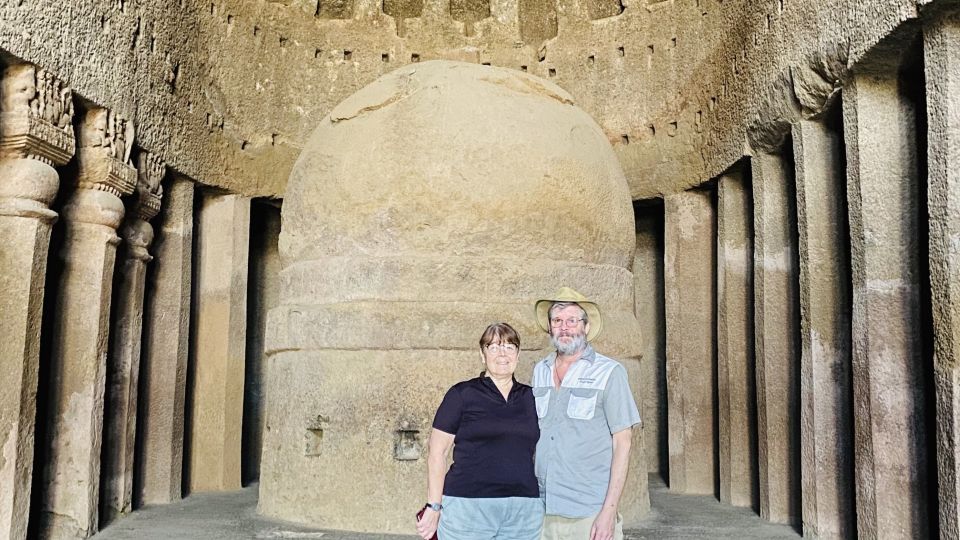
Kanheri is not a small, decorative stop. It’s a dense cluster of caves carved out of a massive basaltic rock outcrop, and it’s tied to early Buddhist presence in western India. The caves date back to around the 1st century, which is the sort of detail that changes how you look at the walls. You’re not just touring stone rooms; you’re reading the work of people who were building worship and study space into the landscape.
Your guide will focus on several of the most significant caves (you’ll visit five key ones as part of the guided time). That matters because Kanheri is big, and without context it’s easy to wander and miss the most meaningful carvings.
A practical note: Kanheri is inside a national park, so plan for uneven ground and a lot of walking between caves. Comfortable shoes aren’t optional if you want to enjoy this at a steady pace, not at a shuffle.
Viharas and chaityas: what you’re seeing in each cave type
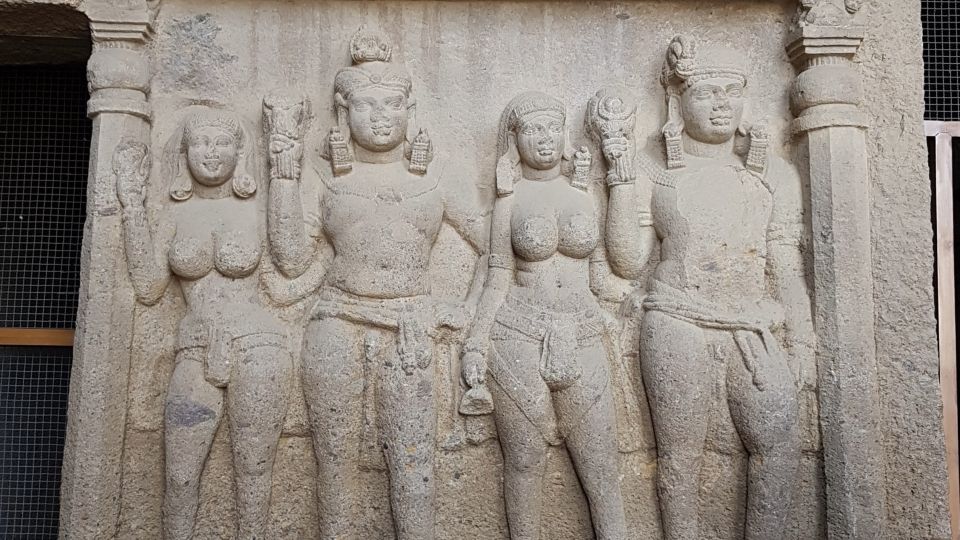
Buddhist cave architecture can feel like one long hallway if nobody explains the logic. Here, the guide helps you sort out the two main types you’ll notice at Kanheri:
- Viharas: smaller caves used as resting places for monks
- Chaityas: larger caves used for worship, often with carved Buddhist sculptures
This distinction isn’t just trivia. Once you understand it, the caves start to make emotional sense. The smaller spaces feel like daily life—quiet, practical, meant for routines. The larger worship spaces feel ceremonial—built for gathering attention, with carvings that guide your eye toward spiritual figures.
And yes, the cave interior lighting can be dim. The guide’s explanations help you “see” even when the carvings aren’t fully bright, which makes the visit feel worth the effort.
Inside the main hall: 7-meter Buddha, 34 pillars, and Avalokiteshwara
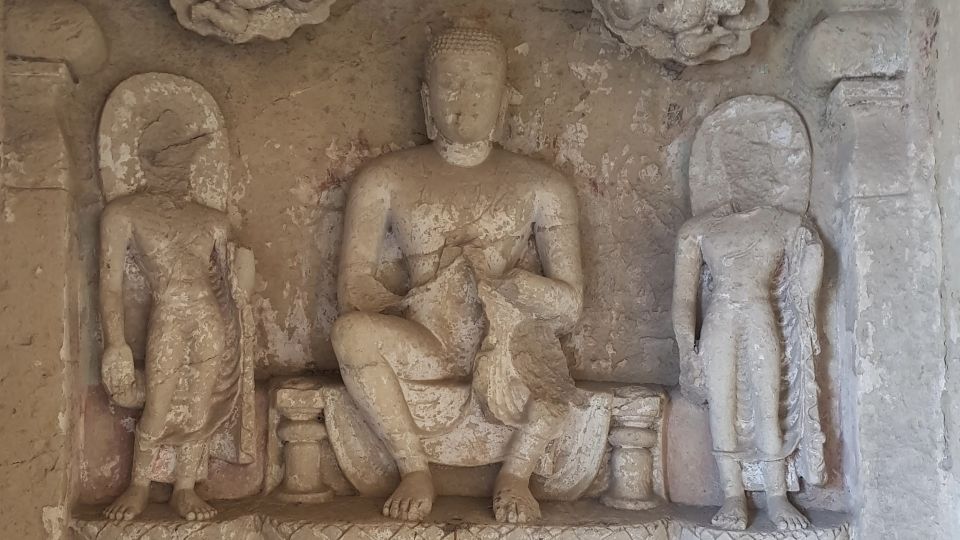
If you only remember one interior detail from Kanheri, make it the main hall. In the large hall, there’s a towering 7-meter-high figure of Lord Buddha. Around it is a colonnade of 34 carved pillars, which gives the room a sense of structure and rhythm—even though you’re surrounded by stone.
Another standout is the eleven-headed Avalokiteshwara. It’s the kind of carving that pulls your attention instantly once someone points out what you’re looking for. Instead of treating carvings like random decoration, you start to recognize specific spiritual imagery.
This is exactly where a good guide earns their keep. You get not only what’s carved, but why those figures mattered to the community using the caves.
The inscriptions and meditation cells that turn stone into lived practice
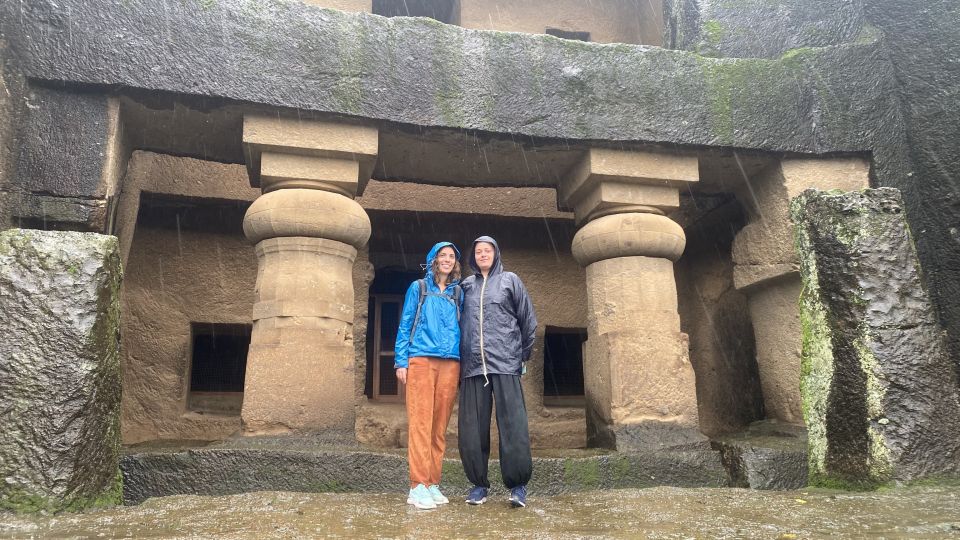
Kanheri isn’t only about big statues. One of the most impressive facts you’ll hear is that there are about 100 inscriptions across different scripts. You’ll encounter scripts such as Brahmi, Devnagri, Pallavi, and Sanskrit. Even if you can’t read them, you’ll feel the range: these are written records layered over centuries of use, support, and teaching.
These inscriptions make Kanheri feel less like a “museum object” and more like a functioning place. They suggest ongoing activity—people coming, dedicating, recording, and carrying beliefs forward.
Then there are the serene meditation cells. These smaller spaces can feel almost plain compared to the big worship halls, but that’s the point. They reveal how monks likely spent ordinary hours away from the everyday world, using quiet corners for mental training. For me, that’s what makes Kanheri more than just a visual stop. It gives you a sense of rhythm and routine, not only spectacle.





Ferry to Gorai: quick crossing, crowded moments, and a real transfer rhythm
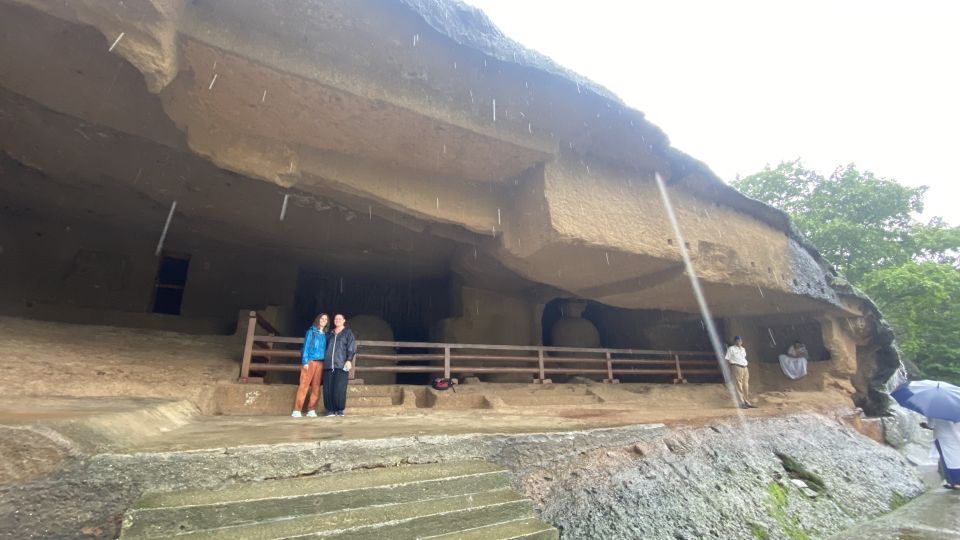
After Kanheri, you’ll take a 10-minute ferry toward Gorai for the Golden Vipassana Pagoda. This part is short, but it changes the mood. You go from shaded cave interiors and stone paths to the open air and movement of a waterfront crossing.
One practical thing to know: the ferry and walk-on areas can get very busy on weekends. If you hate squeeze-through crowds, I’d treat weekends as a risk and choose weekdays when possible. Also, during busy times you may find you’re navigating with motorcycles and lots of foot traffic nearby, which makes steady pacing important.
When you arrive at the far side, expect a bit of transfer time. You may need a tuk-tuk ride from the ferry landing area to the temple area, since the main car often doesn’t go right up to the pagoda. It’s not complicated—just don’t assume you’ll stay in the same vehicle the whole time.
Golden Vipassana Pagoda in Gorai: sunlight, no-pillar design, and relic focus
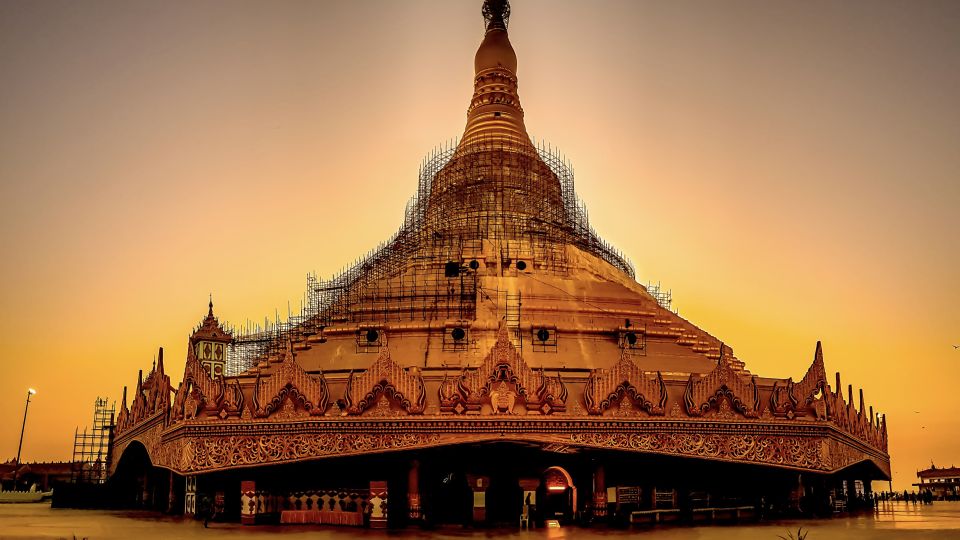
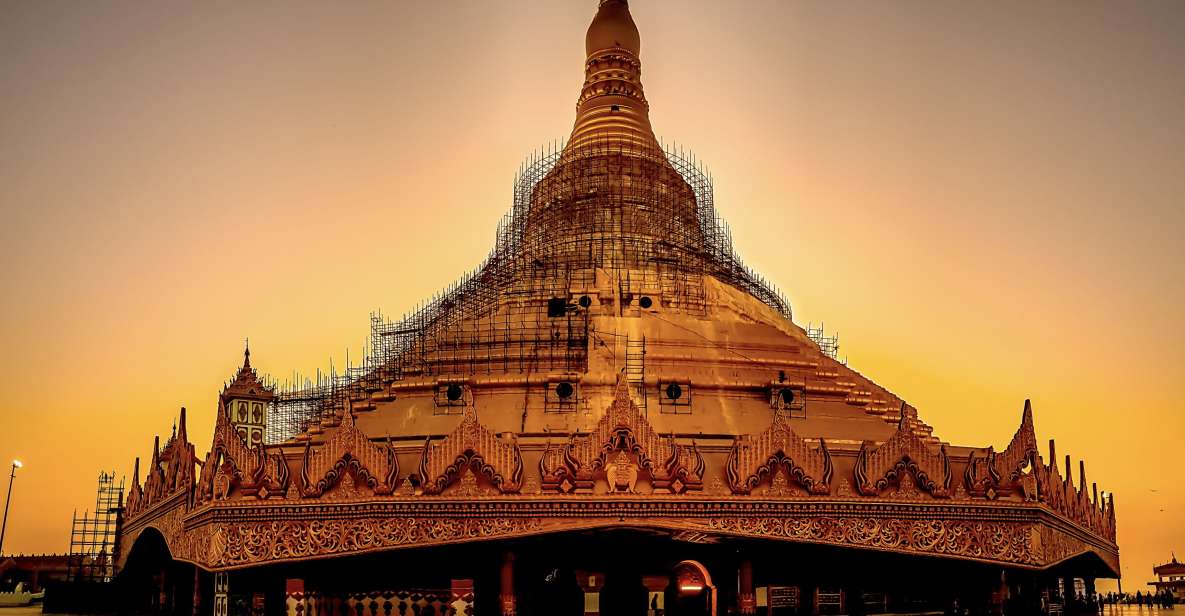
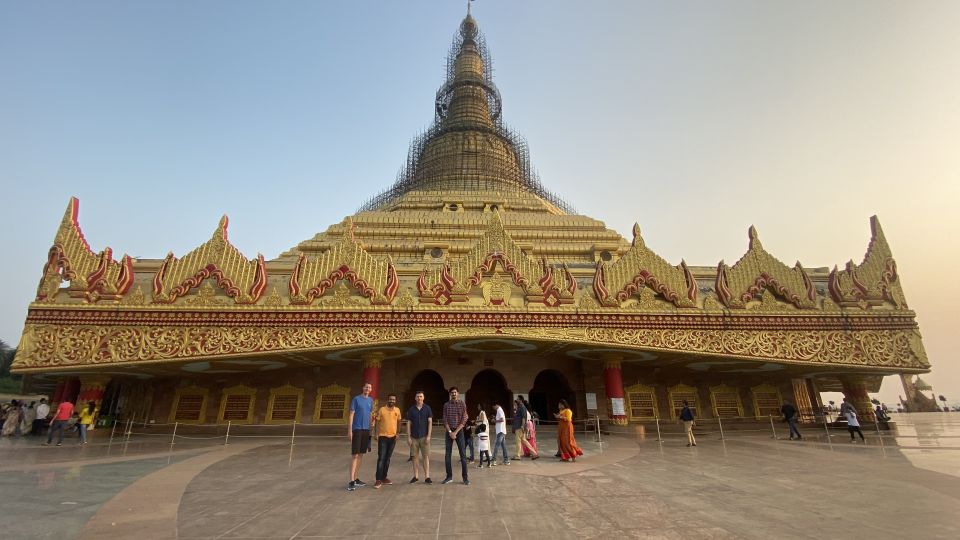
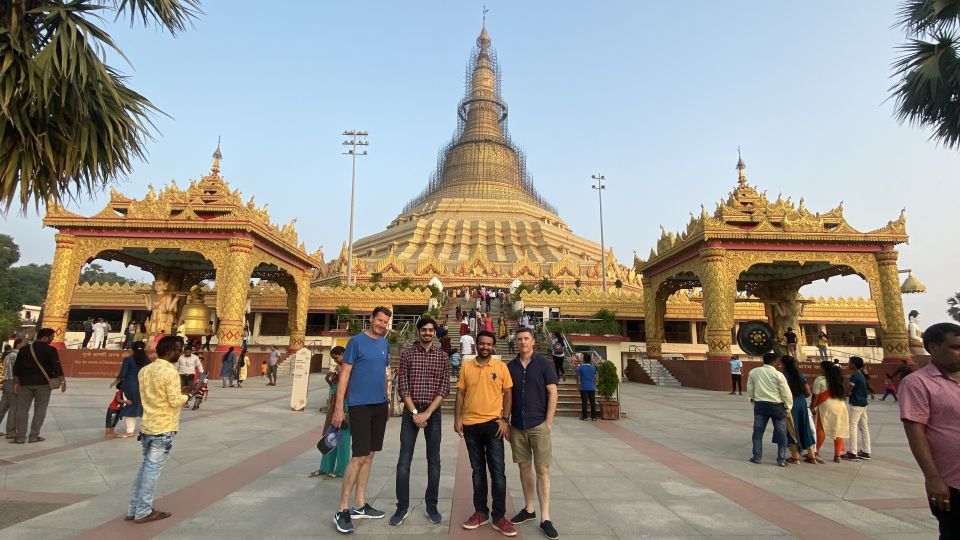
The Golden Vipassana Pagoda is the perfect contrast to Kanheri. The outside is golden, and it catches light in a way that feels almost theatrical when you first see it. It’s the kind of building where the color matters, because the gold isn’t just decoration—it’s part of how the place signals devotion and enlightenment.
Inside, the focus is spiritual and specific. The pagoda holds Gautama Buddha’s relics, which explains why it draws pilgrims and visitors who come with a quiet mindset.
Architecturally, it’s described as Burmese-inspired, and one distinctive point you’ll hear is that it is designed without supporting pillars. That unusual approach makes the interior feel open and controlled at the same time, which you’ll notice once you’re inside rather than looking only at the exterior.
And because it’s in Gorai near the coast, you can also get views toward the Arabian Sea. That combination—golden structure, relic significance, and a coastal horizon—creates an atmosphere where it’s easier to slow down.
Timing and comfort tips: when to go and what to pack
This outing is very doable, but your experience can swing based on timing. I’d strongly favor mornings and weekday days. On weekends, park crowds can grow fast, and the ferry/transfer areas can become tightly packed, turning an otherwise relaxing spiritual day into a lot of waiting and sidestepping.
If you’re traveling during monsoon season, plan for extra patience. Rain can affect park paths and general movement, so keep your schedule flexible and your boots ready.
What to bring:
- Passport or ID card (carry it)
- Comfortable shoes (for cave steps and walking)
- A light load (large bags and luggage aren’t allowed)
If you’re the kind of traveler who hates carrying restrictions, this is one point to take seriously. The restriction is clear: no luggage or large bags, so pack to move.
Price and value: $21 worth it when you factor in guide + pickup
At $21 per person, this tour can feel like good value if you want both stops with minimal hassle. Here’s where the price earns its keep:
Included:
- Hotel pickup and drop-off
- English-speaking guide
- Air-conditioned car
- Skip the ticket line
Not included:
- Entry tickets
- Food and drinks
So the money is paying for logistics plus guidance. You’re not just getting transportation; you’re getting an organized Kanheri walk with specific highlights and explanations. That’s the part that makes the $21 feel fair, especially at Kanheri where context is everything.
Also, the private group format can be a real advantage if you’re traveling with family, friends, or a small group that wants steady pacing rather than a big-bus stampede.
Who this tour fits best (and who should reconsider)
This tour fits best if you want a clear “two-site day” with real meaning behind both stops.
You’ll like it if:
- You’re short on time in Mumbai but want Kanheri plus a famous Buddhist pagoda
- You enjoy architectural details and want help interpreting what you see
- You prefer a private setup with an English guide rather than doing it all solo
- You want a mix of history and quiet spaces—cave halls for worship and meditation cells for stillness
You might rethink it if:
- You’re very crowd-sensitive and can only travel on weekends
- You dislike any ferry-based transfer in busy conditions (even though it’s only 10 minutes each way)
- You’re not comfortable walking and switching between cave interiors and outdoor paths
Should you book this Kanheri and Golden Pagoda tour?
I’d book it if your goal is a focused day that gives Kanheri’s carvings context and then rewards you with the bright, peaceful atmosphere of the Golden Vipassana Pagoda. The guide-led format makes Kanheri much more satisfying, and the ferry-to-Gorai pairing is a smart way to see something coastal without blowing your schedule.
Book it with a simple strategy: choose weekday mornings if you can, wear good shoes, travel with no bulky bags, and go into the caves ready to look slowly. If you do that, this is the kind of day that feels like you left Mumbai for a different pace and brought that calm back with you.
FAQ
How long is the tour from start to finish?
The duration runs from 2.5 to 6 hours, depending on your start time and the option you select.
Is hotel pickup and drop-off included?
Yes. Hotel pickup and drop-off are included, and you’ll be picked up from your Mumbai accommodation.
What do I need to buy for entry and food?
Entry tickets and food and drinks are not included. The tour also includes skip the ticket line, which can save time at the sites.
Where do I meet the guide?
Meet your guide at the main entrance of Sanjay Gandhi National Park at the scheduled time.
What should I bring, and is luggage allowed?
Bring passport or an ID card and comfortable shoes. Luggage or large bags are not allowed.
Is there an English-speaking guide and private group option?
Yes. The tour includes an English-speaking guide, and a private group is available.