REVIEW · MUMBAI
Mumbai Sightseeing with Dharavi Slum
Book on Viator →Operated by Dynamic Mumbai · Bookable on Viator
Mumbai has two faces.
This private outing pairs a real Dharavi slum walk with major city icons, guided by Nikesh (often called Nick). I like the honesty of the slum experience and the way the tour also gives you big-name Mumbai sights without dragging on. One thing to consider: Dharavi is emotionally heavy, so go with respect and a calmer mindset.
I also love the balance here: you get waterfront and colonial landmarks, then you slow down for places that explain why Mumbai grew the way it did. Chhatrapati Shivaji Terminus (CST) and Mani Bhavan Gandhi Museum are worth the time, and the guide ties those spots to everyday life in the city. The only drawback I’d flag is pacing—this is built as a 6-hour sweep, so you won’t have long, leisurely hours inside every stop.
The setup helps: pickup is offered, you ride in an air-conditioned vehicle, and your group stays small (up to 3). If you want curated, checklist-style sightseeing and a grounded look at how people live and work, this fits nicely.
In This Review
- Key things to know before you go
- How this 6-hour itinerary actually feels
- Dharavi Slum: the part you’ll remember
- From Gateway of India to Taj Mahal Palace: the waterfront reset
- CST (UNESCO) in 15 minutes: why Mumbai’s trains matter
- Mani Bhavan Gandhi Museum: a pause with real meaning
- Dhobi Ghat: watching laundry work in the open
- The drive-by stops that fill in Mumbai’s picture
- What you’re really paying for: value, not just sightseeing
- Who this tour suits best (and who should skip it)
- Should you book this Dharavi + Mumbai sights tour?
- FAQ
- FAQ
- How long is the tour?
- What is the price and group size?
- Is pickup included, and where do we meet?
- What’s included in the tour cost?
- Which attractions have admission included or free?
- Is lunch included?
- Can I cancel for a full refund?
Key things to know before you go
- A Dharavi walk led by Nikesh/Nick from local perspective
- You hit UNESCO-listed CST and Mani Bhavan in the same day
- Dhobi Ghat is quick but eye-opening (open-air laundry viewing)
- Most major sights are outside views or short stops, with the focus shifting back to neighborhoods
- Small private group (up to 3) with air-conditioned transport
- Booking tends to happen about 24 days in advance, so planning ahead helps**
How this 6-hour itinerary actually feels
This tour runs about 6 hours, and it’s designed like a smart loop through Mumbai’s contrasts. You start with neighborhood life in Dharavi for about 2 hours, then you move into major sights—some quick, some slightly longer—like Gateway of India, CST, and Mani Bhavan. After that, you finish with Dhobi Ghat, the open-air laundry area, for a shorter stop.
What makes it work is that the tour doesn’t treat Mumbai as just monuments on a map. The order matters: you first see real, current-life Mumbai, and only then do you circle through the grand stations, museums, and seafront views that were shaped by the city’s growth, trade, and power.
You also get a practical rhythm. Between walking time and museum time, there’s vehicle travel plus short viewing stops—so it’s not exhausting nonstop. Just keep expectations realistic: this is not a slow, multi-day museum crawl.
You can also read our reviews of more tours and experiences in Mumbai.



Dharavi Slum: the part you’ll remember
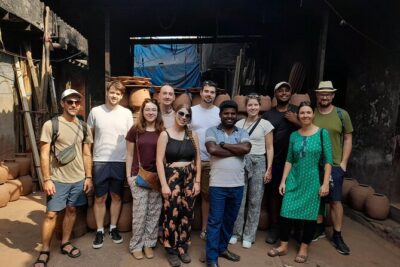
The heart of the day is the Dharavi walk. You go in on foot with a guide to see how people work and live in one of the largest slum areas in Asia. That two-hour block is the closest you’ll get to the day-to-day Mumbai that’s often simplified in headlines.
What I like about this segment is that it’s not framed as a spectacle. It’s a guided walk focused on daily routines—work, homes, and the local economy that keeps everything moving. The guide’s perspective is a big part of why the experience lands. In past visits on this tour, guides have been praised for being friendly, safe-focused, and honest, and that matches the tone you should hope for on a visit like this.
Also, this is where the guide’s personality shows up. Feedback on this experience highlights humor and warmth, plus a strong focus on safety for solo visitors. As a solo traveler, you’ll likely feel less like you’re wandering through something unfamiliar and more like you have a steady, local anchor.
A possible drawback: Dharavi can be emotionally demanding. If you’re someone who gets overwhelmed easily by poverty, crowded places, or uncomfortable contrasts, mentally prepare for it. Go with respect, keep your tone thoughtful, and treat the walk as a conversation with lived reality—not a theme park.
Practical tip: wear comfortable shoes. You’ll be walking, and Mumbai sidewalks can change fast.
From Gateway of India to Taj Mahal Palace: the waterfront reset

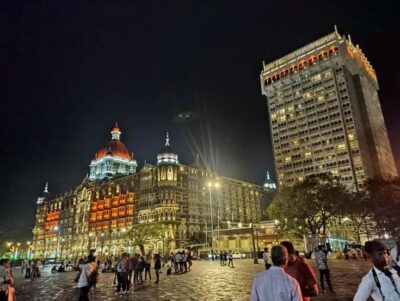
After Dharavi, you shift gears to the seafront energy around Gateway of India. The meeting point is right where Gateway of India and the Taj Mahal Palace Hotel area sit side by side, so you get the classic photo backdrop with the historical context behind it.
Gateway of India was built to welcome King George V and Queen Mary into India. That one detail helps you read the space differently. It’s not just a landmark; it’s a literal stage from the British era, placed where arriving ships and visitors could be seen.
This part of the day is short—about 10 minutes—but it works as a visual reset. You’ll also catch a feel for the city’s coastal vibe from the drive later, including views linked to Marine Drive and Chowpatty Beach.
If you love iconic buildings and want the quick cultural context without spending hours here, this stop is a good deal.
CST (UNESCO) in 15 minutes: why Mumbai’s trains matter
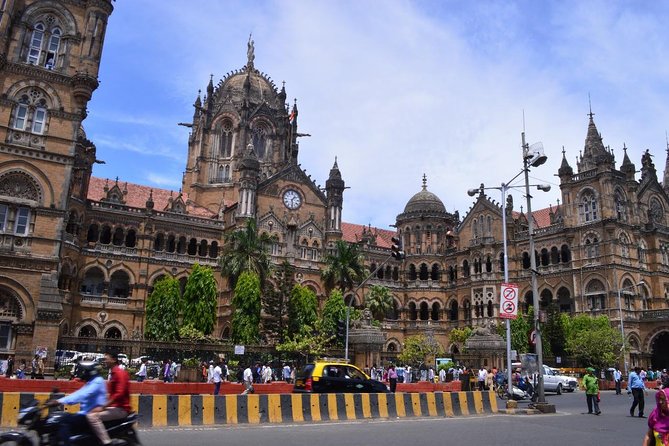
Next comes Chhatrapati Shivaji Terminus (CST), a UNESCO World Heritage train station. You’ll spend about 15 minutes here, which sounds brief—until you remember that stations are meant to be felt more than studied. Even in a short stop, you can pick up the grand scale and the sense of momentum the station brings to the city.
This is also one of those spots where the guide’s job becomes clearer. You’re not just looking at old architecture; you’re understanding why a station of this importance became a symbol of connectivity in a growing city.
My advice: don’t rush your eyes. Even in 15 minutes, look for the details that make it feel more like a civic monument than a simple transit hub. If you enjoy architecture and urban planning, CST is one of the best “bang for time” moments on the itinerary.
Mani Bhavan Gandhi Museum: a pause with real meaning

You then head to Mani Bhavan Gandhi Museum, where Gandhi lived for 17 years (1917 to 1934). This is a 30-minute stop, and it’s your chance to slow down after the intensity of Dharavi and the visual jump from colonial-era architecture.
This museum matters because it adds a human scale. Mumbai isn’t only trade and empire in this story. It’s also a place connected to Gandhi’s time in the city and the movement around him. When a tour includes Dharavi and then places this museum into the same day, the contrast can feel sharp—but it also makes Mumbai feel more complete.
Drawback to consider: this is a museum stop, so if you prefer strictly outdoor sightseeing, you might wish it were longer or swapped for a different type of local experience. Still, the time is reasonable, and the setting gives you a grounded break.




Dhobi Ghat: watching laundry work in the open
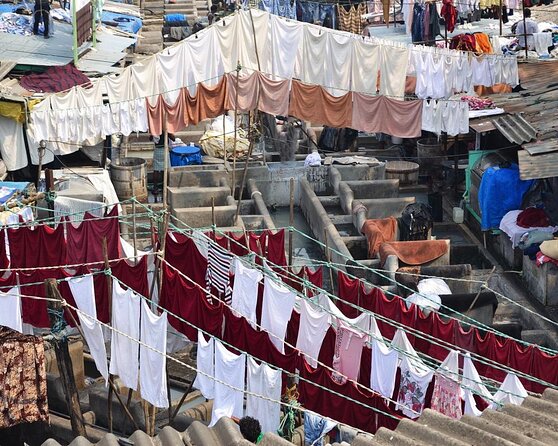
In the later part of the day, you go to Dhobi Ghat, described as the world’s largest open-air laundry. Your time here is about 20 minutes.
This stop is short, but it’s one of those sights that sticks because it’s so immediate. You see laundry work performed in full view, which turns something ordinary into something watchable—and also something that gives you insight into the city’s service systems.
One thing to keep in mind: Dhobi Ghat can feel more like an active workplace than a tourist attraction. The better your attitude, the better your experience. If you’re the type who likes to observe respectfully and stay curious, you’ll get more out of this than if you expect a static viewing deck.
And yes, it’s also a photo spot—just don’t treat it like a stop where people are props. It’s an active place.
The drive-by stops that fill in Mumbai’s picture
Between the bigger stops, the tour includes a series of outside-view moments from the vehicle. These are quick, but they add texture and help you connect the day’s themes—work, power, and how the city was shaped.
Here are some of the sights you’ll pass or see as part of the route:
- Rajabai Clock Towers, often linked to the idea of Big Ben of India
- Watson’s Hotel Ruins, tied to a story about Tata being refused entry and then building what became the Taj Mahal Hotel
- Oval Cricket Ground, a place connected to India’s love of cricket
- Bombay High Court, another major British heritage building
- Municipality Building, another colonial-era landmark
- Kamala Nehru Park, with skyline views and the famous Old woman’s shoe
- Hanging Gardens, built on top of water tanks near the Tower of Silence, associated with the Parsi burial place
Even if you only catch these from the car or during brief pauses, they help you build a mental map. Mumbai’s identity is layered, and these drive-by glimpses keep you from feeling like the day is only split between two extremes: Dharavi and glossy icons.
What you’re really paying for: value, not just sightseeing
The price is $250 per group (up to 3 people). If you split it with two friends, the effective cost per person drops a lot compared to paying separately for smaller guided experiences.
This is not just a list of stops. The structure is what you’re paying for:
- An air-conditioned vehicle during the city transit stretches
- Admission tickets included for CST and Mani Bhavan Gandhi Museum
- Free entry for the Dharavi walk segment and for Dhobi Ghat
- A guide who can handle both heavy context (Dharavi) and architectural storytelling (CST, colonial sites)
Also, the tour is private, meaning it’s only your group. That matters more than people expect. In a city like Mumbai, having control over pacing—especially when one part of the day is emotionally intense—can make the difference between a trip that feels rushed and one that feels respectful and manageable.
One more value note: this tour tends to get booked about 24 days in advance on average. If you’re traveling around festivals or busy weekends, booking earlier is smart so you’re not stuck with last-minute options.
Who this tour suits best (and who should skip it)
This tour is a strong fit if you:
- Want a real neighborhood visit paired with major Mumbai landmarks
- Like guided context more than wandering on your own
- Travel as a small group or as a solo traveler who wants an extra layer of safety and clarity
It might not be your best match if you:
- Want long time inside museums or deep architectural study
- Get easily overwhelmed by poverty contrasts and prefer gentler sightseeing
- Hate walking and want only quick stops with minimal foot time
The best approach is to match your expectations to the format. This day is built to be balanced: a local-life walk first, then the big sights that help you interpret the city afterward.
Should you book this Dharavi + Mumbai sights tour?
I’d book it if you want Mumbai to feel like a city, not a theme. The standout strength is how the day connects Dharavi with landmark Mumbai through the lens of a guide like Nikesh/Nick, praised for being safe-focused, friendly, honest, and able to explain what you’re seeing.
Book this tour if your idea of value is: you pay once, you get transport, you get a guided narrative, and you see the contrasts you’d otherwise miss or misunderstand. The pacing is tight, but that’s also what keeps the day efficient.
If you’re sensitive to difficult realities, plan your mindset first. Go respectfully, wear comfy shoes, and keep your expectations realistic about time at each stop. Done right, this tour gives you the kind of Mumbai picture that stays with you long after you leave the city.
FAQ
FAQ
How long is the tour?
The tour lasts about 6 hours.
What is the price and group size?
It costs $250 per group for up to 3 people.
Is pickup included, and where do we meet?
Pickup is offered, and the listed start meeting point is Café Coffee Day, Unit No. 58, Ground Floor, Ram Mahal Building, Senapati Bapat Marg, Mahim. The activity ends back at the meeting point.
What’s included in the tour cost?
Included features are an air-conditioned vehicle and all fees and taxes. The tour also uses a mobile ticket.
Which attractions have admission included or free?
Admission is included for Chhatrapati Shivaji Terminus (CST) and Mani Bhavan Gandhi Museum. Dharavi (walk) and Dhobi Ghat are listed as free. Gateway of India is also listed as free.
Is lunch included?
No, lunch is not included.
Can I cancel for a full refund?
Yes. There is free cancellation, with a full refund if you cancel at least 24 hours in advance.