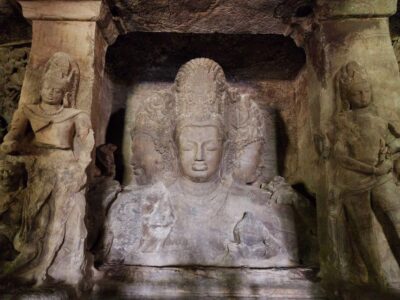
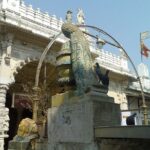
Three faces of Shiva, carved in stone. On this Elephanta Island trip, a UNESCO caves visit pairs with a ferry ride that frames Mumbai and the Arabian Sea in big, easy-to-love views. You’ll also get expert context for what you’re seeing, so the sculptures make sense instead of just looking impressive.
I especially liked the way the tour walks you through the main Shiva cave and then connects the smaller shrines to the larger myth scenes. You’ll also get the human touch of a local guide, with names like Rohit, Nick, Rahul, and Nikhil showing up in the experience. The main drawback is simple: the ferry can be crowded, so if you hate close quarters, come mentally prepared.
In This Review
- Key highlights I’d plan around
- Elephanta Caves: one day, two different kinds of awe
- Getting started in Colaba: pickup, meeting point, and timing that fits real life
- Ferry ride over to Elephanta Island: good views, real crowding risk
- Inside the UNESCO caves: Shiva first, then the wider story
- The guide factor: when local names and English clarity matter
- What you’ll actually do in 5 to 6 hours (and how to not feel rushed)
- Price and value: is $27.89 a fair deal?
- Managing the one big complaint: ferry crowding
- Should you book? My practical take
- FAQ
- FAQ
- How long is the Elephanta Caves exploration tour?
- Where does the tour start and where does it end?
- Is pickup offered?
- Is admission to Elephant Island included?
- What’s included in the price besides admission?
- Is lunch included?
- Is this tour private?
- Do I get a mobile ticket?
- What happens if the weather is bad?
- What is the cancellation policy?
- Are service animals allowed?
Key highlights I’d plan around
- Trimurti sculpture in the main cave: a striking three-headed Shiva that’s about 20 feet tall.
- Panoramic ferry ride: Mumbai skyline and Arabian Sea views along the way to Elephanta Island.
- Story-led cave explanations: guides who can translate carvings, gods, and scenes into something you can follow.
- UNESCO setting you can feel: rock-cut temples dating roughly from the 5th to 8th centuries (often described up to the 9th in broader summaries).
- Admission and fees handled: admission to Elephant Island is included, along with bottled water and taxes.
- Plan for no lunch: lunch isn’t included, so you’ll want snacks or a meal plan for later.
Elephanta Caves: one day, two different kinds of awe
Elephanta Island is where Mumbai’s busy energy quietly swaps gears. The rock-cut temples here are dedicated mainly to Hindu deities, and the carving work is detailed enough that you’ll keep spotting new things as your eyes adjust. What makes the caves worth your time is that they aren’t one random hall of statues. You move through a set of caves with clear themes, starting with the big focus on Lord Shiva.
The UNESCO factor matters, but it’s not just paperwork. The caves date back to roughly the 5th to 8th centuries, and you can see how artists of that era used stone to tell religious stories and show the structure of belief. One standout is the Trimurti concept, including a three-headed Shiva about 20 feet tall, which gives the whole site a sense of scale you don’t get from a typical museum stop.
This is also a site where a guide changes the experience. Without explanation, you might admire the art and move on. With the right guide, the carvings start answering questions you didn’t even know you had: who the figures represent, how the scenes fit together, and why this cave is the centerpiece.
You can also read our reviews of more guided tours in Mumbai



Getting started in Colaba: pickup, meeting point, and timing that fits real life
Your tour start is easy to find: PizzaExpress Dhanraj Mahal, Chhatrapati Shivaji Maharaj Marg, Apollo Bandar, Colaba, Mumbai, Maharashtra 400001. The good news is you return to this same meeting point at the end, so you’re not stuck figuring out late-day logistics.
The total day runs about 5 to 6 hours, and that includes travel time. Admission to Elephant Island and the cave portion are part of the plan, with the cave visit itself clocking in at around 4 hours. That time window is important. You’re not doing a quick walk-by. You have enough hours to see the main Shiva cave properly and still have time for the smaller caves and their mythological scenes.
Practical detail: you can get pickup offered, and the tour is set up as a private tour/activity, meaning it’s just your group. That matters if you want a more comfortable pace, fewer bottlenecks during explanations, and less waiting around. You’ll also receive confirmation at booking and use a mobile ticket, which keeps your day smoother if you’re juggling multiple stops in Mumbai.
And yes, bottled water is included. It’s a small line item, but it helps on a day where you’re walking and waiting for ferry schedules.
Ferry ride over to Elephanta Island: good views, real crowding risk
The ferry is not just transportation. It’s part of the experience, with panoramic views of Mumbai’s skyline and the Arabian Sea. Even before you reach the caves, you get that contrast: Mumbai from the water looks different, and the horizon makes the day feel cinematic in a very practical way.
Now for the caution. The ferry ride can be too crowded, and the experience of squeezing into tight space is a legitimate downside. If you’re the type who dislikes cramped seating or you tend to get uncomfortable quickly, this is where you’ll feel it most.
How I manage this kind of issue on day trips:
- Arrive with realistic expectations and keep your patience for the cave portion, not the ferry.
- Wear breathable clothes and be ready for the ferry’s temperature swings.
- Keep your phone/valuables secure but easy to reach for quick skyline photos.
Also, remember that the ferry is run by a third party and not fully controlled by the tour operator. So if you’re planning your day tightly, treat the ferry as the variable and the caves as the payoff.
Inside the UNESCO caves: Shiva first, then the wider story
Elephanta Caves are a network, not a single attraction. The tour’s main stop is the principal cave dedicated to Lord Shiva, where you’ll spend the most time and see the most famous sculptures. The centerpiece is the Trimurti idea, including the impressive three-headed Shiva sculpture that reaches around 20 feet tall. Seeing that in person changes the feeling. It’s not just size. It’s how the forms sit within the cave space, giving you a sense of intentional composition rather than random decoration.
From there, you shift into smaller caves and side areas showcasing other Hindu deities and mythological scenes. This is where the guide becomes more than a translator. The best tours connect the dots: why certain scenes are grouped, how myth scenes relate to Shiva-centered themes, and what to look for in the carvings beyond faces and poses.
You’ll also benefit from a guided approach that’s built for first-time visitors. The caves can be visually overwhelming if you’re just doing it as a self-walk route. With a guide, you get a path through the structure: main cave first, then supporting caves, with explanations timed to what you’re actually seeing.
One more reason this matters: the caves are rock-cut and ancient, so details can be subtle depending on lighting and angles. A guide can point you to features that you might miss otherwise, like how figures are positioned or what visual cues indicate a specific myth or deity.
The guide factor: when local names and English clarity matter
The tour experience is heavily shaped by who’s leading you. In the experience, guides such as Rohit, Nick, Rahul, and Nikhil have been part of the day, and the themes in their guiding are consistent: clear English, and a real effort to make the carvings feel understandable, not just impressive.
I like guides who can do two things at once:
- Identify the big elements quickly (where to look, what it represents).
- Add human context that turns stone into a story.
That’s what stood out in the experience of guides like Nikhil, described as a local who grew up on the island with family there for generations. When that kind of local connection is part of the tour, you often feel the difference in tone. It’s less like reciting facts and more like explaining how the site fits into a living cultural memory.
If your English comfort level matters, you’re in a good place here. The guiding reported in the experience emphasizes that the explanations are easy to understand, which helps if you want to enjoy the day without constantly stopping to reread signage.




What you’ll actually do in 5 to 6 hours (and how to not feel rushed)
Here’s a practical way to think about your schedule. First, you gather near Colaba for pickup or direct meeting. Then you head toward the ferry. Ferry time is part of the total 5 to 6 hours, so don’t plan anything tight right after you return. Aim for a slower end to your day, especially if you’re hungry or you get travel-worn.
Once you reach Elephanta Island, the cave portion is set for around 4 hours. That’s the heart of the day. You’ll cover:
- The main Shiva cave first, with the strongest sculptures and main visual themes.
- Smaller caves next, so you can see the broader range of deities and myth scenes.
- A guided flow so you’re not zigzagging randomly.
Lunch is not included, and that’s a real planning point. It’s easy to underestimate hunger on a day like this because you’re walking, standing, and looking up. If you dislike late meals, bring snacks for later in the cave section. If you’re the type who likes a full post-tour meal, just be ready for the timing and the fact that you’ll be hungry when you get back.
Also, expect good weather to matter. The experience is listed as requiring good weather, and if it’s canceled due to poor weather, you’ll be offered a different date or a full refund. That doesn’t just mean comfort. Weather affects ferry operations and how enjoyable the day feels overall.
Price and value: is $27.89 a fair deal?
At $27.89 per person, this tour sits in the value zone for a half-day guided UNESCO experience with ferry time included. What helps the value is that several costs are taken care of up front:
- All fees and taxes
- Admission fees to Elephant Island
- Bottled water
That means you’re not piecing together surprise add-ons while you’re already en route.
The trade-off is what isn’t included: lunch. But for most people, that’s not a dealbreaker. It’s fairly common on island day trips, and it can actually be a benefit if you prefer eating somewhere you choose after the tour.
For whom this is a strong match:
- You want a structured, guided UNESCO visit rather than a self-guided scramble.
- You care about explanations for what you’re seeing in the caves.
- You like the ferry ride for the views, not only for getting there.
For whom it may be less ideal:
- You strongly dislike crowded ferry conditions and want maximum comfort the whole time.
- You don’t want to plan around weather (since the day can be rescheduled if conditions are poor).
Managing the one big complaint: ferry crowding
Crowding is the most repeated practical worry. On a busy ferry, the experience can feel like the operator is trying to pack in as many people as possible, which takes the edge off the ride. And since the ferry is part of the time budget, it’s hard to avoid completely.
So treat the ferry as a means to an end and focus your energy on the caves themselves. The caves are where the value concentrates. The guiding and admission inclusion do the heavy lifting for your money: you’re paying for access plus a guided interpretation of a complex site.
If you’re the kind of traveler who wants a calmer trip, I’d consider adjusting your mindset rather than expecting a private ferry. This tour is private for your group, but the ferry itself may not be exclusive. That distinction is what keeps expectations realistic.
Should you book? My practical take
If you’re excited by ancient rock-cut temples and want a guide to help you understand what you’re seeing, I’d book it. The combination of guided cave time, UNESCO scale, and ferry views from the water makes this a genuinely efficient use of a half-day. Plus, the inclusion of admission fees, taxes, and bottled water takes away some friction.
But if you know you hate crowded public transport and close quarters, the ferry may annoy you. In that case, I’d still consider booking if you’re confident the caves will outweigh the ride discomfort.
FAQ
FAQ
How long is the Elephanta Caves exploration tour?
The duration is approximately 5 to 6 hours, and travel time is included in the total duration.
Where does the tour start and where does it end?
It starts at PizzaExpress Dhanraj Mahal, Chhatrapati Shivaji Maharaj Marg, Apollo Bandar, Colaba, Mumbai, and it ends back at the same meeting point.
Is pickup offered?
Pickup is offered, and the start point is listed as PizzaExpress Dhanraj Mahal in Colaba.
Is admission to Elephant Island included?
Yes. Admission fees to Elephant Island are included.
What’s included in the price besides admission?
The tour includes all fees and taxes and bottled water. A confirmation is received at booking, and admission to the island is part of what you’re paying for.
Is lunch included?
No. Lunch is not included.
Is this tour private?
Yes. It’s listed as a private tour/activity, so only your group participates.
Do I get a mobile ticket?
Yes. A mobile ticket is part of the tour features.
What happens if the weather is bad?
The experience requires good weather. If it’s canceled due to poor weather, you’ll be offered a different date or a full refund.
What is the cancellation policy?
You can cancel for free up to 24 hours in advance for a full refund. If you cancel less than 24 hours before the experience starts, the amount paid is not refunded.
Are service animals allowed?
Yes. Service animals are allowed.