REVIEW · MUMBAI
Dharavi Slum Walking Tour: Mumbai’s Inspiring Small Industries
Book on Viator →Operated by Explore Mumbai Tours · Bookable on Viator
Small workshops, big stories, right on your feet. This Dharavi slum walking tour is interesting because it mixes work and home in the same two hours, taking you from local industry to everyday neighborhoods, plus a planned stop at Kumbharwada pottery. I also like that the tour shows how recycling workshops and small manufacturing actually operate, not just as a photo stop.
One consideration: this is very up close. You’ll be walking through narrow alleys, including places where people work, so if you prefer a distance view, it may feel cramped or intense.
In This Review
- Key things to know before you walk Dharavi
- First stop: Third Wave Coffee and getting your bearings
- Industrial Dharavi: recycling and small manufacturing up close
- Switching gears: from workshops to residential streets
- The Kumbharwada pottery colony: craft you can actually see
- Guided by locals: why the guide changes everything
- Photos, comfort, and respect: the real on-the-ground tips
- Duration and pacing: why two hours is a sweet spot
- Transfers and adding sightseeing without overcomplicating the day
- Price and value: why $9.51 can make sense here
- Who this tour is best for (and who should rethink it)
- Should you book the Dharavi walking tour?
- FAQ
- How long is the Dharavi Slum walking tour?
- How much does it cost?
- Where does the tour start?
- Does the tour include a visit to Kumbharwada?
- What will I see during the walk?
- Are transfers available?
- Is it a group tour or private?
- Can I cancel for a full refund?
Key things to know before you walk Dharavi
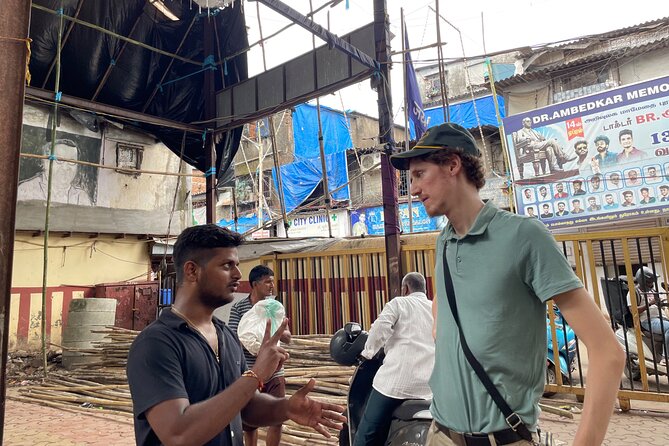
- Local-guided safety and context from start to finish, beginning at Third Wave Coffee
- Work and home in one loop, with commercial activity followed by residential streets
- Kumbharwada pottery colony included as a focused cultural stop
- Recycling and small manufacturing you can see with your own eyes (not just hear about)
- Realistic expectations: tight lanes, close-up workplaces, and you moving at walking pace
First stop: Third Wave Coffee and getting your bearings
Your tour starts at Third Wave Coffee on Tip Road, Ram Mahal, Senapati Bapat Marg, Marinagar Colony, Mahim, Mumbai (the meeting point is clearly pinned on the area map). The nice part of starting at a known café is that it makes the start feel less chaotic than meeting somewhere vague inside a busy neighborhood. You’ll also get the orientation you need before your feet start moving.
This is a 2-hour walking tour, and that length matters. Dharavi is complex, and two hours is long enough to see meaningful contrast—industry first, homes second—without turning it into a marathon. The tour is also designed so your guide can keep you safe while you take photos.
Also, this is listed as a private tour/activity, meaning only your group participates. If you’re traveling with friends or family, that usually means you can ask questions without feeling like you’re being rushed by a crowd.
You can also read our reviews of more walking tours in Mumbai


Industrial Dharavi: recycling and small manufacturing up close
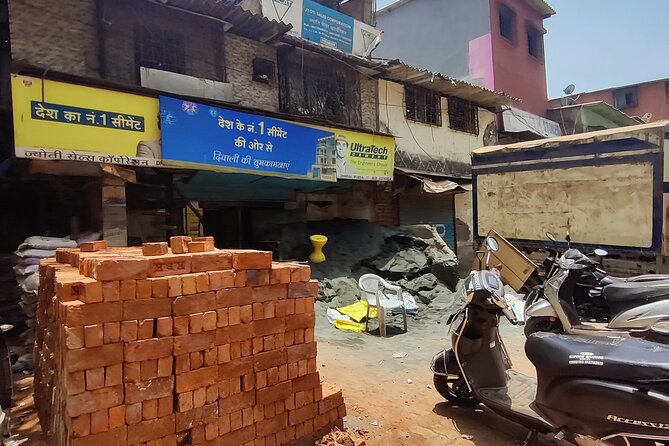
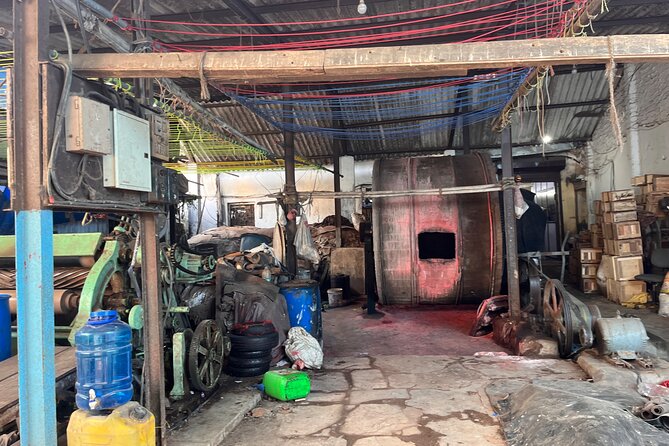
The tour route begins in the commercial side of Dharavi—where small-scale work happens in tight spaces and people move fast because production keeps going. You’ll see recycling and manufacturing in action tied to everyday materials like plastic, cardboard, aluminum, and even garment creation. For many visitors, this is the part that changes their mental picture of Dharavi the most.
Here’s why I think it’s valuable: you’re not being handed a “poverty-only” story. You’re watching a functioning network of work. Even if you don’t fully understand the supply chain on your first pass, you can still see the logic: materials come in, processes happen on site, outputs get sent onward. A local guide helps you connect the dots so it feels less random.
One practical note: because it’s real workplaces, movement can be tight and the space can feel busy around you. That’s part of the authenticity, but it can also be uncomfortable for people who expect a wide, scenic walk. If you’re someone who likes quiet observation from afar, plan to stay respectful and follow your guide’s pace.
Photos can work here, but keep your expectations realistic. You’re often shooting close range, and you’ll want to avoid blocking people or slowing work. Let your guide steer how and where to pause.
Switching gears: from workshops to residential streets
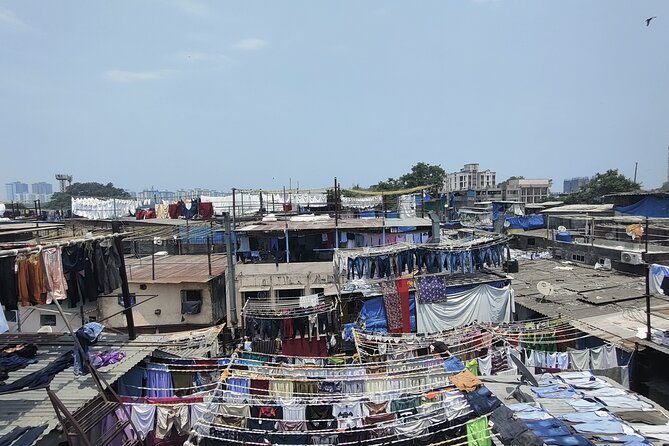
After the industrial side, the tour shifts to a residential sector where you’ll see small-roofed homes side-by-side with government and private buildings, plus areas connected to leather workshops. This contrast is one of the strongest reasons to take the tour on foot. In a car, it’s easy to “zip through” and miss the way work and living overlap.
This part helps you understand how daily life continues around production. People aren’t just passing by—they’re living, cooking, caring, and working in spaces that are small but organized for their routines. Your guide’s commentary is what turns the walk into an actual experience, not just a sequence of streets.
This is also where you’ll start to feel the “tight lanes” factor in a more noticeable way. There are passages that can feel narrow—exactly the kind of space where you have to keep your balance, stay aware, and avoid sudden movements while you’re taking photos or pointing.
If you go with the right mindset, it can be fascinating rather than stressful. You’re learning how communities adapt space for practical use. And you’re doing it in a guided way that prioritizes safety and clarity.
The Kumbharwada pottery colony: craft you can actually see
One of the tour highlights is the planned visit to the Kumbharwada pottery colony within Dharavi. Even if you think you already understand the idea of “making things,” seeing pottery work in a live, working setting is different from watching a video. It’s visual, it’s hands-on in spirit, and it’s tied to a specific place in the neighborhood.
Pottery matters here because it gives you a cultural anchor—something with tradition and craft technique, not only recycling inputs. When your guide connects the dots between industries in Dharavi, this stop often helps the story feel less abstract. You’ll come away with a clearer sense of how skill gets passed, how work gets organized, and how materials become objects people use.
It’s also a calmer moment compared with some of the very tight industrial areas, because craft work tends to be slower paced in the sense that you can watch how the process unfolds. Still, treat it like a working area. Move quietly, ask questions through your guide, and let the moment be respectful.
Guided by locals: why the guide changes everything
A big reason these tours earn such strong ratings is the quality of guiding. You’re not just walking a map—you’re learning from someone who knows how the neighborhood functions and how to explain it without turning it into a lecture.
Names come up for different guides. For example, a guide named Ruqaiyya has been described as engaging and very informed, with the confidence of someone who lives there and clearly feels pride in sharing Dharavi’s reality. Another guide named Sharon has been praised for depth and friendliness, especially when visitors requested her specifically after a previous Mumbai tour.
Even when you don’t meet the same guide, the pattern is consistent: the best experience happens when you’re curious and you let the guide set the tone. If you ask thoughtful questions—about how work is organized, how people balance home and industry, or what certain trades mean—you’ll get more out of the walk and spend less time guessing.




Photos, comfort, and respect: the real on-the-ground tips
This tour is set up so you can capture photos, but the “how” matters. You’ll likely be moving through narrow alleys and inside or right next to work spaces. That means:
- Keep your camera ready, but don’t stop dead in the middle of a lane.
- Follow your guide’s instructions first; photos come second.
- Think “observe and learn” rather than “film and collect.”
- Wear shoes you can walk in for the full two hours—no fragile footwear.
Comfort depends a lot on your expectations. If you need wide open views and lots of space, you might find this less satisfying. But if you want to see a neighborhood as it works—industries, homes, crafts—then the closeness becomes the point.
And yes, it can feel intense. That’s not a reason to skip. It’s a reason to bring patience and a respectful attitude.
Duration and pacing: why two hours is a sweet spot
Two hours is a compact window, but it’s long enough to show Dharavi’s two faces. The pacing also keeps you from getting mentally overloaded.
The tour starts with the commercial hub, then moves through the residential sector, then includes the Kumbharwada pottery colony before heading back to the meeting point at Third Wave Coffee. That structure is helpful because it creates a clear arc: work first, then life around it, then craft as a memorable closing chapter.
If you’re deciding between a slum tour and other Mumbai highlights, this one is a manageable time block. It also tends to fit well with a half-day or full-day plan because the route is walking-based and not dependent on long drives.
Transfers and adding sightseeing without overcomplicating the day
You can choose an optional transfer option that includes hotel pickup and drop-off, which is a big help in Mumbai. Even if you’re comfortable navigating by local transit, extra travel time can drain your energy. With transfers, you can spend your mental focus on the tour itself.
There’s also an option to include city sightseeing alongside the Dharavi walk. If you like a structured itinerary and want your day to feel connected—rather than bouncing between scattered points—this can be a practical way to do it.
That said, the core experience is the walk. If you hate long vehicle rides, you can still plan around the meeting point near public transportation.
Price and value: why $9.51 can make sense here
The listed price is $9.51 per person, which is remarkably low for a guided tour. That doesn’t mean it’s casual. In practice, value comes from three things:
First, you’re paying for local interpretation—the part that helps you understand what you’re seeing. Second, you’re getting guided access to a route that mixes workplaces and homes, which is hard to replicate on your own responsibly. Third, you get a defined highlight stop at Kumbharwada pottery rather than an open-ended wander.
You also get a mobile ticket and the tour operates with group discounts (so if you’re traveling in a small group, you may benefit more than solo travelers do).
Given the short duration, low cost, and the fact that it’s built around a local guide rather than just a route, it tends to be one of the more budget-friendly ways to see Dharavi in a structured, respectful way.
Who this tour is best for (and who should rethink it)
This tour is a strong match if you want:
- A guided walking look at Dharavi’s small industries and daily life
- A visit to Kumbharwada pottery as a concrete cultural highlight
- A short, manageable experience in the middle of a Mumbai trip
You might rethink it if:
- You strongly prefer distance viewing and wide open spaces
- You don’t handle cramped lanes or close-up working environments well
- You want a mostly “scenic” photography experience
For many people, the emotional payoff is high. You leave with a more grounded understanding—less assumption, more observation.
Should you book the Dharavi walking tour?
If your goal is to see Dharavi as a living neighborhood with ongoing work—recycling, manufacturing, leather, textiles, and craft—then I’d book it. The combination of a tight walking route, a knowledgeable local guide, and the Kumbharwada pottery stop makes it more than a quick look.
Where you should pause is if you’re very uncomfortable with crowding, narrow passages, and being near active workplaces. This tour is designed for people who can handle close-up travel. If that’s you, it’s a smart, high-value way to spend two hours in Mumbai.
If you’re on the fence, consider the practical choice: with hotel pickup/drop-off, you can make the day easier on yourself and focus on the experience rather than logistics.
FAQ
How long is the Dharavi Slum walking tour?
The tour is about 2 hours.
How much does it cost?
The price is $9.51 per person.
Where does the tour start?
It starts at Third Wave Coffee on Tip Road (Ram Mahal, Senapati Bapat Marg area).
Does the tour include a visit to Kumbharwada?
Yes. The itinerary includes a visit to the Kumbharwada pottery colony within Dharavi.
What will I see during the walk?
You’ll see both the residential side where locals live and the commercial side with small industries, including pottery, leather, textiles, and recycling. The route also includes observation of work connected to recycling materials and garment creation.
Are transfers available?
Yes. There’s an optional transfer that includes hotel pickup and drop-off.
Is it a group tour or private?
It’s listed as private, meaning only your group participates.
Can I cancel for a full refund?
Yes. You can cancel for free up to 24 hours in advance for a full refund. If you cancel less than 24 hours before, the amount paid is not refunded.