Mumbai hits different in motion.
This half-day private tour is interesting because you get a smooth ride in an air-conditioned vehicle plus a real city explainer in the passenger seat. I love the quick-hit structure that still feels personal, and I love the way the guide ties big monuments to everyday Mumbai moments, from Gandhi’s story at Mani Bhavan to the hand-washing scene at Dhobi Ghat. The only drawback: many stops are short, so you mostly get curbside or viewing-deck time rather than long, in-depth wandering.
You’ll also appreciate the practical setup: hotel, port, or airport pickup and drop-off, bottled water, parking fees handled, and an English-speaking guide traveling with you. Guides such as Max, Arman, Farouk, Samarth, Armaan, and Kaif show up in past experiences, and the common theme is smart pacing through heavy traffic.
In This Review
- Key highlights I’d bank on
- A private Mumbai ride that makes the city easier to read
- Mani Bhavan to CSMT: Gandhi and the power of old stone
- Malabar Hill viewpoints: Hanging Gardens, Kamala Nehru Park, and Marine Drive
- Oval Maidan and the cricket-around-town feeling
- Dhobi Ghat from the viewing deck: one of Mumbai’s most real sights
- Taj Mahal Palace and Gateway of India: the harbor’s big-photo finale
- University of Mumbai library: colonial-era architecture without the crowd fatigue
- Price and value: what $45.39 gets you in real terms
- How to make the most of short stops and car views
- Who should book this Mumbai landmarks tour?
- Should you book it?
- FAQ
- What’s the duration of the Mumbai private sightseeing tour?
- Do you get pickup and drop-off?
- Is the tour private?
- What’s included in the price?
- Do I need tickets or entry fees at the stops?
- Does the tour involve walking?
- Can I add food or snacks?
- What happens if I need to cancel?
Key highlights I’d bank on
- Dhobi Ghat from the viewing deck: you can watch the hand-washing operation as it’s still running.
- Short, high-impact stops: around 5–10 minutes each, with the rest of the route handled from the car.
- Iconic architecture across Mumbai: Victorian Gothic at CSMT and the High Court, plus other landmark facades.
- Malabar Hill viewpoints: Hanging Gardens, Kamala Nehru Park, and Marine Drive in one sweep.
- Harbor landmarks: Taj Mahal Palace and the Gateway of India, timed for great photo chances.
A private Mumbai ride that makes the city easier to read
The big win here is focus. In 4 to 5 hours, you’re not trying to figure out where everything is or how to connect stops across town. You’re in a comfortable car with your guide and driver, with pickup and drop-off covering hotel, the port, and the airport.
Because some points are viewed through the car, the tour works best when you accept the rhythm: stop, look, listen, move on. That can feel perfect if you want orientation fast, and slightly limiting if you came to spend hours inside buildings. Either way, it’s built for momentum.
You also get options for your group size with different vehicle types (sedans, SUVs, or mini coaches). That matters in Mumbai, where traffic can turn a “quick drive” into a slow crawl. Several past groups praised the guides and drivers for handling the city’s chaos, which is exactly what you want on day one.
You can also read our reviews of more tours and experiences in Mumbai.


Mani Bhavan to CSMT: Gandhi and the power of old stone
The tour starts with Mani Bhavan Gandhi Museum. The time is brief, but it’s a strong opening because it frames Mumbai in the language of India’s freedom movement. Even if you’re not a museum person, the setting helps you understand why the city’s public life looks the way it does.
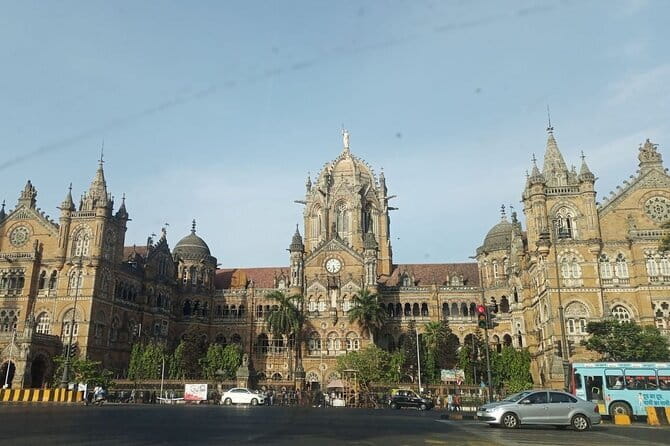
Next up is Chhatrapati Shivaji Maharaj Terminus (CSMT), a UNESCO World Heritage railway station famous for its Victorian Gothic architecture. You’ll get a quick look—just enough to clock the scale and details—without needing to commit half your day to train history.
Right after that, you pass the Brihanmumbai Municipal Corporation building. This Gothic-style facade is tied to how the city governs itself, and it’s the kind of place you’d miss if you only followed the headline sights. The High Court later keeps the same theme: long, serious lines in stone that make you realize Mumbai was shaped by centuries of ambition.
If you care about architecture and institutions, this stretch delivers. If you only want beaches and skyline photos, you may find it a bit more cerebral than expected—but it pays off when you later look at the city’s views from Malabar Hill and Marine Drive.
Malabar Hill viewpoints: Hanging Gardens, Kamala Nehru Park, and Marine Drive
This is where the tour shifts from buildings to perspective. You head to Hanging Gardens on Malabar Hill, a terraced garden setup with city and Arabian Sea views. The stop is short, so treat it as a “view and reset” moment: phone camera ready, eyes up, then move on.
Then Kamala Nehru Park adds a playful landmark: the Old Woman’s Shoe structure. It’s a famous photo spot, but it also works because it puts you in the right neighborhood for broad sightlines. The surrounding panoramas help you understand why Malabar Hill is the kind of place people want to live in.
From there, you’ll reach Marine Drive, the crescent-shaped boulevard along the sea. It’s known for sunset views, and at night it gets the famous Queen’s Necklace lighting. Even if your timing isn’t perfect, it’s one of those places where the shape does half the storytelling for you.
This section is valuable because you’re not just looking at one view. You’re stacking viewpoints—gardens, park landmark, then boulevard—so Mumbai’s coastline and skyline feel connected, not random.
Oval Maidan and the cricket-around-town feeling
You’ll also stop at Oval Maidan, the historic Oval Cricket Ground area. This is another short look, but it helps you read Mumbai beyond monuments. Cricket isn’t a side hobby in India; it’s part of daily conversation, and the ground and its surrounding architecture give that context.
The area is known for iconic Victorian and Art Deco buildings nearby, and the contrast is part of the appeal. Even if you don’t watch cricket, seeing the setting can help you understand how colonial-era design and modern city culture coexist in the same blocks.
If you want a “Mumbai feels like Mumbai” moment without adding extra travel time, this stop does the job. It’s small, quick, and sets up the rest of the route with a more local vibe than the purely institutional sights.
Dhobi Ghat from the viewing deck: one of Mumbai’s most real sights
The stop that repeatedly gets praise is Byculla’s Dhobi Ghat, where thousands of clothes are washed by hand. The tour takes you to a viewing deck, which is the smart way to see this working scene. You don’t need to hunt around or guess where to stand, and you can watch what’s happening in the rhythm of the place.
Why this moment lands: it’s not a staged monument. It’s daily labor, visible and ongoing. Even in a short stop, you get a concrete sense of how Mumbai keeps itself moving behind the postcard surface.
A lot of guides make this kind of stop either forgettable or meaningful, depending on how they frame it. Past experiences highlight that the guide explanations and the timing helped people see the activity as more than just spectacle. If you care about how cities work, this is the one stop I’d prioritize in your brain.
Practical tip: wear comfortable clothing for a viewing-deck style stop. You’ll be looking and observing more than walking.


Taj Mahal Palace and Gateway of India: the harbor’s big-photo finale
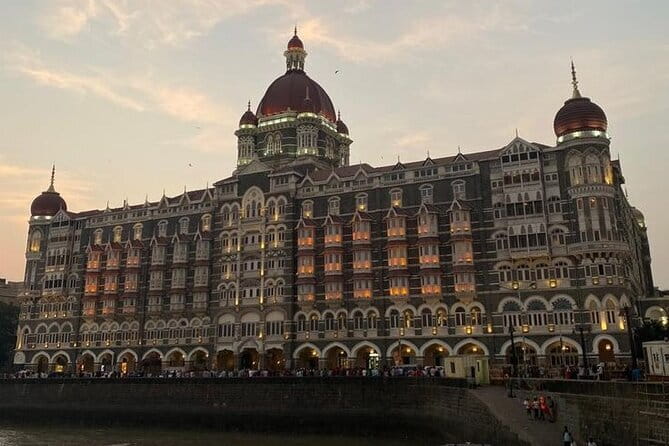
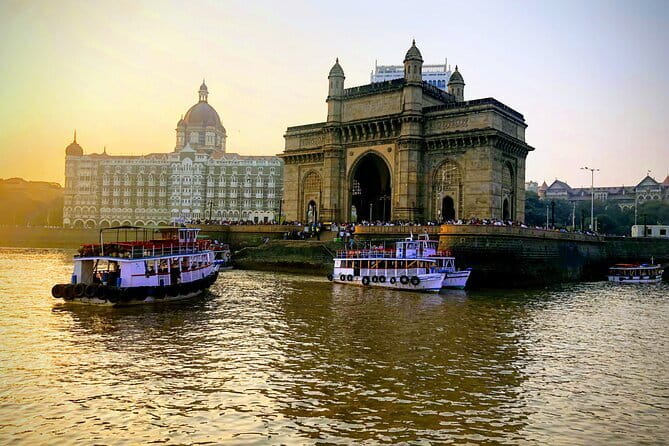
Toward the end, you get the classic waterfront connection. The Taj Mahal Palace Hotel is a major landmark with famous architecture and a strong historical presence. The stop is short, but the surrounding area gives you a sense of grandeur and the way the sea sits at the edge of Mumbai’s biggest names.
Then comes the Gateway of India, built to commemorate King George V’s 1911 visit. This is one of the best places in town for photos with the Arabian Sea in frame. The monument’s scale makes it feel important, even if you only spend a few minutes there.
If your day includes sunset timing, the harbor can look dramatically different depending on the light. If not, it still works as a finish because it’s visually satisfying and easy to understand: you’re ending at the water where the city opens to the world.
University of Mumbai library: colonial-era architecture without the crowd fatigue
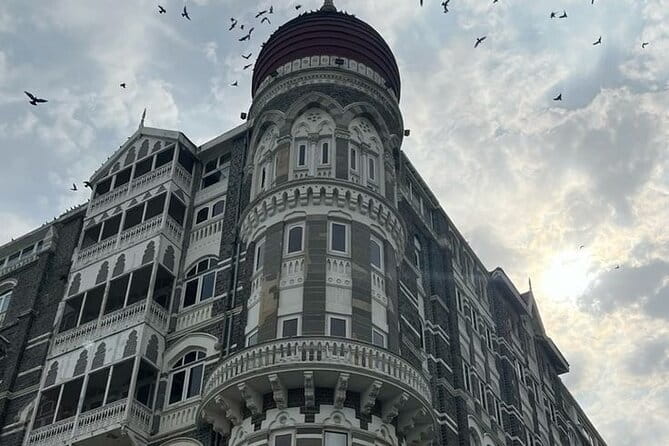
You’ll also visit the University of Mumbai Library. It’s known for colonial-era architecture and its role as a center of higher education. This stop is a helpful change of pace: less about famous landmarks and more about institutions that keep shaping Mumbai’s future.
Because it’s a quick stop, don’t expect a guided tour of every internal detail. Think of it as a “get the big picture” stop—like reading the city’s handwriting. The building style is part of why you’ll remember it later when you see other architectural signatures from the same era.
If you like history that’s still in use—buildings that aren’t just museum props—this fits.
Price and value: what $45.39 gets you in real terms
At $45.39 per person, this tour is priced like an efficient way to see a lot without the logistical headaches. For that money, you get a private tour, an English-speaking guide, an air-conditioned vehicle, bottled water, and parking fees. That’s a lot of “hidden costs” removed, especially if you’re trying to move across town with taxis and constant re-checking.
You also have mobile ticket convenience and group discounts, which can help if you’re traveling with friends or family. Another value point: you’re looking at a free-entry listing for each stop, including Mani Bhavan, CSMT, the municipal building, Hanging Gardens, Kamala Nehru Park, Marine Drive, and more.
The other value is time management. The 4 to 5 hour duration means you can still enjoy Mumbai afterward—dinner, a second neighborhood, or simply time to wander on your own with a better mental map. One more practical note: the tour is commonly booked well ahead (around 135 days on average), so if you’re aiming for specific dates, lock it in sooner rather than later.
How to make the most of short stops and car views
This is built around quick viewing and good narration, not marathon walking. That’s actually a strength if you plan your energy for what you can control.
Here’s how I’d do it:
- Keep your expectations aligned: many stops are around 5–10 minutes, and some points are primarily viewed from the car.
- Ask your guide to prioritize photos: since time is tight, a good guide can point you to the angles that matter.
- Use the vehicle time: during drives, pay attention to the city context. It’s often where the guide explains why one area looks the way it does.
- Plan for climate: air-conditioning helps, and bottled water is included, but Mumbai’s heat can still wear you down if you’re out too long at any one stop.
- If you want food: snacks aren’t included, but arranging a meal or tasting is possible for an extra cost. One past group had that done by request, so if it matters to you, ask early.
If you’re traveling solo, this still works well because it’s a private setup. If you’re with a family, the short stops can be easier than a long walking tour, as long as everyone is comfortable moving quickly between sights.
Who should book this Mumbai landmarks tour?
Book it if you want:
- A fast introduction to Mumbai’s big icons and key architectural styles
- A guide-led day that reduces decision stress (where to go, in what order)
- A chance to see Dhobi Ghat in a structured, respectful way from a viewing deck
Skip it if you want:
- Deep museum time at multiple indoor sites
- A lot of free-roaming walking at every stop
- An experience that functions like a slow neighborhood stroll
It’s also a great fit if you like balance: a blend of monuments, civic architecture, sea views, and a real-life working sight.
Should you book it?
For most first-timers, I think it’s a smart buy. You get a tight route, comfortable private transportation, and a guide who can turn famous names into something you can actually picture in your head. The biggest reason to consider it is Dhobi Ghat from the deck—one of the most talked-about moments because it’s hands-on, real, and easy to see without hassle.
If you’re the kind of traveler who likes structure but still wants authentic moments, this tour fits your style.
FAQ
What’s the duration of the Mumbai private sightseeing tour?
It runs about 4 to 5 hours.
Do you get pickup and drop-off?
Yes. Pickup and drop-off are offered from hotels, the port, and the airport.
Is the tour private?
Yes. It’s a private tour/activity, and only your group participates.
What’s included in the price?
Included are an air-conditioned vehicle, private transportation, bottled water, parking fees, an English-speaking tour guide, and the private tour.
Do I need tickets or entry fees at the stops?
The listed stops are marked as free entry in the tour information.
Does the tour involve walking?
You’ll have short stops (often 5–10 minutes), and some points are primarily viewed through the car. There is also a viewing deck visit at Dhobi Ghat.
Can I add food or snacks?
Snacks are not included, but you can arrange a meal or tasting for an extra cost.
What happens if I need to cancel?
You can cancel for a full refund up to 24 hours before the start time. Changes within 24 hours aren’t accepted, and refunds won’t be issued inside that window.