REVIEW · MUMBAI
2-Hour Guided Tour of Dharavi
Book on Viator →Operated by Be The Local Tours and Travel · Bookable on Viator
Two hours, and Dharavi stops being a movie. This guided tour is designed to show the everyday logic of life in Dharavi, not the stereotype version. You’ll walk with a professional guide, get context for what you see, and travel with small groups that make it easier to ask questions.
I love how the tour’s framing helps you break stereotypes fast. I also love the practical setup: round-trip transfers from your hotel and a clear meeting spot so your day in Mumbai stays stress-free.
One possible drawback: if you’re expecting scenes of extreme despair straight from movies, you may feel mismatched. The tour openly aims to show Dharavi as a place of work, family life, and community energy.
In This Review
- Key things to know before you go
- Dharavi, beyond Slumdog Millionaire: what you’ll actually notice on day one
- The 2-hour guided walk: how the time works and where it feels different
- Stop 1 in Dharavi: homes, schools, and the industries that feed Mumbai
- Meeting points and timing: Third Wave Coffee to Kumbhar Wada
- Local guides make the difference: Razak, Faisan, Touseef, Adil, Avil, Abir
- Price and value: $22.32 for a guided neighborhood walk with transfers
- What to expect walking through dense lanes (and how to prepare)
- Who this tour suits best (and who should reconsider)
- Should you book this Dharavi tour?
- FAQ
- How long is the 2-Hour Guided Tour of Dharavi?
- What does the tour cost?
- Is the tour guided?
- Where is the tour start point?
- Where does the tour end?
- Does the tour include hotel transfers?
- Is this tour private?
- Do I need good weather?
- Is admission included?
- What ticket will I receive?
Key things to know before you go
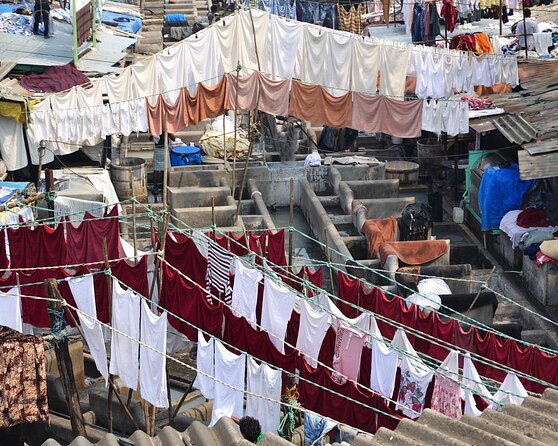
- Local guides with real connections: You might be led by locals such as Razak, Faisan, Touseef, Adil, Avil, or Abir, depending on the departure.
- It’s a working neighborhood: Expect bakeries, pottery, and other small-scale industries close to where people live.
- You visit more than alleyways: You’ll see where people live, work, and relax, plus schools along the way.
- Small groups keep it personal: Even on bigger days, groups may split among multiple guides.
- Comfort matters: Bring water and wear shoes you don’t mind for a walking route.
Dharavi, beyond Slumdog Millionaire: what you’ll actually notice on day one
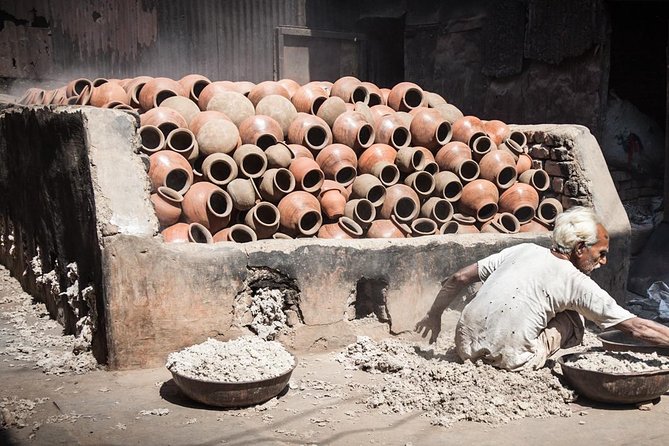
Dharavi gets name-checked a lot because of pop culture. The problem with that is pop culture edits the real world into a few emotional moments. This tour is built to do the opposite. It’s a walking route that helps you notice systems: how neighborhoods function, how industry grows in tight spaces, and how daily life keeps moving.
Instead of treating Dharavi like a single dramatic image, you’ll see it as a dense place with neighborhoods, routines, and crafts. One big takeaway is that people aren’t just surviving. They’re producing. They’re educating kids. They’re running small services. And they’re building a life inside crowded square footage.
If you keep a relaxed, curious mindset, you’ll get more than facts. You’ll start putting Mumbai in perspective. Dharavi becomes less of a distant label and more of a working part of a huge city.
You can also read our reviews of more guided tours in Mumbai



The 2-hour guided walk: how the time works and where it feels different
This is a 2-hour guided experience. That sounds short until you realize how much is packed into a local walking route. You’re not sitting in a vehicle for the whole time. You’re moving through areas where work and home life sit side by side, so the story becomes visual fast.
You’ll also notice the rhythm: walk, stop, look, ask, move again. The guide role matters here. A local guide doesn’t just point. They translate what you’re seeing into something you can understand quickly, including why certain industries cluster where they do.
The tour ends with you in Dharavi near Kumbhar Wada (close to Sion Hospital). That means you get exposure to the neighborhood without being stuck at a single point for the full duration.
Stop 1 in Dharavi: homes, schools, and the industries that feed Mumbai

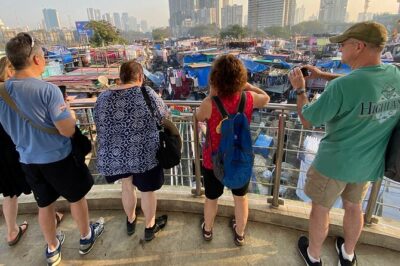
Your main stop is Dharavi itself, with the guide leading you through the area’s everyday zones. The tour is aimed at correcting expectations. If you thought Dharavi would look like a single-note image of poverty, you’ll notice that the place is more layered than that.
Here’s what the walk is designed to show you:
- Where people live: You’ll get a view of residential areas where families share tight indoor space.
- Where people work: You’ll pass through wide industrial areas where production happens close to daily routines.
- Where people learn: You’ll see local schools along the route.
- Where people relax: You’ll also notice the social side of life, not just labor.
And then there are the industries. The tour highlights how Dharavi supports Mumbai through practical, often under-the-radar manufacturing. You may see bakeries connected to feeding the city, plus pottery industries that show how traditional crafts and local skills become real products.
This is where the tour earns its reputation. You don’t just get photos. You get understanding of how people organize work in cramped spaces—and how that work supports more than just one household.
Meeting points and timing: Third Wave Coffee to Kumbhar Wada
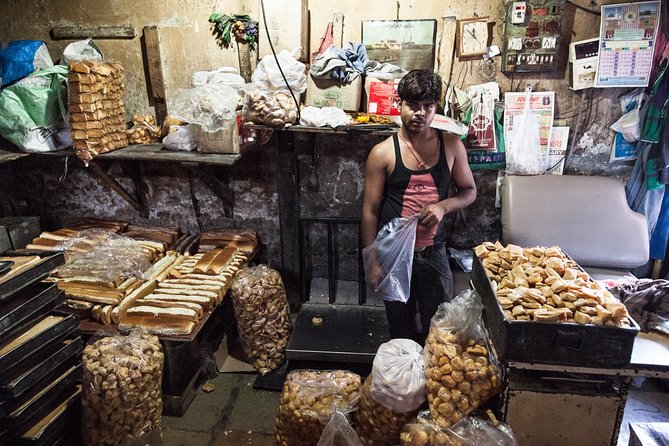
Let’s keep it simple: you start at a specific place, and you finish near a clear landmark.
Start: Third Wave Coffee, Tip Road, Unit no. 58, Ground, Ram Mahal, Senapati Bapat Marg, Marinagar Colony, Station, Mahim, Mumbai, Maharashtra 400016.
End: Kumbhar Wada, Dharavi, near Sion Hospital.
The tour’s listed operating window shows 10:00 AM to 4:00 PM, with coverage throughout the week.
Why this matters for you: Mumbai has a lot of “looks close on a map, takes forever in real life” situations. Having a defined start and end helps you plan the rest of your day. And because the experience includes round-trip transfers from your hotel, you’re not trying to coordinate transport while also juggling a neighborhood visit.
Also note the meeting point is described as near public transportation. That’s useful if you need a backup plan.
Local guides make the difference: Razak, Faisan, Touseef, Adil, Avil, Abir
A guided slum tour can easily become a checklist. This one tries to avoid that by using guides who know Dharavi from the inside.
Several guides are named in the guide stories tied to the experience, including:
- Razak: praised for giving a memorable, impactful route and sharing insight from his lived experience.
- Faisan: described as gracious and willing to answer lots of questions.
- Touseef: noted for taking people through alleyways and areas with strong local hospitality.
- Adil: credited with being courteous and helpful, and with keeping safety from feeling like a concern.
- Avil: highlighted for showing an interesting side of the so-called slum.
- Abir: praised for strong storytelling and knowledge of how the area works.
Even if your guide is different, the pattern you’re paying for is consistent: local context plus a willingness to explain. You’ll benefit most if you come ready with questions. Think less about forcing your own assumptions, and more about asking how certain industries function, or how families manage day-to-day life in limited space.
One more bonus: the experience is described as private for your group/activity. That usually means less awkwardness and more time to actually talk.
You can also read our reviews of more tours and experiences in Mumbai




Price and value: $22.32 for a guided neighborhood walk with transfers
At $22.32 per person, you’re not paying for luxury. You’re paying for access: a guide, a focused route, and round-trip transfers from your hotel.
Here’s how the value adds up in practical terms:
- A 2-hour guided walk is enough time to see multiple parts of the neighborhood without turning it into a half-day grind.
- Transfers remove one of the biggest friction points in Mumbai logistics.
- The guide component is where the learning happens. Without that, Dharavi can feel like you’re just looking at buildings and lanes. With the guide, you start understanding how the place works.
You might be wondering: is it worth it if you’ve already seen Dharavi in photos? In my view, the answer is yes, because this isn’t about watching a single famous scene. It’s about seeing workshops, homes, and schools as part of one system.
What to expect walking through dense lanes (and how to prepare)
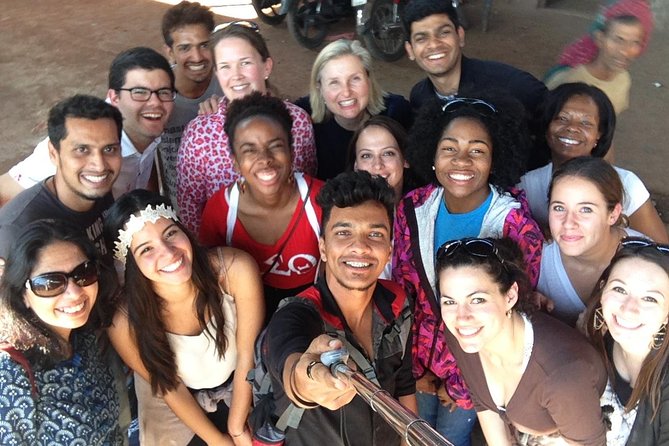
Because you’re walking in a neighborhood, plan like you’re doing a city street walk—not a museum visit. The guide route takes you through areas where people live and work, so you should expect to be a visitor in an active place.
A few preparation tips based on what’s emphasized for this experience:
- Bring water. It’s a walking tour and you’ll want something easy to sip.
- Wear comfortable shoes.
- Go with an open mind. The whole point is to correct assumptions.
- Keep your camera behavior respectful. The tour is about interaction and learning, not photographing from a distance.
Also, the experience notes that it requires good weather. That’s common for walking tours, but it matters here because Mumbai can change quickly. If the weather isn’t good, you’ll be offered a different date or a refund.
Who this tour suits best (and who should reconsider)
This tour is a strong fit if you want:
- Real-world context for Mumbai beyond postcards
- A guide-led way to understand local industry and daily life
- A learning experience that challenges the movie stereotype
It’s also a good choice if you prefer small groups and you like asking questions.
You might reconsider if you’re expecting a gloomy, extreme-poverty portrayal. This tour is explicitly designed to show Dharavi as a place of industry, families, and routines. That doesn’t mean hardship isn’t part of the conversation; it means the emphasis is on reality in a fuller way.
Should you book this Dharavi tour?
Yes, if you want a guided, human-scale way to understand Dharavi as part of Mumbai. The biggest reasons to book are the local guide experience, the focus on how people work and live, and the practical convenience of round-trip hotel transfers plus a short, doable time commitment.
If you’re mostly looking for dramatic scenes, you may leave feeling slightly disappointed. But if you want to see how communities function in tight spaces—and you’re okay with a route that prioritizes understanding over shock—this is one of the more meaningful ways to spend two hours in Mumbai.
FAQ
How long is the 2-Hour Guided Tour of Dharavi?
The tour runs for about 2 hours.
What does the tour cost?
The price is listed at $22.32 per person.
Is the tour guided?
Yes. You’ll visit Dharavi with a professional guide.
Where is the tour start point?
The start point is Third Wave Coffee, Tip Road, Unit no. 58, Ground, Ram Mahal, Senapati Bapat Marg, Marinagar Colony, Station, Mahim, Mumbai, Maharashtra 400016.
Where does the tour end?
The tour ends at Kumbhar Wada, Dharavi, near Sion Hospital.
Does the tour include hotel transfers?
Yes, it includes hassle-free round-trip transfers from your hotel.
Is this tour private?
The experience is described as private for your group/activity, meaning only your group participates.
Do I need good weather?
Yes. The experience requires good weather. If it’s canceled due to poor weather, you’ll be offered a different date or a full refund.
Is admission included?
Admission is listed as free.
What ticket will I receive?
The tour includes a mobile ticket.