REVIEW · MUMBAI
Mumbai By Dawn Morning Markets & The World’s Largest Laundry
Book on Viator →Operated by Explore Mumbai Tours · Bookable on Viator
Morning in Mumbai comes with real work. I love the close-up Sassoon Dock fish trading and the hands-on wonder of Dhobi Ghat, where dhobis wash, dry, and iron clothes that keep the city running. One drawback to plan for: the whole tour is about 3 hours, with roughly 30 minutes at each main stop, so you move on even if you still want a longer look.
This is a morning tour built around how Mumbai actually functions before the day turns loud. You get a private AC vehicle, pickup, bottled water, and an English in-person guide who helps you cut through crowds and focus on what matters. The route also points toward the city’s big behind-the-scenes systems, like newspaper distribution logistics and traditional milk delivery routines.
Price-wise, it’s surprisingly direct value: $20.40 per person for a private-group experience with guide service and transport (plus all fees and taxes). If you want monuments and museum-hours, this is not that. If you want real morning texture, you’ll probably enjoy it.
In This Review
- Key highlights worth waking up for
- Sassoon Dock fish auctions: where the day gets fed
- Dhobi Ghat: the world’s largest laundry in action
- Dadar Flower Market (Phool Gully): colors with a schedule
- Dadar fruit and vegetable market: the daily supply line
- The city’s hidden logistics: newspapers and milk runs
- Private AC vehicle and English guide: comfort that keeps you focused
- How to make the most of 3 hours (without rushing yourself)
- Price and value: why $20.40 can feel like a deal
- Who this dawn tour is for (and who should skip it)
- Where you meet and end in Mumbai
- Should you book this Mumbai by Dawn tour?
- FAQ
- How long is the Mumbai by Dawn Morning Markets tour?
- What stops are included?
- Is pickup offered, and where does the tour start?
- Where does the tour end?
- Is there an admission fee for the markets?
- What’s included in the price besides the tour itself?
- Is this tour private?
- What kind of transportation do you use?
- Can I get a mobile ticket, and how does confirmation work?
- What is the cancellation policy?
Key highlights worth waking up for
- Sassoon Dock at first light: watch the fish auction energy while everything is still getting going.
- Dhobi Ghat, the working laundry scene: see how Mumbai’s clothing gets washed and pressed at scale.
- Dadar Flower Market (Phool Gully): color, fragrance, and fast-moving daily trade.
- Dadar fruit and vegetable market: a practical look at what goes from market to homes.
- English guidance that helps with the crowd: you get context fast, not just sightseeing.
Sassoon Dock fish auctions: where the day gets fed
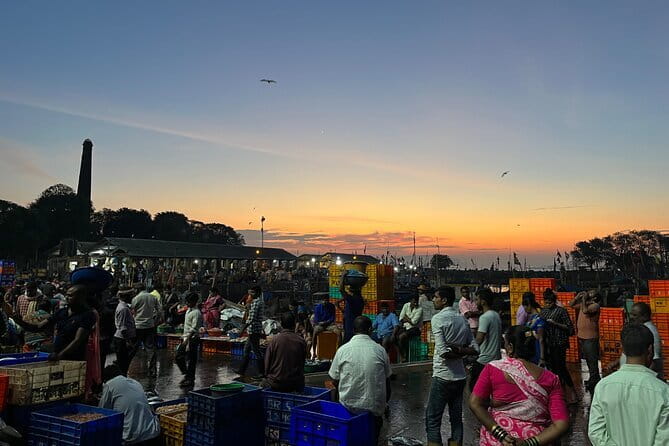
Sassoon Dock is one of Mumbai’s older, high-traffic fish markets, and it shows. Plan for a working place, not a staged market. You’ll see fishermen and sellers dealing with fresh catches, with the kind of pace that makes you notice the city’s logistics right away.
What I like about this first stop is how it sets the tone. Mumbai can look like chaos from a distance, but morning work has structure. Even if you’re not a seafood expert, you’ll be able to watch the flow: people arriving, sorting, trading, and moving.
A practical tip for this segment: keep your camera ready but don’t block foot traffic. In places like this, your best photos come from watching where people naturally pause, then moving with them rather than pushing into the busiest angles.
Time check: this stop is short (about 30 minutes), so focus on one or two themes: hands at work, crates and trays, or the rhythm of sellers coordinating.
You can also read our reviews of more tours and experiences in Mumbai


Dhobi Ghat: the world’s largest laundry in action
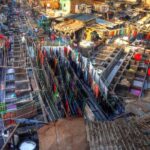
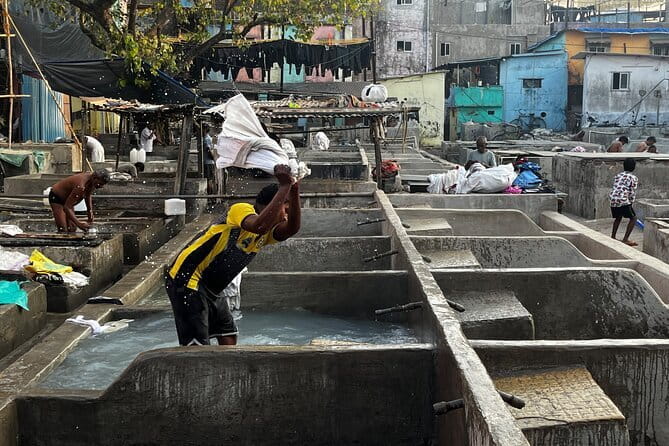
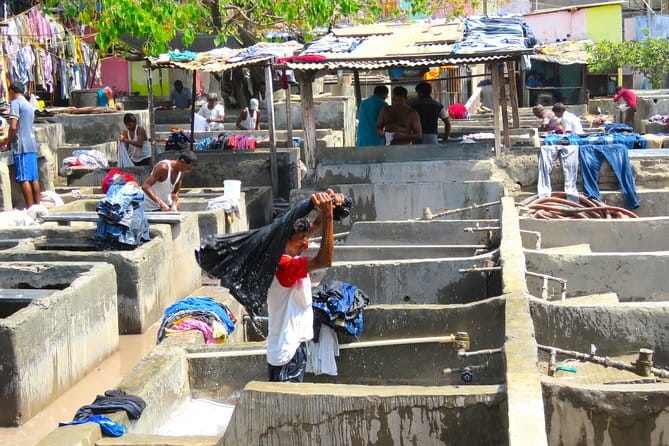
Dhobi Ghat is the signature stop that turns a morning market into something unforgettable. This open-air laundromat is where hundreds of washermen, known as dhobis, wash, dry, and iron clothes for Mumbai’s residents and businesses.
The scale is the point. You’re not just seeing someone doing laundry. You’re watching an entire service system, day after day, built to handle volume and consistency. That’s why this stop feels like a window into how the city runs when most of us sleep.
What to expect on the ground: lots of visual activity, and plenty happening at once. Some parts may be busy with movement, so give yourself permission to slow down for a few minutes and observe patterns instead of trying to capture everything at once.
One more consideration: this is an outdoor working area, so conditions can change quickly as people and loads shift. I’d treat Dhobi Ghat like a practical photo walk: move smart, stay out of the way, and keep your focus on the people-and-process story.
Dadar Flower Market (Phool Gully): colors with a schedule
Then comes Dadar Flower Market, also known as Phool Gully. This is where the morning adds color and fragrance to the mix. It’s a neighborhood market where flowers move fast, and you can almost see the purpose in every bundle—flowers are being sorted for daily use, ceremonies, and sales.
I like that the tour doesn’t treat flowers like decoration. It frames them as part of daily supply. If you’ve ever wondered where all those offerings and bouquets actually come from, this stop gives you a real answer: they come from organized, early-morning work by people who know exactly how much gets needed.
Photography can be great here because the color variety gives you natural subject contrast. Focus on hands arranging bunches, layers of petals, and close-up details of stems and wrapping. If you want wider context, step back slightly for market lanes and the flow of movement.
Time check: again, you’re not lingering for long. About 30 minutes means you’ll want to decide what you’re chasing—color detail or market context—so you don’t spend the whole stop just moving around.
Dadar fruit and vegetable market: the daily supply line
After flowers, you’ll explore the Dadar Fruit and Vegetable Market near Dadar Station over bridge. This part of the morning tour shifts from sensory beauty to everyday essentials—what people buy to cook, eat, and stock up.
This stop is valuable because it’s practical. You see produce trading in a way that feels close to real life, not a demo. You also get a sense of how Mumbai’s markets feed neighborhoods consistently, day after day.
If you’re someone who likes learning through observation, this is where you’ll pick up the most “how things move” feeling. Look at the rhythm: how sellers handle items, how buyers sort through options, and how the market keeps itself organized even when it’s busy.
One note: produce markets can be noisy and crowded. If you’re the type who gets overwhelmed, use the guide to help you find calmer angles for photos and explanations.
The city’s hidden logistics: newspapers and milk runs
One of the more interesting ideas built into this morning route is that it doesn’t stop at markets. The tour is designed to show the big behind-the-scenes systems that feed millions, including newspaper distribution network logistics and traditional milk delivery routines.
Even without a full technical lecture, these moments help you connect dots. Markets don’t exist in a vacuum. Morning Mumbai depends on deliveries and routes that start early and repeat reliably.
For you as a visitor, this is the difference between a photo stop and a real city-understanding experience. You come away noticing the plumbing of the city: delivery, sorting, selling, and then the next handoff.
This is also where a good guide matters. An English-speaking guide can point out what you’re seeing and why it’s timed the way it is, so you don’t just walk past interesting things.



Private AC vehicle and English guide: comfort that keeps you focused
The comfort piece is not a luxury add-on here; it actually helps you enjoy the experience. Morning in Mumbai can be intense, and the private AC vehicle gives you a reset between busy stops. You also get bottled water, plus all fees and taxes are included, so you’re not doing constant add-on math.
The guide role is especially helpful in crowded areas. A skilled local guide can help you move efficiently, spot what’s worth photographing, and translate what you’re seeing into something you’ll remember.
From past trips, guides like Yash and Abhi have been praised for being professional, adjusting the pace to match interests, and sharing in-depth context around the specific places on the route. That kind of flexibility matters, because a market is not like a museum line. If you want a few extra minutes at Dhobi Ghat, a good guide will often work with that.
Add the driver factor too. Deepak has been described as an excellent driver who drives cautiously and helps with photo timing from the car—like positioning for good angles without making you scramble at the last second.
How to make the most of 3 hours (without rushing yourself)

This tour is about 3 hours, which is long enough to feel like you saw real work, but short enough that you won’t burn your whole day. Each main stop is about 30 minutes, so you need a simple strategy.
Here’s what works for me: pick one “wow” stop and one “learn” stop. For many people, Sassoon Dock or Dhobi Ghat becomes the wow, while flower and produce markets become the learn. Then, at each place, give yourself a small target: one photo theme, one question to ask your guide, and one slow minute just watching.
The biggest time thief in a market tour is wandering without a plan. You’ll get more value if you aim your attention. Don’t try to cover everything visually. Cover a story.
Also, remember this is a private tour/activity, meaning only your group participates. That usually makes it easier to move at your preferred pace and ask questions without feeling like you’re holding up strangers.
Price and value: why $20.40 can feel like a deal
At $20.40 per person, this tour stacks up well because it includes more than a guide. You’re paying for:
- Pickup and a defined route with a separate end point
- An English in-person guide
- A private AC vehicle
- Bottled water
- All fees and taxes
- A mobile ticket
You also avoid paid admissions at the main stops, since admission tickets for the planned segments are free. That matters because market days can include little extra costs that add up on other tours.
The value logic is simple: you get local context at four core sites plus city-flow insight, without having to coordinate transport on your own. If you’re visiting for a limited time and want the “how Mumbai works” view, this is one of the most practical ways to spend a half-day.
Who this dawn tour is for (and who should skip it)
This tour is a strong match if you want:
- Morning market energy without losing time to navigation
- Real work places like Dhobi Ghat and Sassoon Dock
- A photography-focused route with a guide who understands the areas
- A private-group experience with comfort between stops
It’s not a great fit if you only want major monuments, long leisurely museum-style wandering, or a slower itinerary with lots of free time. The pace is structured because it’s built around early morning operations.
Most importantly: it’s for people who can enjoy “busy” as a feature, not a bug. The payoff is the feeling of seeing Mumbai before the day fully settles in.
Where you meet and end in Mumbai
The tour starts at PizzaExpress Dhanraj Mahal, Chhatrapati Shivaji Maharaj Marg, Apollo Bandar, Colaba, Mumbai 400001. It ends at Prabhadevi, Balaseth Madhukar Marg, Krishna Nagar, Parel, Mumbai 400012.
You’ll also find the meeting area is near public transportation, which is useful if you want backup options for getting there.
Should you book this Mumbai by Dawn tour?
Book it if you want a morning that feels like the city’s backstage, not just its highlight reels. The mix of Sassoon Dock, Dhobi Ghat, and the Dadar flower and produce markets gives you both visual drama and practical understanding of how Mumbai supplies itself.
Skip it if you’re chasing monuments or you need lots of unstructured time at each stop. Also, if you get stressed by crowds and active working spaces, you may find the pace and close contact challenging.
If you do book, I’d go in with two goals: ask your guide one question at each stop, and pick a photo theme you can stick to. That turns 3 hours into a story you can actually explain later.
FAQ
How long is the Mumbai by Dawn Morning Markets tour?
It’s approximately 3 hours.
What stops are included?
The tour includes Sassoon Dock, Dhobi Ghat, the Dadar Flower Market (Phool Gully), and the Dadar Fruit and Vegetable Market.
Is pickup offered, and where does the tour start?
Pickup is offered. The tour starts at PizzaExpress Dhanraj Mahal on Chhatrapati Shivaji Maharaj Marg in Colaba.
Where does the tour end?
The tour ends at Prabhadevi, on Balaseth Madhukar Marg in Krishna Nagar, Parel, Mumbai.
Is there an admission fee for the markets?
Admission tickets for the listed stops are free.
What’s included in the price besides the tour itself?
It includes bottled water, all fees and taxes, and an in-person English guide.
Is this tour private?
Yes. It’s a private tour/activity, so only your group participates.
What kind of transportation do you use?
The experience includes a private AC vehicle.
Can I get a mobile ticket, and how does confirmation work?
You’ll receive confirmation at the time of booking, and the tour uses a mobile ticket.
What is the cancellation policy?
Free cancellation is available up to 24 hours in advance for a full refund.