REVIEW · MUMBAI
Mumbai: Local Markets & Temples Tour
Book on GetYourGuide →Operated by Reality Tours and Travel Private Limited · Bookable on GetYourGuide
Markets and temples in Mumbai, all in one walk. In about 2.5–3 hours, you get wholesale markets (fruit, veg, meat, textiles) plus the historic Mumbadevi Temple, and a quick stop at Bombay Panjrapole for 350-plus cows. I also love how the tour links everyday commerce with everyday devotion, not just sightseeing. One thing to consider: if you’re only after the most famous, “grand” temple set pieces, this route leans more local and practical than monumental.
I like that the guide experience can really shape how you read the chaos. Guides like Rakesh and Javid stand out for clear, calm explanations and genuine care, which makes the markets easier to follow and the temple visits more meaningful. If you get overwhelmed easily in crowded streets, just know the tour is designed around active neighborhoods.
The pace is steady but not exhausting: a short cab hop, then mostly walking. You’ll want comfy shoes because rain or shine is part of the plan, and you’ll be moving through busy indoor and outdoor market spaces.
In This Review
- Key Points You’ll Feel on the Ground
- Mumbai’s Market Maze: Commerce Meets Devotion
- Price and Value for $27: Short Time, Real Stops
- Meeting Point, Pace, and the 2.5–3 Hour Flow
- Crawford Market: Where Fruit, Veg, and Meat Become Big Business
- Mangaldas Market: The Indoor Textile World Locals Shop
- Zaveri Bazaar and the Gold-District Vibe
- Side Lanes and Flower Alley: Finding Texture Between Big Stops
- A Local Restaurant Stop You Can Use as Your Plan B
- Mumbadevi Temple: The Namesake Meaning Behind the Visit
- Bombay Panjrapole: Why a Cow Sanctuary Changes How You See the City
- Guides Matter: When Clarity Turns Chaos into Culture
- Who This Tour Suits Best (and Who Might Prefer Something Else)
- Should You Book This Mumbai Local Markets & Temples Tour?
- FAQ
- How long is the Mumbai Local Markets & Temples Tour?
- How much does the tour cost?
- Is the tour rain or shine?
- What is included in the price?
- Is hotel pick-up and drop-off included?
- Is food included?
- What language is the live guide?
- Where do I meet for the tour?
- Is there a private group option?
- Can I cancel for a full refund?
Key Points You’ll Feel on the Ground
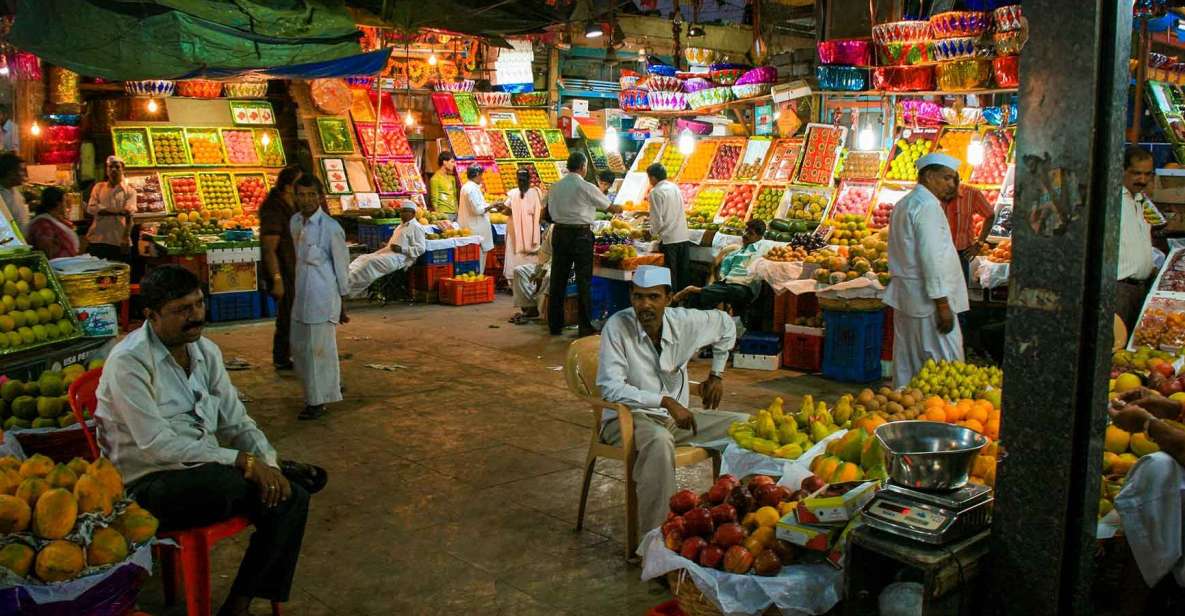
- Wholesale fruit, veg, and meat scale you can’t grasp from photos alone
- Mumbai’s largest indoor wholesale textile market where locals buy clothing
- Mumbadevi Temple and the story behind the namesake of Mumba
- Bombay Panjrapole cow sanctuary focused on welfare for 350+ cows
- Short, efficient route that fits into a 2.5–3 hour time window
Mumbai’s Market Maze: Commerce Meets Devotion
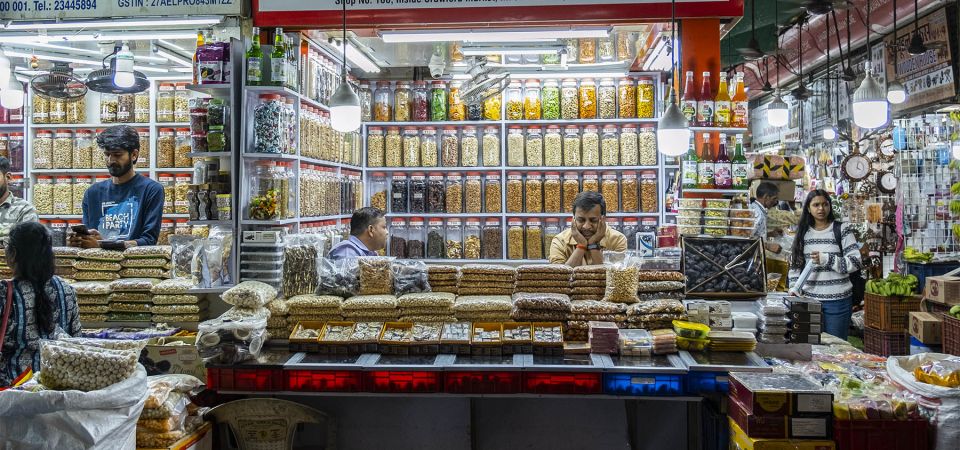
Mumbai’s street life has a rhythm. You’ll see it up close here, where vendors call out over carts of flowers, colorful birds, and traditional clothes and food. It’s not quiet, polished tourism. It’s the city doing business.
What I like is that the tour doesn’t treat markets and temples like separate worlds. Instead, you watch how people move through both. In a single route, you’re seeing what keeps the city running (wholesale trade) and what anchors it (daily faith).
This is also a tour where you’ll get context fast. A good guide helps you understand why certain stalls and routines matter, and how the temple space fits into local life. That’s where the experience becomes more than “walk and look.”
You can also read our reviews of more tours and experiences in Mumbai.


Price and Value for $27: Short Time, Real Stops
$27 per person for a 2.5–3 hour guided walk feels like good value when you compare it to how much you’d have to piece together on your own. You’re paying for an English-speaking local guide, guided time inside major markets, and transport by black cab for a short connector segment.
You also get water or cold drinks included, which matters in market areas where you’ll be stopping, watching, and listening for a while. Food is not included, but there’s a restaurant stop on the route as a pass-by—use it as a reference point for where you can eat next, not as a guarantee of a meal.
If your goal is to cover several iconic-yet-different areas in one morning or afternoon, this price works because the time is tight and the stops are specific.
Meeting Point, Pace, and the 2.5–3 Hour Flow
This tour is built to move without rushing. You start near Regal Cinema, then you take a short black cab ride (about 15 minutes) before stepping into the market circuit. From there, it’s guided walking segments with brief passes by other places.
Crawford Market gets a solid chunk of time, then you flow into other wholesale areas and temple space. Expect lots of looking and listening, with enough breaks to catch your breath between crowded indoor halls and narrower lanes.
Because it’s rain or shine, pack for weather. Even a light rain can make streets slick and market surfaces busy. Comfortable shoes help more than you’d think, especially with indoor halls where floors can be crowded and moving can feel tight.
Crawford Market: Where Fruit, Veg, and Meat Become Big Business
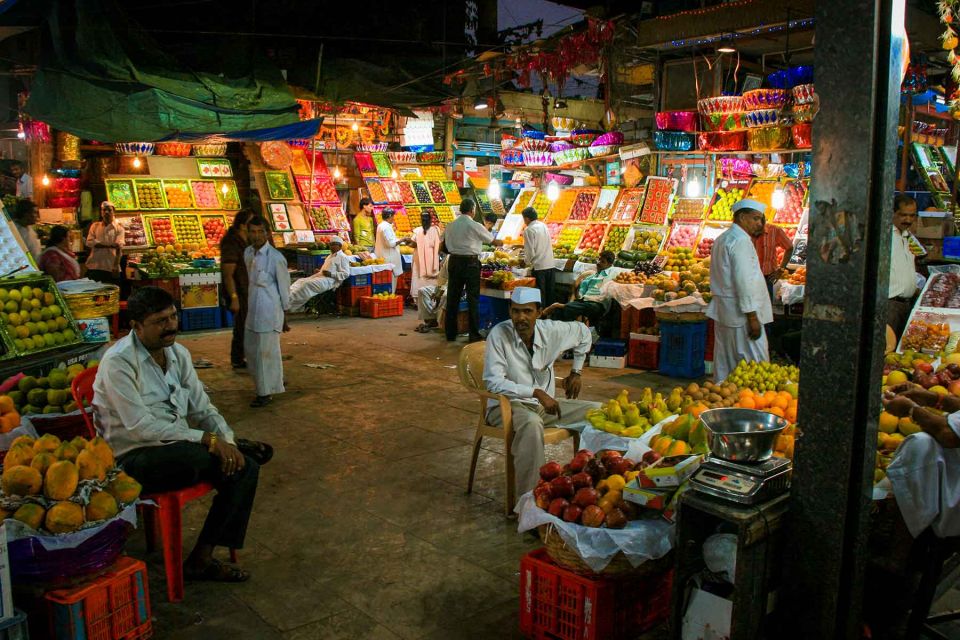
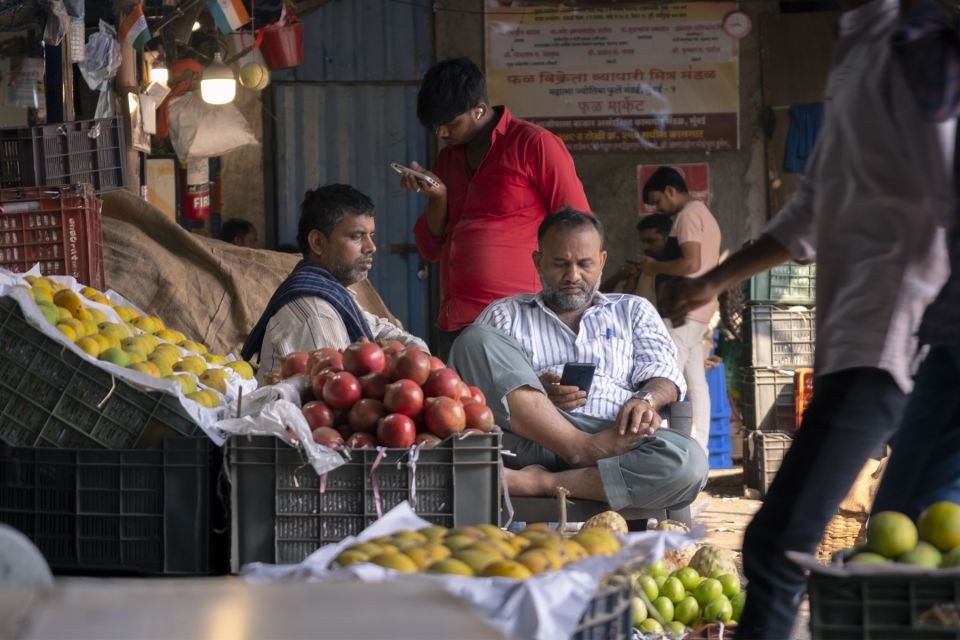
Crawford Market is where you see Mumbai’s wholesale energy at full volume. It’s described as one of the city’s largest wholesale fruit, vegetable, and meat markets, and that scale changes the feel of everything.
Inside, the action isn’t “shopping” the way tourists usually picture it. You’re watching a working supply chain. You’ll notice how quickly people move, how stalls are organized for bulk buyers, and how the market staff and vendors communicate with customers.
The guided time here matters. If you wander in alone, you might just see colors and motion. With a guide, you start to notice patterns: what kinds of goods dominate, how sellers present items, and how the market supports people who buy for homes and businesses.
A drawback? This area can be dense and noisy. If you’re sensitive to crowds, keep your pace slow and let the guide lead your route so you don’t get pulled into dead-end streams of foot traffic.
Mangaldas Market: The Indoor Textile World Locals Shop
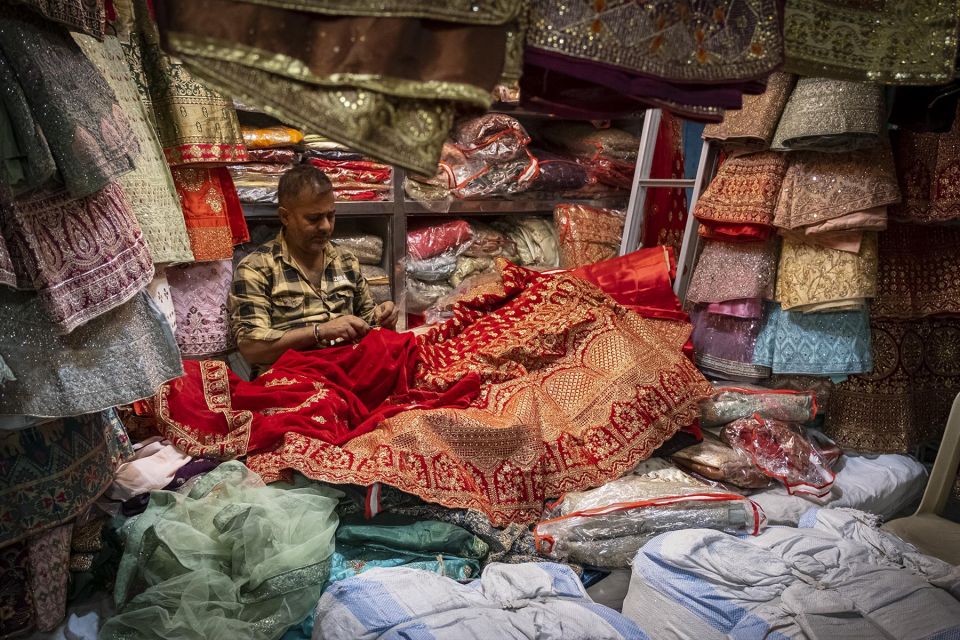
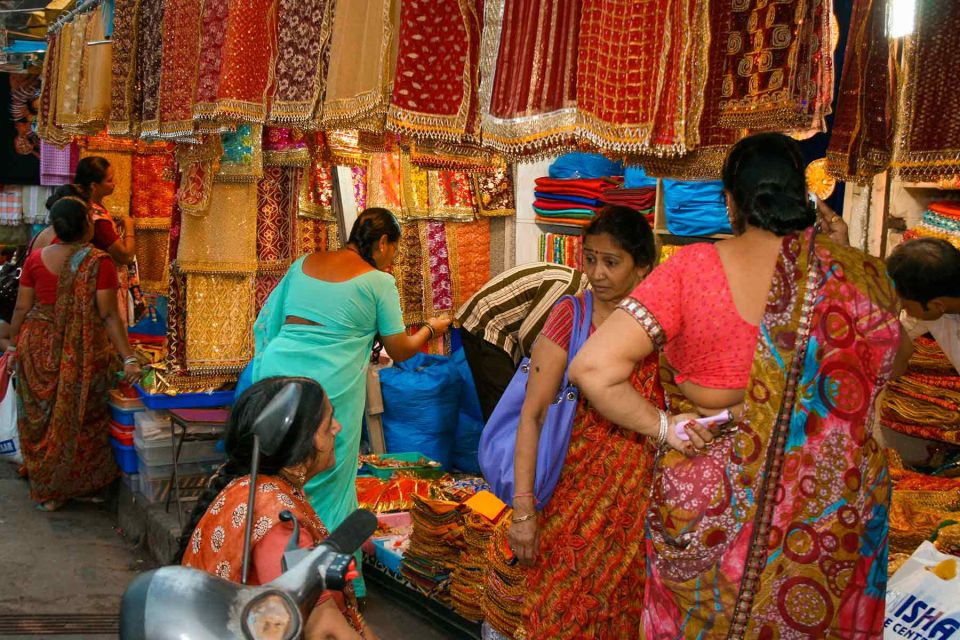
After Crawford’s wholesale food scene, you shift into fabric and clothing culture at Mangaldas Market. This stop is specifically noted as the largest indoor wholesale textile market in Mumbai, where locals buy clothing.
Textiles change how you experience a market. Instead of focusing on food, you focus on materials, color, and the sheer variety of garments and fabric. Indoor markets also tend to compress sound and activity, so you’ll feel the density more than you might outdoors.
Here, I recommend you slow down your attention. Look at how items are displayed and how buyers interact with vendors. A guided visit helps you read what you’re seeing—especially if you don’t speak the local language. The guide can translate the “logic” behind stall layouts and what locals are likely to seek.
If you love craftsmanship—fabric weight, color choices, how clothing gets made and bought—this stop is one of the most rewarding parts of the tour.




Zaveri Bazaar and the Gold-District Vibe
You’ll spend time with Zaveri Bazaar during the tour, mainly as a guided sightseeing segment. Even if you don’t plan to buy anything, this area helps you understand the wider economy that runs through Mumbai’s neighborhoods.
Bazaar zones usually have a different feel than wholesale markets focused on food or textiles. You’re likely to notice tighter lanes, storefront rhythms, and a crowd that feels more “buyer-ready” in the moment. The guide’s job here is to point out what you’re looking at and why the place functions the way it does.
The downside is simple: if you’re hoping for long, sit-down commentary at every stop, this part is more about visual context than extended time. But that’s also why the route works inside a short time frame.
Side Lanes and Flower Alley: Finding Texture Between Big Stops
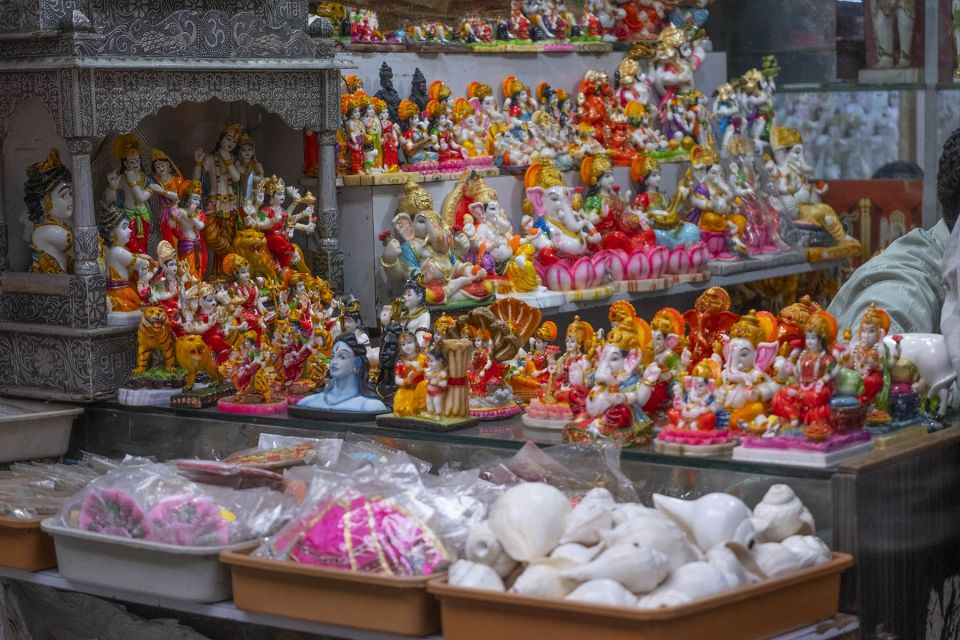
One of my favorite types of city tours is the one that doesn’t only hit the headline names. This route includes a quieter layer—old lanes and lesser-known spots like Flower Alley—so you get the texture of everyday Mumbai, not just the major market floors.
Flower Alley gives you a different sensory track than textiles and food. Flowers and greenery bring color, scent, and a sense of routine: spaces that support decoration, worship, and daily life all at once.
These lane segments also help you reset your brain. Market halls can feel overwhelming. Narrower paths slow your movement just enough that you can notice details—how people arrange their carts, how shopfronts connect to temples, and how neighborhoods flow together.
Bring patience. Some streets look chaotic until a guide shows you the thread.
A Local Restaurant Stop You Can Use as Your Plan B
You’ll pass by a local restaurant partway through the tour. Food isn’t included, so treat this as a helpful timing landmark and a clue for where to eat after you’ve finished walking.
If you’re someone who plans meals around location, this “pass by” stop can still help. It gives you a reference point in the neighborhood network. Then you can choose something that fits your appetite and budget, without feeling forced by a set meal that doesn’t work for you.
Tip: if you’re doing this in the midday heat, timing matters. Consider eating either before you start or right after you finish, so you’re not searching for food while tired and sweaty.
Mumbadevi Temple: The Namesake Meaning Behind the Visit
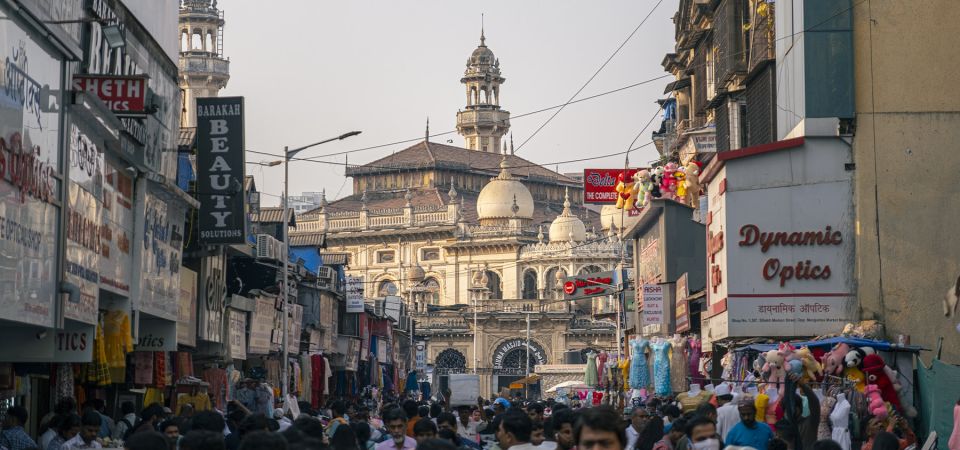
Mumbadevi Temple is a standout cultural stop on this route. It’s described as the historic Hindu temple that is the namesake of Mumba, which means you’re not just visiting a building—you’re visiting a story tied to the city’s identity.
What you’ll feel here is the shift in pace. Market noise doesn’t disappear, but the temple space changes your attention. You’ll see a more devotional mood, and your guide will help connect what you’re observing to local meaning.
I like that the tour doesn’t present temples as “photo backdrops.” When a guide explains the namesake and historical context, the place lands differently. You start to understand why people return, why certain rituals matter, and how the temple anchors the surrounding streets.
One possible drawback shows up in real-world expectations: if you want a tour packed with only the most famous temple icons, you may wish you had more time at temples that feel more “major.” This one balances temples with markets on purpose, so choose it if you want variety over temple-only time.
Bombay Panjrapole: Why a Cow Sanctuary Changes How You See the City
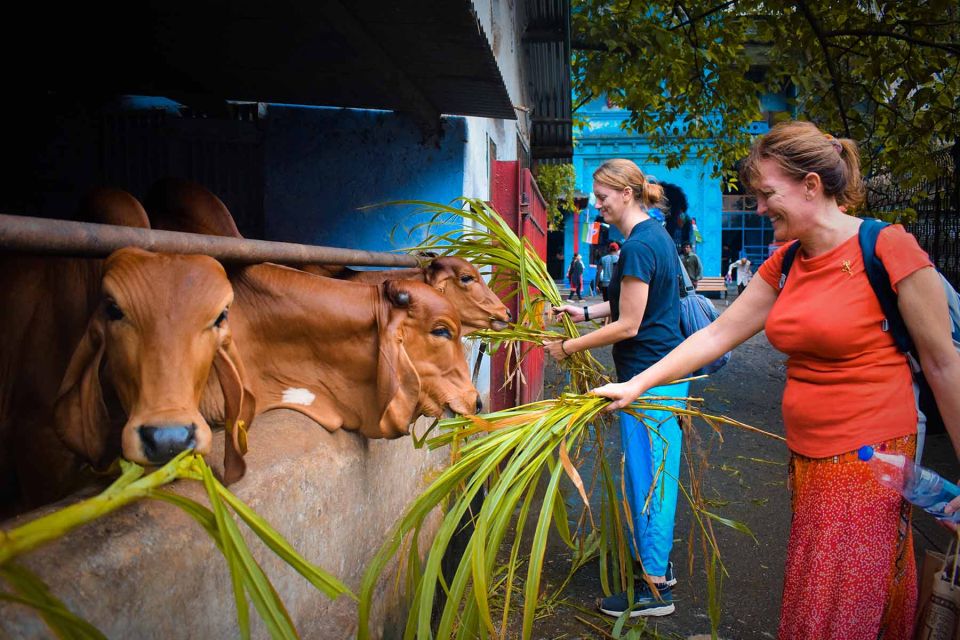
Then you go to Shri Mumbai Panjrapole, a sanctuary focused on the welfare of more than 350 cows. This is where the tour becomes more emotionally grounded.
Seeing a cow shelter in a city you’ve just experienced as loud and fast shifts your viewpoint. It reminds you that Mumbai’s care systems exist alongside its commerce systems. A good guide helps you understand the purpose of the sanctuary and why cows have such a strong presence in everyday life here.
This stop is short in time, but the takeaway can be long. It’s not about watching animals for entertainment. It’s about welfare and responsibility, in a place that operates for the long run.
If you’re an animal lover, this is often the emotional highlight. If you’re not, it still works because it reframes the themes of the tour: everyday life, everyday values.
Guides Matter: When Clarity Turns Chaos into Culture
A big reason this tour earns strong ratings is the guide quality. In the experiences shared, guides such as Rakesh and Javid are praised for being gentle, personable, and passionate, with explanations that help you understand what you’re seeing.
That matters more than most people expect. Markets can be confusing if you don’t know what counts as a “wholesale” operation versus casual retail. Temple visits can feel like a checklist if you don’t get the meaning behind what’s in front of you.
Look for that guide-led clarity and you’ll get more out of every stop. The tour succeeds when you feel led through the city instead of dropped into it.
Who This Tour Suits Best (and Who Might Prefer Something Else)
This is a great fit if you:
- Want a fast, guided introduction to Mumbai’s working markets
- Like cultural stops that connect to daily life, not just big sights
- Enjoy animal-welfare stories and want a short but meaningful look at Panjrapole
It may be less ideal if you:
- Want a temple-focused day with more major landmark shrines
- Hate crowds or find constant movement draining
- Expect a full food experience (meals are not included)
You’ll get the most from it if you’re curious and okay with city energy. Think of it like learning Mumbai’s “how it runs” side, not just the “what it looks like” side.
Should You Book This Mumbai Local Markets & Temples Tour?
I’d book it if your time in Mumbai is limited and you want variety that still feels grounded. For $27, you’re covering wholesale markets (food and textiles), a historic temple tied to the city’s name, and a cow sanctuary with welfare for 350-plus cows. That mix is unusual, and it works because the route is guided and purposeful.
Skip it if you want a slow, high-comfort experience with minimal crowds, or if your priority is only the most famous temple landmarks. This tour is designed for movement, local texture, and “see how Mumbai works” learning.
FAQ
How long is the Mumbai Local Markets & Temples Tour?
The tour runs for about 2.5 to 3 hours.
How much does the tour cost?
It costs $27 per person.
Is the tour rain or shine?
Yes. It takes place rain or shine.
What is included in the price?
A local English-speaking guide and water or cold drinks are included.
Is hotel pick-up and drop-off included?
No, hotel pick-up and drop-off are not included.
Is food included?
No food is not included, though there is a local restaurant stop on the route.
What language is the live guide?
The live tour guide speaks English.
Where do I meet for the tour?
The meeting point may vary depending on the option booked, and there are starting location options near Regal Cinema.
Is there a private group option?
Yes, private group availability is offered.
Can I cancel for a full refund?
You can cancel up to 24 hours in advance for a full refund.