REVIEW · MUMBAI
Mumbai : Private 2 Days Agra Taj mahal & Delhi Tours From Mumbai
Book on Viator →Operated by 707 TOURS · Bookable on Viator
Taj Mahal fever, minus the hassle. This private 2-day combo links your Mumbai-to-Delhi flight with a full day of Delhi monuments, then an Agra overnight that sets you up for the big sights without racing around all day. It’s built for a steadier pace than the usual checklist sprint.
I especially like the way this package keeps things practical: door-to-door air-conditioned transport and an English-speaking guide who can turn famous names into real context. I also appreciate the included hotel comforts, including dinner and breakfast built into the plan.
One thing to watch: monument fees are not included, so your final “all-in” cost will rise a bit once you add entry tickets. And since the tour is tight, double-check whether your final schedule includes every place advertised, like Fatehpur Sikri.
In This Review
- Key highlights worth your attention
- Why this Delhi-and-Agra in 2 days tour makes sense from Mumbai
- Price and value: what $681 covers (and what it doesn’t)
- Day 1 in New Delhi: Qutb Minar, Jama Masjid, India Gate, and the Lotus Temple
- Qutb Minar: Delhi’s early power made stone
- Jama Masjid: Mughal grandeur with real working-city energy
- India Gate: quick photos and the ceremonial axis
- Rashtrapati Bhavan from the outside: a government icon with a deeper past
- Lotus Temple: calm design in a busy capital
- Day 1 transfer to Agra: why the overnight matters
- Day 2 in Agra: Taj Mahal, Agra Fort, and Itmad-ud-Daula
- Taj Mahal: allow time for the details, not just the view
- Agra Fort: Mughal residence and the shift of power
- Itmad-ud-Daula: the so-called Bachcha Taj
- Ending at Indira Gandhi International Airport
- A private guide changes the whole feel of these monuments
- Meals and hotel comfort: where you’ll actually feel the package
- The big planning check: tickets, and whether Fatehpur Sikri is included
- Should you book this private 2-day tour from Mumbai?
- FAQ
- How long is the tour?
- What’s the price per person?
- Are hotel meals included?
- Is pickup included?
- Does this include flights from Mumbai?
- Is admission for monuments included?
- Is this tour private?
- What’s the main Agra sightseeing included?
- What’s the cancellation policy?
Key highlights worth your attention
- Flights + sightseeing bundled: Mumbai–Delhi–Mumbai is included, so you skip the hardest logistics.
- A real guide for context: You’re not just collecting photos; you get story and meaning as you go.
- Comfortable pacing: An air-conditioned private vehicle helps on long stretches and between stops.
- Time at the big three in Agra: Taj Mahal gets about 3 hours, with Agra Fort and Itmad-ud-Daula added.
- Hotel value: A booked four-star stay in Agra plus dinner and breakfast are part of the package.
- Tickets are extra: Admission for key sites (including the Taj) is listed as not included.
Why this Delhi-and-Agra in 2 days tour makes sense from Mumbai
If you’re coming from Mumbai and you want the Taj Mahal without turning your trip into a transportation puzzle, this format works. You start with the included flight to New Delhi, then move through Delhi’s major landmarks with a guide. Next, you transfer to Agra for a proper overnight, not a drive-through and goodbye situation.
The big win is how the time is structured. You get multiple Delhi sights on Day 1, then Day 2 is concentrated in Agra where you actually want the hours to linger. This is the kind of schedule where you can stop for photos, listen to explanations, and still feel like you did something meaningful.
You can also read our reviews of more private tours in Mumbai


Price and value: what $681 covers (and what it doesn’t)
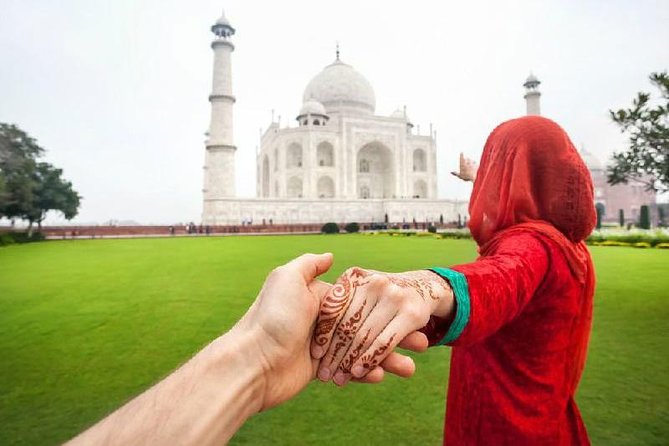
At $681 per person, the headline is pretty clear: the package wraps in flights, private transport, a hotel night, and an English-speaking guide. That matters because Taj Mahal trips often become expensive when you price everything separately—especially if you’re trying to avoid shared buses and awkward timing.
Here’s where the value usually comes from:
- Included flights (Mumbai–Delhi–Mumbai) reduce your risk of missed connections.
- Private air-conditioned transport in Delhi and between Delhi and Agra saves time and energy.
- A booked four-star hotel in Agra plus meals gives you less to juggle on the ground.
- A guide turns your time into something more than camera time.
What’s not included is the part that can surprise people: monument fees/admission tickets. The Taj Mahal, Agra Fort, and the other sites list admission as not included, so you should budget for entry costs on top of the tour price. If you like knowing your total upfront, add a ticket buffer before you commit.
Also note the planning rhythm: this tour is typically booked well in advance (around 159 days on average). That’s a hint that the combo of flights + hotel + private guiding is popular, so don’t wait until the last minute.
Day 1 in New Delhi: Qutb Minar, Jama Masjid, India Gate, and the Lotus Temple
Day 1 is essentially your Delhi orientation day. You’ll begin with pickup and the flight to New Delhi, then you’ll start sightseeing right away. The tour keeps each stop short enough to see a lot, but long enough that you can still feel the place rather than just pass by it.
Qutb Minar: Delhi’s early power made stone
You’ll spend about 1 hour at Qutb Minar, part of the Qutb complex. It’s described as a minaret and victory tower, tied to Delhi’s older fortified city of Lal Kot founded by the Tomar Rajputs. That background is a nice reminder that Delhi isn’t just one era—it’s stacked eras.
Practical note: admission isn’t included here, so you’ll want to have that sorted. Also, expect a lot of stairs and crowds depending on the time of day, so wear shoes you trust.
Jama Masjid: Mughal grandeur with real working-city energy
Next is Jama Masjid for about 30 minutes. It was built by Mughal emperor Shah Jahan between 1644 and 1656, and it was inaugurated by Syed Abdul Ghafoor Shah Bukhari. Standing in front of a mosque like this, you start to see why Mughal architecture was meant to feel both ceremonial and commanding.
The drawback of a short stop is that it can feel fast if you love details. If that’s your style, you’ll want to lean on your guide—ask a quick question early and you’ll get more meaning out of the time you have.
You can also read our reviews of more tours and experiences in Mumbai





India Gate: quick photos and the ceremonial axis
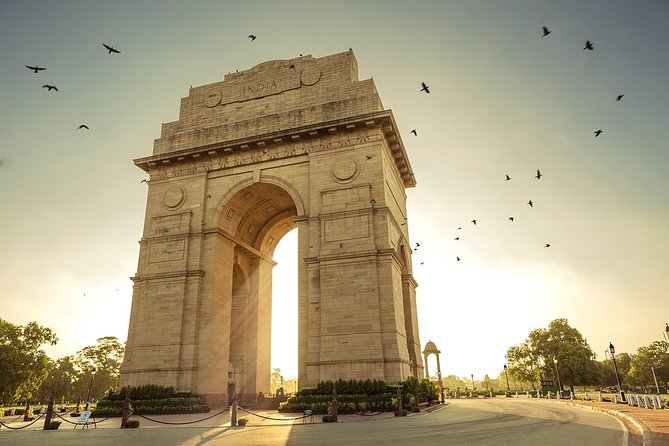
You’ll get a brief 10-minute stop at India Gate, a war memorial near Kartavya Path on the eastern edge of the ceremonial axis (formerly Rajpath). It’s a useful landmark because it helps you understand how the city is planned around government space and major boulevards.
This isn’t a “walk for hours” stop. Think of it as a reset point—get your bearings, grab photos, and keep moving.
Rashtrapati Bhavan from the outside: a government icon with a deeper past
The itinerary also includes the Rashtrapati Bhavan area. It’s noted as the President’s official residence at the western end of Rajpath, previously the Viceroy’s House. Even if you’re only viewing from a distance, this stop ties Delhi’s old imperial framework to modern governance.
Lotus Temple: calm design in a busy capital
Finally, you’ll visit the Lotus Temple, a Baháʼí House of Worship dedicated in December 1986. If you’ve had your fill of stone and history for the day, this is a nice visual change. The tour keeps it on the schedule as a breather before you head toward Agra.
Day 1 transfer to Agra: why the overnight matters
After sightseeing, the plan is straightforward: you drive to Agra and stay overnight. Even though you might want more time in Delhi, this overnight is what makes the whole trip feel doable.
The value of an overnight in Agra is that you avoid the classic problem of Taj Mahal tours that start late and rush everything. With a night in place, you can enjoy the next day’s sights at a calmer rhythm rather than constantly wondering when your next transport window will close.
Day 2 in Agra: Taj Mahal, Agra Fort, and Itmad-ud-Daula
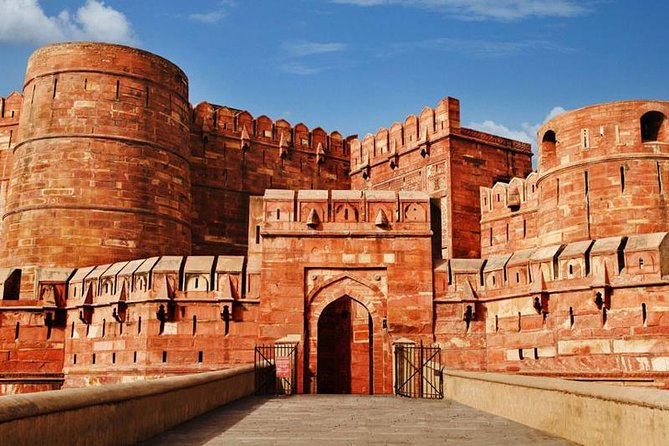
Day 2 is where the tour earns its name. You’ll start with the Taj Mahal (about 3 hours) and then move through two other Mughal-era power statements: Agra Fort and Itmad-ud-Daula.
Taj Mahal: allow time for the details, not just the view
The Taj Mahal is described as an ivory-white marble mausoleum on the south bank of the Yamuna River, commissioned in 1632 by Shah Jahan to house the tomb of his favorite. This is the kind of place where 20 minutes feels like a drive-by, and 2–3 hours starts to feel right.
Here’s what helps you make those hours count:
- Let the guide set the historical context first, so the carvings and symmetry feel purposeful.
- Use the time to look beyond the main sightline. Around the complex, small design choices matter a lot.
- Plan for crowds. You’ll be happier if you accept that people are going to be there, and you focus on your own pacing.
Admission for the Taj is listed as not included, so remember to budget for that ticket too.
Agra Fort: Mughal residence and the shift of power
Next up is Agra Fort for about 1 hour. The fort is described as the main residence of Mughal emperors until 1638, when the capital shifted from Agra to Delhi. That one date gives you a strong lens: you’re standing inside a place that later lost its political center, yet still carries authority in its stone.
One limitation of a 1-hour slot is that you won’t cover every corner. Your best strategy is to let your guide steer you toward the highlights that connect directly to the story of Mughal rule.
Itmad-ud-Daula: the so-called Bachcha Taj
Then you’ll visit Itmad-ud-Daula (about 50 minutes). It’s described as a Mughal mausoleum in Agra, often called the Bachcha Taj and even described as a “jewel box.” This site is a great counterpoint to the Taj Mahal. Same general Mughal craft obsession, but in a different scale and mood.
If you tend to get emotional about architecture, this is the stop where you might feel it most. The time is shorter than the Taj, but it can be more relaxing because it isn’t constantly demanding your attention in the same way.
Ending at Indira Gandhi International Airport
Your tour concludes with a drive back to Delhi’s Indira Gandhi International Airport for your flight, with about 4 hours listed for the transfer and drop-off. That buffer is useful. It reduces the stress of getting through the airport quickly and helps you finish your tour without feeling like you’re sprinting.
A private guide changes the whole feel of these monuments
The itinerary is full of iconic names, but what you really pay for is the guide’s ability to connect them. With an English-speaking guide, you can ask quick questions and get answers that make the next stop clearer.
It also helps that the tour is private, meaning you’re not stuck with someone else’s pace. If you want photo time, you get it. If you want explanations, you get those too. You’re traveling with your group only.
One more service detail: the tour company lists a contact named Sartaj (707 Tours) in guest communication. That kind of direct, named support is a small comfort when you’re trying to line up flights, hotels, and sightseeing.
Meals and hotel comfort: where you’ll actually feel the package
This tour includes dinner and hotel breakfasts, and it lists a booked four-star hotel in Agra for one night. In practical terms, that means your main energy drain is handled. You can focus on sights rather than hunting for a good meal and then worrying if it’s near your next transport.
The best part for many people is the breakfast setup. One guest specifically praised the breakfast as a buffet-style spread and described the overall stay as first-class. Even if you don’t care about hotels, you should care about breakfast quality on a sightseeing day—it’s your fuel.
The big planning check: tickets, and whether Fatehpur Sikri is included
Most of the key places list admission as not included, including the Taj Mahal and Agra Fort. So you’ll need to handle monument fees separately.
Also, the tour overview describes the package as covering the Taj Mahal, Agra Fort, Baby Taj (Itmad-ud-Daula), and Fatehpur Sikri. Yet the specific Day 2 stop list you’ll see centers on Taj Mahal, Agra Fort, and Itmad-ud-Daula, then the airport transfer.
So here’s your smart move: once you receive your final confirmed schedule, check whether Fatehpur Sikri appears on your day plan. With only 2 days and a strict airport cutoff, it may depend on timing.
Should you book this private 2-day tour from Mumbai?
Book it if you want:
- Flights + hotel + private transport handled in one package
- A guided route that covers major Delhi sights and then focuses on Agra’s top monuments
- A comfortable plan with meals included and less day-to-day decision fatigue
Skip or reconsider if:
- You want to fully control every ticket detail yourself and prefer a DIY itinerary
- You’re hoping for lots of extra stops beyond the listed sights (this schedule is structured and tight)
- You need Fatehpur Sikri included without any questions—confirm it before you pay
For many visitors, this is one of the smoother ways to see the Taj Mahal caliber of sights while still enjoying Delhi’s atmosphere on the way in. The biggest reason it works is simple: it gives you the comfort of a private plan without asking you to figure out the hard parts.
FAQ
How long is the tour?
It’s listed as approximately 2 days.
What’s the price per person?
The price is $681.00 per person.
Are hotel meals included?
Yes. The package includes dinner and hotel breakfasts (two breakfasts are mentioned in the highlights).
Is pickup included?
Yes, pickup is offered, and the tour includes door-to-door air-conditioned transportation from Delhi.
Does this include flights from Mumbai?
Yes. Flight Ticket Mumbai – Delhi – Mumbai is included.
Is admission for monuments included?
No. Monument fees are listed as not included, and several stops show admission tickets not included (including the Taj Mahal).
Is this tour private?
Yes. It’s described as private, with only your group participating.
What’s the main Agra sightseeing included?
Agra includes Taj Mahal, Agra Fort, and Itmad-ud-Daula.
What’s the cancellation policy?
It offers free cancellation and you can cancel up to 24 hours in advance for a full refund.