REVIEW · MUMBAI
Private Mumbai Sightseeing Tour – Full Day
Book on Viator →Operated by Reality Tours & Travel Pvt Ltd · Bookable on Viator
One-day in Mumbai, and you don’t waste it. This private sightseeing tour strings together religious landmarks, classic city stops, and real daily life like Dhobi Ghat—so you get a day that feels both meaningful and practical, with flexibility backed up by guides like Bipin and Chetan. I love that you get a plan built around Mumbai’s different faith traditions, and I love the calm of not wrestling with crowded public transit.
The main thing to watch is pacing and comfort: with a 9-hour day and many short stops, you’ll want good shoes and you may feel rushed if you love lingering. Also, admission is free for the listed sights, but you still need a respectful dress code (shoulders and knees covered) to avoid awkward moments at temples and mosques.
In This Review
- Key highlights you’ll actually care about
- A private Mumbai day that’s more about flow than checklists
- How the logistics make your day easier (and less stressful)
- Stop 1: Dhobi Ghat and the real work behind the postcards
- Stop 2: Jain Temple—beauty, calm, and a different kind of spirituality
- Stop 3: Kamala Nehru Park—green break plus a major ocean view
- Stop 4: Banganga—Hindu temples, an old tank, and a local legend
- Stop 5: Haji Ali Mosque—where the sea is part of the scene
- Stop 6: Crawford Market—market life plus a standout fact
- Stop 7: Chhatrapati Shivaji Maharaj Terminus—UNESCO plus rush-hour energy
- Stop 8: Gateway of India—British-era history and post-empire change
- Stop 9: Chor Bazaar—Thieves Market and the joy of browsing
- Stop 10: Marine Drive—Queen’s Necklace at street level
- Stop 11: Sassoon Dock—fishermen, catch, and port realism
- Price and value: what you’re really paying for
- Who this tour is best for (and who should tweak expectations)
- Booking tips that make a difference on the ground
- Should you book the Private Mumbai Sightseeing Tour?
- FAQ
- Is hotel pickup and drop-off included?
- How long is the tour, and when does it start?
- Is this a private tour?
- Are tickets or admission fees included?
- What should I wear?
- Is food included?
- What is the cancellation policy?
Key highlights you’ll actually care about
- Hotel/Residence pickup and drop-off mean you start fresh and don’t burn the morning figuring out transport.
- Private driver + local English-speaking guide keep the day smooth and tailored to your interests.
- Religion-focused routing: Jain, Hindu, and Muslim sites are woven into the day rather than treated as an afterthought.
- No public transit negotiation: the guide handles directions, timing, and the city’s traffic friction.
- Free entry for the included stops keeps your budget cleaner than many “sightseeing” days.
- Flexibility in practice, with real examples of guides adjusting the day to what your group wants, including short slum-area add-ons.
A private Mumbai day that’s more about flow than checklists
Mumbai can feel like a living puzzle. Streets are busy, lanes change their rules as you walk, and the “easy” option—public transit—can turn into a full-time job of figuring out where you are and where you’re going next. This tour keeps it simple: a private driver, a guide, and a morning start that gets you moving while most people are still thawing out their day.
What makes it feel good is the balance. You get major landmarks and famous views, but you also spend real time at places that show how Mumbai works—like Dhobi Ghat, where laundry life runs on muscle and routine. And instead of stacking only one kind of sight, the day follows Mumbai’s religious variety, with stops that help you understand how different communities shape the city’s rhythm.
You’re paying for time saved and decisions handled. At $87.27 per person for a full day (about 9 hours), the value isn’t just the sights—it’s the logistics: pickup, drop-off, and a guide who can keep you out of pointless detours.
You can also read our reviews of more private tours in Mumbai

How the logistics make your day easier (and less stressful)
Start time is 8:30 am, with hotel/residence pickup and drop-off included. That matters in Mumbai because the “distance” between sights isn’t only measured in kilometers. It’s measured in traffic, crossings, and the moment you realize you need to ask someone in the exact right place.
Because it’s a private tour, only your group goes along. That’s a big deal if you want a steady pace, quieter photo stops, or time to ask questions without feeling like you’re holding up a bigger bus group.
You’ll also want to plan for the rhythm of shorter visits. The stop durations are mostly in the 10–30 minute range, with Chor Bazaar at 45 minutes. That’s enough time to see what you came for, but not enough for a slow, museum-style wandering day. If you’re the type who wants to sit and observe for an hour, you’ll be happier with an “adjustment” mindset and letting the guide shape the time.
Stop 1: Dhobi Ghat and the real work behind the postcards
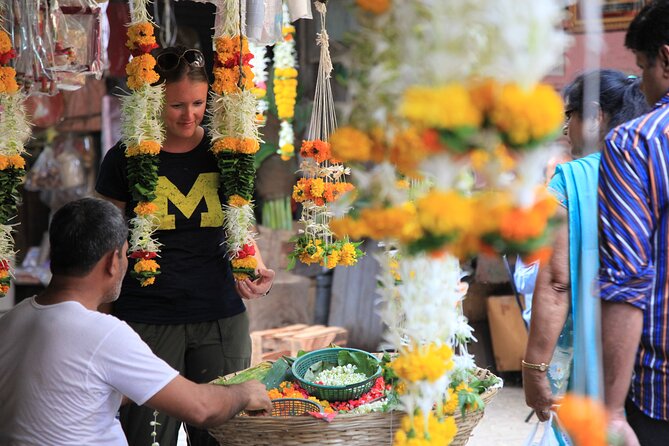
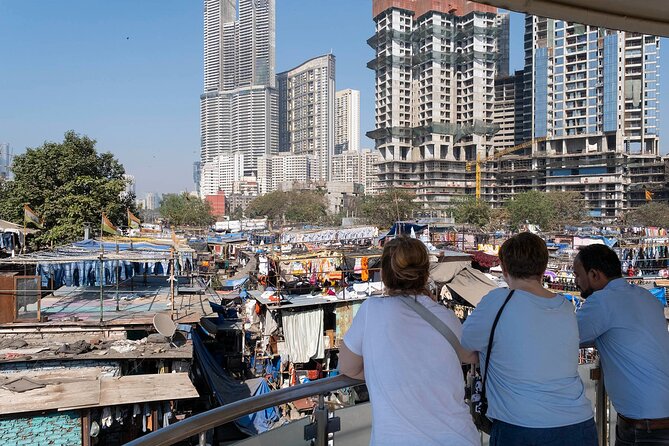
You start at Dhobi Ghat, described as the world’s largest outdoor laundry. This is not a monument you admire from a safe distance and move on. It’s a working area where you watch dhobiwallahs (washermen) scrubbing sheets from Mumbai’s hospitals and hotels.
Why I like starting here: it grounds the day fast. Before you chase skyline photos, you understand something simple about Mumbai—people here keep the city running through everyday labor. It’s also a great photo subject, but it’s a working scene, so keep your manners on high alert: look, observe, and avoid getting in the way.
The practical upside is that it’s free to enter, and the visit is short (about 10 minutes). That means you’re not trapped here waiting for “the next thing.” If you want more time, your private guide can usually help you adjust within the day’s schedule.
Stop 2: Jain Temple—beauty, calm, and a different kind of spirituality
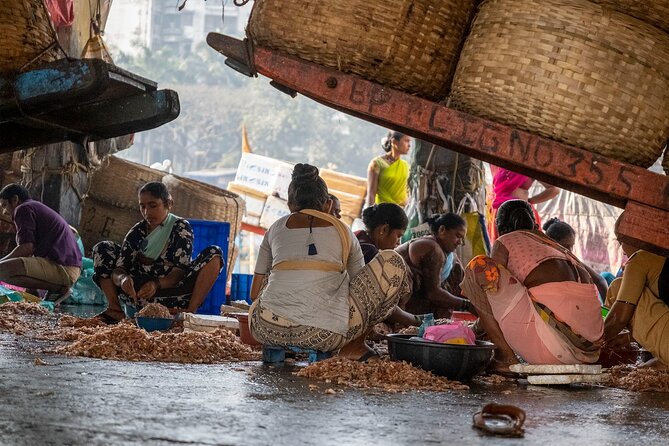
Next up is a Jain Temple in Mumbai, known for intricate decoration. Jainism emphasizes peacefulness and non-violence, so the atmosphere you’re likely to feel is different from a quick temple drive-by. The value here is not only the artistry, but the way a Jain site teaches you to look slowly—at details, symbols, and the overall mood.
The visit is around 20 minutes, and admission is listed as free. Short enough to see it properly, not so long that you lose the thread of the day.
The main consideration: temples require modest, respectful clothing. Shoulders and knees covered is the rule here, and it’s also the rule for later religious stops. Pack a light scarf or shawl if you’re traveling with something more “vacation casual” than “temple appropriate.”
Stop 3: Kamala Nehru Park—green break plus a major ocean view
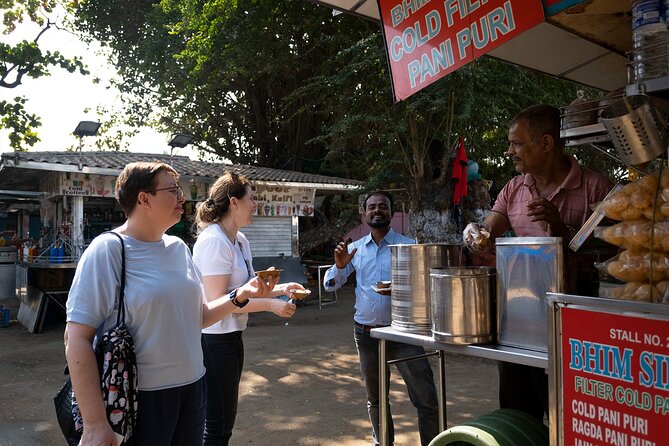
Then you get a breather at Kamala Nehru Park on top of Malabar Hill. It’s one of the greener, calmer areas, and the view over Marine Drive and the Arabian Sea is the payoff.
At 20 minutes, it’s timed like a reset. You’ve been in busy streets and working life, then you get a moment where your senses can unclench. This stop also helps with photos—especially if you want a skyline moment without having to squeeze into a crowd.
One drawback to consider: it’s a view stop, not a long wandering garden day. If you’re the kind of person who wants deep park time, you might feel “done” quickly. Still, for a first-time Mumbai day, this is a strong place to breathe.
You can also read our reviews of more tours and experiences in Mumbai



Stop 4: Banganga—Hindu temples, an old tank, and a local legend
Banganga brings you to a famous 12th-century tank surrounded by Hindu temples. The tank is believed to contain water with special healing powers, and there’s a rumor that its source spring comes from the holy Ganges river.
This stop is interesting because it mixes the physical with the belief system. Even if you don’t treat legends as literal facts, they show you what locals connect to—water, memory, ritual, and history. You’ll spend about 20 minutes here, and entry is listed as free.
It can also be a great “context” stop. By the time you reach Banganga, you’ve already seen Jain ideals and you’re now watching how Hindu worship and sacred water show up in the city’s geography.
Stop 5: Haji Ali Mosque—where the sea is part of the scene
Next is Haji Ali Mosque, famous for sitting at the end of a causeway that protrudes into the sea. It’s the tomb of Saint Haji Ali, a wealthy Muslim who renounced the world and went on to Mecca.
This one is both visually dramatic and culturally grounded. Sea-edge religious sites feel unforgettable, and this is built for that. Admission is listed as free, and the visit is about 30 minutes.
Practical note: you’re dressing for religious spaces again, and the setting can make walking feel more noticeable than you expect. Wear shoes you can handle comfortably, especially if the causeway and surrounding area involves uneven ground.
Stop 6: Crawford Market—market life plus a standout fact
Crawford Market is a wholesale fruit, vegetable, and meat market, plus it carries a history detail: it was the first building in India to get electricity. That’s the kind of fact that helps a place click. It’s not just a crowd of shoppers—it’s a landmark in how the city developed.
You get about 30 minutes, and admission is listed as free. Markets are one of the best places for a guide to help, because they can explain what you’re seeing without turning it into a lecture.
Two considerations. First, markets can be intense—smells, sound, and movement. Second, you’ll want to keep your pace steady so you don’t get separated while people brush past.
Stop 7: Chhatrapati Shivaji Maharaj Terminus—UNESCO plus rush-hour energy
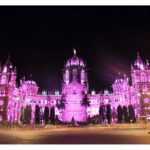
Now for a real icon: Chhatrapati Shivaji Maharaj Terminus (CST). It’s Mumbai’s only UNESCO World Heritage Site, and it’s also described as one of the busiest railway stations in the country during rush hour. CST even appears in the final song of Slumdog Millionaire, which is a fun pop-culture anchor for what you’re seeing.
You’ll have about 20 minutes here, and admission is listed as free. This is a “look up, look around” stop. The architecture and station motion are the main events.
The potential drawback is timing. If you’re sensitive to crowds, rush-hour energy might feel like a lot. Still, that’s also why it works. This is Mumbai’s pace in real time, not staged for visitors.
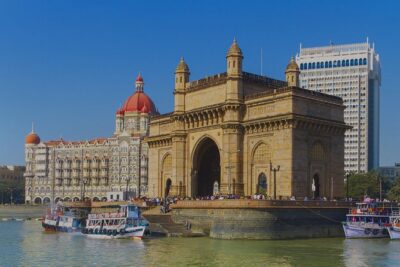
Stop 8: Gateway of India—British-era history and post-empire change
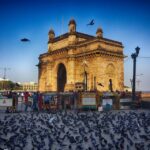
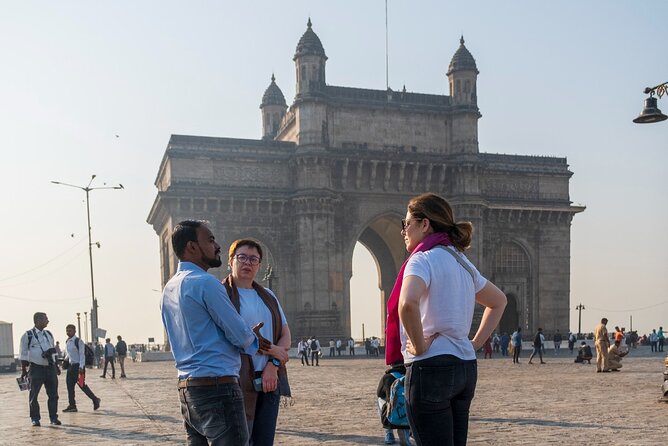
At Gateway of India, you’ll see a monument built in 1911. The tour notes that British troops marched under it in 1948 to signal the end of the British Raj.
Gateway of India is one of those places where your brain keeps rewriting what you thought it meant. It’s a classic landmark, but it also acts like a stage for modern Mumbai life—tour photos, sea views, and people arriving and leaving.
You’ll spend about 20 minutes, and entry is listed as free. If you’re hoping for long, quiet contemplation, you may find the scene too social for that. But if you want the basic context plus a quick waterfront moment, it’s right on target.
Stop 9: Chor Bazaar—Thieves Market and the joy of browsing
Then comes the playful chaos of Chor Bazaar, nicknamed the Thieves Market. It’s one of India’s largest and busiest flea markets, and it sells almost anything. This is the stop that feels the most like a true “wander,” even though you’re still on a private schedule.
You get about 45 minutes, and admission is listed as free. This is a good place to snack, browse, and buy small items like local sweets, as the tour description suggests. If you like bargaining and bargaining strategy, this market is where you’ll feel it—though you’ll still want to keep it respectful and not aggressive.
One consideration: it’s crowded and fast-moving. Keep your valuables secure, and decide what you’re looking for before you walk in so you don’t lose time to distraction.
Stop 10: Marine Drive—Queen’s Necklace at street level
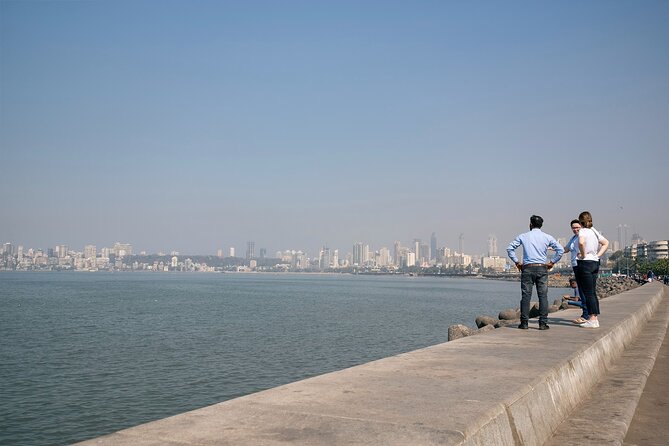
After all that market energy, Marine Drive is your clean wind-down. The nickname Queen’s Necklace matches the shape of the road and the way lights show along the curve (even in daylight, you’ll see the design intent).
This stop is about 25 minutes, and admission is free. It’s a classic “walk and absorb” section, and it’s also a great place to get your bearings for the rest of your trip.
If you hate crowds near scenic spots, this might be the one moment you’ll wish you had more quiet. Still, it’s a must-see for most first-timers for a reason: it’s one of Mumbai’s most recognizable waterfront moods.
Stop 11: Sassoon Dock—fishermen, catch, and port realism
You end at Sassoon Dock, a bustling port where local fishermen bring in their catch. This is another “real work” finish, like Dhobi Ghat—just a different sector of daily life.
You’ll spend about 30 minutes, and admission is listed as free. Ports make the city feel grounded. You leave with a sense of what Mumbai is feeding on and building with, beyond landmarks and viewpoints.
If you’re a photo person, this is often where the best candid shots happen. Keep your camera ready, but be considerate. People are working, not posing.
Price and value: what you’re really paying for
Let’s talk money with clear eyes. The tour is priced at $87.27 per person for a full day of about 9 hours. That includes hotel/residence pickup and drop-off, plus a local English-speaking guide and driver for the entire tour.
You’re not only paying for entry to free sights. You’re paying for:
- Someone handling route and timing so you don’t spend your day stuck in the “now what?” phase
- A driver to keep you moving through traffic without constant re-planning
- A guide who can explain what you’re seeing as you see it
That adds up fast in a city where simple travel can become complicated. If you’re splitting the day with another person, it’s usually more comfortable than trying to do it all by yourself, because you’re also saving your energy for the sights.
One pricing caveat: food and drinks aren’t included. So budget for meals and snacks. The tour is structured around sights, not dining, but a good guide can usually point you to places that fit the day.
Who this tour is best for (and who should tweak expectations)
This tour fits best if you want a guided day where someone else manages the hard parts. If you’re new to Mumbai, or you’re short on time, or you don’t want to negotiate transport and crowds, this is an efficient way to get a high-quality overview.
It’s also good for people who like religion and culture as more than trivia. The day’s flow—Jain temple → Hindu sites → mosque → city landmarks—helps you see how faith shows up in real space.
If you’re someone who wants lots of downtime, long sits, or one neighborhood for hours, you may feel the pace is tight. In that case, focus on which stops matter most to you and ask your guide to prioritize them.
Booking tips that make a difference on the ground
A few small choices can make the day much smoother:
- Bring modest clothing that covers shoulders and knees. Even if you think you’ll be okay, religious sites are strict about respect.
- Wear shoes you can walk in at market and port areas. This is not a flip-flops kind of day.
- Keep water and snacks in mind because food isn’t included.
- If you have strong interests beyond the listed stops, ask your guide how they can adjust. The tour is described as fully customizable, and that’s where the private format really pays off.
Also, since every stop listed is admission free, your money goes to comfort and convenience rather than ticket stacks.
Should you book the Private Mumbai Sightseeing Tour?
I’d book it if you want a structured, religion-aware Mumbai day with real-world stops, without the stress of coordinating transport. The combination of pickup, a private driver, and a guide who can shape the day is exactly what helps on a city like Mumbai.
I’d think twice if you hate crowds and fast pacing. This tour includes places that naturally attract people—CST at rush hour and Chor Bazaar—so it’s best approached with a calm, flexible mindset.
If you’re open to questions and you want more than just photos—like how one guide can make the day feel thought-provoking by adding a short slum-area segment when appropriate—this tour is the kind of day that can stick with you longer than a standard “highlights” bus route.
FAQ
Is hotel pickup and drop-off included?
Yes. The tour includes hotel/residence car pickup and drop-off, so you don’t have to arrange transport on your own.
How long is the tour, and when does it start?
The tour is about 9 hours and starts at 8:30 am.
Is this a private tour?
Yes. It’s a private tour/activity, and only your group participates.
Are tickets or admission fees included?
The listed stops show admission tickets as free. The tour description also indicates admission is not something you need to budget for at these specific stops.
What should I wear?
Dress codes are conservative throughout India. Plan on modest, respectful clothing that covers shoulders and knees for temples and mosques.
Is food included?
No. Food and drinks are not included.
What is the cancellation policy?
You can cancel for a full refund if you cancel at least 24 hours before the experience’s start time. If you cancel within 24 hours, the amount paid is not refunded.