REVIEW · MUMBAI
Private Mumbai 25 sights in one tour as recommended by Gigi Hadid
Book on Viator →Operated by No Footprints · Bookable on Viator
Twenty-five Mumbai stops in half a day. This is a private half-day intro that strings together colonial icons, art stops, and everyday city life with a professional local guide. I like that you ride in comfort by private vehicle and get hotel pickup and drop-off, which makes the whole thing feel efficient instead of exhausting. I also like how the route mixes famous landmarks with practical, you-can-see-it-now details like the dhobi ghat laundry area and the lunch-delivery world around Churchgate. One consideration: the pacing is brisk, with short visits and a moderate fitness level required, so you won’t have time to linger like you might on a slower walk.
If you’re doing Mumbai for the first time, this kind of tour helps you get your bearings fast. You’ll see the obvious picture-postcard hits, then you’ll start noticing the city’s layers: British-era architecture, Maratha pride, and neighborhoods where daily routines are the real show. The tour is advertised as a “hop-on hop-off” style, but in practice it feels more like guided highlights with a vehicle shuttling you between stops.
The price—$83.25 per person—stacks up well because it includes a guide, private transport, hotel pickup/drop-off, and all fees and taxes (currently 5%). Also, one review singled out a guide named Krupesh, noting the car was clean and comfortable and the stories landed in a way that made the stops click. Just keep in mind that some pieces depend on the day and conditions, like the dabbawalas being shut on weekends.
In This Review
- Key things I’d plan around
- Why this 25-stop private tour works for first-time Mumbai
- Price and what you really get for $83.25
- The route: Gateway of India to the colonial core
- Kala Ghoda and the library-and-architecture stretch
- Marine Drive, Mani Bhavan, and Dhobi Ghat: where Mumbai feels human
- How the private vehicle and timing shape your day
- A quick reality check: who this tour is best for
- Should you book this private Mumbai 25-sight tour?
- FAQ
- How long is the tour, and what time does it start?
- Is hotel pickup and drop-off included?
- What’s included in the $83.25 per person price?
- Are tickets included for the attractions?
- Is food and drinks included?
- Does the tour include dabbawalas on weekends?
- Can I cancel if plans change or if weather is poor?
Key things I’d plan around
- 25 sights in 3–4 hours: lots of “first-time Mumbai” targets without turning it into an all-day ordeal
- Hotel pickup and drop-off: fewer logistics headaches, especially if you’re staying central
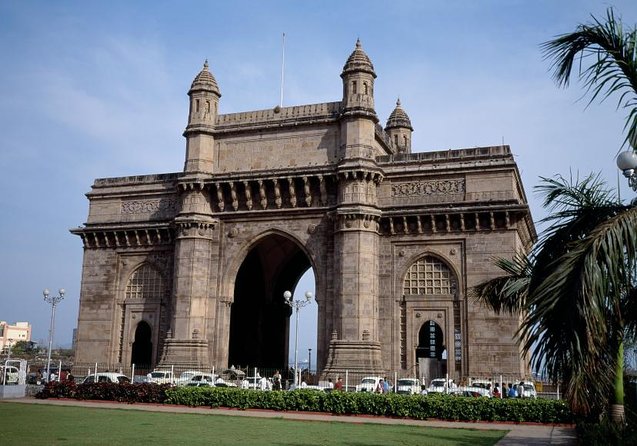
- Architecture + daily life mix: Gateway of India, CST, Rajabai Clock Tower, plus dhobi ghat
- Mani Bhavan Gandhi Museum included: a ticketed stop wrapped into the tour price
- Order can shift with traffic: the guide may swap the sequence to keep things running smoothly
- Moderate walking fitness: expect short walks, not long museum-style stays
Why this 25-stop private tour works for first-time Mumbai

Mumbai can feel like a lot when it’s your first day. Roads are busy, distances feel longer than the map suggests, and figuring out what to prioritize can take more time than it’s worth. This tour’s biggest strength is that it gives you a structured route across the parts most visitors use as their mental map: the waterfront and monumental sights, the British-era institutions, and the art-and-education zone around Kala Ghoda.
You get a professional guide who talks through what you’re seeing—not just dates, but why these places matter in how Mumbai looks and functions. And because it’s a private group only, you’re not trapped listening to a guide tailored for someone else’s pace.
It’s also a good fit if you like being outdoors but you don’t want your whole vacation day eaten by transport. You’ll spend time where it counts, then hop back into the car for the next cluster of sights.
You can also read our reviews of more private tours in Mumbai


Price and what you really get for $83.25
At $83.25 per person, you’re paying for more than “a list of places.” You’re paying for private transport, hotel pickup and drop-off, and a professional guide, plus all fees and taxes. That’s the part people often forget when they compare “free to walk” sightseeing to guided formats.
Most of the stops here are admission-free. So instead of spending your budget on entry tickets, you’re spending it on access and context: the stories, the quick orientation at each location, and the time savings of not having to plan the route yourself.
One ticketed exception is Mani Bhavan Gandhi Museum, which is included. That matters because Gandhi-related stops tend to be worth the effort, and it saves you from buying another ticket mid-day.
If you’re staying in suburban Mumbai, there may be additional transport cost for pickup. That’s worth checking early, because it can change the “value feel” of the tour depending on where your hotel sits.
The route: Gateway of India to the colonial core
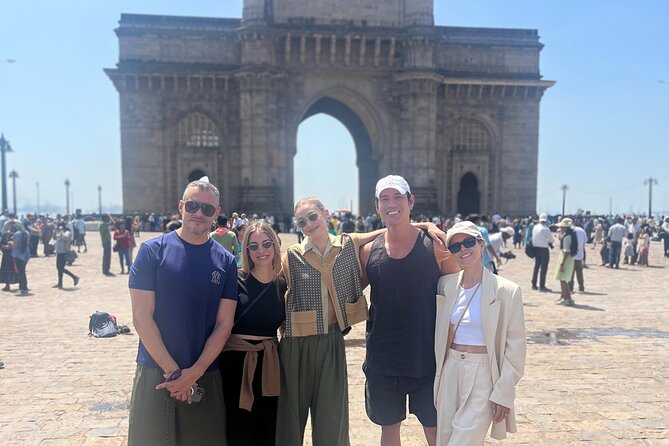
The tour starts at 9:30 am, and you’ll feel the rhythm right away. The guide makes quick introductions, then you get short viewing windows—enough to understand the place, not enough to do “deep museum time.”
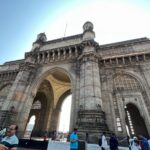
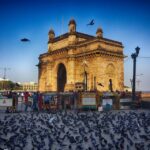
Stop 1: Gateway of India
This is the classic start for a reason. The victory arch is instantly recognizable, and it’s a smart first stop because you can orient yourself from the waterfront. You’ll get a quick sense of why it became the symbol of Mumbai tourism.
Stop 2: Statue of Chhatrapati Shivaji Maharaj
Right after the British-era icon, you pivot to Maratha pride. Shivaji is presented as the brave Maratha king who fought the Mughals, and seeing the statue here helps you understand Mumbai isn’t just one chapter of influence—it’s a stack of them.
Drive-past stops: famous hotel, historic club
You’ll also ride past a century-old landmark hotel associated with high-profile visitors, including Barack Obama and the Beatles. Nearby, the route includes Royal Mumbai Yacht Club, described as one of the oldest clubs in the city, built by John Adams and Charles Stevens. The fact that it sits between Charles and Adams Street isn’t just trivia—it’s the kind of small local detail your guide can connect to the city’s layout.
Stop 3: Maharashtra Police Headquarters
This stop adds a twist. You’re told the site was earlier connected to Mendham’s Point graveyard and the Alfred Sailors Club. Even the mention of work by John Lockwood Kipling gives you a sense that Mumbai’s institutions didn’t appear from thin air; many evolved from older roles.
Stop 4: Wellington Fountain
This is a monument-to-an-empire moment. It commemorates Duke of Wellington (Arthur Wellesley), tied to the Battle of Waterloo. It’s a short stop, but it’s useful because it keeps the colonial-era thread consistent.
Stop 5: National Gallery of Modern Art
Then you step into the modern-art world—still within a government-run setting. If contemporary art is your thing, this stop gives you a quick foothold without committing your whole day.
Museum stop (brief, guided viewpoint)
There’s also a short viewing of an iconic city museum spot. The tour format keeps it moving, so the value here is mostly context and orientation, not a full-on museum visit.
If you want to control pacing, this is where you’ll feel it most. You’ll get the highlights fast. If you’re the type who likes to linger at one building until you’ve fully processed it, you’ll need to accept the “see and learn” style here.
Kala Ghoda and the library-and-architecture stretch
After you pass the major waterfront-and-institution zone, the tour hits the Kala Ghoda Art Precinct. This area is especially useful for first-timers because it’s where art, architecture, and education overlap.
Stop 6: Kala Ghoda Art Precinct (about 25 minutes)
Kala Ghoda is treated as the art area of Mumbai, and the guide connects it to multiple strands of community stories, including Sassoon and Jewish history. You’ll also hear about the Watson Hotel, described as the first iron-cast building in the city and a place that hosted Mark Twain—now noted as being under threat due to deteriorating condition. That kind of “today’s reality” comment is exactly what you want from a good city guide: it adds urgency beyond postcard views.
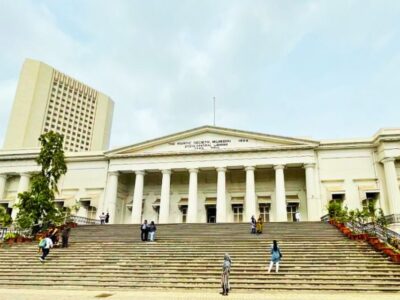
Stop 7: David Sassoon Library and Reading Room
This one is a favorite stop for people who like architecture with function. It’s described as an erstwhile mechanical institute turned into a library, overlooking the Kalaghoda area. Even if you don’t spend long here, the message is clear: libraries are part of Mumbai’s identity, not just quiet rooms.
Mumbai’s oldest college (viewed en route)
The tour also references Mumbai’s oldest college, mentioning alumni including Lokmanya Tilak, Naoroji, and Ambedkar, plus the fact it hosted the University of Mumbai while under construction. You don’t get a long educational detour, but it’s a strong “this city produced big thinkers” moment.
Stop 8: University of Mumbai Library (about 15 minutes)
The focus here is the building itself—architecture and arches that make you want to stand a little longer. For me, this is one of those stops where you see why Mumbai became known for solid, influential institutional buildings. It’s not just about what the university does; it’s about how it looks.
Stop 9: Rajabai Clock Tower (the Big Ben of Mumbai)
This is one of those easy-to-understand landmarks. It’s called the Big Ben of Mumbai, built with a donation from Premchand Roychand. The best detail: it still chimes old British tunes every 15 minutes. If you’re lucky and timing lines up, you’ll catch the sound in the middle of your walk.
Stop 10: Bombay High Court principal bench
You’ll hear that it was built in the form of a German castle. This stop also carries a judicial milestone: it’s where the jury system was abolished. It’s a short visit, but it’s the kind of information that makes the building feel like an actor in the city, not just a backdrop.
Stop 11: Oval Maidan
This ground is used by aspiring cricketers. You’re not watching a match here, but you get a sense of what the city treats as sport-space—another layer of daily life.
Stop 12: Churchgate Railway Station and the lunch-delivery world
This stop is about dabbawalas—lunch deliveries—plus the choreography around it. You’ll be told that dabbawalas (and also 6 sigma workers) send over 500,000 boxes of lunch daily with extreme precision, and that the system has been studied by consultants and business schools. If your day falls on a weekend, a key note applies: dabbawalas are shut on weekends, so the observation part may be less active than on weekdays.
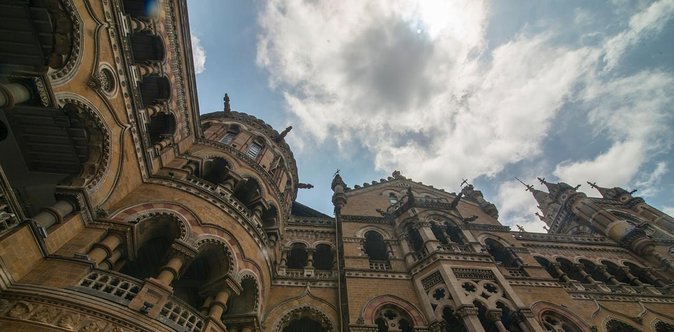
Stop 13: Chhatrapati Shivaji Terminus (CST)
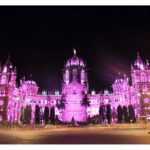
CST is presented as the architectural standout in the route. You’ll also hear the scale of foot traffic—about 660,000 footfalls daily, described as the busiest station in Mumbai. Even in a short stop, it’s hard not to feel what a working hub like this does to a city’s pace.
Marine Drive, Mani Bhavan, and Dhobi Ghat: where Mumbai feels human
Once you hit the “lighter on paper, heavier on feeling” part of the tour, the sights shift from governance and rail to everyday routines and viewpoints.
Stop 14: Marine Drive
You’ll get a view of the sea from Marine Drive, with just enough time to appreciate the line where city and water meet. It’s a classic viewpoint, but it works here because you’ve already seen so much of the city’s built environment. This is where you rebalance.
Stop 15: Mani Bhavan Gandhi Museum (included, about 20 minutes)
This is the included ticket stop, so it’s where your guide’s context tends to matter most. The museum is described as offering insight into Gandhi’s life, with material archived there. Even if you only have a short window, it’s a grounded, specific stop that adds meaning beyond monuments.
Stop 16: Dhobi Ghat (open-air laundry)
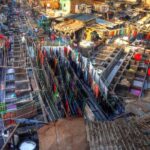
This is the “human washing machines” stop. Dhobi Ghat is described as an open-air laundry where you can see the work happening. It’s one of the most memorable parts of the tour because it’s not staged for visitors—it’s labor, routine, and motion. I like this stop because it stops the tour from becoming all architecture and official buildings.
You also have a few additional city-indicator stops presented as quick passes or short viewpoints:
- An Art Deco structure connected to Bollywood queen Zubeida
- The city’s iconic cinema (named generically in the itinerary)
- The Wayside Inn turned Punjab Grill, noted for its history of a prominent person in Indian history frequenting it
- The place where Mumbai raised India’s flag for the first time after Independence
These are short, but they function like punctuation marks. They keep Mumbai from feeling like a museum with street addresses.




How the private vehicle and timing shape your day
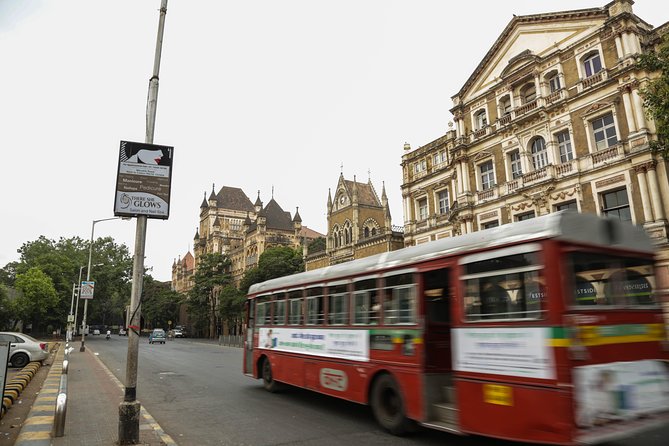
This tour is designed to fit into a 3 to 4 hour block, which means you get intensity, not comfort-with-time. The guide keeps the flow, then you step out for quick viewing windows and return to the car.
A helpful detail: the start and end timing can change based on traffic, and the sequence of the tour is at the discretion of the guide. That’s a smart way to handle Mumbai’s road reality. Don’t plan anything right after like it’s a simple city stroll.
The itinerary includes a mix of actual standing time and “drive past” moments. That’s not a flaw; it’s how you fit 25 sights in a half-day. Still, it does mean you should manage expectations if you want close-up time at every stop.
For physical comfort, the tour asks for moderate physical fitness. That usually means short walks and standing rather than long hikes or long museum lines, but you should still feel comfortable moving through uneven sidewalks.
A quick reality check: who this tour is best for
This tour is a good match if:
- you’re visiting with limited time and want the main landmarks without planning
- you want private guide attention rather than a large-group pace
- you like architecture mixed with practical city life
- you want a route that covers “both the famous and the everyday”
It’s less ideal if:
- you hate moving quickly between stops
- you want long museum time or deep, slow exploration at one location
- you’re traveling on a weekend and were hoping to see the dabbawalas in action
Should you book this private Mumbai 25-sight tour?
Yes—if your goal is to get oriented fast and collect the must-see Mumbai mental map in a single morning. The value is strong because pickup/drop-off, transport, guide time, and fees/taxes are folded into the price, and most stops are admission-free. You also end with a good balance: major landmarks, architecture points, a strong Gandhi-focused stop, and a memorable peek into Dhobi Ghat.
Before you book, sanity-check two things: the day of the week (dabbawalas shut on weekends) and how you feel about short stops. If you’re comfortable with a “see and learn” pace, this tour will save you planning effort and help you enjoy the rest of Mumbai with clearer context.
FAQ
How long is the tour, and what time does it start?
The tour runs for about 3 to 4 hours and starts at 9:30 am.
Is hotel pickup and drop-off included?
Yes. Hotel pickup and drop-off are included. If your hotel is in suburban Mumbai, there may be additional transport cost for pickup.
What’s included in the $83.25 per person price?
It includes a professional guide, transport by private vehicle, hotel pickup and drop-off, and all fees and taxes.
Are tickets included for the attractions?
Many stops list admission tickets as free. Mani Bhavan Gandhi Museum is specifically included as an admission ticket.
Is food and drinks included?
No. Food and drinks are not included unless a specific stop states otherwise.
Does the tour include dabbawalas on weekends?
The itinerary notes that dabbawalas are shut on weekends, so that part may not be operating as described on Saturday or Sunday.
Can I cancel if plans change or if weather is poor?
Yes. You can cancel for free up to 24 hours in advance for a full refund. If the tour is canceled due to poor weather, you’ll be offered a different date or a full refund. The tour is also not conducted on the day of the Mumbai Marathon.