REVIEW · MUMBAI
Mumbai: Full-Day Guided City Tour with Elephanta Caves
Book on GetYourGuide →Operated by Travel Pests · Bookable on GetYourGuide
Mumbai feels like a live postcard. This full-day guided loop gives you Gateway of India grandeur and then the honest daily rhythm of Dhobi Ghat—all with someone handling the story and the timing. The one thing to plan around: the Elephanta Caves boat visit is optional and depends on tides, so your day can shift.
What I like most is the way the route stacks classic sights with working-city scenes. Guides such as Anas, Nadeem, and Farad are repeatedly praised for turning landmarks into clear, human explanations, not just photos. The main drawback is lunch: you get a local meal, but one guide-suggested tweak is to let you choose where you eat if you have specific preferences.
In This Review
- Key highlights you’ll care about
- Gateway of India to Taj Mahal Palace: starting with Mumbai’s big statement
- Colaba on foot: Regal Cinema, Kala Ghoda, and the streets between
- Dhobi Ghat: watching a 140-year system run in real time
- Marine Drive and Chowpatty: the walk that sets your mood
- Walkeshwar Temple: a quieter coast break with ocean views
- Elephanta Caves by ferry: UNESCO temples, Trimurti sculpture, and timing issues
- Chhatrapati Shivaji Terminus and the University of Mumbai: Gothic meets Indian design
- Lunch in Mumbai: where you eat affects how you rate the day
- Bandra-Worli Sea Link sunset: the photo stop you should plan around
- Price and value: is $98 per person a fair deal?
- Practical tips for a smoother day in Mumbai
- Should you book this Mumbai guided city tour?
- FAQ
- How long is the Mumbai full-day city tour?
- Is Elephanta Caves included?
- What stops are included besides Elephanta?
- Does the tour include lunch?
- Do I need to buy entrance tickets?
- Is pickup included, and is it wheelchair accessible?
Key highlights you’ll care about
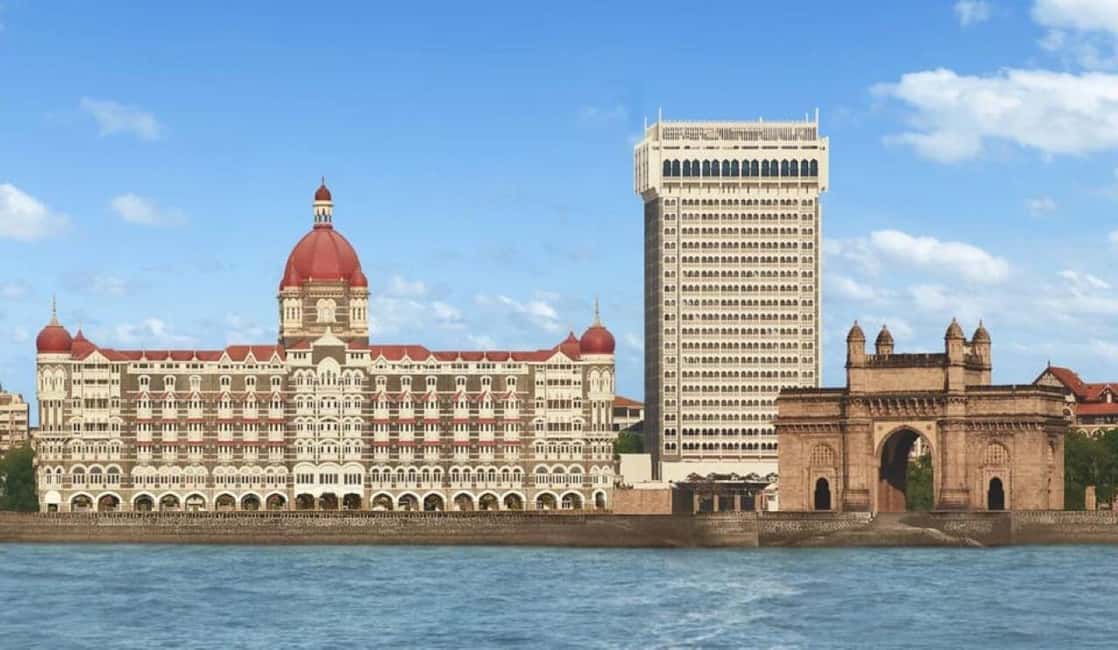
- Gateway of India + Taj Mahal Palace Hotel: the 1911 monument you can’t ignore, paired with a hotel story of survival after 2008
- Dhobi Ghat (open-air laundry): watch over 5,000 dhobis work in a 140-year system tied to Bollywood filming
- Marine Drive to Chowpatty Beach: Queen’s Necklace promenade plus sunset rituals and street snacks like pav bhaji
- Regal Cinema and Kala Ghoda: art-deco cinema stop and Mumbai’s creative district walk
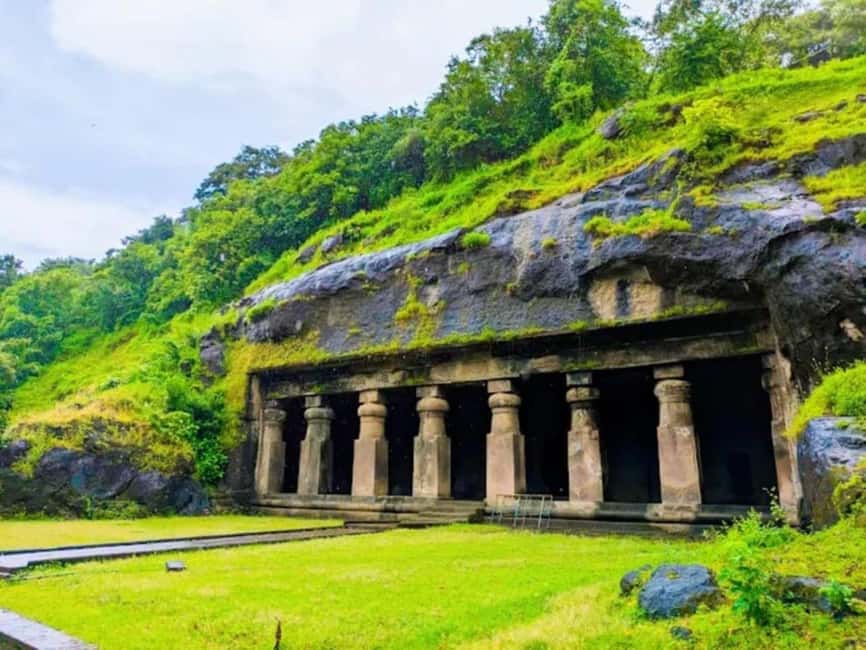
- Elephanta Caves (UNESCO): 5th-century Shiva rock-cut temples and the Trimurti sculpture, reached by ferry
- Bandra-Worli Sea Link sunset photos: a 5.6km engineering shot with timing built into the day
Gateway of India to Taj Mahal Palace: starting with Mumbai’s big statement
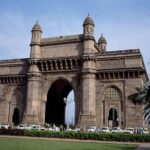
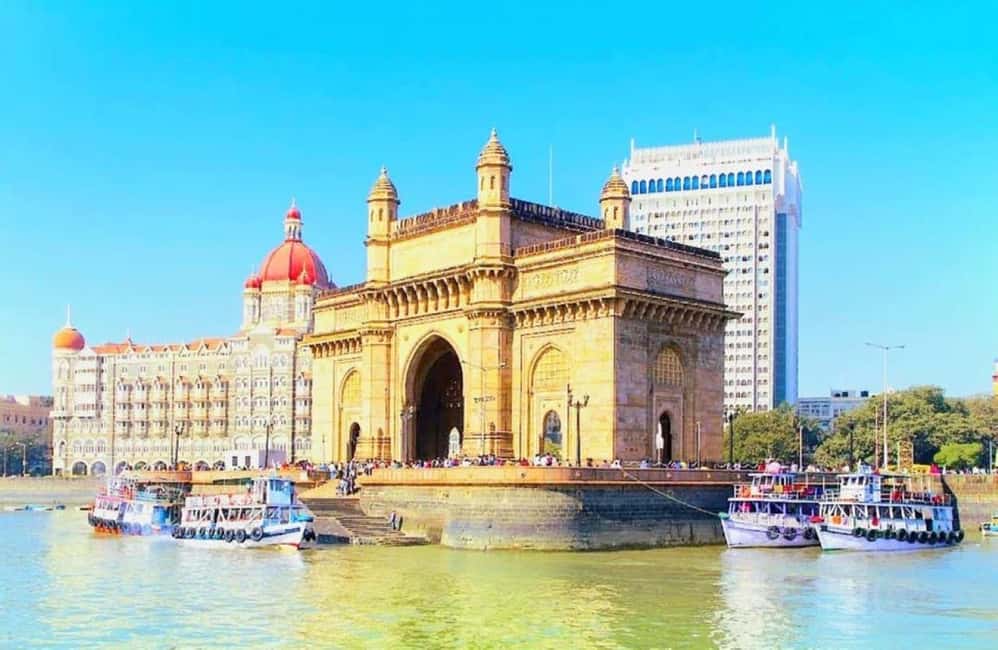
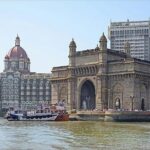
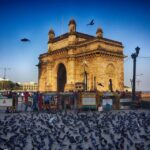
Your day typically begins at the Gateway of India, built to commemorate King George V’s 1911 visit. Even if you only glance from the road, the scale lands fast. Your guide keeps the moment grounded with the story of the last British troops leaving India in 1948, which turns the arch from decoration into a historical marker you actually understand.
Right beside it is the Taj Mahal Palace Hotel, also worth your attention. The tour frames it as a symbol of resilience after the 2008 attacks. That matters because Mumbai’s landmarks often feel like they’re constantly negotiating the present and the past at the same time.
Practical thought: this is a good stop for early photos, before the light gets harsher and before crowds thicken along the waterfront.
You can also read our reviews of more guided tours in Mumbai


Colaba on foot: Regal Cinema, Kala Ghoda, and the streets between
Once you’re through the monumental start, you move into Colaba, where colonial-era building fronts now host cafes and galleries. This is where you start to feel how Mumbai reshapes old stone into current life.
Two stops make this area especially useful:
- Regal Cinema, one of India’s oldest art-deco theaters
- Kala Ghoda Art Precinct, a creative hub that’s easy to wander with your guide keeping you oriented
The value here isn’t just sightseeing. It’s your chance to learn how to read the neighborhood quickly: what’s a landmark, what’s a shortcut, and where the streets tend to funnel toward waterfront views. That skill helps later in the trip—whether you’re continuing on your own or just trying to find the best photo angle without doing mental gymnastics.
Dhobi Ghat: watching a 140-year system run in real time
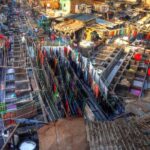
Then comes the stop many people remember even after they forget which day it was: Dhobi Ghat, the world’s largest open-air laundry. You’ll see thousands of washermen—over 5,000 dhobis—working in concrete flumes, scrubbing clothes as part of a process that’s around 140 years old.
What’s especially good about having a guide here is the explanation behind the scene:
- how the system works as a daily operation
- why the place has been filmed so often by Bollywood
This isn’t a museum-style viewing. It’s a living workplace. That means you’ll want to behave accordingly: keep your camera ready but avoid blocking work, and treat the scene like you’re observing a job, not like you’re collecting props for a photo set.
If you’re sensitive to smoke, heat, or crowds, plan for it mentally. Wear comfortable shoes and bring water—this is an active walking-and-looking stop.
Marine Drive and Chowpatty: the walk that sets your mood
From Dhobi Ghat’s concrete intensity, the day softens into Marine Drive. The tour calls it the Queen’s Necklace, and that nickname makes sense the first time you see how the waterfront lights and the curve of the road create a long, continuous line.
From there you head toward Chowpatty Beach. This is where Mumbai turns your senses on:
- you’ll get sunset rituals in the mix
- and street food culture you can actually try, with pav bhaji specifically called out
Even if you don’t buy snacks, this stop is worth it because it teaches you how Mumbai eats casually. You’re seeing street life as daily culture, not an activity. That’s the kind of knowledge that makes you a better independent traveler later.
Walkeshwar Temple: a quieter coast break with ocean views
Next, you’ll reach the Walkeshwar Temple complex, noted for its ocean-facing views. This stop works as a breather after beach crowds. It’s also a reminder that Mumbai isn’t only street food and waterfront promenades—there’s devotion and calm in the same geography.
Because the tour is guided, you’ll likely get context on what you’re seeing instead of just standing and guessing. Take your time here if you want photos, but keep one eye on sun and footing. Coastal walks can be uneven, and you’ll likely still have more stops after this.
You can also read our reviews of more city tours in Mumbai




Elephanta Caves by ferry: UNESCO temples, Trimurti sculpture, and timing issues
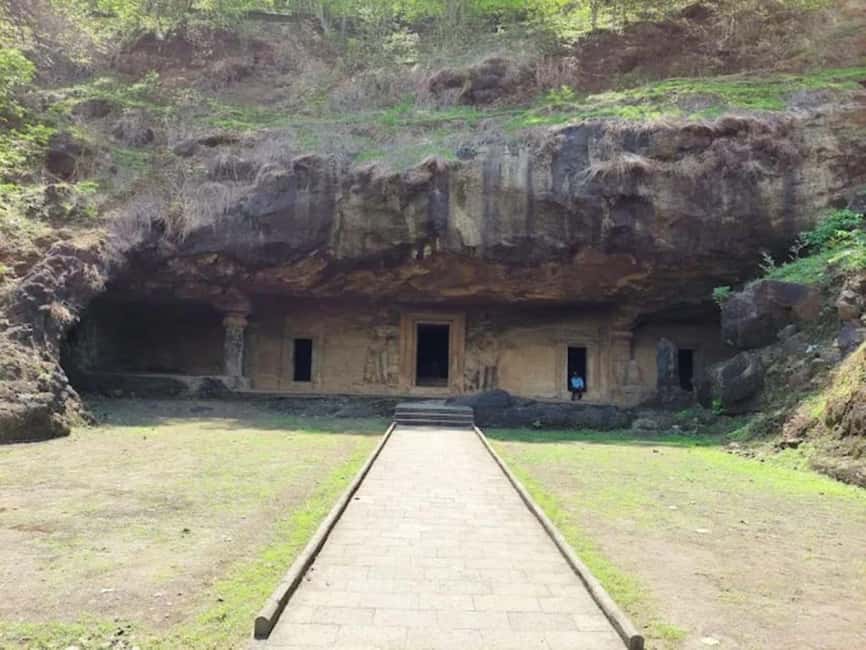
Here’s the big decision point of the day: Elephanta Caves are optional, reached by ferry, and the timing depends on tides. The crossing itself is about one hour, so if you hate feeling rushed, this tour makes more sense if you treat the Elephanta add-on as a flexible experience rather than a rigid checklist item.
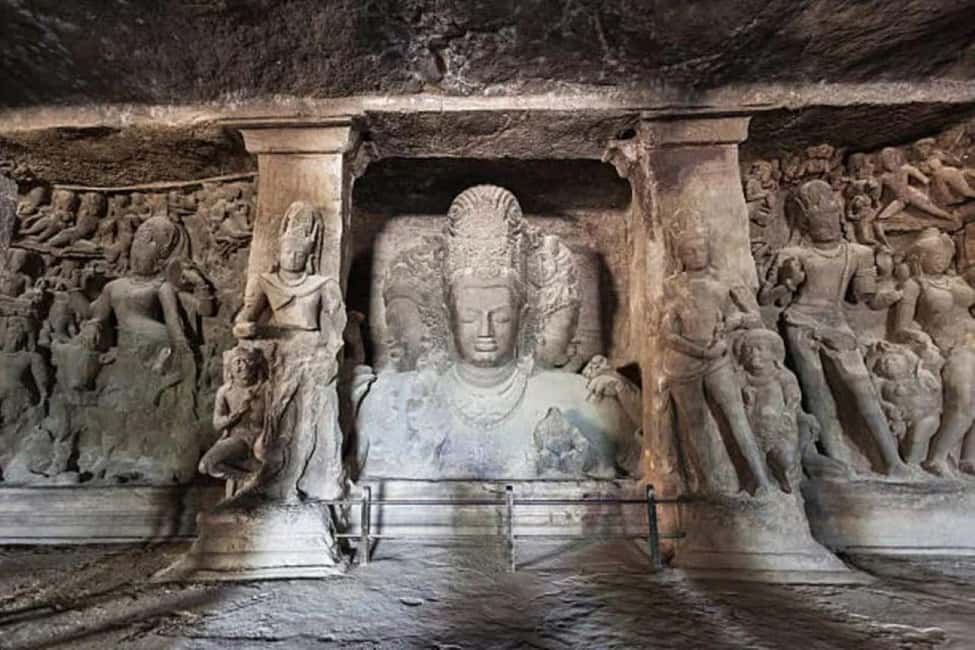
At the UNESCO site, you’ll see 5th-century rock-cut Shiva temples plus the famous Trimurti sculpture. That combination is the reason people do Elephanta at all: it’s ancient sacred art in a setting that feels dramatically removed from the city—even though you’re still part of Mumbai’s orbit.
One practical contingency worth knowing: if something disrupts the plan, your guide may suggest another option. In one real case, the guide couldn’t take the group to Elephanta and instead suggested Kanheri Caves, which turned out to be a great alternative. So if you’re booking, choose a guide-managed day knowing there can be weather, timing, or protest-related changes.
Chhatrapati Shivaji Terminus and the University of Mumbai: Gothic meets Indian design
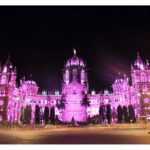
Back on the mainland, the tour shifts to architecture that’s very Mumbai: Chhatrapati Shivaji Terminus (UNESCO) and the University of Mumbai.
The key idea you’ll learn here is how British architects blended Gothic and Indian styles, and how these buildings still function today. That last part matters. Too often, old architecture becomes scenery. Here, you’re seeing buildings used by real people, which makes the design details feel less like theory and more like everyday infrastructure.
What to do with this stop: slow down and look for contrasts—spiky Victorian lines next to Indian motifs. A guide is useful because they’ll point you at features you’d miss if you were only reading a plaque.
Lunch in Mumbai: where you eat affects how you rate the day
Lunch is included as a local restaurant stop, but the experience isn’t identical for everyone. The tour names two possible choices:
- Britannia & Co. for Parsi berry pulao
- Trishna for butter garlic crab
That’s a strong range, and I like that you’re not left guessing what’s typical. Still, one caution from experience: someone advised skipping the lunch at the fixed local restaurant and choosing where to eat based on your preferences.
So here’s the practical approach: if you’re picky about seafood, spice level, or simply want control over your meal timing, tell your guide what you want. Even a small request can turn lunch from a schedule slot into a highlight.
Bandra-Worli Sea Link sunset: the photo stop you should plan around
The tour includes sunset at Bandra-Worli Sea Link, an engineering highlight spanning 5.6km over the Arabian Sea. If you’re the kind of traveler who cares about photos, this stop is worth keeping your expectations realistic and your attention focused.
Sunset timing can be finicky. The advantage of a guided full-day structure is that someone is building the day so you arrive at the right moment. Still, bring your camera readiness mindset: you want clear sight lines, not frantic button-pressing.
This is also a good place to decompress after a long day. The view is broad, and it helps you make sense of Mumbai’s scale.
Price and value: is $98 per person a fair deal?
At $98 per person for a full-day private guided tour, the value comes from what’s bundled and what you’re spared:
- a private guide in English
- key site visits with entrance tickets
- a structured day that includes pickup and major transit points
- local lunch
- and extra photo-timing support like the sunset stop
The biggest value-maker is the private guiding. Mumbai has a lot going on at once. With a guide, you spend less time figuring out what matters and more time understanding what you’re seeing—especially at places like Dhobi Ghat and the UNESCO sites where context changes your whole experience.
Elephanta is optional, so your final value depends on whether you add it. If you do, you get the ferry portion and UNESCO temples in the same day plan. If you don’t, you still get a full mainland-focused loop with beach, architecture, and laundry-watching.
For most visitors, $98 feels fair when you treat it as a guided “time saver” day rather than a bargain-basement sightseeing bus ride.
Practical tips for a smoother day in Mumbai
A full-day guide program is great—until you trip over the basics. Here’s what helps most:
- Wear comfortable shoes. You’ll do enough walking that your feet will vote before your brain does.
- Bring sunscreen and water. Heat and sun are real, especially around outdoor stops like Dhobi Ghat and the waterfront.
- Bring a camera, and keep it accessible for Gateway of India and the sea views at Bandra-Worli.
- Expect a flexible start time. This helps with traffic, tide planning for Elephanta, and timing for sunset.
- If you’re curious about a deeper social context, there’s an ethical Dharavi Slum Tour available as an add-on. It’s not included in the core plan, but it’s worth considering if that theme interests you.
Also note: the tour is wheelchair accessible, and it’s a private group. That usually means the pace and stops can be more workable than in large group formats.
Should you book this Mumbai guided city tour?
If you want one day that gives you Mumbai’s essentials without you having to plan every turn, I think this tour is a smart choice. The pairing of Gateway of India, Dhobi Ghat, Marine Drive/Chowpatty, and the option for Elephanta Caves gives you both iconic monuments and real daily life.
I’d especially recommend it if:
- you like having a guide explain what you’re seeing
- you want a smooth day with pickup included
- you’re interested in UNESCO sights but don’t want to manage the logistics yourself
I’d hesitate only if:
- you absolutely need your lunch and schedule to be fully controlled
- you get stressed by tide-based changes for Elephanta
Overall, this is a solid, structured way to see Mumbai in depth—without turning your day into a self-made scavenger hunt.
FAQ
How long is the Mumbai full-day city tour?
It’s a full day, scheduled as 1 day. You’ll check availability for starting times.
Is Elephanta Caves included?
Elephanta Caves are optional. If you add it, you’ll take a ferry (about 1 hour) and the timing can depend on tides.
What stops are included besides Elephanta?
You’ll visit Gateway of India, Dhobi Ghat, Marine Drive, and other key areas such as Colaba, Kala Ghoda Art Precinct, and architecture like Chhatrapati Shivaji Terminus and the University of Mumbai, plus sunset at Bandra-Worli Sea Link.
Does the tour include lunch?
Yes. There is local lunch included, with named restaurant options that include Britannia & Co. and Trishna.
Do I need to buy entrance tickets?
No. Entrance tickets are included, and the tour also notes skip the ticket line.
Is pickup included, and is it wheelchair accessible?
Yes, pickup is included from your desired location in Mumbai. The tour is also wheelchair accessible.