REVIEW · MUMBAI
Mumbai Heritage Walking Tour of Colaba and Fort
Book on Viator →Operated by Mystical Mumbai · Bookable on Viator
Old Mumbai runs on stories, not brochures. This small-group walk through Colaba and Fort helps you piece together what you’re seeing, with a guide-led route that strings together major landmarks like the Gateway of India, St. Thomas Cathedral, and Chhatrapati Shivaji Terminus. I especially like the small group size (max 10), which makes it easier to ask questions and keep moving without feeling swallowed by a crowd. I also like that the route hits both landmark architecture and street life, so the walk feels grounded instead of just photo stops. One possible drawback: each stop is brief, so if you’re hoping for long, sit-down time inside buildings or deep slow exploration, this is more of a smart “see and understand” walk than a linger-and-browse day.
You get a practical way to get oriented fast, especially if you’re visiting South Mumbai for the first time. The pacing is built for a ~3-hour stroll, ending near Chhatrapati Shivaji Terminus, so you can stay in the area afterward. I found this is the kind of tour that helps your self-guided exploring after the walk make more sense.
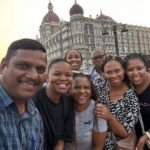
Guides from Mystical Mumbai can be genuinely helpful at the sidewalk level, and in the past, people have mentioned guides like Anthony and Dev for being enthusiastic, photo-friendly, and good at explaining how daily life overlaps with big historical sites. If you’re the type who likes to understand what you’re looking at while walking, you’re going to get a lot out of this.
In This Review
- Key things you’ll notice on this Colaba and Fort Heritage Walk
- Why Colaba and Fort work so well for a heritage walk
- Price and value for a 3-hour, 10-person experience
- The meeting point and walking pace you should plan for
- Your route: from the Gateway of India to UNESCO CST
- Stop 1: Gateway of India (Apollo Bunder)
- Stop 2: University of Mumbai Library and the colonial clock look
- Stop 3: Oval Maidan pedestrian crossing and the cricket rhythm
- Stop 4: St. Thomas Cathedral and the memorials connection
- Stop 5: Bombay High Court principal bench
- Stop 6: Fashion Street and the shopping-chaos reality
- Stop 7: Chhatrapati Shivaji Terminus (CST), UNESCO station finish
- What a 10-person group changes (and why it matters on this route)
- How to get the most from each stop (without slowing the group down)
- Photo reality: where this walk naturally sets you up
- Who should book this Colaba and Fort heritage walk
- Should you book the Mystical Mumbai Colaba and Fort Heritage Walk?
- FAQ
- Is the tour in a small group?
- How long is the walking tour?
- Where does the tour start and end?
- What are some of the main stops on the route?
- Are any of the sights included with admission fees?
- What’s included in the price?
- Is hotel pickup or drop-off included?
- What’s the cancellation window?
Key things you’ll notice on this Colaba and Fort Heritage Walk

- Small group, max 10 people: less noise, more chance to ask questions.
- Free-entry stops listed on the route: you can focus on the walking and stories.
- A mix of monuments and real streets: from the Gateway of India to Fashion Street.
- You end at UNESCO Chhatrapati Shivaji Terminus: a great finish point for onward plans.
- A guide who connects buildings to lived context: the route is about meaning, not just dates.
Why Colaba and Fort work so well for a heritage walk
Colaba and Fort sit right at the heart of South Mumbai, where colonial-era architecture meets working-city energy. What makes this area interesting is how often the big, famous landmarks sit next to everyday motion: commuters, shoppers, street stalls, and the kind of public spaces where people actually spend their afternoons.
On this tour, you’re not just ticking off names. You’re getting a guided way to interpret what’s around you. The Gateway of India isn’t presented as a standalone monument; it’s tied to the city’s timeline. St. Thomas Cathedral isn’t just a photo target; it comes with context about memorials connected to the British soldier presence. And when you reach Chhatrapati Shivaji Terminus, you’re primed to look at the station as a world-famous landmark, not only as a transport hub.
This is also a strong first-day choice. If Mumbai still feels like a blur when you land, a heritage walk can help you stop “wandering” and start navigating with purpose.
You can also read our reviews of more walking tours in Mumbai


Price and value for a 3-hour, 10-person experience
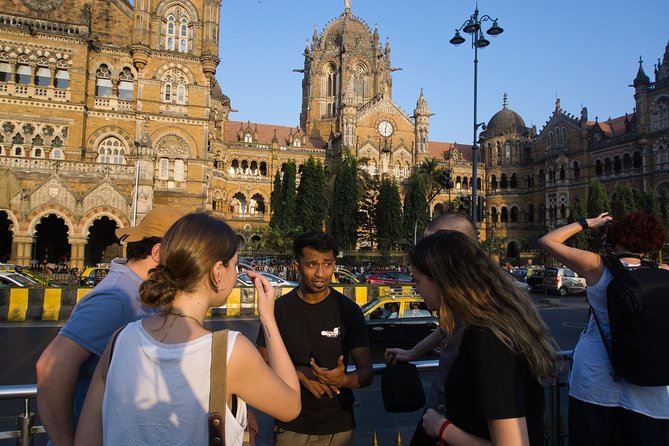
At $66.87 per person for about 3 hours, the main value comes from three things: a professional local guide, a small group, and a route packed with major sights that are marked Admission Ticket Free on the tour’s stop list.
In practical terms, that means you’re paying for interpretation and time-efficiency. Instead of spending your first day trying to connect the dots yourself, you get someone to point out what matters and why it matters—while also keeping the walk moving so you see a lot without running out of steam too fast.
You also get bottled water included, which sounds basic, but it matters on a walking route. And because the tour offers multiple start times throughout the day, you’re not locked into one awkward schedule.
If you’re traveling with friends and can’t find a better group rate elsewhere, this one’s designed around staying small, which usually makes the experience feel more personal than the “big bus energy” option.
The meeting point and walking pace you should plan for
The tour starts at Regal Cinema Building, on Chhatrapati Shivaji Maharaj Marg, Apollo Bandar, Colaba. It ends in the Chhatrapati Shivaji Terminus area in Fort.
There’s no hotel pickup, so plan to arrive on your own via public transportation (the tour is marked as near public transport). The tour also notes a moderate physical fitness level. Since it’s a walking tour, you’ll want comfortable shoes and a willingness to keep your pace for roughly three hours.
A helpful mindset: treat this as a guided route with short, high-impact stops. You’ll see many locations in a single morning/afternoon block, but you won’t get long, empty-silent time at each one.
Your route: from the Gateway of India to UNESCO CST
The itinerary is built around a classic South Mumbai “heritage spine.” You start with the big symbolic monument, then move through colonial civic buildings and public spaces, and finish at the city’s most famous train-station landmark.
Here’s what you can expect stop by stop, and what’s worth your attention at each one.
Stop 1: Gateway of India (Apollo Bunder)
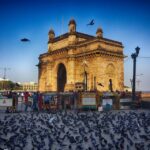
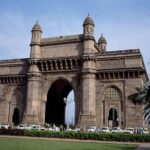
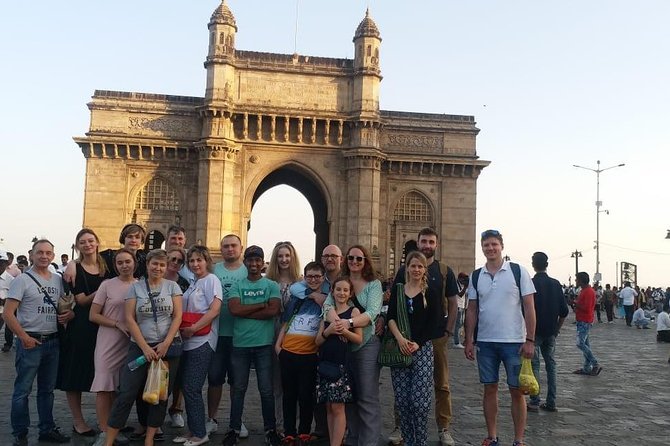
You begin at the Gateway of India, an arch-monument built in the early twentieth century. It commemorates the landing of King-Emperor in December 1911 at Apollo Bunder.
This is one of those places where it helps to hear what you’re looking at before you start photographing everything. The guide’s story gives the arch a purpose beyond “it’s famous.” You’ll also get a feel for how this landmark anchors the surrounding coastline and the idea of Mumbai as a city shaped by arrivals and departures.
Time on-site is short (about 15 minutes), so focus on getting a couple of good angles and then move on. Don’t over-plan your shot list here unless you’re willing to lose the pace.
You can also read our reviews of more historical tours in Mumbai


Stop 2: University of Mumbai Library and the colonial clock look
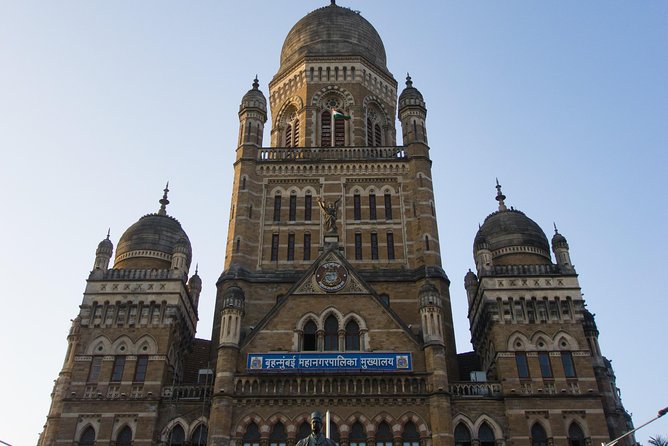
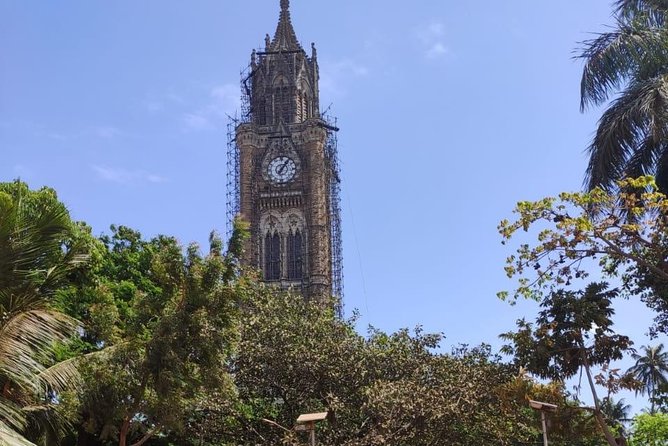
Next up is the University of Mumbai Library, where the colonial architecture is a major draw. The tour highlights Mumbai’s “Big Ben,” which is a clue to what you should look for: that British-style clock presence and the general civic grandeur of the campus buildings.
This stop is only about 10 minutes, so you’re not visiting the campus in a deep way. Think of it as a visual palate cleanser between larger monuments and church architecture. You’ll start noticing how colonial-era design shows up in public institutions, not just in standalone landmarks.
Stop 3: Oval Maidan pedestrian crossing and the cricket rhythm
You’ll cross near Oval Maidan, a colonial park area where hundreds of people play cricket. The tour frames it as India’s other religion, which is a fun way to point you toward the real-life energy in the public space.
This stop is about 10 minutes, and it’s one of the best for absorbing Mumbai as a working city. You’re not only looking at the past; you’re watching people use the space now. If you only photograph buildings, you miss the point. Oval Maidan helps correct that.
Practical tip: be ready to share the sidewalk. The cricket scene means people move around, and you’ll want to keep your footing steady while you watch and take quick photos.
Stop 4: St. Thomas Cathedral and the memorials connection
At St. Thomas Cathedral, the highlight is that it’s one of the oldest cathedrals in Mumbai. The tour also calls out memorials of fallen British soldiers and their families.
This stop is about 15 minutes. What makes it more than a quick sight is the emotional weight of the memorials. You’ll likely get better appreciation from the guide’s commentary here than from just looking at the building from the outside, because the context explains why the memorials are there and what they signify.
If you’re not comfortable in solemn spaces or you prefer purely visual sightseeing, this stop may slow you down. But if you like meaning behind the stones, it’s a strong one.
Stop 5: Bombay High Court principal bench
Next comes the Bombay High Court (principal bench), described as one of the oldest high courts of India.
This is another “short stop, big theme” moment. In a walking tour like this, the goal isn’t to learn every legal term. It’s to recognize how colonial and post-colonial civic power shows up in architecture and placement. The guide’s role is to help you read the building as an institution, not just a facade.
Time is about 10 minutes, so keep it simple: look at the form, notice the setting, and use the guide’s explanation to connect the site to the city’s bigger story.
Stop 6: Fashion Street and the shopping-chaos reality
Then you hit Fashion Street, a cluster of over 385 street side clothing shops. The tour notes it’s a popular tourist destination and known for bargaining.
This stop is about 10 minutes, and it’s the most “street scene” part of the route. If you like people-watching, this is a great segment. If shopping isn’t your thing, you can treat it like a quick cultural snapshot: see how the street economy works and how negotiation is part of the rhythm.
A consideration here: it can feel crowded and noisy compared with the more formal landmark stops. Plan to stay aware of your belongings and keep your personal space in mind while you walk through.
Stop 7: Chhatrapati Shivaji Terminus (CST), UNESCO station finish
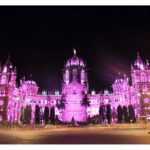
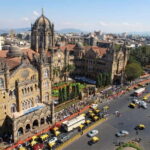
You end at Chhatrapati Shivaji Terminus, described as one of the world’s UNESCO Heritage Sites and viewed as the most beautiful train station in India.
This finish is about 15 minutes of viewing. Even if you don’t ride the trains, the terminal itself is the point. The architecture is meant to impress, and UNESCO status adds weight: you’re looking at a structure recognized internationally for its value.
Ending here also makes practical sense. You’re in a central, well-known area at the end of your walk, so you can smoothly continue your plans afterward.
What a 10-person group changes (and why it matters on this route)
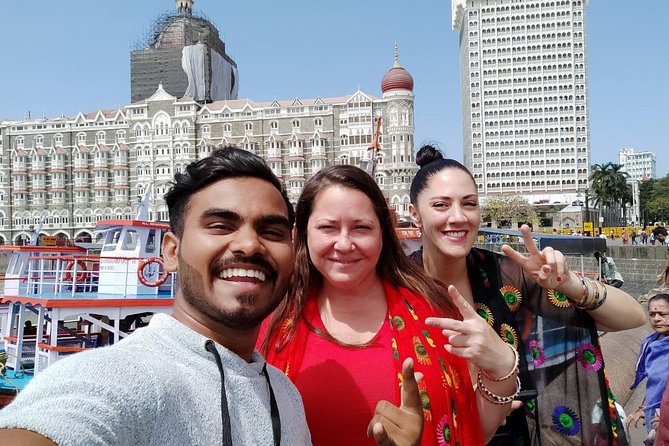
A max of 10 travelers makes a difference on a heritage walk. You can actually hear your guide at sidewalk distance. You’re less likely to get separated from your group at busy intersections. And when something sparks a question, you’re not competing with a crowd for attention.
Based on what guides have been known for, people have credited leaders like Anthony for taking people to unique sites and adding commentary that connects places that otherwise feel random on a map. Others have mentioned Dev for being enthusiastic, photo-helpful, and even sharing a real-world angle on daily life and commute habits.
That last part is key. The tour isn’t only “big story, big building.” It’s also about how the city works around those landmarks. When you’re done, you tend to understand the route better and feel more confident doing your own walking afterward.
How to get the most from each stop (without slowing the group down)
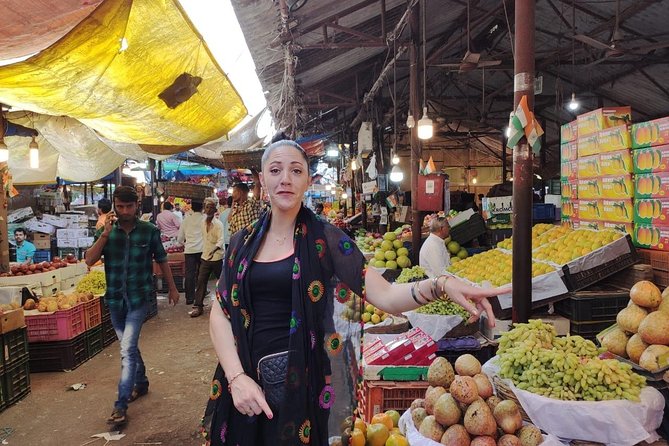
Because the stops are short, you’ll get better results if you set a simple goal at each one: one photo angle, one thing you want to remember, and one question you want answered.
Here are a few ways I’d make the most of it:
- Bring your phone camera, but don’t linger in the way that forces your group to wait.
- If a stop is emotional (like St. Thomas Cathedral memorials), take a minute to absorb before you move on. It helps the story stick.
- At Fashion Street, if you’re shopping, do it quickly and smart. Bargaining is part of the scene, but the tour time is limited, so treat this as a browse moment unless you’ve already decided what you want.
And since bottled water is included, you can focus on the walk itself instead of hunting for a drink mid-route.
Photo reality: where this walk naturally sets you up
Some tours are hard on photos because you spend too much time in traffic or too far from buildings. This one works better because the route is designed for visible landmarks and recognizable street scenes.
Expect your strongest photo opportunities at:
- the Gateway of India arch monument,
- the University of Mumbai Library clock-style colonial look,
- the people-and-cricket scene near Oval Maidan,
- St. Thomas Cathedral exterior views (and likely its surrounding memorial context),
- Chhatrapati Shivaji Terminus, especially as your finish.
If you’re serious about photos, arrive a couple of minutes early at the start so you’re not rushing your first snapshots before the group moves.
Who should book this Colaba and Fort heritage walk
This tour is a great fit if you:
- want an efficient orientation to South Mumbai,
- enjoy walking with a guide who explains what you’re seeing,
- like mixing major landmarks with street life (cricket at Oval Maidan, shopping at Fashion Street),
- prefer a small group instead of a big herd.
It may not be the best choice if you:
- want a slow museum-style day,
- need lots of free time inside churches or civic buildings (the stops are timed and designed for seeing, not lingering),
- are uncomfortable with walking for around three hours.
If you’re deciding between this and a longer, more relaxed tour, choose this one for clarity and coverage. Choose a slower option if you want to settle in and spend half an hour or more per major site.
Should you book the Mystical Mumbai Colaba and Fort Heritage Walk?
I think this is a smart booking for first-time South Mumbai visitors, especially if you want your day to feel structured but not boxed-in. The price feels reasonable when you factor in a professional local guide, bottled water, and a route with major stops that are marked Admission Ticket Free. The small group size also gives you a better chance of actually hearing the stories and asking questions, which is where the value really lives.
Book it if your goal is to understand Mumbai’s layers while you walk. Skip it if your goal is long, quiet time in fewer places. Either way, going in with the right expectation helps: you’re buying momentum and context, and you’ll earn that confidence as soon as you finish by UNESCO CST.
FAQ
Is the tour in a small group?
Yes. The tour has a maximum of 10 people.
How long is the walking tour?
It runs about 3 hours.
Where does the tour start and end?
It starts at Regal Cinema Building, Chhatrapati Shivaji Maharaj Marg, Apollo Bandar, Colaba. It ends in the Chhatrapati Shivaji Terminus area, Fort.
What are some of the main stops on the route?
The route includes the Gateway of India, University of Mumbai Library, Oval Maidan, St. Thomas Cathedral, Bombay High Court, Fashion Street, and Chhatrapati Shivaji Terminus.
Are any of the sights included with admission fees?
The listed stops on the itinerary are marked as Admission Ticket Free.
What’s included in the price?
A professional local guide and bottled water are included.
Is hotel pickup or drop-off included?
No, hotel pickup and drop-off are not included.
What’s the cancellation window?
You can cancel up to 24 hours in advance for a full refund.