REVIEW · MUMBAI
Private Custom Mumbai Tour
Book on Viator →Operated by City Tours India · Bookable on Viator
Mumbai can overwhelm fast. This tour keeps it under control.
What I like most is the custom nature of the day: you choose what matters, and you can skip what doesn’t. The second big win is comfort and convenience—hotel pickup and drop-off plus a private, air-conditioned chauffeur-driven car means you spend time seeing Mumbai, not negotiating taxis.
I also like that the private guide is with you the whole time, so you get context at each stop instead of just a quick photo. A small consideration: admission rules vary by stop, and Mani Bhavan’s museum ticket is not included, so plan for that if it’s on your must-see list.
In This Review
- Key Highlights at a Glance
- How Private Means You Can Actually Enjoy Mumbai
- Price and Value: What $199 Buys in Real Terms
- 9:00 AM Start, Hotel Transfers, and How the Day Stays Flexible
- Gateway of India: The Monument That Explains an Era
- Regal Theatre at Colaba: Art Deco + Film-Era Trivia
- Town Hall / Asiatic Society Library: Where Mumbai Learned to Think
- Mani Bhavan Gandhi Museum: When Gandhi’s Mumbai Becomes Personal
- Chowpatty Beach and the Queen’s Necklace: Sea Air + City Energy
- Chhatrapati Shivaji Terminus (Mumbai Central Terminus): A UNESCO-Listed Surprise
- Nariman Point: Business District Views and the Performing Arts Thread
- Dhobi Ghat: Seeing Work in the Open Air
- Who This Private Custom Tour Fits Best
- Should You Book It?
- FAQ
- FAQ
- How long is the private custom tour?
- What time does the tour start?
- Is hotel pickup and drop-off included?
- Do I ride in a private vehicle?
- Is the tour guided?
- Are admission tickets included for every stop?
- What’s included in the price besides the guide and vehicle?
- What is the cancellation window?
Key Highlights at a Glance
- Customizable route, private pace so you steer the day toward your interests
- Air-conditioned private transport with a chauffeur, plus fuel, parking, and taxes covered
- Hotel pickup and drop-off removes the biggest friction point in busy Mumbai
- A guide named Ashkay has been praised for being knowledgeable and great company
- Top sights across eras and themes, from Gandhi to an UNESCO rail station
- Admission is mostly free, with the key exception of Mani Bhavan
How Private Means You Can Actually Enjoy Mumbai
Mumbai is not a “checklist” city. It’s a choose-your-own-adventure city, and that’s exactly where a private tour shines. With this setup, you’re not stuck with someone else’s priorities. If your day is about architecture, you lean into the historic landmarks. If you’re more interested in the way people live and work, you have room to spend time where that shows up.
The practical payoff is simple: you get one guide, one vehicle, and a full block of time (about 7 to 8 hours) to move across South and central Mumbai without constantly resetting your plans.
The other part I appreciate is that private doesn’t mean chaotic. You’re not wandering alone; you’re guided, which helps when street directions are confusing or when you want the story behind what you’re seeing.
You can also read our reviews of more private tours in Mumbai


Price and Value: What $199 Buys in Real Terms
At $199 per person for a 7-8 hour private tour, the question isn’t just cost—it’s what’s included that you’d otherwise pay for separately. Here’s the value math in plain language:
- You’re paying for a private air-conditioned car with fuel, parking charges, and government taxes for transport included.
- You get an English-speaking local guide throughout the day.
- Hotel pickup and drop-off are included, which usually saves time and extra coordination.
If you’re traveling as a couple or small group, private transport usually becomes better value fast compared to piecing together multiple rides plus a separate guide. Even as a solo traveler, it can still make sense if you want a smooth, controlled day and don’t want to spend half your energy figuring out logistics.
9:00 AM Start, Hotel Transfers, and How the Day Stays Flexible
The tour starts at 9:00 am, and the day is structured around a sequence of major stops, with time blocks that range from about 30 minutes to around 1 hour at key points.
That matters because Mumbai’s traffic and crowds can turn a “quick stop” into an “oops, we lost time.” A private vehicle helps, but the real advantage is having a guide to keep things moving and to adjust when something feels more interesting (or less so).
Also, your tour is designed to be customizable. The day is built around well-known landmarks, but you’re not locked into staring at everything equally. If you want more time near the sea, for example, you can shift focus. If you want more context at a cultural stop, you can extend your time there and cut another area.
Gateway of India: The Monument That Explains an Era
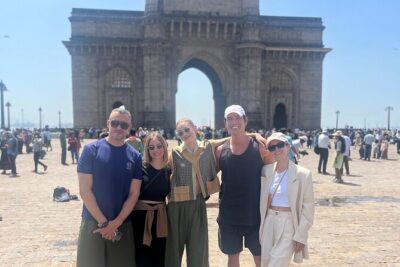
Your day often begins at Gateway of India, a major arch monument built in the early twentieth century. It was created to commemorate the landing in December 1911 of King-Emperor George V and Queen-Empress Mary at Apollo Bunder in Mumbai.
Even if you don’t plan to read every plaque, this stop works because it anchors the bigger story of Mumbai’s colonial-era connections and the way public monuments can mark political moments.
Time tip: you’re typically given about 30 minutes here. Use that window to get your bearings, snap a couple of photos, and then use your guide’s context to decide whether you want a longer look from different angles as the day changes.
Admission here is listed as free, so you’re not forced into ticket lines or extra costs at the start.
Regal Theatre at Colaba: Art Deco + Film-Era Trivia
Next is the Regal Theatre in Colaba Causeway. This is an Art deco movie theatre, and the fun detail here is its early film connection: it opened with the Laurel and Hardy work The Devil’s Brother in 1933.
There’s also a standout record-worthy fact: it’s noted as the first air-conditioned theatre of India (according to the Limca Book of Records). That’s the kind of detail that makes Mumbai feel layered—modern comforts appearing in unexpected historical moments.
The good part about including Regal is that it adds a different flavor from the stone-and-royalty tone of Gateway of India. You get culture, film heritage, and an architectural style you can actually see up close.




Town Hall / Asiatic Society Library: Where Mumbai Learned to Think
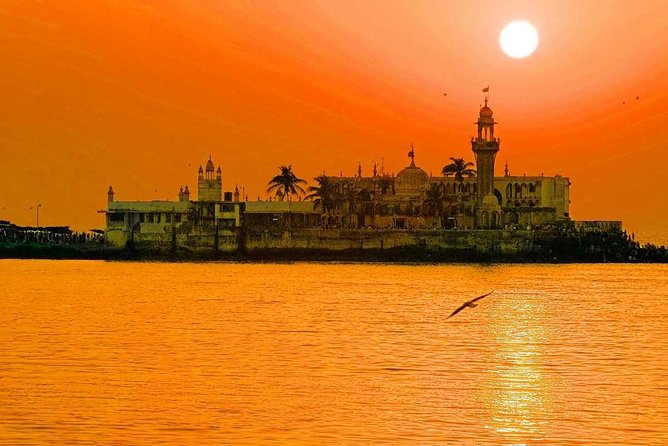
From there, you head toward Town Hall (Asiatic Society Library). The Asiatic Society of Mumbai is a learned society focused on Asian studies, and it traces its origin to the Literary Society of Bombay, which first met on 26 November 1804.
This stop is often a surprise hit. Not because it’s flashy, but because it helps explain how a city grows its identity. Mumbai isn’t only about monuments and commerce—it’s also about institutions that shape ideas.
Time tip: plan for about 30 minutes. In that time, you can cover the basics and then rely on your guide for the context that turns a building into a story.
Admission is free here as listed, so it’s an easy win.
Mani Bhavan Gandhi Museum: When Gandhi’s Mumbai Becomes Personal
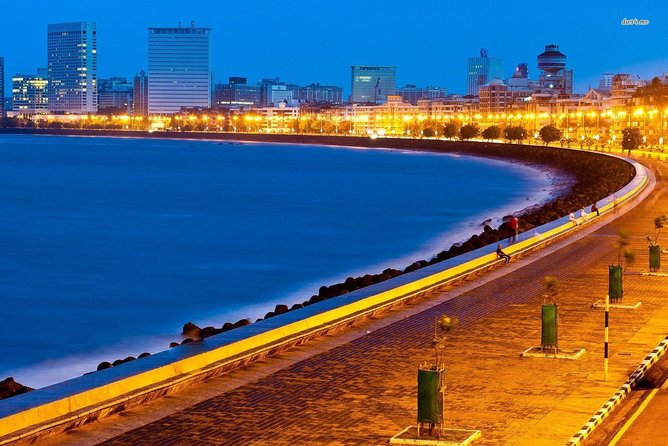
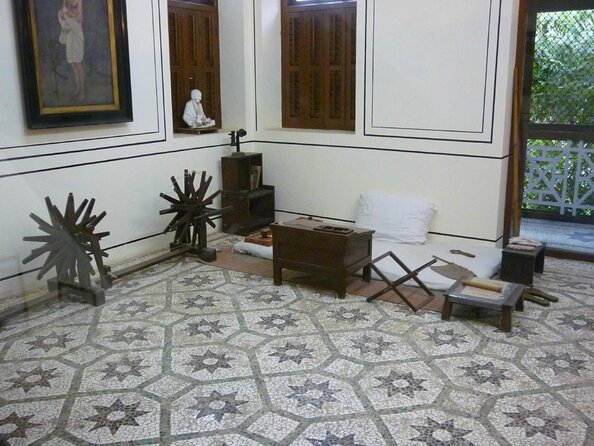
Then comes Mani Bhavan, Gandhi’s museum and historical building in the Gamdevi precinct on Laburnum Road. This place matters because it was the focal point of Gandhi’s political activities in Mumbai from 1917 to 1934.
If you care about how ideas spread through cities, this stop delivers. It’s not just about Gandhi as a figure; it’s about location—where action and planning happened, and how Mumbai fits into the timeline of political change.
Here’s the key consideration: Mani Bhavan admission is not included. Some other stops are listed as free, so you’ll want to budget for this if it’s a must-see.
Time tip: you’re typically allotted about 1 hour. That’s the right amount if you want to read enough to feel the place instead of sprinting through.
Chowpatty Beach and the Queen’s Necklace: Sea Air + City Energy
Next is Chowpatty Beach (Girgaon Chowpatty), a public beach along the Queen’s Necklace adjoining Marine Drive. It’s connected to the city’s rhythm with a nearby rail reference—Charni Road railway station serves the area.
Even if you’re not there for a swim, this stop is useful because it gives you a breather between landmarks. It also lets you see Mumbai as a lived-in city, not just a museum of buildings.
Time tip: about 1 hour here gives you enough time to walk a bit, take photos, and recharge before the more structured stops.
Admission is listed as free. That keeps the day moving without adding cost.
Chhatrapati Shivaji Terminus (Mumbai Central Terminus): A UNESCO-Listed Surprise
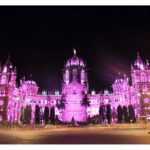
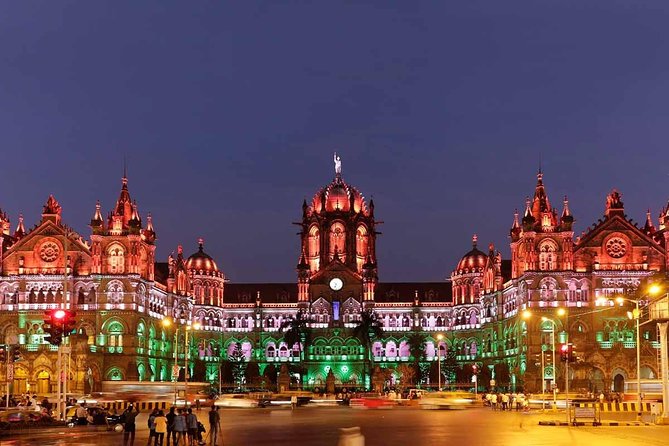
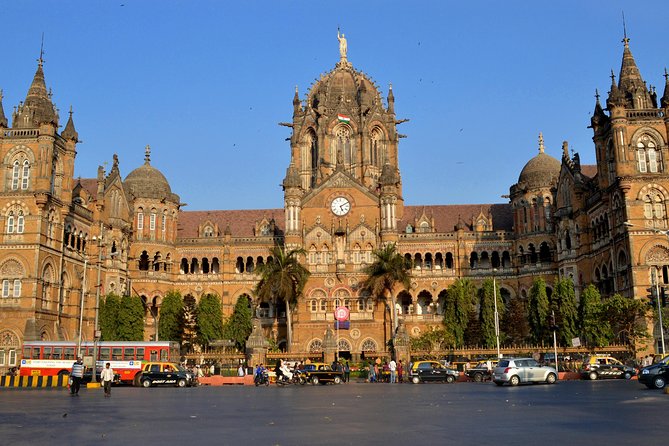
From the coast, the tour shifts to a transport landmark: Chhatrapati Shivaji Terminus, also known by its former name Victoria Terminus. It’s a historic train station and UNESCO World Heritage Site.
This is where the day gets interesting in a different way. Rail stations often get treated like pure logistics, but at UNESCO level, they’re about design, history, and a city’s ambition. The station becomes a symbol of Mumbai’s scale and its role as a hub.
Time tip: you’ll likely spend around 1 hour here. That’s long enough to look carefully at the station setting and absorb the story with your guide, not just rush through for a quick shot.
Admission is listed as free, so it’s another low-friction stop.
Nariman Point: Business District Views and the Performing Arts Thread
Then you head to Nariman Point, Mumbai’s business district with high-rise offices and upscale hotels. It’s also known for sea-facing bars and sunset drinks.
But Nariman Point isn’t only about finance and views. It’s home to the National Centre for the Performing Arts (NCPA), which hosts experimental theatre and international music acts. There’s also the Piramal Art Gallery, focused on modern visual arts.
This stop works as a contrast: you’ve just seen Gandhi’s era and UNESCO rail heritage, and now you’re in a present-day zone where culture and business sit side by side.
Time tip: expect about 30 minutes. Use that for a quick orientation, a photo with the skyline, and a chance to ask your guide what’s worth focusing on if you ever return on your own.
Admission is listed as free.
Dhobi Ghat: Seeing Work in the Open Air
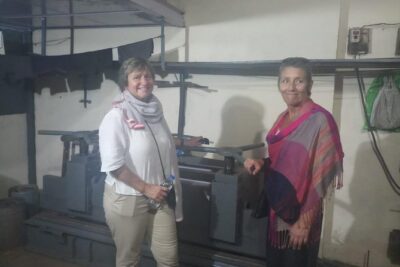
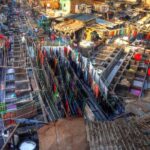
The final stop is Dhobi Ghat, an open-air laundromat in Mumbai. The washers are known as dhobis, and they clean clothes and linens from Mumbai’s hotels and hospitals. It was constructed in 1890.
If you want one stop that feels real, this is it. You’re not only looking at architecture or institutions—you’re watching labor and daily service in a historic setting.
Time tip: allow about 30 minutes. You’ll likely want to observe quietly, take a few photos if appropriate, and listen for your guide’s explanation of how this operation fits into Mumbai’s bigger systems.
Admission is listed as free.
Who This Private Custom Tour Fits Best
This is a strong match if you want:
- A guided day without needing to plan every route change yourself
- Control over what you prioritize, since the tour is customizable
- Comfort and efficiency from a private air-conditioned vehicle
- A route that covers heritage + culture + daily life in one go
It may be less ideal if:
- You want long time at just one place. Many stops are 30-minute blocks, so the day is more “see a lot intelligently” than “live here for hours.”
- You’re extremely price-sensitive, since private transport and a guide are part of the deal.
Should You Book It?
If you want an easy, guided way to cover major Mumbai highlights in one controlled day, I think this tour is worth serious consideration. The inclusion of hotel transfers, private driver, and an English-speaking guide helps you avoid the usual friction of navigating a large city under time pressure.
I’d especially book this if Mani Bhavan and the historical landmarks appeal to you, because the route is built to connect stories across different periods—royal-era monuments, film-era architecture, Gandhi’s political base, UNESCO rail heritage, and living work at Dhobi Ghat.
Just go in with one mindset: this is a smart sampler with guided context, not a slow wandering marathon. If that fits your style, you’ll come away with a clearer picture of Mumbai fast.
FAQ
FAQ
How long is the private custom tour?
It runs about 7 to 8 hours.
What time does the tour start?
The start time is 9:00 am.
Is hotel pickup and drop-off included?
Yes. Hotel pickup and drop-off are included.
Do I ride in a private vehicle?
Yes. You’ll use a private, air-conditioned vehicle with a private driver.
Is the tour guided?
Yes. You get an English-speaking local guide for the tour.
Are admission tickets included for every stop?
Not all of them. Admission is not included for Mani Bhavan, while the other listed stops are marked as free.
What’s included in the price besides the guide and vehicle?
The package includes fuel, parking charges, and government taxes for transport, plus your private tour.
What is the cancellation window?
You can cancel up to 24 hours in advance for a full refund. Changes less than 24 hours before the start time aren’t accepted, and refunds won’t be available inside that window.