REVIEW · MUMBAI
4 Day Golden Triangle Tour to Delhi Agra and Jaipur From Mumbai
Book on Viator →Operated by Imperial Holidays · Bookable on Viator
Golden Triangle, planned and organized. This 4-day private route strings together Mumbai, Delhi, Agra, and Jaipur with included flights and guided sightseeing, so you skip the hardest parts of planning and still hit the big icons like the Taj Mahal and Amber Fort. I especially like the way it’s built around transport + entrances + hotels as one package, not a scavenger hunt through bookings.
The only real drawback is the pace: you’ll pack in a lot, start early for the Taj, and you might run into an English accent that’s harder to follow (one past guest flagged this). Still, with a careful plan and a good driver like Mr. Singh in Mumbai and Sunil on the road, it stays calm and well-managed.
In This Review
- Key Points to Know Before You Go
- The Big Picture: What This Tour Gets Right
- Day 1: Mumbai Icons, Gandhi Museum Time, Then Off to Delhi
- Day 2: Qutub Minar, Lotus Temple, India Gate, Then Agra
- Day 3: Sunrise Taj Mahal Plus Agra Fort and Itmad-ud-Daula
- Day 4: Amber Fort, Jantar Mantar, City Palace, and Pink Hawa Mahal
- Price and Value: What $550.27 Really Buys
- Guides, Drivers, and Why Reviews Keep Coming Back to Safety
- What I’d Pack and How I’d Handle the Schedule
- Who This Tour Fits Best (and Who Might Want Something Else)
- Should You Book This 4-Day Golden Triangle Tour?
- FAQ
- Is the tour private?
- Are flights included in the price?
- Does the tour include hotels and breakfast?
- What sightseeing tickets are included?
- Is lunch or dinner included?
- How many days is the tour, and when does it start?
- Can I cancel and get a refund?
Key Points to Know Before You Go
- Flights are included both directions (Mumbai → Delhi and Jaipur → Mumbai) with 15 kg checked + 7 kg carry-on per person.
- Private, air-conditioned transport handles all road travel between cities and stops.
- Professional local guides are part of the package in each city, and they can help with timing and photo angles (RashidBhai is one guide who impressed people as both guide and photographer).
- Taj Mahal logistics are covered with a battery shuttle to help you get to the entrance and back.
- Hotels are included if you choose that option, with twin-sharing as the default setup.
- A lot is crammed into four days, so you’ll want comfortable shoes and a flexible mindset about early starts.
The Big Picture: What This Tour Gets Right
This is a classic Golden Triangle schedule, but the value comes from how much is pre-arranged. You’re not just getting a list of sights. You’re getting a full backbone: airport transfers, private car, entrance fees, hotel nights, and licensed English-speaking local guides who help you move efficiently between stops.
For first-timers to India (or anyone short on time), this matters. In places like Delhi and Mumbai, traffic, distance, and timing can turn even a good plan into stress. Here, the plan keeps you moving while also protecting the key moments—especially the early Taj Mahal visit.
You also get a sensible “travel rhythm.” Day 1 is Mumbai with an evening flight to Delhi. Day 2 is Delhi then onward to Agra. Day 3 is Agra early, then Jaipur. Day 4 is Jaipur sights before flying back to Mumbai. It’s tight, but it’s logical.
You can also read our reviews of more tours and experiences in Mumbai
Day 1: Mumbai Icons, Gandhi Museum Time, Then Off to Delhi
Your day starts at 9:00 am with a sightseeing loop around Mumbai’s most recognizable landmarks. You’ll see the Gateway of India area with free time for photos and views over the Arabian Sea. Nearby, you can also fit in the Mani Bhavan Gandhi Museum, a meaningful stop that helps you understand Gandhi’s life beyond the headlines.
From there, the tour keeps mixing old-and-new Mumbai. You’ll pass or visit places like Chhatrapati Shivaji Maharaj Terminus (CST), known for Victorian Gothic architecture, plus a local-market moment at Crawford Market. The route also includes Dhobi Ghat, the famous open-air laundry area, and a scenic pause at Kamala Nehru Park with views toward Marine Drive (often called Queen’s Necklace for a reason at night, though daytime views still help you orient).
One of the practical advantages here is that your schedule includes transfers that would otherwise eat up your day. By the end of the sightseeing block, you’re transferred to Mumbai airport for your evening flight to Delhi. That means less waiting around, fewer taxi calculations, and more time actually looking at places.
Day 2: Qutub Minar, Lotus Temple, India Gate, Then Agra
Day 2 begins in Delhi with Qutub Minar. It’s a towering UNESCO site tied to Indo-Islamic architecture, and it’s the kind of landmark where a guide helps you notice details you’d miss if you just wander.
Next is the Lotus Temple, a serene stop with a striking lotus shape. You’ll also have time at India Gate, the war memorial, where the setting makes it easy to get a quick sense of national scale and design.
The itinerary also includes viewpoints near Parliament House and another important historic site: Agrasen Ki Baoli, a stepwell that feels atmospheric and a bit eerie in the best way—especially if you go in with a slower pace for photos.
Then you hit the long but efficient road segment: drive from Delhi to Agra via the Yamuna Expressway (about 3.5 hours, depending on traffic). Once you arrive, you check in and spend the night in Agra.
This day is a good example of how the package protects your time. Delhi traffic can be unpredictable, but you’re not stuck trying to solve transportation. You get an AC vehicle, bottled water during road journeys, and a handoff from one city’s guide world to the next.
Day 3: Sunrise Taj Mahal Plus Agra Fort and Itmad-ud-Daula
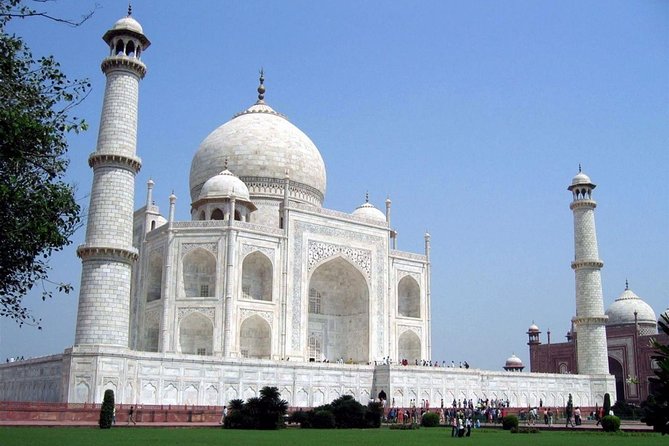
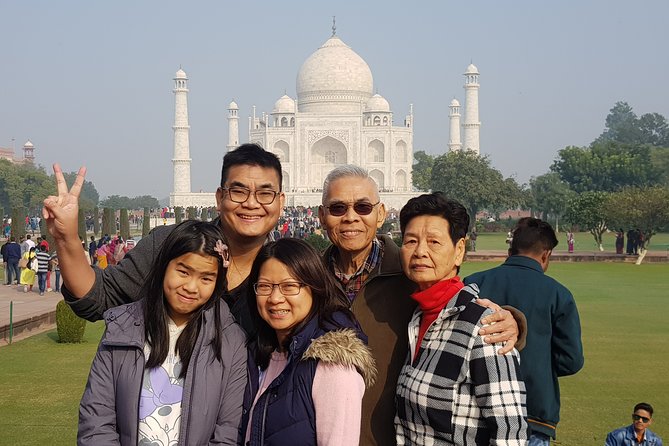
If the Taj Mahal is your must-see, this tour treats it like a must-see. You start with a sunrise visit to the Taj Mahal, with admission included. Sunrise timing is a big deal here: the light softens the marble, the crowd pressure is typically lower than mid-day, and the experience feels more “moment-like” than “checklist-like.”
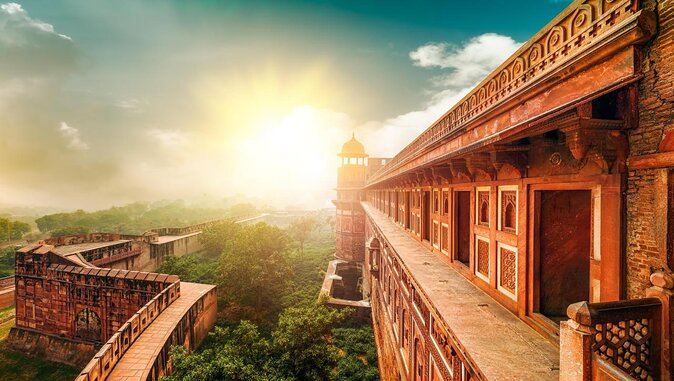
After the Taj, you’ll move to Agra Fort, another UNESCO-listed site. The fort gives you a different kind of grand scale—less about one single landmark view and more about walls, structure, and the feel of Mughal power.
Then comes Itmad-ud-Daula, a tomb often described as a quieter predecessor to the Taj look. Even if you’re not chasing every architectural comparison, it’s a strong add-on because it shifts the focus from big drama to careful craftsmanship.
Next, you drive to Jaipur (about 4.5–5 hours) and check in for the night. This is a long day, no sugarcoating. But it’s also one of the best ways to cover the Golden Triangle without losing half your trip to transit chaos.
Day 4: Amber Fort, Jantar Mantar, City Palace, and Pink Hawa Mahal
Jaipur is where the tour really flexes variety: fort views, town-palace architecture, astronomy, and iconic photo stops.
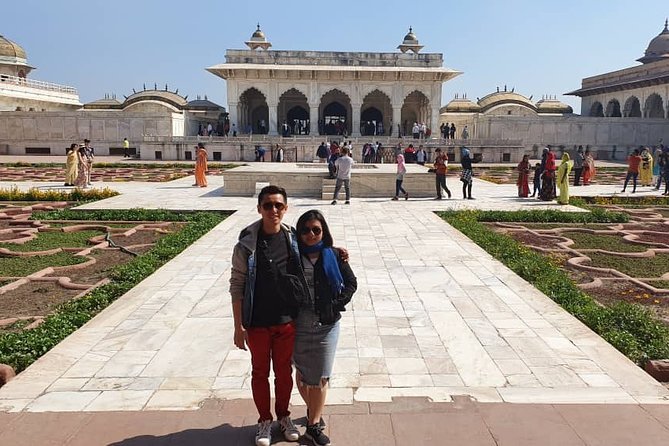
You start with Amber Palace (Amber Fort), visiting the hilltop complex with included admission. It’s built for views—so go in expecting walking and stairs around courtyards and lookouts. After that, the schedule adds a mix of shorter stops that keep the day from becoming one long museum slog.
You’ll visit Panna Meena ka Kund, a stepwell known for its geometric layout, and Jal Mahal, the palace sitting in the middle of Man Sagar Lake. Even in brief time, these two stops help you understand why Jaipur is more than forts and shopping streets.
You’ll also see Gaitore Ki Chhatriyan, royal cenotaphs with intricate carvings, then move into the larger palace zone at City Palace of Jaipur. The palace complex blends Rajput and Mughal styles, and it’s a great “big picture” closer to your Jaipur story.
For one of the tour’s most unique experiences, you’ll go to Jantar Mantar, the astronomical observatory and UNESCO site. This is the stop that helps you slow down and look at instruments as real engineering, not just old stone.
Finally, you finish with Hawa Mahal (Palace of Wind). It’s a fast icon stop, but it’s one of the best “tell your friends later” moments from Jaipur because it’s instantly recognizable from photos and from the streets.
Then you’re transferred to the airport for your Jaipur → Mumbai commercial flight, and once you land, you’re picked up and taken to your preferred Mumbai location.





Price and Value: What $550.27 Really Buys
At $550.27 per person, the key question is what’s included, not just what’s missing. This price bundles a lot that often gets pieced together separately:
- Round-trip domestic flights (Mumbai → Delhi and Jaipur → Mumbai) with baggage allowance
- Three nights’ accommodation (only if you select the option with hotels)
- Daily breakfast (3 breakfasts total, if hotels are selected)
- Private, air-conditioned transport for all road movement
- Entrance fees for monuments in the itinerary
- Local guide services across the cities
- Airport pickup and drop-off in Mumbai, Delhi, Agra, and Jaipur
That’s why people call it good value. You’re paying for coordination that’s hard to DIY in four days—especially when you want to keep the big sights without turning each day into a negotiation with traffic and ticket counters.
One note: dinner and lunch are not included. That’s common on tours like this, but it’s still something to plan for. I’d set aside time and money for at least a couple of simple meals near where you’re dropped off, so you’re not hungry during the next drive or visit.
Guides, Drivers, and Why Reviews Keep Coming Back to Safety
The consistent theme here is not just “we saw everything.” It’s the comfort factor: you’re met on time, driven in private vehicles, and guided with an actual local perspective.
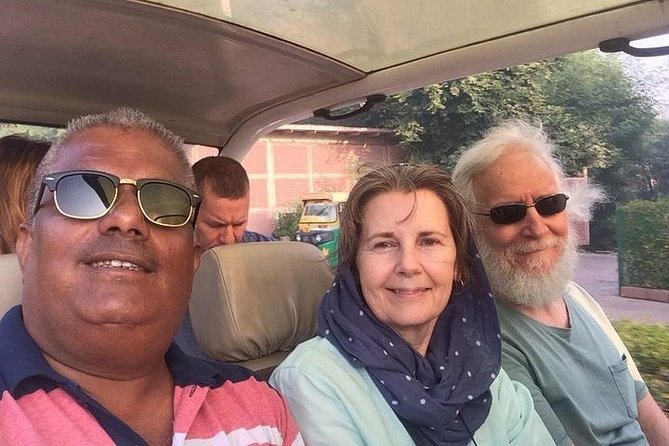
The driver Mr. Singh is named for professional care during the full experience. RashidBhai is highlighted as a passionate guide and photographer around Agra. Rati Ram is praised for punctual, accommodating driving on the Delhi → Jaipur stretch. Sunil also stands out for being accommodating and knowledgeable about areas.
Even if you don’t meet the same staff, the pattern matters. A well-run Golden Triangle tour depends on drivers who handle timing and guides who keep visits efficient. This package is built around that, and it’s the main reason the schedule doesn’t feel chaotic.
One practical tip: if your guide’s English is tough to catch, don’t suffer silently. Ask for slower explanations and point out you want the meaning behind what you’re seeing. If they’re used to international visitors, they’ll usually adjust quickly.
What I’d Pack and How I’d Handle the Schedule
This trip is very doable for most people, but comfort is everything on a tight itinerary.
- Wear walking shoes. Forts and palace complexes involve stairs and uneven surfaces.
- Bring sunscreen. You’ll spend time outdoors across multiple cities.
- Carry a valid ID/passport for domestic flights and hotels.
- Plan for early mornings, especially the sunrise Taj schedule.
- Keep your day flexible in Delhi and Agra. Even with a plan, traffic can stretch driving times.
Also, the Taj Mahal stop includes a battery shuttle from parking to the entrance and back. That helps. It doesn’t remove all walking, but it reduces the long slog at a time when you’ll already be waking up early.
Who This Tour Fits Best (and Who Might Want Something Else)
This is a strong match for:
- First-time visitors who want the Golden Triangle hits without babysitting logistics
- Couples and solo travelers who prefer private guides and private transport
- Families who want hotels and entrance fees handled so you can focus on the sights
It might be less ideal for:
- People who hate early starts
- Travelers who want lots of free time to wander without a tight sequence
- Anyone who plans to be ultra-picky about guide language style (one past guest mentioned an accent issue)
Should You Book This 4-Day Golden Triangle Tour?
I’d book it if you want a smart, time-saving Golden Triangle that handles flights, hotels, entrances, and city-to-city driving in one clear plan. For the money, the package does real work: it removes planning stress and protects the moments that usually take the most effort—like reaching the Taj at sunrise.
If you do choose it, pick the hotel option you like most and bring comfortable shoes. Then go in with the right expectations: this isn’t a slow travel retreat. It’s a focused, high-output itinerary that still leaves room for memorable stops like Qutub Minar, Amber Fort, City Palace, Jantar Mantar, and the Taj Mahal.
FAQ
Is the tour private?
Yes. It’s described as a private tour, meaning only your group participates.
Are flights included in the price?
The itinerary includes commercial economy-class flights from Mumbai to Delhi and from Jaipur back to Mumbai, and it lists baggage allowances (15 kg checked and 7 kg hand luggage).
Does the tour include hotels and breakfast?
Hotels are included only if you choose the option with hotels during booking. The package also includes daily breakfast (3 breakfasts total if hotels are selected).
What sightseeing tickets are included?
Entrance fees to monuments and attractions listed in the itinerary are included.
Is lunch or dinner included?
No. Lunch and dinner are not included.
How many days is the tour, and when does it start?
The duration is listed as 4 days (approx.). The start time is 9:00 am.
Can I cancel and get a refund?
You can cancel up to 6 days in advance for a full refund. Shorter notice has lower refunds, and changes made less than 2 days before the start are not accepted.