REVIEW · MUMBAI
Mumbai heritage walk- Story of Gothic and Art Deco buildings
Book on Viator →Operated by 5 Senses Walks, Mumbai · Bookable on Viator
Mumbai’s Gothic and Art Deco stories walk beside you. This 3-hour heritage walk in Fort turns big-name buildings into an easy, human story of how Mumbai grew. I love the way the tour connects Gothic and Art Deco details to what the city was doing at the time, from trade and power to wealth and public life.
The second thing I like is the small-group feel, plus the included snacks that keep you comfortable through the walk. One drawback to consider: you’ll mostly see buildings from outside, and at a couple spots you may only get a lobby-level view rather than full interior access.
In This Review
- Key highlights worth your attention
- A Fort-area walk through Mumbai’s big architectural mood swings
- Good guide, good pace: what the 3-hour format feels like
- Stop 1: Chhatrapati Shivaji Maharaj Terminus (CST) and Victorian Gothic with Indian notes
- Stop 2: Eros Cinema’s Art Deco tiers that look like a wedding cake
- Stop 3: Empress Court and what Art Deco living signaled
- Stop 4: Bombay High Court Principal Bench and the statues of Justice & Mercy
- Stop 5: Rajabai Clock Tower and the chimes story
- Stop 6: David Sassoon Library and reading room (lobby view, still worth it)
- Stop 7: Elphinstone College and Gothic education landmarks
- Stop 8: Chhatrapati Shivaji Maharaj Vastu Sangrahalaya (CSMVS) to close the loop
- Price and tickets: is $35 actually good value?
- Who this tour fits best (and who might want something else)
- Should you book this Mumbai heritage walk?
- FAQ
- How long is the Mumbai heritage walk?
- How much does the tour cost?
- How many people are in the group?
- Where does the tour start and end?
- Are tickets included?
- Do you get snacks during the walk?
- Are the stops mostly indoors or outdoors?
- Is the tour run in good weather only?
- Do I get a mobile ticket?
- What’s the cancellation policy?
Key highlights worth your attention
- UNESCO-class Victorian Gothic at Chhatrapati Shivaji Maharaj Terminus, with Indian design influences explained clearly
- Art Deco “cinema architecture” at Eros Cinema, including how the building’s tiers create that wedding-cake look
- Status and design at Empress Court, where Art Deco living was a flex
- Justice, mercy, and timekeeping at the Bombay High Court and Rajabai Clock Tower, tied to real stories
- Gothic education landmarks at Elphinstone College, plus a Jewish banker’s library space you view from the lobby
- A strong finish at CSMVS (Prince of Wales Museum) in a major heritage building
A Fort-area walk through Mumbai’s big architectural mood swings

This is the kind of tour that helps you look up—and keep looking. Mumbai’s Fort area is packed with buildings that were designed for different eras, different ideas, and different audiences. The walk gives you a simple lens to spot those changes as you move from Gothic Revival into Art Deco.
What makes it fun is the mix: you’re not just chasing pretty facades. You get the “why” behind the shapes, towers, statues, and materials—how Victorian builders borrowed Gothic language, and how later Art Deco designers used clean geometry to signal modern taste.
The route also works well if you’re short on time. In about 3 hours, you can hit a concentrated set of landmarks without needing to plan a whole day of transit and ticket math.
You can also read our reviews of more walking tours in Mumbai


Good guide, good pace: what the 3-hour format feels like
The tour runs for about 3 hours with a maximum group size of 15 people. That small number matters because you’re walking, stopping, and asking questions in real time instead of being shuffled like a human pinball.
Your guide (the reviews frequently mention Pankaj) is what turns architecture into an actual story. He’s the type who explains in plain language, and the tour approach makes it easy to follow along even if Gothic and Art Deco aren’t your usual hobbies.
You’ll also get snacks during the walk, which is a practical comfort in a city where weather and schedules can be unpredictable. The tour is designed for most travelers, and it’s near public transportation, so you’re not stuck scrambling to get to the start.
One practical note: this experience is weather-dependent. If conditions are poor, it can be moved or refunded, so keep an eye on forecasts on the day.
Stop 1: Chhatrapati Shivaji Maharaj Terminus (CST) and Victorian Gothic with Indian notes
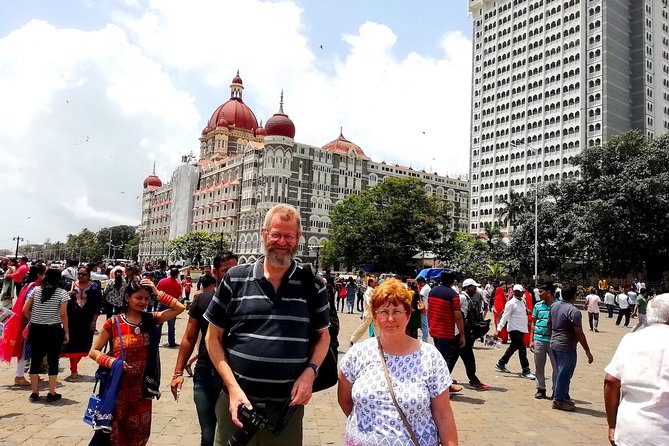
You start at Chhatrapati Shivaji Maharaj Terminus (CST), a UNESCO heritage building. This is arguably the best example of Victorian Gothic Revival architecture in India, and the tour’s angle is smart: it doesn’t treat Gothic as a single style with fixed rules. It explains how the Gothic elements were blended with Indian design themes.
That blend is the real takeaway. Once you understand it, you start noticing patterns: the way the building carries Gothic drama (pointed forms, vertical emphasis) while still reflecting local identity. It’s an architecture lesson you can literally see.
This stop also includes an admission ticket, so you’re not only photographing the outside. You get time inside (about 30 minutes), which helps you connect exterior details to what the space is doing.
If you’re the type who loves stations, clocks, rail history, and the idea of cities becoming global through transport, this is your anchor stop.
Stop 2: Eros Cinema’s Art Deco tiers that look like a wedding cake
Next up is Eros Cinema, seen from the outside. This building is a classic Art Deco cinema hall, and the guide points out what your eye may miss at first: it rises in tiers, capped by a semi-circular tower.
The tour description compares it to a wedding cake—and honestly, that comparison works. When you look for the tiering, it stops feeling like random ornament and starts feeling like deliberate design for glamour and spectacle. Movie palaces were built to sell more than films; they were selling an experience of modern life.
This is a 30-minute stop with no ticket included. So treat it as a “see it, interpret it, move on” moment. You’ll come away with an Art Deco pattern-recognition skill you can use elsewhere in the city.
Stop 3: Empress Court and what Art Deco living signaled
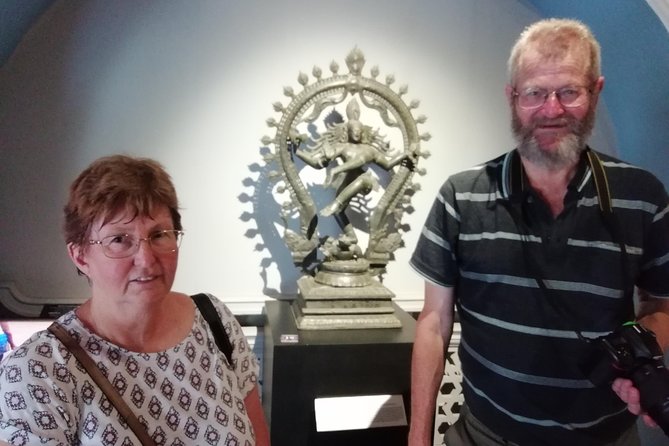
You then walk to Empress Court, another Art Deco landmark, again viewed from the outside. The tour focuses on meaning, not just style: living in Art Deco buildings was once a symbol of status and wealth.
This is where architecture stops being abstract. The building becomes a clue about who lived where, what “modern” meant, and how design communicated power. If you like social history as much as buildings, you’ll enjoy this stop.
It’s a shorter stop (about 15 minutes), so don’t expect a long lecture here. But the point lands: Art Deco wasn’t only about curves and geometry—it was also about signaling arrival into a new era.
You can also read our reviews of more historical tours in Mumbai




Stop 4: Bombay High Court Principal Bench and the statues of Justice & Mercy
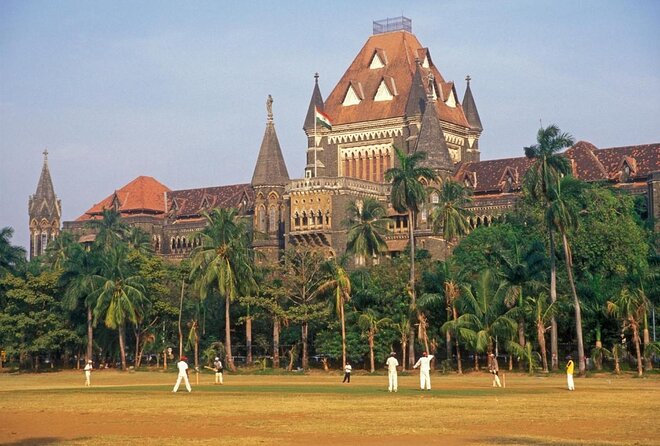
The walk brings you to the Bombay High Court Principal Bench from the outside. This one is framed as a “splendid specimen” of Gothic architecture, and the tour highlights what you should look for high up on the facade.
Specifically, you’ll be guided to the statues of Justice and Mercy on top of the building. Those sculptures aren’t just decoration. They’re part of how law wanted to look: not cold or purely administrative, but moral and inspiring.
This stop is around 30 minutes, and since there’s no admission ticket included, it’s mainly a visual interpretation. It’s still worthwhile, because it trains your eye to read architecture the way a designer likely intended: as a public statement.
Stop 5: Rajabai Clock Tower and the chimes story
You’ll reach Rajabai Clock Tower, described as the Big Ben of Mumbai—a great hook for anyone who likes famous timepieces or weird origins. The tour shares a specific story about financing and how the chimes were meant to support a visually challenged mother of the patron to keep her fasts punctually.
That story makes the tower feel personal instead of purely monumental. Clocks are functional, sure—but in buildings like this, timekeeping also becomes a social promise: the city wants you to hear, keep rhythm, and follow tradition.
It’s another 30-minute stop with no admission ticket included. You’ll likely spend your time focusing on sightlines and details that connect the clock face and tower design to that bigger meaning.
Stop 6: David Sassoon Library and reading room (lobby view, still worth it)

Next is the David Sassoon Library and Reading Room. This is a Gothic structure tied to David Sassoon, a Jewish banker who built a magnificent reading room and library.
Here’s the important practical detail: only members are allowed inside, so you’ll see the space from the lobby rather than touring the full interior. That could sound like a letdown—until you remember that from the street-level entry area, you can still understand the building’s purpose and scale.
The tour gives you about 20 minutes for this stop, and it’s a good example of how this walk balances expectation. You’re not promised full access everywhere, but you are given a context-rich view that still lands.
If you like architecture that’s tied to learning, public institutions, and community life, this stop will click.
Stop 7: Elphinstone College and Gothic education landmarks
You’ll also appreciate Elphinstone College, another striking Gothic structure. The tour connects the building to big names, including alumni such as Bal Gangadhar Tilak, Dr BR Ambedkar, and Jamshedji Tata.
Even if you don’t know every figure at first, the building’s role becomes clear: this is architecture that supports an institution with serious influence.
You get about 15 minutes here. It’s short, but it fits the tour’s pace: quick stops with strong takeaways. The main benefit is that it adds one more “category” to the Gothic story—law and governance, plus education.
Stop 8: Chhatrapati Shivaji Maharaj Vastu Sangrahalaya (CSMVS) to close the loop
The walk ends at Chhatrapati Shivaji Maharaj Vastu Sangrahalaya, also known as the Prince of Wales Museum. The heritage building has a layered past; it was earlier used as a military hospital for the Children’s Welfare Exhibitions.
This ending makes the whole route feel connected. Earlier stops show how Mumbai displayed authority (courts), industry and movement (CST), leisure and modernity (Eros), and wealth signaling (Empress Court). Ending at a major museum building pushes the theme toward preservation and storytelling—literally what a museum does.
This final stop is about 10 minutes, and there’s no admission ticket included. So think of it as a strong visual finish, not a full museum visit. If you want more time inside the museum galleries, you can plan that separately.
Price and tickets: is $35 actually good value?
At $35 per person for about 3 hours, this tour can be good value—especially if you enjoy structured sightseeing. You’re getting:
- a curated route in a dense heritage zone
- a small group size (max 15)
- included snacks
- and an admission ticket at CST
Those details matter because they reduce your hassle. You don’t have to figure out every entry on your own, and you’re not wasting prime sightseeing time hunting for tickets or waiting around.
One catch: several stops are outside views, and ticketed interiors are not included at most locations. The David Sassoon reading room is lobby-level due to membership. So you’re buying interpretation and context as much as access.
If your priority is “max inside entries,” you might want to pair this walk with a separate plan for the places you care about most. But if your priority is understanding Mumbai’s architectural language fast, this is a solid purchase.
Who this tour fits best (and who might want something else)
This walk is a great match for you if:
- you like architecture and want a guided way to read it
- you enjoy city history that’s tied to real buildings
- you want a concentrated route in the Fort area without full-day planning
- you appreciate a guide who can answer questions as you go (Pankaj comes up often for this)
You might want a different style of tour if:
- you’re only interested in interior museum time and want lots of included entries
- you hate outdoor walking stops or don’t want most buildings photographed from the outside
Should you book this Mumbai heritage walk?
I’d book it if you want an efficient, story-driven way to understand how Mumbai used Victorian Gothic Revival and later Art Deco styles to project identity, ambition, and public life. The best part is the combination: recognizable landmarks plus practical explanation, in a tight 15-person group with snacks and a strong guide.
If you’re the type who likes to keep learning after the tour—by noticing what you learned while walking on your own day—this one gives you that skill. For many first-timers, it’s an easy way to get your bearings fast in Mumbai’s most architectural pocket.
FAQ
How long is the Mumbai heritage walk?
It’s about 3 hours.
How much does the tour cost?
The price is $35.00 per person.
How many people are in the group?
The tour has a maximum of 15 travelers.
Where does the tour start and end?
It starts at Chhatrapati Shivaji Maharaj Terminus (CST) in the Fort area and ends at Chhatrapati Shivaji Maharaj Vastu Sangrahalaya (CSMVS) on Mahatma Gandhi Road, near Lion Gate.
Are tickets included?
An admission ticket is included for Chhatrapati Shivaji Maharaj Terminus (CST). For other stops, admission is not included.
Do you get snacks during the walk?
Yes, snacks are provided during the walk.
Are the stops mostly indoors or outdoors?
Most stops are visited from the outside. The David Sassoon Library and Reading Room is viewed from the lobby.
Is the tour run in good weather only?
Yes, the experience requires good weather. If it’s canceled due to poor weather, you’ll be offered a different date or a full refund.
Do I get a mobile ticket?
Yes, the tour includes a mobile ticket.
What’s the cancellation policy?
You can cancel for free up to 24 hours in advance for a full refund. If you cancel less than 24 hours before the start time, the amount paid is not refunded.