REVIEW · MUMBAI
Mumbai Sightseeing Tour by Public Transport with family Lunch
Book on Viator →Operated by Mystical Mumbai · Bookable on Viator
Mumbai works best on trains. This tour shows off Mumbai’s biggest sights while you ride local routes with an English-speaking guide, and I especially like the people-and-patterns approach plus the family lunch at Banganga. One thing to consider: you’ll be moving through active areas and using public transport, so it helps to be ready for crowds and a bit of push-and-go energy.
You start near Ballard Pier and head through cinematic landmarks, working neighborhoods, and sea-facing viewpoints without turning it into a rush of check-the-box stops. The format is also practical for families, since it builds in short photo/walk windows and then gives you a real pause at Banganga.
In This Review
- Key highlights at a glance
- Mumbai by public transport feels real because you ride the city
- Meeting at Ballard Pier at 9:30am, then moving with purpose
- Regal Cinema and CST: two icons that explain Mumbai’s attention to style
- Dhobi Ghat (1890) to Churchgate: watching work, not just monuments
- Marine Drive: a short walk that teaches you the nickname
- Banganga: a holy tank, rituals, and a family lunch with your guide
- Jain Temple and Malabar Hill gardens: calm views after the city noise
- What the English-speaking guide adds (and how it shows up in real moments)
- Price value: when $50 buys a full route, not just photos
- Timing and pacing: short stops that work for families
- Who should book this Mumbai public transport tour
- Should you book this tour
- FAQ
- FAQ
- How long is the Mumbai sightseeing tour?
- What time does the tour start?
- Where do we meet for the tour?
- Where does the tour end?
- Is pickup available?
- Is this a private tour?
- Is there an English-speaking guide?
- Is lunch included?
- Do I need tickets for the stops?
- How does ticketing work?
- What is the cancellation policy?
Key highlights at a glance
- Public transport route: You see Mumbai not as a theme park, but as a daily system.
- Regal Cinema + Chhatrapati Shivaji Maharaj Terminus: Old movie grandeur meets Gothic railway power.
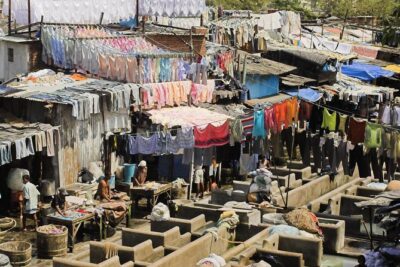
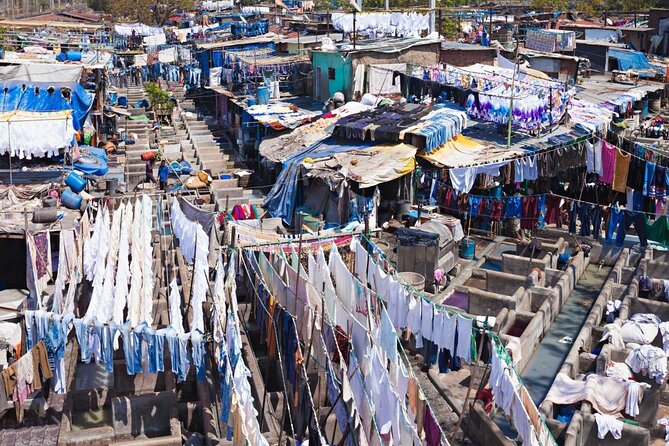
- Dhobi Ghat (built in 1890): An open-air laundromat that keeps hotel and hospital linens moving.
- Churchgate dabbawallas: A look at how lunchboxes (about 200,000 a day) get organized.
- Banganga family lunch: A calm spiritual tank stop paired with a proper meal with your guide.
Mumbai by public transport feels real because you ride the city
This is the kind of sightseeing that makes Mumbai click fast. Instead of hopping by private car all day, you take local transport between major points, so you catch the rhythm of commutes, street life, and the small logistics that keep the city running.
I like that the route is designed around recognizable landmarks, but the experience is really about how people live around them. Even when a stop is famous, your guide focuses on what it means in daily life rather than treating it like a static postcard.
You can also read our reviews of more tours and experiences in Mumbai

Meeting at Ballard Pier at 9:30am, then moving with purpose
You meet around Ballard Pier / Alexandra Dock / Green Gate in Fort, with the tour starting at 9:30am. Because the starting area is near public transportation, you’re not stuck figuring out how to reach the first stop once you land in the city.
The trip ends at Mani Bhavan Gandhi Sangrahalaya. That’s helpful because it gives you a logical finish point if you want to continue exploring after the 6-hour mark. Also, the tour is private, so it’s only your group—less waiting for strangers, more time staying together.
Regal Cinema and CST: two icons that explain Mumbai’s attention to style
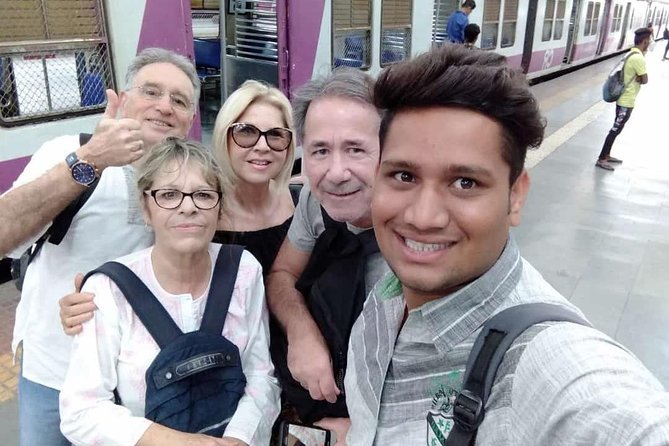
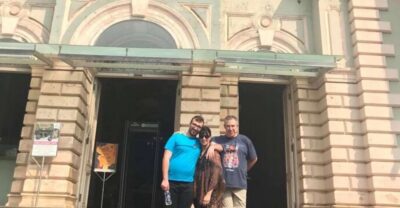
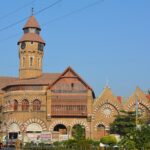
Your first stop is Regal Cinemas, one of Mumbai’s oldest movie theaters. You get about 10 minutes here, which is short, but it’s a good opener. The point isn’t to treat it like a museum stop—it’s to set the mood. Mumbai takes entertainment seriously, and this theater is part of that story.
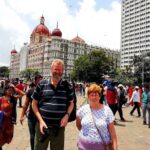
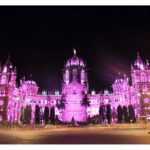
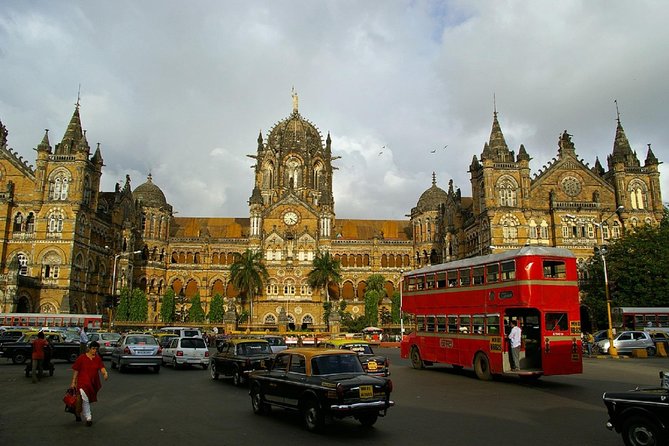
Then you move to Chhatrapati Shivaji Maharaj Terminus, the high Gothic Victorian landmark that anchors Mumbai’s suburban train network. You’ll spend around 20 minutes here, and this stop works because it shows you how the city’s infrastructure and its architecture both carry identity. It’s not just a station; it’s a centerpiece.
Practical tip: when you’re photographing big architecture, give yourself a moment to step back and scan angles before you squeeze into the crowd line. Your guide can help you pick a quick vantage point without turning the whole time into camera chaos.
Dhobi Ghat (1890) to Churchgate: watching work, not just monuments
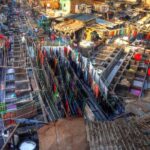
Next comes Dhobi Ghat, the open-air laundromat built in 1890. You’ll have about 20 minutes, and this is one of the most meaningful stops because it’s still doing the job it was made for. Dhobis wash clothes and linens from Mumbai’s hotels and hospitals in open air, which makes the place feel both practical and strangely beautiful in motion.
This is also where you learn to look at Mumbai differently. Instead of asking what something looks like, you start asking how it functions—and how people fit into that function.
From there, you head to Churchgate Railway Station for about 15 minutes. The big focus here is the dabbawallas, the lunchbox delivery system that manages roughly 200,000 lunchboxes every day. It’s the rare sightseeing moment that’s about logistics and community organization, not just architecture.
If your family is with you, this stop often lands well because it’s easy to explain: people have a plan, lunch shows up, work continues. You’ll get a clearer picture of how coordinated daily routines can be, even at a city scale.
Marine Drive: a short walk that teaches you the nickname
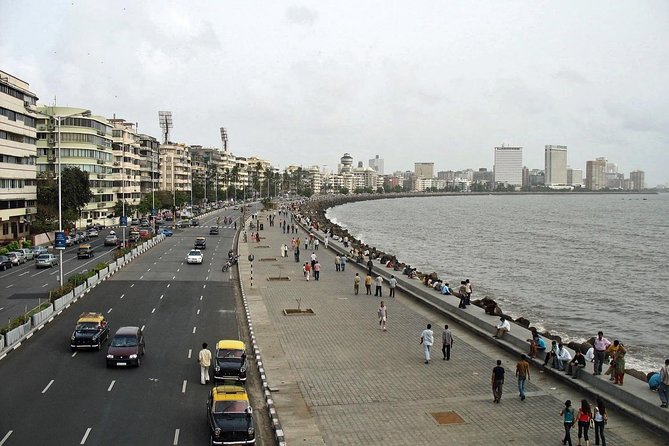
You get 10 minutes at Marine Drive, Mumbai’s famous boulevard. Your guide will point out why it’s called the Queen’s Necklace, so you’re not just walking for steps—you’re learning the reason behind the nickname.
This stop is a nice break from the denser station and work-area atmosphere. It’s also a good place for families to reset because you can pause, look out, and take in the waterfront feel without committing to a long hike.



Banganga: a holy tank, rituals, and a family lunch with your guide
Then you reach Banganga, where underground springs fill a holy tank used for rituals and prayers. You’ll spend about 30 minutes here, and this stop is built as both a spiritual pause and a family meal break.
The standout is that you’re not just looking at a site—you’re being told how it’s used. The stop name often gets described through the idea of the Ganges of Mumbai, and you’ll feel the contrast between the quiet tank setting and the fact that you’re still in a huge city.
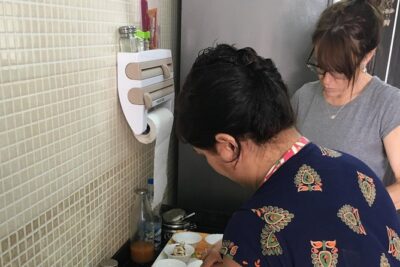
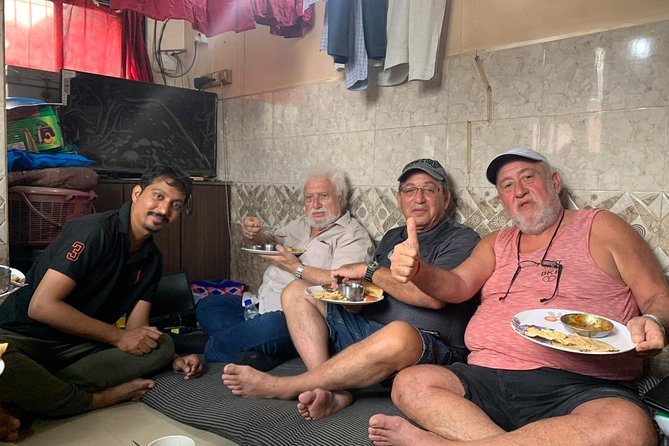
After the initial orientation, you enjoy family lunch with your guide. I like this structure because it prevents the classic travel problem: you’re either sightseeing all day with no fuel, or you’re eating in a random gap without context. Here, lunch is part of the experience, not a detour.
Tip for families: take advantage of the meal time to slow down. If your group includes kids (or anyone who gets cranky in crowds), Banganga is the point where energy usually levels out.
Jain Temple and Malabar Hill gardens: calm views after the city noise
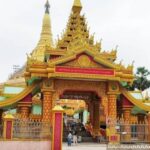
You continue to the Jain Temple in Mumbai, located in the Walkeshwar Teen Batti area on Malabar Hill. It’s described as being built in 1904, and it’s considered a tirth place of Mumbai, visited by Jain Deravas. You’ll have around 10 minutes, which is perfect for soaking in the atmosphere without turning it into a long endurance test.
Next is Hanging Gardens, also known as Pherozeshah Mehta Gardens, with about 20 minutes. These are terraced gardens perched on Malabar Hill on the western side, opposite Kamala Nehru Park. This stop gives you a different Mumbai texture: hillside calm after train stations, laundries, and busy delivery routes.
I recommend taking five minutes here just to look at positioning—how terraces and viewpoints work on a hill. Gardens on sloped ground change how you move, and it’s a subtle way to understand a city built around uneven terrain.
What the English-speaking guide adds (and how it shows up in real moments)
This tour is guided, and that matters more than people expect on a public-transport day. Your guide keeps you oriented, explains what you’re seeing in plain language, and helps you stay comfortable while moving through busy areas.
Past guides associated with this tour have been praised for being articulate and caring, with guides such as Aarti highlighted for clear explanations, Nikesh for mixing history with jokes to keep things fun, and Anthony for patiently answering questions and helping the group feel safe even in crowds. You should expect that kind of focus on clarity and pacing rather than a nonstop lecture.
Even if you’re not a hardcore history fan, you’ll appreciate the guide’s ability to connect each stop to something practical. Dhobi Ghat isn’t just an old image; it’s a working laundry system. Churchgate isn’t just a station; it’s a delivery network.
Price value: when $50 buys a full route, not just photos
At $50 per person for about 6 hours, the value comes from what’s included in the experience design. You get guided navigation, public transport use during the route, and a day that strings together several high-interest stops with free admission at each site listed on the schedule.
That free-admission detail matters. Many city tours stack up costs quickly once you add entry fees. Here, the price mostly supports guiding and the day’s structure, so your money goes toward making the route make sense and reducing your own planning stress.
The other value piece is that it includes a family lunch as part of the day. Food can easily become the hidden expense on sightseeing tours, and having lunch built into the flow keeps the day from feeling chopped up.
Timing and pacing: short stops that work for families
The schedule is built around many quick segments: Regal Cinemas (10 minutes), CST (20 minutes), Dhobi Ghat (20 minutes), Churchgate (15 minutes), Marine Drive (10 minutes), Banganga (30 minutes), Jain Temple (10 minutes), Hanging Gardens (20 minutes). That adds up to a full day without requiring marathon walking.
This pacing is particularly helpful for families. Kids (and grown-ups) can handle short photo breaks and quick explanations, then enjoy a longer sit-down period at Banganga. If your family has mixed ages, that balance usually makes the day feel doable.
Who should book this Mumbai public transport tour
This tour is a strong fit if you want to see Mumbai like a working city. You enjoy landmarks, but you also like learning how systems operate—trains that shape neighborhoods, laundry that supports hotels and hospitals, and lunch delivery that runs at massive daily scale.
It also works well if you like a guide who keeps the day friendly and question-friendly. If you’re traveling with family, the built-in lunch stop and shorter walking blocks are a big plus.
If you dislike crowds or you prefer slow, private pacing with lots of quiet time, you might find some sections busier than you want. Public transport days can be energetic, even when everyone’s trying to move politely.
Should you book this tour
I’d book it if you want a focused Mumbai day that connects famous places with real daily life. The mix of architecture, work scenes, religious space, and a family lunch makes the route feel purposeful rather than random.
I’d skip or reconsider if your top priority is getting away from crowds completely. This is a city day on local routes, and the energy is part of the point.
If you do book, go in with comfy shoes and a flexible mindset. You’ll get more out of the explanations when you’re ready to watch, ask, and move at a human pace through Mumbai.
FAQ
FAQ
How long is the Mumbai sightseeing tour?
It runs for about 6 hours.
What time does the tour start?
The start time is 9:30am.
Where do we meet for the tour?
You meet at the Ballard Pier Mumbai / Alexandra Dock / Green Gate area near Fort.
Where does the tour end?
The tour ends at Mani Bhavan Gandhi Sangrahalaya in Babulnath, Gamdevi.
Is pickup available?
Pickup is offered.
Is this a private tour?
Yes. Only your group participates.
Is there an English-speaking guide?
Yes, the tour includes an English-speaking guide.
Is lunch included?
Yes. You have a family lunch with the guide during the Banganga stop.
Do I need tickets for the stops?
Each listed stop shows admission ticket free.
How does ticketing work?
You’ll receive a mobile ticket.
What is the cancellation policy?
Free cancellation is available up to 24 hours in advance for a full refund. If you cancel less than 24 hours before the start time, the amount paid is not refunded.