REVIEW · MUMBAI
Private 8 Hours Mumbai City Sightseeing and Dharavi Slum Tour
Book on Viator →Operated by Mumbai Dream Tours · Bookable on Viator
Mumbai has two faces, and this tour shows both. In one long day you’ll hit UNESCO-listed colonial icons like Chhatrapati Shivaji Maharaj Terminus, then switch gears to real neighborhood life in the city’s slums.
I really like the private, air-conditioned comfort for moving between areas that feel worlds apart. One possible drawback: the day includes real walking time, including slum routes, so if heat and mobility are issues you’ll want a plan (your guide can help, and Rakesh is known for adjusting to needs).
In This Review
- Key things to know before you go
- A private day that mixes colonial Mumbai with Dharavi real life
- Price, time, and what you really get for $153 for up to 2
- The tour’s guide is the whole deal
- Morning stops: Gateway, Taj Hotel, and the Big Ben of India
- CST and the Gandhi hour: UNESCO terminal meets real ideas
- Hanging Gardens and Dhobi Ghat: daily life on show
- Dharavi: one of Asia’s largest slums, with economic context
- What you’ll likely see around Slumdog Millionaire scenes
- How the route flows, and why it matters
- Drawback to keep in mind: it’s a lot of stops in one day
- Comfort tips for heat, walking, and respectful photos
- Who this tour suits best (and who might want a different pace)
- Should you book this Mumbai city + Dharavi tour?
Key things to know before you go
- A private setup for up to 2 people means you’re not stuck with a rigid group pace.
- Rakesh-style tailoring: the route can be adjusted when schedules are tight.
- Hands-on street viewing at Dhobi Ghat, where laundry happens in public view.
- Two different slum experiences in the itinerary, including a Dharavi stop.
- Main sights are quick photo-and-stand times, so you’ll get breadth more than museum depth.
A private day that mixes colonial Mumbai with Dharavi real life
This is the kind of Mumbai itinerary that helps you understand the city’s contrasts fast. You start with big British-era architecture and UNESCO recognition, then you shift into places most tourists only hear about. The whole point is contrast with context, not shock value.
What makes it work is the guide-led structure. You’re not just driving past landmarks; you’re also walking with someone who lives there, which changes the tone from sightseeing to learning. And because it’s private, your day can bend to your pace.
You can also read our reviews of more city tours in Mumbai



Price, time, and what you really get for $153 for up to 2
At about $153.08 per group (up to 2), the pricing is easier to judge by what’s included. You’re getting hotel pickup and drop-off from South Mumbai, round-trip transport in an air-conditioned vehicle, and a professional guide for roughly 7 to 8 hours. You also get a mobile ticket.
You’ll notice something else: many of the stops listed are marked free entry, including the big-name sights. That’s a practical value boost because your biggest variable costs (tickets and fees) stay low. The big “cost” is really time and attention, because the itinerary moves.
The tour’s guide is the whole deal
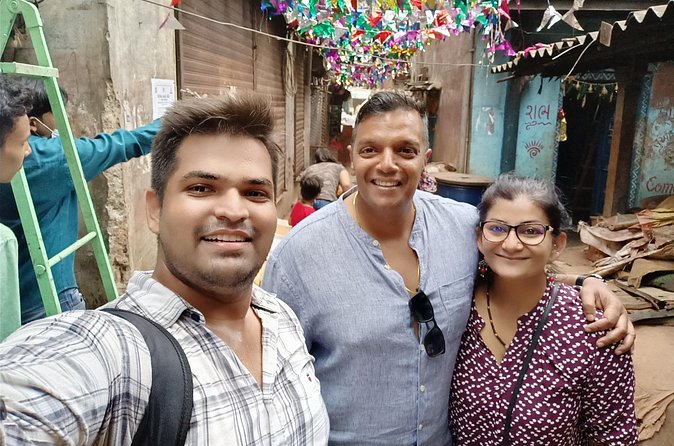
This is a guided tour with a big emphasis on the slum sections. The plan includes a stop designed around walking with a guide who lives there, which matters more than people expect. You’ll get explanations that connect what you see to daily life, work, and community patterns.
In the reviews data you provided, the name Rakesh comes up repeatedly, and one standout theme is flexibility. One family needed timing around flights, and Rakesh helped make the day fit. Another review mentioned support for mobility, with adjustments to help someone who couldn’t walk far in the heat.
The takeaway for you: if you have kids, limited mobility, or a tight schedule, this tour’s private format plus a guide like Rakesh is a strong match.
Morning stops: Gateway, Taj Hotel, and the Big Ben of India
Your day kicks off near the waterfront at Gateway of India. It’s a short stop, but it’s a classic starting point because you get that arrival feeling right away. The gateway was built to welcome King George V and Queen Mary, which gives you a quick historical anchor before you move into more architecture.
Next up, you’ll stop briefly at The Taj Mahal Palace, Mumbai. This is more about viewing the building and its setting than a long visit. Even in a quick photo stop, it helps you see why Mumbai earned its reputation for grand colonial-era hotels.
From there, the plan turns into a fast-hit British heritage sweep around education and civic buildings:
- University of Mumbai Library (built in 1857): quick, outside-focused viewing.
- Rajabai Clock Tower, often called the Big Ben of India: another short stop that rewards you if you like clock-tower landmarks.
- Watson’s Hotel ruins: this one is tied to a story. The plan notes that Tata was refused entry, and so he built the Taj Mahal Hotel. That gives the ruins more meaning than they would have as random stone.
A quick note on expectations: these are brief stops (often 5 minutes here, 10 minutes there). If you prefer slow museum-style pacing, you may wish you had more time at fewer places. If you want breadth—colonial buildings plus slums in the same day—this schedule makes sense.
CST and the Gandhi hour: UNESCO terminal meets real ideas

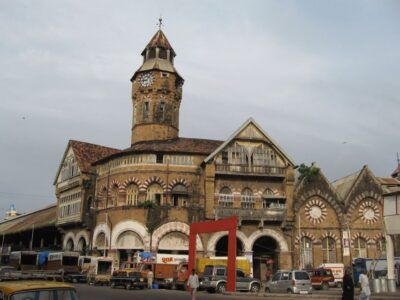
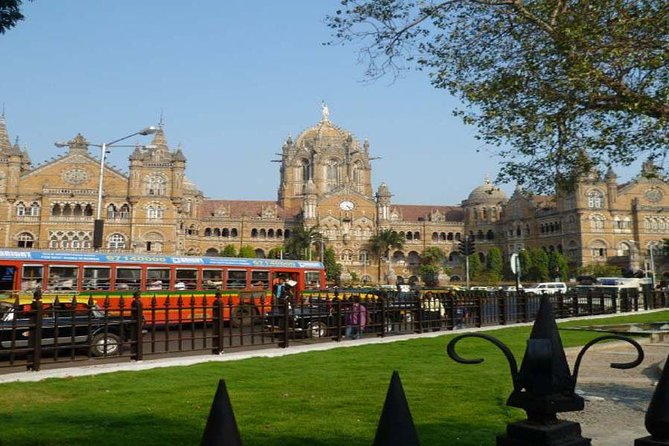
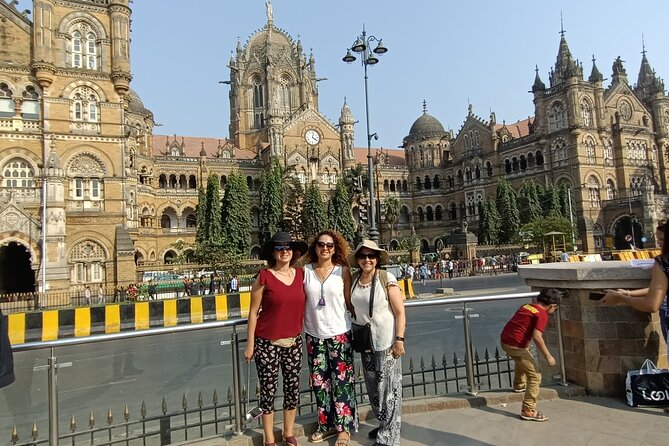
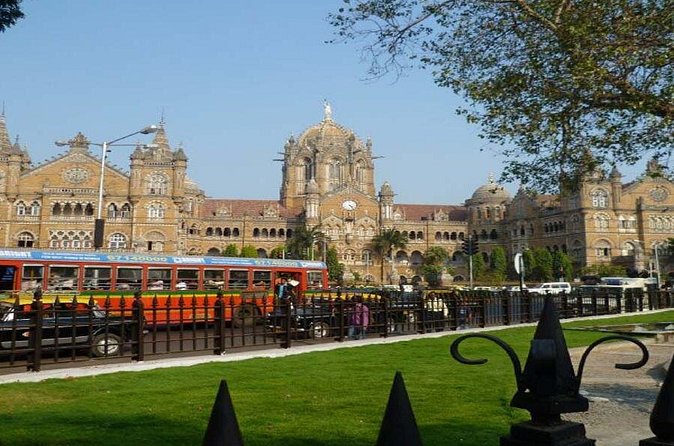
One of the most important stops is Chhatrapati Shivaji Maharaj Terminus (Victoria Terminus, CST). This is the UNESCO World Heritage train station you’ll want to see in person at least once. Even if your time is limited, the building itself communicates ambition: huge scale, strong symmetry, and a sense of movement built into stone.
After CST, the tour heads toward the sea for Marine Drive and Chowpatty beach. Here you mostly drive past, so treat this as orientation for where Mumbai’s energy lines up with the coastline. Even without a long walk, it’s a useful visual break before the heavier portions of the day.
Then you get a longer cultural stop: Mani Bhavan Gandhi Museum for about an hour. This is one of the better “time investment” points in the itinerary because it’s not just external viewing. If your goal is to understand Mumbai beyond architecture, this hour is where you slow down.
You can also read our reviews of more private tours in Mumbai





Hanging Gardens and Dhobi Ghat: daily life on show
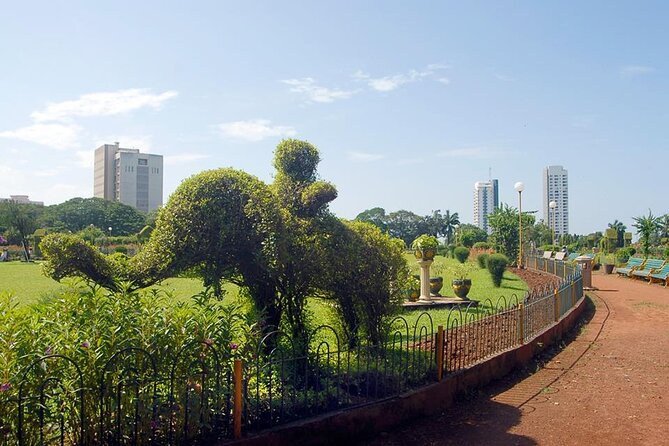
You’ll also spend time at Hanging Gardens, described as gardens built on top of water tanks near the Tower of Silence (a Parsi burial place). That combination—gardens over infrastructure, near a unique landmark—adds texture to the city’s layers. The stop is about 30 minutes, which is enough to walk a bit and take photos without feeling rushed.
After that comes a very practical, very human stop: Dhobi Ghat, the open-air laundry. The itinerary frames it as clothes being washed in full view of the public. If you’ve never seen laundry operations conducted this openly, this is one of those moments that changes how you think about work and visibility in a city.
The value here is that Dhobi Ghat isn’t a staged performance in the itinerary plan. It’s part of how the city functions day to day. Expect it to feel different from most tourist sights because it’s not built for visitors—it’s built for residents and workers.
Dharavi: one of Asia’s largest slums, with economic context
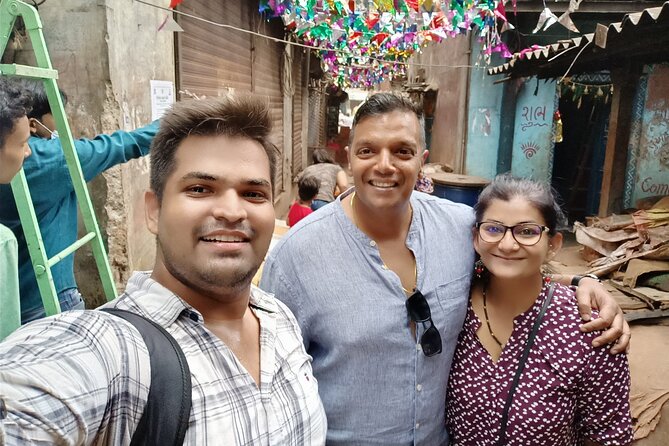
The last third of the day focuses on slum areas, including Dharavi. The itinerary notes it’s one of the largest slums in Asia, with economic output estimated around $1 billion annually. It also mentions that much of this revenue connects to informal recycling industries.
That context changes what you see. Instead of thinking only about poverty, you start noticing work systems—how materials are sorted, how informal economies operate, and how residents build income through practical trades.
What you’ll likely see around Slumdog Millionaire scenes
The overview for this tour mentions visiting a slum area where many scenes from Slumdog Millionaire were shot, and the plan includes slum walking as part of the route. For you, that means the neighborhood experience is not purely theoretical. You’ll connect a famous film location with the living reality around it.
This isn’t about checking off a movie set. It’s about understanding how film-imagery relates to actual streets, daily rhythms, and the way guides frame what you’re seeing.
How the route flows, and why it matters
Here’s the structure that makes this day workable:
You start with the “wow” landmarks—Gateway, Taj, major clock tower and heritage civic buildings. Then you pivot to an UNESCO stop at CST and a sea-side drive. After that you move into culture (Gandhi museum) and visible daily work (Dhobi Ghat). Finally, you reach the slum sections, including a Dharavi visit and an additional slum walking component.
Why this flow matters: it prevents you from jumping straight into heavy topics without a framing day. You get city orientation first. You also avoid ending the day with only intense architecture or only intense life scenes. By the time you’re in Dharavi, you’ve already seen how Mumbai runs—ports and rail, colonial buildings and civic systems, everyday labor and public spaces.
Drawback to keep in mind: it’s a lot of stops in one day
The itinerary includes many short exterior stops—often 5 to 15 minutes. That’s great for coverage, but it does mean you won’t linger long enough to feel like you “conquered” any one neighborhood in depth. The trade is breadth in a limited time window.
Also, the slum portion is walking-based. So even in an air-conditioned vehicle between stops, the body part of the day can feel real.
Comfort tips for heat, walking, and respectful photos
Because the itinerary includes slum walking and multiple outdoor photo moments, think in terms of comfort. Wear shoes that handle uneven pavement, and plan for a pace that isn’t museum-slow.
If mobility is a concern, this tour’s private format helps. In the review information you shared, Rakesh is specifically credited with adjusting for an elderly traveler who couldn’t walk far in the heat. That’s a strong sign you can talk your needs through before you start, then move at a realistic pace.
For photos: you’ll be in public view at Dhobi Ghat and in sensitive living areas during slum walking. Keep your phone and camera use respectful. If someone looks uncomfortable, step back.
Who this tour suits best (and who might want a different pace)

This experience fits you best if you want:
- A single-day Mumbai overview that includes both colonial landmarks and slum neighborhoods.
- A private, guide-led approach, especially if you want route flexibility.
- A tour where the slum sections are treated as learning moments with context, not just a viewpoint.
It may not be ideal if you want long museum time or deep, slow architecture study. With so many quick stops marked in minutes, you’ll get “see it, understand it, move on,” not “spend half a day in one place.”
Should you book this Mumbai city + Dharavi tour?
I think you should book it if you’re the type of traveler who wants contrast you can actually stand in, not just read about. The biggest strengths are the private format, hotel pickup from South Mumbai, and a guide who can handle real-world timing and needs. The itinerary also balances heavy content with landmarks and city orientation, so you don’t end the day confused or emotionally drained without context.
Skip or consider another option if your ideal day is mostly indoor sights with long time at each stop. This tour is built for coverage—colonial-era icons, a UNESCO terminal, a culture museum hour, public work at Dhobi Ghat, then slum walking and Dharavi with economic and community framing.
If you want one day that genuinely covers Mumbai’s range, this is a strong choice.