REVIEW · MUMBAI
Mumbai City Tour With Laundry And Hotel Transfers (South Mumbai)
Book on Viator →Operated by Showcase India Tourism Company · Bookable on Viator
South Mumbai means history, crowds, and everyday life. This tour threads it all together in a tight 3–4 hours, from the colonial monuments to the working laundry scene. I really like the English-speaking driver-cum-guide approach, with a calm, safety-first vibe that helps you enjoy busy streets.
Two things I especially like are how many sights have entry fees handled for you, and how the route mixes icons with real routines (fisher life, dabbawalas, and manual laundry). One possible drawback: it is weather-dependent, and some stops involve walking and looking around rather than sitting down for long.
In This Review
- Key Points You’ll Care About
- Why This South Mumbai Route Feels Smart (Not Just Scenic)
- Your Driver-Guide: The Difference Between Knowing and Not Getting Lost
- Price Value: What You Get for Around $41
- Gateway of India: The British Memorial That Became a Modern Meeting Point
- Badhwar Park: Fisher Life and a Model Village Feeling
- Mani Bhavan Gandhi Museum: A Non-Violent Freedom Story in One Place
- Jain Temple in Mumbai: Stone Carvings and Zodiac Details
- Hanging Gardens, Water Tanks, and the City’s Hidden Utility
- Tower of Silence (Dakhma) and Ambani’s Residence: Two Extremes, One City
- Churchgate and the Dabbawalas: Lunch Delivery as Daily Infrastructure
- Chowpatty Beach: Evening Family Time and Street Food Energy
- Dhobi Ghat: Watching 5,000 Manual Washers in Action
- Chhatrapati Shivaji Terminus: Victoria Terminus and Central Rail Power
- Afghan Church: St. John the Evangelist and a First Afghan War Memorial
- Horniman Circle Garden and Rajabai Clock Tower: The Clockwork Side of South Mumbai
- Logistics That Make It Easier: Transfers, Mobile Ticket, and a Short Day
- Who Should Book This Tour (And Who Might Skip It)
- Should You Book This Mumbai South Mumbai City Tour?
- FAQ
- How long is the Mumbai South City Tour with laundry and hotel transfers?
- What is the price per person?
- Does the tour include pickup or hotel transfers?
- Is a mobile ticket provided?
- Are monument entry fees included?
- Are snacks included in the price?
- What is the maximum group size?
- Is the tour language English?
- Is the tour affected by weather?
Key Points You’ll Care About
- Hotel transfers and pickup help you start smoothly in South Mumbai
- Most monument entry fees included, so you are not constantly pulling out cash
- Max 6 travelers, which keeps the pace conversational instead of chaotic
- Dhobi Ghat laundry viewing with a scale you can actually picture
- A balanced mix of Gandhi-era memory, Zoroastrian tradition, and working-city scenes
- Mobile ticket for easy check-in
Why This South Mumbai Route Feels Smart (Not Just Scenic)
South Mumbai can be overwhelming fast: you step out of the car, and suddenly you have trains, churches, beaches, old clock towers, and tight lanes all competing for attention. This tour is built to keep you oriented. You get a clear storyline of how the city’s power shifted over time, while still seeing how people live today.
I also like the pacing. It is not a marathon, but it is not a slow bus tour either. Most stops are short enough that you stay alert, and the guide can point out what matters without turning every corner into a lecture.
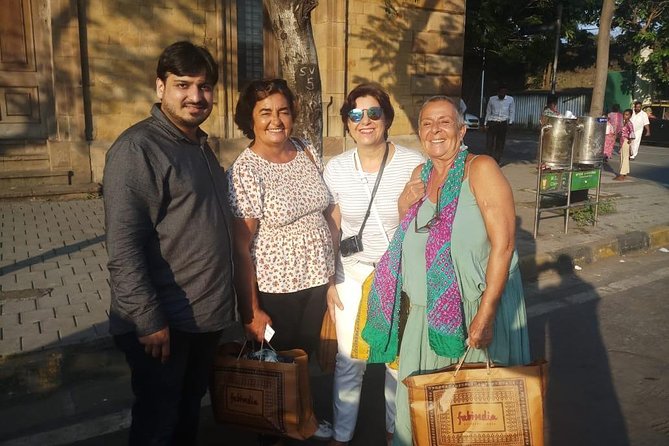
The group size cap of up to 6 people matters more than you’d think. You get time to ask questions, and you are less likely to lose the guide in crowds.
You can also read our reviews of more city tours in Mumbai



Your Driver-Guide: The Difference Between Knowing and Not Getting Lost
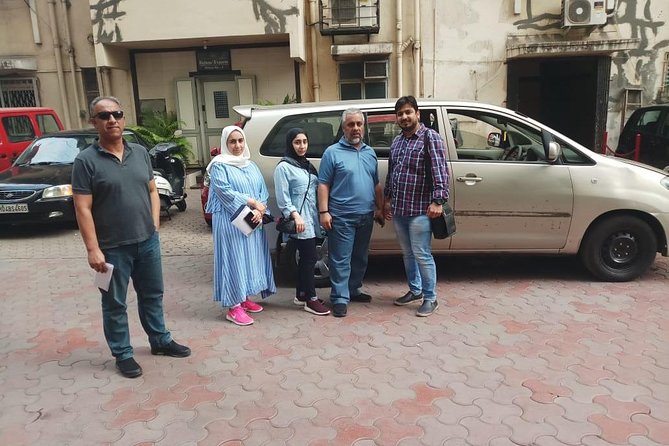
The tour is led by a driver-cum-guide with 25+ years in hospitality, and they speak English. That combo is huge. In a city where directions can get messy, having someone who can read the streets and manage timing keeps the experience feeling safe and organized.
I also appreciate the emphasis on transparency. When most entry fees to monuments are included, it reduces the awkward moment of figuring out what costs extra and where. It keeps your focus on the sights rather than on payment logistics.
One practical note: it is a group tour, so you will follow the schedule. If you want to linger for long photo sessions at every stop, you may feel slightly time-pressured.
Price Value: What You Get for Around $41

At about $41.39 per person, the value here comes from coverage, not from a flashy gimmick. You are paying for guided time, pickup/transfer support, and all fees and taxes. That means you are not doing a stop-and-pay scavenger hunt.
The only thing that is not included is snacks. So, bring an easy plan for food—especially if you like eating while the city is active.
If you are sightseeing across South Mumbai anyway, this package can save you both money and mental energy.
Gateway of India: The British Memorial That Became a Modern Meeting Point
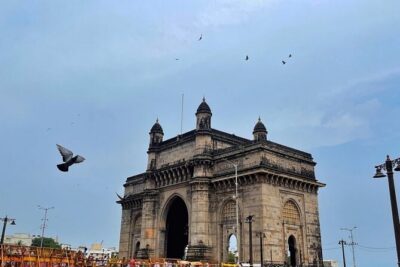
The day starts at Gateway of India, built by the British to commemorate the arrival of King George V and Queen Mary in India. It’s one of those monuments that makes you pause because it is instantly recognizable, even if you do not know the full context.
What I like about this stop is how quickly it frames Mumbai’s theme: empire-era architecture meeting a city that kept moving. You’re standing at a place tied to big arrivals, but today it’s also a busy focal point where people gather, take photos, and start their own stories.
This stop is kept short (about 20 minutes), which works because you are about to see the city’s texture up close next.
Badhwar Park: Fisher Life and a Model Village Feeling
Next is Badhwar Park, where you get shown a fishermen’s village-style area. The idea here is to show how fishermen lived and worked—homes built for them, leaving early for bread for their families, and returning in the morning.
This is not a theme park version of life. It’s more of a viewpoint into how the coastline supported daily survival. Even in a short time, you get a sense that Mumbai’s history is not only about rulers and monuments. It is also about work and routines.
Expect this to be more observational than hands-on. If you’re hoping for deep explanations on the spot, ask your guide what they think is most misunderstood about fisher communities.




Mani Bhavan Gandhi Museum: A Non-Violent Freedom Story in One Place
Then you visit Mani Bhavan Gandhi Museum, Gandhi’s house converted into a museum. It gives a brief look at India’s freedom struggle through the lens of non-violence, under the mentorship of the Father of the Nation, Mahatma Gandhi.
I like museum stops that explain a person and a movement without making you feel lost. This one works as a connector between the grand buildings you saw earlier and the everyday city scenes you’ll see later.
The stop is around 20 minutes, so treat it like an introduction. If this subject hooks you, you’ll likely want to read more after.
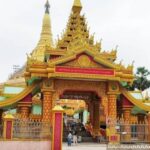
Jain Temple in Mumbai: Stone Carvings and Zodiac Details
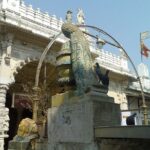
At the Jain Temple in Mumbai, the focus is visual craftsmanship: intricate stone carvings and a dome painted with the zodiac. Even with limited time, you can tell this place was made for careful attention.
A drawback to temples on short tours: you might want more time to look at the details. But if you approach it slowly for a few minutes at each section, you can still catch the main patterns and carvings.
If you’re sensitive to crowd flow, just take your time while the group pauses—this stop can be visually dense.
Hanging Gardens, Water Tanks, and the City’s Hidden Utility
Next up: Hanging Gardens, built hanging on water tanks—a reminder that Mumbai’s beauty is often tied to infrastructure. You also hear about the Boot House and other nearby features.
This stop is around 15 minutes, and it’s a great break because it turns your attention from buildings to systems. Where does the city get water, and how does that show up in public spaces?
If you’re the type who likes city functioning behind the scenes, you will enjoy this. If you only want big-ticket landmarks, this may feel more technical, but in a good way.
Tower of Silence (Dakhma) and Ambani’s Residence: Two Extremes, One City
One of the most striking parts of this route is the contrast.
You’ll see the cremation process site of the Zoroastrian community, a Dakhma also known as the Tower of Silence. This is a circular, raised structure used for exposing dead bodies as part of their tradition. It’s a solemn stop, and the guide’s framing matters.
Then you shift from a place of tradition to a place of modern wealth: the house of Mukesh Ambani, often described as built at a cost of USD 200 million, with a rumor that it pays around USD 100,000 as an electricity bill per month.
I like that the tour doesn’t try to smooth over Mumbai’s contradictions. The city can feel spiritual, historical, and intensely futuristic in the same breath.
This is also where it helps to keep your expectations flexible. These stops are not meant to entertain you. They’re meant to help you understand the layers.
Churchgate and the Dabbawalas: Lunch Delivery as Daily Infrastructure
At Churchgate Railway Station, you get a glimpse of the dabbawalas—the lunch box delivery system that serves offices around the city. The idea is simple and powerful: lunch arrives, reliably, to government and private offices.
This stop lasts about 10 minutes, so you’re not getting a full documentary. But you do get a real-world view of how logistics becomes culture in Mumbai.
If you like seeing how systems work, this will land well. It also gives you a different angle on the city beyond monuments.
Chowpatty Beach: Evening Family Time and Street Food Energy
Next: Chowpatty Beach, described as a family beach where people go to recover their energy after work. It also becomes famous for street food in the evening, and on weekends you’ll see lots of Indian families out enjoying the day.
Even though the stop is short (about 15 minutes), it’s the right kind of break. You get open space after a string of buildings and stations. And if timing aligns with evening, the energy is real.
Practical tip: since snacks are not included, consider this the place to buy what you want to eat. You can keep it simple—just plan that your food may be part of the experience here.
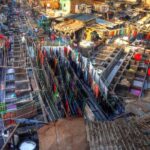
Dhobi Ghat: Watching 5,000 Manual Washers in Action
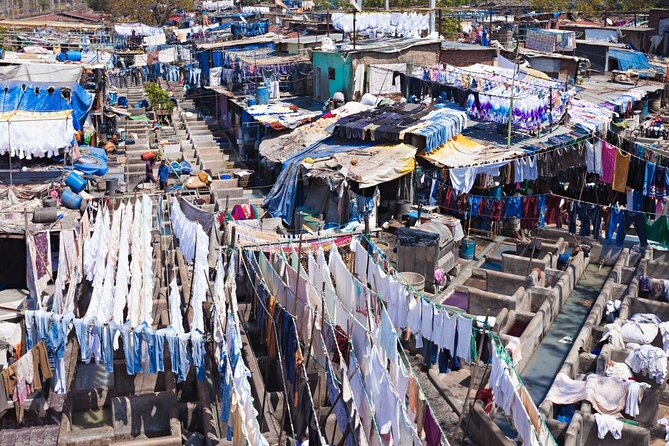
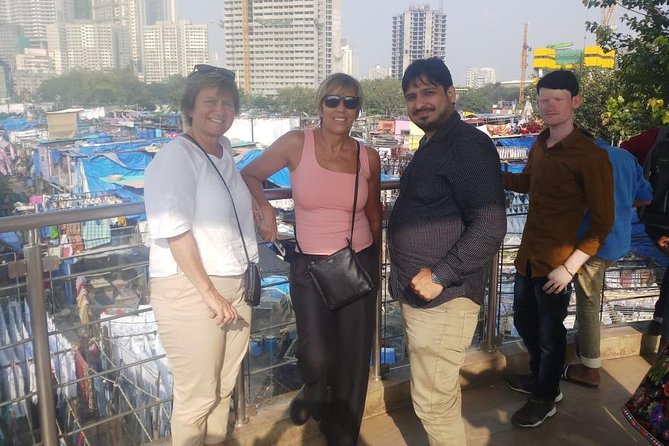
Now for the laundry star: Dhobi Ghat. You’ll witness a scale you can’t fake on a postcard—around 5,000 manual washing operations at a time. The laundry is described as about 150 years old and made during the British era, with contracts from star hotels and organizations such as Indian Railways.
This is probably the most memorable stop for most people because it’s not staged. It’s labor you can see, hear, and understand. Even if you only spend about 10 minutes, you’ll leave with a new respect for the work.
Keep your expectations respectful. This is a working place, not a show. Take photos if allowed, but focus first on seeing how the system runs and what tools and roles you can spot.
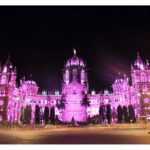
Chhatrapati Shivaji Terminus: Victoria Terminus and Central Rail Power
Then it’s Chhatrapati Shivaji Terminus, formerly known as Victoria Terminus. The information you get here is about the station’s major role—head of all central trains going to and from different parts of India.
A quick 10-minute look can still help you “read” the place. Even in a brief stop, you notice the grand architecture and the sense of movement. You’re seeing the city as a transportation engine, not just a sightseeing target.
Afghan Church: St. John the Evangelist and a First Afghan War Memorial
Next is the Afghan Church, officially the Church of St. John the Evangelist. It’s an Anglican church built by the British to commemorate the dead of the First Afghan War and the disastrous 1842 events.
This stop is about 15 minutes and gives you another layer of colonial-era memory. What I like is how it ties a specific historical conflict to a physical building you can stand in and observe.
Horniman Circle Garden and Rajabai Clock Tower: The Clockwork Side of South Mumbai
Finally, you reach Horniman Circle Garden—a large open space with grand buildings around a central walled area. It was known as Bombay Green in the 18th century, and the area around it was called Elphinstone Circle.
Then you also get views connected with Marine Drive’s promenade and road area. The road and promenade were constructed by philanthropist Bhagojisheth Keer and Pallonji Mistry. The route description notes it as a C-shaped six-lane concrete road along the coast of a natural bay. (It’s the kind of stop where even if your feet want to linger, you keep moving so you don’t lose the group.)
You may also see the Rajabai Clock Tower at the University of Mumbai Fort campus. It stands at 85 meters and is part of the Victorian and Art Deco context of the area.
If you want a city-ending moment where you can breathe and look outward, this section does it. You go from dense city energy into open sightlines.
Logistics That Make It Easier: Transfers, Mobile Ticket, and a Short Day
This tour runs about 3 to 4 hours. That length is practical: long enough to feel substantial, short enough that you still have time for dinner on your own afterward.
Because pickup is offered and there are hotel transfers, you spend less time arranging transport and more time looking at Mumbai. The tour also uses a mobile ticket, which simplifies the start.
Also worth noting: it’s described as being near public transportation. If something goes sideways with traffic, your guide likely has options since the area is well connected.
And because it requires good weather, it’s best to treat it like an outdoor-friendly plan. If the day is rainy or very hazy, you might get offered another date or a refund instead.
Who Should Book This Tour (And Who Might Skip It)
This tour is a strong fit if you want:
- A structured South Mumbai overview in a short time
- A focus on authentic, working-city sights like Dhobi Ghat and the lunch delivery system
- Most entry fees included, which helps you budget calmly
- A small group pace with an experienced guide
You might consider skipping or switching if:
- You dislike walking and prefer lots of seated time
- You want long stays at a single site without moving on
- You are traveling during a period when rain is likely
Should You Book This Mumbai South Mumbai City Tour?
Yes, if you want an efficient, value-minded introduction to South Mumbai that includes more than the obvious landmarks. The biggest draw is the mix: major monuments plus real daily life, handled by an English-speaking guide and supported by hotel transfers and included fees. It’s the kind of tour that helps you understand what you’re seeing, not just take photos and move on.
If you’re flexible about weather, keep your snack plan ready, and like a guided walk with stops you can actually learn from, this one is worth booking.
FAQ
How long is the Mumbai South City Tour with laundry and hotel transfers?
The tour runs about 3 to 4 hours.
What is the price per person?
The price is $41.39 per person.
Does the tour include pickup or hotel transfers?
Yes, pickup is offered, and hotel transfers are part of the experience.
Is a mobile ticket provided?
Yes, the tour offers a mobile ticket.
Are monument entry fees included?
Most entry fees are included, and the tour lists all fees and taxes as included.
Are snacks included in the price?
No, snacks are not included.
What is the maximum group size?
The group is limited to a maximum of 6 travelers.
Is the tour language English?
The driver-cum-guide speaks English.
Is the tour affected by weather?
Yes. The tour requires good weather, and if it is canceled due to poor weather, you’re offered a different date or a full refund.